Splurging and Treating Myself

My financial advisor suggested that I splurge and treat myself. “Financial advisor” is how I sometimes jokingly refer to my sibling who helps me navigate various “grown-up” activities, such as buying a house. Despite the facetious title, his being an advisor on financial matters isn’t a joke. Without him, I would have been at a loss as to find a house let alone buy it. I wouldn’t have had any furniture. And I especially wouldn’t have a clue how to do any of the various chores necessary to keep up the house.

My advisor knows what a tight budget I am on, so his “treat suggestion” came as a bit of a surprise. Still, it’s not a bad idea, perhaps even good for my morale. Many women seem to find satisfaction in treating themselves to a new pair of “cute” shoes, but that whole “cute shoe” gene seems to have passed me by. I do have a few pairs of shoes, all comfortable utilitarian types, such as walking shoes or hiking boots, or slip-ons to wear to go out and check the mail. I even have a couple of pairs of black sneakers (for lack of a better term) that I can use if I want to appear less casual. Whenever I get a ride to a big city, I make sure to stop by a sporting goods store to stock up on a couple more pairs of cheap shoes because I never know when I’ll get another opportunity to shop. It’s a good thing, too. When I get home and actually wear the shoes, sometimes they are too big, in which case I set them aside for gardening shoes. Or they’re too small, in which case I only wear them when I drive to do errands. Those that are “just right” I put in my shoe rotation. (I find it’s easier on my feet if I don’t wear the same pair of shoes all the time.)

But a new pair of basic running around shoes is neither a splurge or a treat. It’s more a matter of opportunity.

My diet is fairly basic, mostly real foods, though I do occasionally go to lunch with a friend, which is a treat but not a splurge. It’s more of a necessity, both the company and a meal that is different from what I normally eat. And anyway, it’s in my budget.

If I could find books for my personal library that I would like to read and reread, I’d snap them up in a second (budget or no budget!), but most books aren’t worth reading once let alone twice, and any book that I don’t plan on reading (or reading again) becomes . . . clutter.

I don’t wear all the clothes I have now, so getting something new wouldn’t really be a treat. Mostly I wear old things around the house, depending more on comfort and warmth (or coolth in the summer) than fashion. I don’t even feel bad about not looking my best because I don’t look at myself — I look at what I’m doing. If I go out somewhere, errands or to that occasional lunch, I wear something nice, and I have plenty of “something nice” to wear. Besides, whatever I wear is covered by a coat for half the year, so it doesn’t really matter.

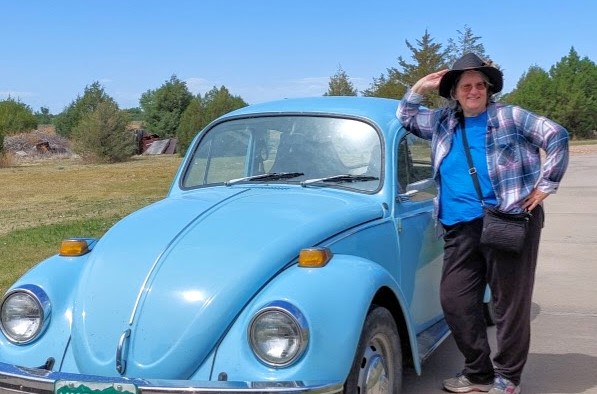
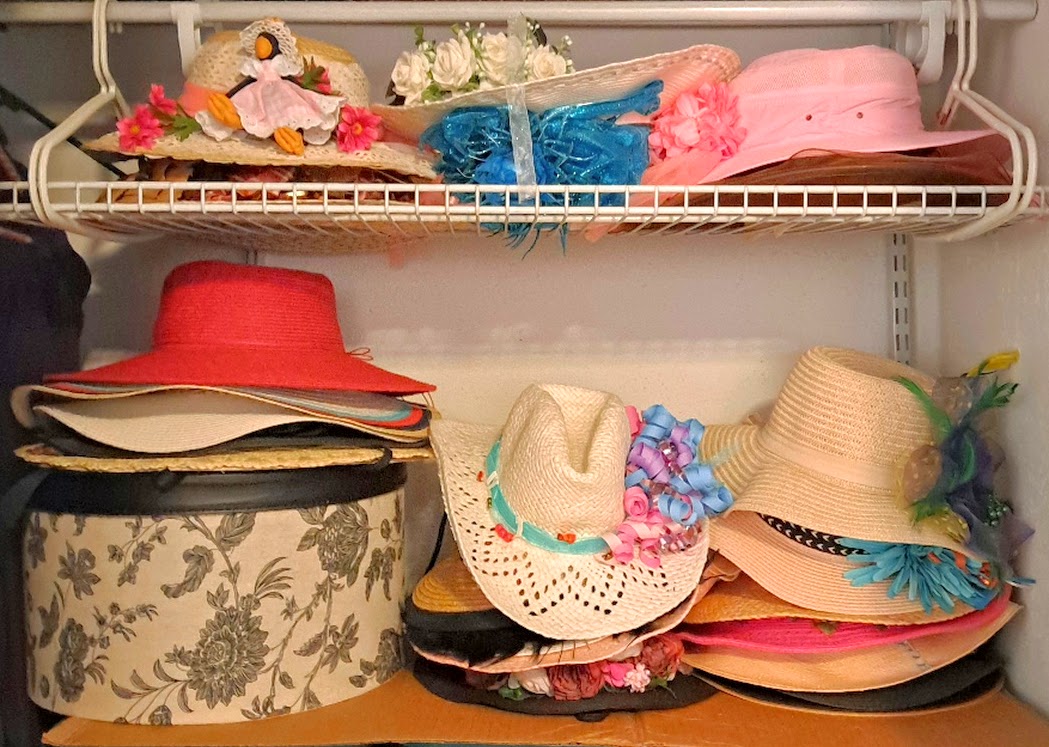
I used to splurge on hats, but I’ve reached a critical mass on headgear. I certainly don’t need more hats!

I have plenty of kitchenware, all the furniture I want, all the . . . I guess, for the most part, I have everything I want. I am by myself and don’t wear things out very quickly. The only thing I might have to get one of these days is a new computer. Although it still seems to me to be rather new, at a little more than seven years, it’s old in computer terms. But that won’t be a splurge. It’s already budgeted for.

Come late spring, of course, I will splurge, might even treat myself to a few expensive plants that I might not otherwise have bothered with, but planting season is still months away.

Until then . . . I don’t know. I suppose it’s a treat thinking about something to splurge on, but for now I’ll stick to my frugal ways.

What would you splurge on?

***

Pat Bertram is the author of Grief: The Inside Story – A Guide to Surviving the Loss of a Loved One.

Grateful

Daily writing prompt
How do significant life events or the passage of time influence your perspective on life?

I’ve experienced many significant life events and life-changing experiences that influenced my perspective on life, but I don’t have any interest in rehashing any those past traumas. Nor do I have any present traumas to talk about since, luckily, I’m going through a rather static time right now. No major life experiences. I am still enamored with the experience of owning my own home and landscaping the yard, but that’s become simply my life.

What does affect me, and does more every day, is the passage of time. I’ve reached the age of no return — my body no longer heals itself quickly, and so small infirmities will begin to add up leading inevitably to a frailer old age than I might have envisioned. If I’m careful, I might not become as frail as I fear, so that’s the big way that time influences my perspective on life now —carefulness. Mindfulness.

Mindfulness is not some sort of esoteric practice, but a very practical way of approaching the end of the road — being careful. I used to move quickly, but now I move deliberately, mindful of where I place my feet. Too many older people have lost their independence because of a fall, and I’ve already destroyed enough of my body by falling (fake elbow, multiple pins in my wrist and forearm). I tend to think I’m still too young to have to worry about losing my independence, but things can happen in an instance, and I am not taking a chance. At least I’m trying not to.

I take care of myself as best as I can, though I admit, it’s not as good a job as I did when I was younger. I might also be coddling myself more than I should, using any small malady as an excuse not to exercise, but maybe coddling is a necessary a part of taking care of oneself.

I also do things like find chores in the kitchen while I’m cooking so that I don’t get distracted and walk away from a potential hazard. And I pay attention to the sort of accidents that happen when people get older so that I can protect myself, if at all possible, from that happening to me. (Not that we can protect ourselves from everything, but being careful means at least trying.)

Mostly, I’m grateful. Grateful for everything I can do. Grateful for every day I wake up. Grateful for every pain-free moment. Grateful I can still read and understand what I’m reading. Grateful I can still eat what I like. Grateful for the friends I have and the companionship they give me.

Just . . . grateful.

***

Pat Bertram is the author of Grief: The Inside Story – A Guide to Surviving the Loss of a Loved One.

Fun? Me?

Daily writing prompt
List five things you do for fun.

Five things I do for fun:

1.

2.

3.

4.

5.

Yep, that’s right — I don’t do anything for fun, don’t even know how to have fun. Even as a kid, I didn’t know how to play let alone have fun. I used to like paper dolls, but after I did the work to cut out the clothes and tried them on the dolls, that was it. I never knew what to do with them afterward. I remember once I spent hours building a small town out of paper, complete with houses and streets, but since I didn’t know what to do with it, I let my younger siblings play with my creation while I sat and watched.

(Apparently, I was born with that trait. My mother often told the tale of baby me and how my eleven-month older brother would play with my toys, and as long as he stayed by my playpen so I could watch, I was content.)

To be honest, I don’t even know what fun is, so I had to look it up. According to the Oxford English Dictionary, fun is “light-hearted pleasure, enjoyment, or amusement; boisterous joviality or merrymaking; entertainment”.

Boisterous joviality and merrymaking are not part of my makeup. I am quiet, the one sitting back and letting other people get rowdy or drink too much or “party” (whatever that is). On my twenty-first birthday, I went to a bar in Central City with a friend for my first drink, but she dragged a friend of hers along. I sat and watched the two of them get raucously drunk. Finally, I went up to the bar and started talking to the owner. Even though he didn’t know it was my birthday, he seemed to feel sorry for me, especially as all I did was order a soft drink. At one point he asked me if I wanted to see his new icemaking machine and I said yes. I know what you think: “Hey, want to come up and see my etchings?” But no. He was thrilled with his new machine, and wanted to show it off. So typical of me! (Typical, too, that I had to drive those two drunks home, stopping periodically so they wouldn’t mess up by new car with their retching.)

I read a lot, but for me, reading is not a “light-hearted pleasure or enjoyment.” I’m not sure it’s even enjoyment. It’s more of a thing I do the in the same way I breathe — as a necessity, a mechanical act that keeps me alive, something that supports calm, and keeps me centered. It’s just what I do. Sometimes, if the book is not particularly stimulating, I let my conscious mind follow the story while my subconscious deals with whatever problems I might have, or even deconstructs the story to see what the author did.

I also like to learn, but that fits in with the whole “reading” thing.

As for entertainment: the last time I had a television (until I moved here to my permanent home, I rented a room in a house that came with a television), I decided to watch Hallmark movies. I figured I’d never spring for television programming, so it would be the last time I had a chance to watch those movies. So I did. But for me, it wasn’t entertaining so much as a study in how to put together a Hallmark movie. So much time for an introduction. So much time until the meeting. So much time for the characters to get to know each other. At exactly what time the big breakup/misunderstanding occurs. And finally how long for the happily ever after ending.

Despite being a rather quiet and serious person who spends most of her time alone, I still do like to laugh and chat with friends, but sometimes days pass without my seeing anyone, especially in winter. (Sometimes it takes more mental energy than I have to make the effort. Luckily, my friends make the effort for me.) In the summer, when I am out working in my yard (again, not really fun for me, though I do like seeing the results of my work) I often visit with neighbors across the fence, in the alley, or in the middle of the street depending on where those neighbors live.

A friend posted on her blog that instead of making New Year’s resolutions or intentions, she’d heard of a different way to start the year: pick a word to be a theme for that year. Sounds nice. Maybe I should choose “fun”?

But no, if resolutions tend to set us up for failure, then trying to live up to a word that is not in my nature would set me up for even more failure.

I suppose not being “fun-loving” is something I should worry about, but I’ve lived this long without being able to list five things I do for fun, so I suppose I can live my remaining years the same way. And anyway, I’m contented, which should count for something.

***

Pat Bertram is the author of Grief: The Inside Story – A Guide to Surviving the Loss of a Loved One.

Pat In the Hat

Daily writing prompt
Write about your first name: its meaning, significance, etymology, etc.

A patrician during the Roman Empire was a person of noble birth, an aristocrat who had high social standing and owned a significant portion of wealth and land.

A plebian was everyone else — the ninety-five percent who did the work: farmers, merchants, laborers, crafts people, who had no rights and could not own land.

Eventually, the plebians managed to attain equal rights through protests and walkouts because a city could not survive, nor could a non-working aristocratic class survive when there were no workers to do the necessary tasks of keeping the armies marching, the cities clean, and the citizenry fed.

Still, throughout the centuries, those two words have held some sort of power. Although I was named after the patricians, I never felt “patrician.” I always considered myself to be plebian and my name ironic, though I am glad of the name “Pat.” I would not like being called “Plebe.”

Actually, I never really liked the name “Pat,” though I took that version of my name as an author name since it seemed to have a nice strong sound and connotation. I also used the name to introduce myself to new acquaintances, partly to help them find me online but mostly because I didn’t like giving my real name to strangers. (It felt as if I were giving too much of myself to people I didn’t know and perhaps would never see again.) When I was mostly nomadic, this pseudo-name didn’t matter. It only became a problem when strangers became friends, or when online connections became offline friends, and by then it was too late to change names.

My writing career, such as it was, has all but disappeared, so what I call myself doesn’t really matter, but it was the name I’d used for so long, that it seems convenient to keep it. The truth is, I no longer know what my real name is. Or if I have one. I spend so much time by myself, that there’s no need of a name. I just . . . am. (I once wanted to learn the names of birds; then it dawned on me that the names of birds were names we gave them, not the names they gave themselves, so it seemed rather a silly project. If you can’t learn the truth from the inside out, then looking from the outside in didn’t seem to gain much.)

A week or so ago, when I had just loaded groceries in my car, I heard someone call out, “Pat!” Since I didn’t associate the name with myself, it took me a moment to realize that a good friend was calling me from across the parking lot. (I recognized her voice before I realized who she was talking to.)

So, until I discover my real name, “Pat” is fine. Besides, to distinguish me from all the other Pats in this town — at least a half dozen of us — people identify me as “Pat in the Hat,” which is kind of cute. And accurate.

***

Pat Bertram is the author of Grief: The Inside Story – A Guide to Surviving the Loss of a Loved One.

Reverse Memory

I’ve often heard people say that as they get older, it’s easier to remember their childhood than what they had for breakfast. I wonder how old you have to be before that sort of reverse memory kicks in. Or is it more of a dementia thing than an elderly thing?

Studies have shown that after 75, people tend to start becoming truly elderly, leaping ahead in the aging game. Before that age, people’s bodies can keep up with healing whatever goes wrong, but after that age, the ability to heal slows, and so the infirmities add up. Is it the same with mental issues?

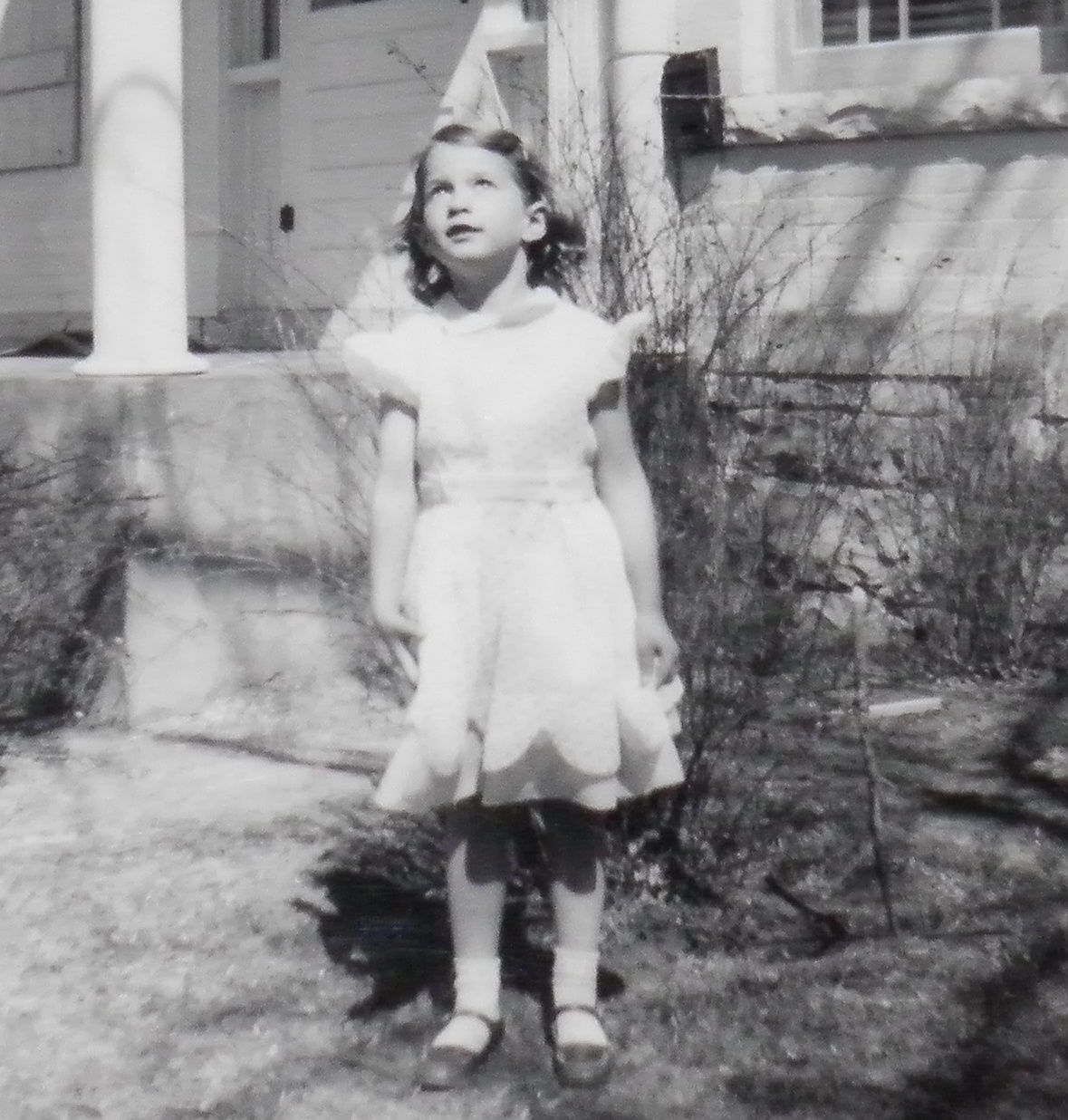
So far, my memory seems okay, with only the typical problems people of all ages have of not being able to dig a particular word out of their memory or getting sidetracked and forgetting food on the stove. I am not yet to the point where I forget what I had for breakfast while remembering my childhood. In fact, there’s little about my childhood I remember or even want to remember. I certainly don’t remember being this little girl, though she was (is?) me.

For the most part, I don’t think about the past. It seems irrelevant, and to an extent, non-existent since no one knows where the past is. Mostly, though, I don’t have any issues with the past. I’ve come to terms with any problems that might have lingered, worked through grief, and dealt with my regrets. I purposely did so because back when I was taking care of my father after Jeff died, I knew that someday I’d be needing to create a new life for myself, and I didn’t want to bring along any excess baggage.

So what happens if I get to the point where my short-term memory is shot and my long-term memory is all I have? Do I have to go back to thinking about things I stopped thinking about long ago?

It’s not just the past I don’t think about — I usually don’t think about the future, either. Just as that little girl I once was could never imagine my life today, I’m thinking that the woman I am today can’t imagine what my life will be as the years pass. Of course, I know where the highway of my life will end — where it ends for everyone. Still, I find it best not to look too far ahead, since such views can be worrisome.

A funny thought (or maybe not so funny) — I read so much, a book a day usually, that other people’s lives are more in my mind than my own. When I get to where I forget today and start reminiscing, will I remember those lives as my own? Probably not — considering how much I read — starting a new book as soon as the old one is finished — I don’t give any book enough time to slither from short term memory to long term storage.

As with most of what I think about, none of this matters. These are just idle thoughts to fill an idle mind.

Still, I do wonder.

***

Pat Bertram is the author of Grief: The Inside Story – A Guide to Surviving the Loss of a Loved One.
Mission Statement

Daily writing prompt
What is your mission?

For a couple of decades, my mission was to write the best books I could, to get published, and ultimately to make a living as an author. I succeeded in the first two, and despite my focus and determination, I never figured out how to accomplish the third task.

Eventually my focus shifted, and I felt as if my mission was to tell the truth about grief: that there weren’t any clearly defined stages to climbing out of the pain but instead was a chaotic spiral of never ending and ever recurring emotions, physical side effects, and mental fog; that grief lasted longer than anyone could imagine; and that eventually you would become the person who could handle the soul-searing loss.

I kept at my truth-telling long after people told me I should “drop the mantle of grief” because so many grievers were helped by my raw writings, though to be honest, in real life, I did learn to cloak my sorrow, mostly to keep other people from feeling bad about my situation.

As the years passed, and I became the person I needed to be to survive the death of the person who made my life worth living, I felt less need to continue the mission. Those writings are all there for new grievers to find, but I no longer have anything to say on the subject.

Now my focus is taking care of myself so I can remain strong and independent and living in my own house until my road ends. This is not a mission so much as an intention. There’s no feeling as if this focus is a calling, no sense that it’s a quest, just a vague attempt to do the best I can for myself each day.

Maybe someday I’ll find another mission, but for now, I’m just as glad to drift, dealing with what comes as it comes, without an all-consuming purpose.

***

Pat Bertram is the author of Grief: The Inside Story – A Guide to Surviving the Loss of a Loved One.
Aged Thoughts

So far this year, I’ve kept up with my resolutions and intentions, as well as inadvertent plans. “Inadvertent plans” meaning those things I’ve been doing without ever actually planning to do them, such as daily blogging.

Of course, this is only the fifth day of the new year, but still — to be keeping up with all I want to do is pretty impressive. At least, it is to me.

What’s funny is how much time everything takes. I knew things took a lot of time, which is why I got lackadaisical about doing them. Blogging, by the time I write, rewrite, edit, add images, figure out tags and actually post the thing takes a couple of hours. Exercise — both the stretching (which includes therapy for my knees) and walking — takes another hour. And cooking, eating, and cleaning up after myself as well as other household chores and personal maintenance takes another hour or two or even three.

Lately it seems as if once I’ve done what I’ve planned, there isn’t a whole lot of time left of the day. Admittedly, I am trying to do more, and the day ends early. Despite the end of the creeping darkness and the gradual returning of the light, sunset comes quickly: today the sun will set at 4:47 pm.

Even taking all that into consideration, the day seems to disappear, which makes me wonder if I am moving slower. Is it possible that one can move slowly without knowing it? It doesn’t seem as if I take a longer time to do the things I’ve often done, and yet, the hours evaporate.

A lot of things change around a person without their being aware of it, such as age. Even in late middle age and early old age, we still feel the same as we always did, and despite occasional twinges and a few wrinkles (well, perhaps more than a few!) we tend to think we still look the same. People used to tell me how young I looked, and yet, I was often given a senior discount without requesting it, which told me that I might look good for my age, but when it comes to comparison with young workers, I must look ancient.

Even if our minds slow, we don’t really notice because we are always at home in our own minds. So perhaps it’s the same with movement. We seem to move with the same level of effort, but the effects of that effort, obviously, change with the years, but when does that change come, and will we know it?

None of this really matters, of course. I do what I can when I can, move at a comfortable pace, and as long as there are enough hours to accomplish what I want to accomplish each day, it’s no one’s business (maybe not even my own) about how much of the day is left to read and relax.

Still, I do wonder how much slower I am moving, and how it will affect me during the coming years. Luckily, I don’t often give in to such aged thoughts, which helps me forget the number of years heaped on my head.

***

Pat Bertram is the author of Grief: The Inside Story – A Guide to Surviving the Loss of a Loved One.
Out With the Old, In With the . . .

Out with the old, in with the . . . same old, same old.

There isn’t any appreciable difference between December 31 and January 1 except for a new calendar. Of course, we pretend there’s a difference because . . . well, because we think there should be a difference. The only time there was a difference, at least in my life, was when it came to school years, and even then, the difference wasn’t appreciable since the first days of the new school year often duplicated the last of the old one as we reviewed the previous year’s work.

But now, as an adult, nope, there’s not any difference between the old and the apocryphal new. In fact, as far as I remember, I never did anything for the new year until after Jeff died. Then, I wanted to do as much as I could to make my new single life different from my old shared life, so once or twice, I even stayed up to midnight and toasted the new year with a glass of bubbly — sparkling cider, if I remember correctly. I wanted a change of focus, a turning away from the way I wished things were to the way things are and maybe even to the way things were meant to be. And that seemed to help me continue on without the person who’d been the focus of my life for so many decades.

What helped during those grieving years now seems ho hum. I do, sometimes, play around with New Year’s resolutions in an effort to make the new year seem new again, or at least to make myself seem new again, but resolutions don’t really help. It seems to me that making a resolution sets one up for failure. Because if you plan to do something for a year, chances are, you won’t continue when the year ends, and if the resolution is going to end, then why wait until the end of the year? Why not in June, or February, or even today?

Still, I did make one resolution I’d like to keep — to stay away from news and opinions of any kind. (Except for my own opinions, of course.)

There’s another resolution I’m planning to keep for a month — to stay away from sugar and wheat. Neither one of those things is good for me, and both create problems, but both are hard to stay away from permanently — no pizza ever again? I don’t eat it very often, maybe a couple of times a year, but still, even the thought of it can be a treat. And no chocolate? Heaven forbid! But I’m trying to do a body reset, if there is such a thing, and so I’m being careful what I eat.

A third resolution I plan to keep when I can — to walk every day. But that’s not much of a resolution when I allow myself an out from the beginning. I’m to the age where I notice every joint, every muscle, every ligament and tendon, and there’s no telling when I get up in the morning which of those things will be out of whack. When you think about it, that so many people live for many years, especially when they are young, without being reminded of a single body part is the true miracle. To think that all those parts once worked painlessly together is truly astonishing! Adding to the “out” of walking every day is the weather. I have no interest in going out in dangerous weather. (Dangerous to old bones, that is.) But, I’ll do what I can for however many years I can.

A fourth resolution isn’t so much a new year’s resolution, but rather a hope since I can’t do anything until spring. I would like to get my head more into gardening and lawn work than I did last year. Last year I went through the motions but didn’t really care. This year, I’d like to care, especially since a neighbor gave me a gardening record book, and I’d like to thank her by actually using it. Though admittedly, it will be mostly blank until March or even April.

And there’s a fifth resolution. Well, not actually a resolution, something that just happened. So far, I’ve blogged every day this year. Whoop-de-do! Two whole days! Sometimes I think I’d like to get back into blogging — I liked that it gave my days form and focus. Other times I wonder what the heck I’d been doing putting so much of myself out there for all the world to see. Did I really just spew out my grief, talk about my father and dysfunctional brother, show my new house and yard, let everyone peek into my private life? It was one thing to talk about author-y things back when I was writing, but the rest? Eek. Not smart! So far, the balance scale is . . . balanced. If I do, I do. If I don’t, I don’t. And either way is fine.

***

Pat Bertram is the author of Grief: The Inside Story – A Guide to Surviving the Loss of a Loved One.
Happy Bloggiversary!

Today is the eighteenth anniversary of this blog. Considering how little I’ve posted during the past couple of years, perhaps I should rephrase that and say that I started this blog eighteen years ago. The two sentences mean basically the same thing, yet the first seems to indicate an ongoing proposition, while the second acknowledges the truth of my inactivity.

Over the years, I’ve used this blog as a place to dump all the thoughts and feelings that didn’t otherwise leave me alone, and luckily, nowadays I’m seldom haunted or taunted by those tenacious circular thoughts (thought loops that continue to swirl ever tighter as one’s mind tries to cope with stress and negativity).

I can’t take credit for the lessening of those thought loops since I’ve never really learned to turn them off; it’s more that I’ve landed in a situation where I can control what goes on in my life. Mostly, of course, that situation lets me spend my time alone, away from anyone or anything that causes me unnecessary distress. And I have pleasant means of occupying my mind — there’s always reading (and I do mean always — it’s no secret why the library staff knows me well) and gardening, of course.

I started the gardening season with a sense of detachment — it seemed foolish, in a way, to care so much for something about which I have little control. No matter what I do, plants die, the sun sears, winds desiccate, unsightly weeds flourish. And yet, despite my sense of detachment, I did what I could, and this fall, I’m reaping the benefits of a beautiful yard.

I have learned, over the years of living here in this sometimes harsh and unpredictable climate, that the promise of spring dies in the heat of summer, so I’ve been spending more attention to fall plants. By autumn, the winds have lessened, the sun has moderated its intensity, pulled weeds stay gone, and flowers flourish.

And I find my mind calm, with seldom anything to write about. Except, of course, to mention that there isn’t anything to blog about on this eighteenth anniversary. I could, of course, talk about all the changes that have gone on during those eighteen years, both in my life and in the world, but thinking of all that tumult would put me back where I don’t want to be.

Still, I survived those years, and through it all, this blog was there for me. And for you.

Happy bloggiversary to us!

***

Pat Bertram is the author of Grief: The Inside Story – A Guide to Surviving the Loss of a Loved One.

Update

After an early heavy snow, followed by higher than average temperatures, we’re now in a deep freeze. Later in the week, the temperatures will get above freezing, although only fleetingly.

And then all too soon, it will be time to work out in my yard again.

I enjoy these months of respite from the struggle against weeds and sun-dried grass, but I miss the daily gifts — the flowers that come up despite this harsh climate, the volunteer plants that so tenaciously take a stand, the perennials that stretch their territory. I do get a flower fix with paint-by-number kits. It’s not the same as real gardening by any means, but it’s a real boon to someone without an artistic bone in her body.

Oddly, what I don’t miss is writing — about gardening or anything else, for that matter. For almost three decades, writing (and blogging) was my life. It kept me going during the long years of Jeff’s ill health and in the dark times after he died. It gave me a reason to get up in the morning, gave me a focus that I might not otherwise have had. In fact, because of this blog, I went on excursions and attended events I might have passed on, but I figured anything I did gave me a topic to write about.

So did my desire to stay at home squelch my desire to blog? Or did my lack of desire to blog squelch any desire for venturing out? Silly questions. Silly because the answers don’t matter. I’ve become a homebody, and that’s it. My being a homebody is not surprising since I’ve always had reclusive tendencies, but what is surprising is that I have a home. And a garden! It still astonishes me that this place is mine. In my restless years of grief and its aftermath, I spent a lot of mental energy trying to figure out what my unshared future would be like, and never once did I come close to imagining this reality.

I remember back then occasionally thinking that my future should be wonderful, because if the pain of grief was something I never knew existed, then there had to be some joy to come I also never knew existed.

And now here it is. And now here I am.

Of course, that raises a conundrum that I try not to consider: the only reason I’m living this particular good life is that Jeff is not here. Still, the last thing Jeff ever said to me was that everything would work out for me, so I know he’d be pleased for me. And yet, there’s that niggle in the back of my head that I try not to think about.

But those are thoughts for another time.

Today I’ll think good thoughts and be grateful for all I’ve been given.

***

Pat Bertram is the author of Grief: The Inside Story – A Guide to Surviving the Loss of a Loved One. “Grief: The Inside Story is perfect and that is not hyperbole! It is exactly what folk who are grieving need to read.” –Leesa Healy, RN, GDAS GDAT, Emotional/Mental Health Therapist & Educator.