A Vehicle to Drive on a Soul’s Journey

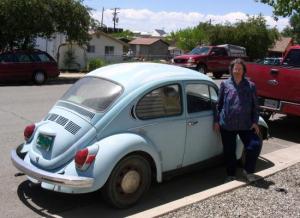
The first car I fell in love with was a Volkswagen bug, and I have it still. In fact, it’s the only car I ever owned. And I’m the only owner it ever had. Only 21 years younger than me, and the thing still runs!

I am aware, though, that it’s not a good idea to take a car this old on an extended journey into the future (as you can see, it’s being held together with duct tape), so in the belief that by visualizing something, it will help it come true, I thought I’d show you the car would like to get. Although many people have suggested campers, fifth wheels, winnebagos, I wouldn’t get one even if I had the money. This will be a journey of the spirit — a soul trip — and I need to be light and free.soul

So this is what I’d like to get — a Kia Soul. Isn’t that the perfect name for a car to take on a mystical quest? Even better, this is only the only other vehicle besides my beetle that I’ve ever fancied. I thought it would be painful to contemplate getting rid of something who . . . oops, I mean something that has been with me all these years, but after the death of my life mate/soul mate, what’s a car? Simply a ride.

***

Pat Bertram is the author of the suspense novels Light Bringer, More Deaths Than One, A Spark of Heavenly Fire, and Daughter Am I. Bertram is also the author of Grief: The Great Yearning, “an exquisite book, wrenching to read, and at the same time full of profound truths.” Connect with Pat on Google+

Figuring Out Where to Go From Here

Route 66During the past three years, ever since the death of my life mate/soul mate I’ve been trying to figure out where to go from here. Currently I am taking care of my 96-year-old father, but someday this responsibility will come to an end, and I will have to find somewhere to live.

Or do I?

By nature, I am a quasi-hermit who easily settles into routines, and now that I am alone, that very nature could become a problem. Unless I do something to prevent stagnation, years from now I could end up being one of those forgotten old women, living behind closed curtains in a dingy apartment. Doesn’t seem like a healthy way to live, but to be honest, I’m not interested in another long-term committed relationship, either. Still, there is a world of opportunity between those two extremes.

When I met the man I was to spend thirty-four years of my life with, I become the most spontaneous I’d ever been. His being in the world made it seem as if the world were full of possibilities, and I grabbed hold of life with both hands and ran with it. Years later, as he got sicker and life took its toll on our finances, the possibilities shrank. Our lives became staid and minutely planned to take his infirmities into consideration. He told me once he regretted that the constraints of our life destroyed my spontaneity, and he was sorry to be the cause of it.

It’s not something I like to face, but the last years, and especially the last months of his life were terrible for both of us. And, something I like to face even less is that his death set me free. The best way to honor my mate’s life and his great gift of freedom is to take back the thing he thought he stole from me. So, to that end, I’m considering becoming a wanderer, living by wit and whim, at least for a while.

When I mentioned this idea to one of my grief-group friends, she said she’d love to be able to live such a life, and she’d do it in a flash if she had a couple of hundred thousand dollars.

Two hundred thousand dollars? Would it really take so much? I hope not, because I don’t have that kind of money — or any kind at all, to be honest — and unless my books became a belated overnight sensation, I have no way of getting it. On the other hand, if I don’t have rent or a mortgage to deal with, if I don’t have utility bills and other standard expenses every month, if I don’t drive all day using up tankfuls of gas but take short jaunts from place to place, then all I’d have to deal with is motels and food, and I might be able to swing that for a few months. I might even be able to find ways of extending the wandering, such as staying with friends and relatives for a few days, or perhaps even try some sort of crowd-funding such as Kickstarter.

Although I would be living by whim, the wandering life, for however long it lasted, wouldn’t be entirely pointless. I could visit bookstores and try to get them interested in my books. I could chronicle the journey, taking pictures of the places I visited, interviewing people, noting differences from place to place (if there are any. For all I know, one place could look the same as any other with a McDonald’s, Dairy Queen or Sonic, and Walmart wherever I went). I could even end up with a new book!

At the very least, I might be able to figure out where to go from here.

***

Pat Bertram is the author of the suspense novels Light Bringer, More Deaths Than One, A Spark of Heavenly Fire, and Daughter Am I. Bertram is also the author of Grief: The Great Yearning, “an exquisite book, wrenching to read, and at the same time full of profound truths.” Connect with Pat on Google+

Can You Change Your Luck?

black catWhile researching What is Luck, yesterday’s blog post about the meaning of luck and how it plays a part in the book business, I found a fascinating study about the difference between lucky people and unlucky people.

Psychologist Richard Wiseman makes a distinction between chance and luck. He believes that chance events are those we have no control over, like winning the lottery, but that luck is a matter of outlook. He says that unlucky people are those who are so focused on their goal that they don’t notice the unexpected. His research reveals that ‘lucky people generate good fortune via four basic principles. They are skilled at creating and noticing chance opportunities, make lucky decisions by listening to their intuition, create self-fulfilling prophesies via positive expectations, and adopt a resilient attitude that transforms bad luck into good.” Lucky people are also serendipitous — they often find something more fortuitous than what they were looking for simply by being observant.

Wiseman believes that unlucky people can become lucky by following a three simple techniques:

1) Pay attention to your intuition and feelings when making decisions. Don’t rely solely on the rational side of the situation.

2) Don’t be a slave to routine. Doing things differently from the way you normally do boosts the likelihood of luck by introducing variety.

3) See the positive side of your ill fortune.

The luckiest man I know never sees ill fortune or failure. He manages to rearrange events in his mind so that he always comes out a winner. For example, when one venture didn’t pan out and he lost money, he finagled his finances in his head (nothing illegal, just a matter of perception) so that the loss was filed under a different category in his mind. I never understood that — if you lost money, you lost it regardless of how you filed the information away, but it helped him maintain the belief in his luck.

His luck wasn’t merely a matter of perception, but of the way things were. He was the captain of a boat in the Navy during WWII, and after he was transferred off, the boat was sunk, and most hands were lost. He found a hobby buying stamp collections, breaking them apart and selling the individual items right at the moment that stamps were becoming a popular investment. Concurrently, he also happened to be working for an airline, which allowed him to travel at little cost to wherever his hobby took him. Years later, to get a stamp collection he wanted, he had to buy a collection of autographs. By then, stamps were declining in value, but at that very moment, autographs were becoming the investment of choice. A lot of luck going on there!

He always believed that things would turn out for the best, and even when “the best” wasn’t very good, he believed that things had, in fact, turned out for the best, that things could have been worse.

Me? I don’t consider myself either lucky or unlucky, though I have had stretches of bad luck — failures that seemed completely beyond my control, successes that seemed just out of reach. Maybe I’d be luckier if I believed things always worked out for the best, or if I could see the good side of bad things, but sometimes such determinations are beyond me. Sometimes it’s important to see that bad happened just because it happened, such as the death of my life mate/soul mate. There is no way I will ever believe it was best that he got sick, suffered excruciating pain, and died. In a way, there is a good side to his death. He is no longer suffering and I have been freed from an untenable situation, but I cannot dismiss his death so lightly.

Grief tends to close us off from the world, and if ever I am able to find happiness in the future, I will have to open myself up again. I am trying to be more spontaneous, to be open to possibilities even if they seem foolish or uncomfortable, to say yes when my inclination or habit is to say no. Mostly I’m looking for serendipity (though I’m sure that’s an oxymoron because serendipity is what you find when you are looking for something else). Since I don’t really know what I want or what will make me happy (other than making a living as a writer), I have to be open to whatever comes my way. Standing tall. Breathing deep. Stretching.

Although I’m making these changes in an effort to change my life, who knows, maybe they will also change my luck.

***

Pat Bertram is the author of the suspense novels Light Bringer, More Deaths Than One, A Spark of Heavenly Fire, and Daughter Am I. Bertram is also the author of Grief: The Great Yearning, “an exquisite book, wrenching to read, and at the same time full of profound truths.” Connect with Pat on Google+

Countdown to One Hundred and One Adventures

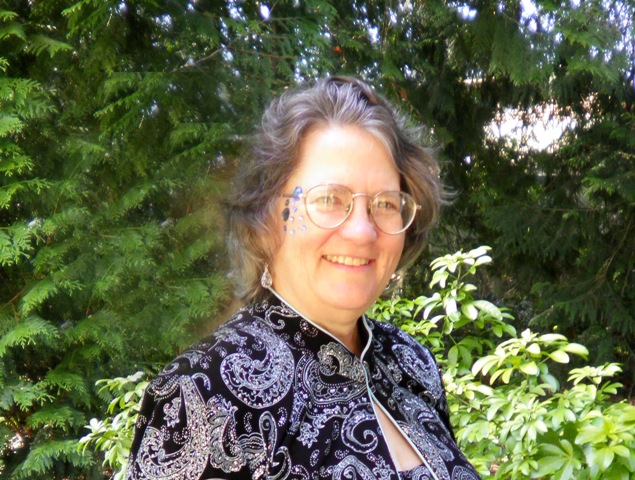
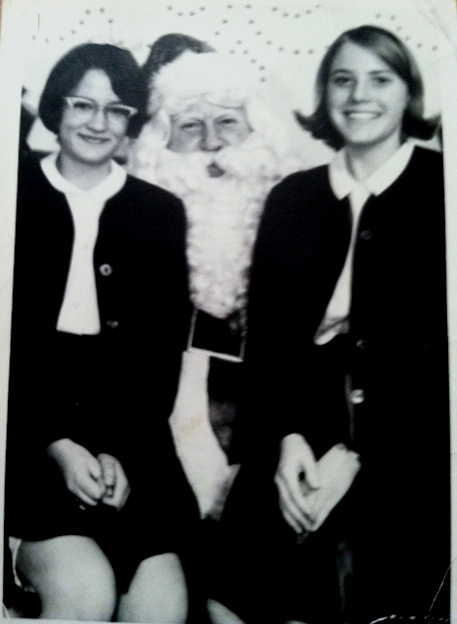
I’m on the left side of the photo

Things are settling down in my life and revving up all at once. My father finally was able to start his breathing treatments and now is more alert, has a bit more energy, and shows more interest in food, so we’re settling back into our quiet life without alarums and excursions. (Hospital excursions, that is.)

My headlong rush into life slowed this past year — I didn’t really do much to embrace life except yoga lessons for a while and walks in the desert. In an effort to revitalize my life, I promised myself to seek one hundred and one adventures, but the promise didn’t give me the push I expected because life got in the way of my embracing life. (I guess, though, as long as I am present even in the unsettling times, I am embracing life, which is an adventure in itself.)

But now I’m on track, at least for this month, with two great adventures planned. Tomorrow night or Thursday morning, depending on when she gets here, I will be meeting my best friend from high school for the first time in decades. The whirlwinds of life flung us in different directions, but now those same winds are bringing us back together. I doubt I will recognize her, but voices seem to be the last things to change, so I should at last recognize the sound of her voice. (Now that I think about it, it seems odd that we’ve only emailed sporadically this past year and never once talked on the phone, so I have an only an assumption that she still sounds the same.) After all this time, will we have anything to say to each other? Will we like each other, or will we take each other in aversion? It should be interesting to find out. (Besides . . . of course she’ll like me. What’s not to like, right?)

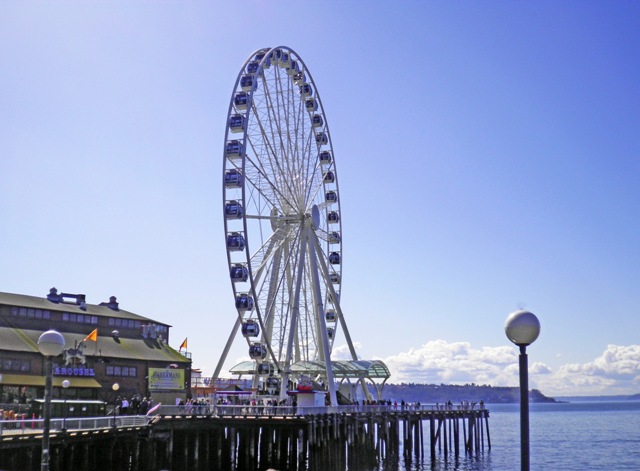
Then at the end of the month, I’m heading to Seattle for a gala weekend. My sister and brother-in-law are treating me to a showing of Shen Yun. 5,000 years of Chinese music and dancing, limousines, champagne, a wonderful dinner. Sounds like an adventure fit for Cinderella.

Even if rags and an out of season pumpkin are all that await me at the end of the Seattle trip, well, there is still a matter of the other 99 adventures I promised myself. I wonder what I will do next?

***

Pat Bertram is the author of the suspense novels Light Bringer, More Deaths Than One, A Spark of Heavenly Fire, and Daughter Am I. Bertram is also the author of Grief: The Great Yearning, “an exquisite book, wrenching to read, and at the same time full of profound truths.” Connect with Pat on Google+

A Palliative for the Brokenhearted

warriorThree years ago, a yoga teacher and fitness instructor living in Holland got tired of the cold, and so her husband put in a transfer to a warmer climate.

Three years ago, I was living a thousand miles away from the high desert in another state, watching my life mate/soul mate die.

Six months ago, that teacher’s life and mine crossed paths. A friend asked me to accompany her to an introductory therapy yoga class (a class geared toward each person’s abilities and disabilites), and there I met the woman from Holland, who was teaching the class. (She wasn’t from Holland originally. She was actually from California, but she’d living all over the world for the past two decades.)

At that yoga class, I began to come alive. Grief pulls you into yourself, huddling you against the pain, and the thrust of her classes was to open us up to the universe, to new experiences, and to ourselves. My friend dropped out after those introductory classes, but I was hooked. Coincidentally, all the women who remained in the class were in various stages of recovering from the deaths of their husbands, and we formed a bond with each other and with our globetrotting teacher. It was a rare and magical experience, the electric highlight of my week, but magic has a way of dissipating. The teacher was offered a wonderful job in another city that used all of her skills (and paid her a phenomenal amount of money), and she couldn’t turn it down.

Although I felt devastated when she made her announcement, I am trying to consider the ending of the class as a graduation. When a student is ready, a teacher appears, or so it said, and in my case it was true. So perhaps it is also true that when the student is ready, the teacher disappears. Perhaps I have learned from her what I need to know to continue on to the next stage of my life.

But this is all prelude to what I really want to talk about. Whenever I have mentioned how distressed I was at the loss of this class, the response has universally been, “Find another yoga class.” Ummm. Yeah. Find another confluence of people and events that come together from thousands of miles away to create a magical, electric, and life-affirming moment. Sure, I’ll get right on it.

This seems to be the response for every loss. Get a new class, a new life, a new soul mate. Is it really that easy for people to do? Or is it simply that it’s easy to say, a palliative for the brokenhearted?

I realize that soon I will need to find a new life, but as I’ve mentioned in a previous post, it’s not as if I can go to the mall and search the aisles at Lifes ‘R’ Us until I find a new life that fits properly and looks good. I’ve never really wanted anything or anyone, but out of the blue, my life mate/soul mate dropped into my life, bringing (for a while anyway) radiance and excitement, and then later companionship, but now that he’s out of my life, I’m back to not wanting anything. If I did want something, I’d go after it, but I don’t want what is out there to get. (Or maybe I mean I don’t want what I know is out there to get. For example, I’d never considered doing yoga, had no interest in it whatsoever, and yet out of the blue, the yoga teacher dropped into my life.)

Mostly I’m taking the need for a new life in stride. Whatever happens, happens. Wherever I go, there I go. It doesn’t seem to really matter — something will drop into my life or it won’t. Either way, I’ll deal with it.

The only thing I know (or rather, suspect) is that I will not remain here in the high desert. Because of the yoga teacher and her class, for the first time I’d been contemplating staying in the area so I could continue taking instruction from her, and her getting a new job seems to be a clear sign that my future doesn’t lie here. But then again, I don’t really believe in signs . . .

***

Pat Bertram is the author of the suspense novels Light Bringer, More Deaths Than One, A Spark of Heavenly Fire, and Daughter Am I. Bertram is also the author of Grief: The Great Yearning, “an exquisite book, wrenching to read, and at the same time full of profound truths.” Connect with Pat on Google+

Becoming the Vibrant Person You Will Remember Being

I woke feeling tired today. Even though I would just as soon have lounged around all morning doing nothing, I got dressed, took a walk, and now I’ve turned on the computer to work on this blog post. After having watched my life mate/soul mate push through the impossible exhaustion of dying from cancer in order to do something, anything each day and now watching my father dealing with the infirmities of old age, including being unutterably weary all the time, I understand the truth. No matter how tired I feel today, in twenty years, I will look back on this time in my life as one of strength and vibrancy, and in thirty years, I will look back at this time as one of incredible youthfulness.

As I mentioned in a previous post, current research by Harvard psychologist Daniel Gilbert shows that while we can see how much we have changed in the past, we never think we will change in future. But this isn’t always true. There does come a time when we know that our advancing years will bring many changes. We know we will not always be feeling the way we do today.

Someone who is dealing with an enervating illness or the weariness of old age, for example, will no longer have an interest in physical activities such as bungee jumping. (Of course, it won’t take old age to rid me of such interests since I don’t have any to begin with. Even if I wanted to participate in such daredevilish activities, my body has a strong sense of self-preservation that simply would not let me step into nothingness.)

Dwelling on the future is as futile as dwelling on the past and brings about as much satisfaction — none. And even if you know what changes will be coming, they probably will not be exactly as you imagined (and maybe you won’t be exactly as you imagined, either), so there is no point in thinking about it. But. . . being aware of a future where you will look back on the person you are today as one who is vibrant and youthful has its advantages. It allows you to do what you want to (or need to) despite your tiredness, and in so doing, become the vibrant person the future you will remember being.

***

Pat Bertram is the author of the suspense novels Light Bringer, More Deaths Than One, A Spark of Heavenly Fire, and Daughter Am I. Bertram is also the author of Grief: The Great Yearning, “an exquisite book, wrenching to read, and at the same time full of profound truths.” Connect with Pat on Google+

The Dower House of Grief

floozyWhile doing a word puzzle, I came across the clue “widow,” which gave me pause since I couldn’t think of anything that means the same as widow, but then it came to me: dowager.  According to the dictionary, “Dowager” can apply to any elderly widow who behaves with dignity, though generally the word is used in historical, monarchical, and aristocratic contexts.

In previous eras, when an estate owner died and a married son took over the estates, the widow was often moved out of the principal family house and relegated to a dower house, a separate abode on the estate. If the heir wasn’t married, the dowager sometimes stayed in the main house until he got married, and then she was shunted off to the dower house, leaving the new bride as mistress of the family home.

Many of us today who have lost our mates have also been shunted off to a dower house of sorts. Without a husband or young children still living at home, we are often relegated to taking care of our elderly parents. Or, almost as frequently in these uncertain financial times, a daughter with a new baby moves in with us. This seems to be the “dower house” of grief, a way for us to still be part of the world, to still be useful, though we are no longer in our primary life of having our mates to care for and love.

Unlike the dowagers of old, the exile in our dower house of grief will come to an end, and then what? Most of us long for freedom and the resources to enjoy it. As one bereft friend says, “We need adventure and excitement and something different. A change of scenery, throwing caution to the wind or anything to get us “out of the parking lot” of our lives (which a friend claimed I’m stuck in).”

Maybe what we need is to embrace dowagerhood. Despite the definition of dowager as an elderly widow who behaves with dignity, I always had the impression of a dowager as a not-so-old, imperious and outspoken woman in outrageous hats, who sailed through life like an icebreaker, pushing ahead regardless of whatever obstacles floated in her path.

Sounds good to me. Meantime, I’ll go for a walk in the desert. That’s about the only adventure I get nowadays, and it’s better than sitting here coming up with (and mixing) metaphors for my life.

***

Pat Bertram is the author of the suspense novels Light Bringer, More Deaths Than One, A Spark of Heavenly Fire, and Daughter Am I. Bertram is also the author of Grief: The Great Yearning, “an exquisite book, wrenching to read, and at the same time full of profound truths.” Connect with Pat on Google+

Finding a New Life that Fits Properly and Looks Good

dancingIn a conversation with a friend about my father, who is still going strong at 96, I said, “I take after my mother, which is good because there is no way I want to live to such an advanced age, particularly since I won’t have a widowed daughter to come stay with me. It’s kind of spooky thinking of having to grow old alone.”

She said, “You never know what will happen. Maybe a new love will drop into your life. I can imagine you at some writer’s festival and a distinguished stud with salt and pepper hair and a sweet smile flirts with you. He asks for your number and the next thing the rest of us know, Pat’s out dancing and dining every Saturday night and she’s suddenly submitting romance novels for publication…”

I laughed. “I love the ‘sweet smile’ part. Who knows, with or without a stud, I might go out dancing every Saturday night. I desperately need a new life.”

She responded, “I think you need a new life too. I’m afraid you’re just wilting away. So — how do you get a new life? What do you want your new life to be?”

And that’s where the conversation stalled. How do you get a new life? It’s not as if you can go to the mall and search the aisles at Lifes ‘R’ Us until you find a new life that fits properly and looks good. (Though that does sound like an interesting concept.)

What-we-can-become is dependent on whether what-we-are is an integral part of our genetics, keeping us always “us,” or if we are infinitely mutable and can become whatever we wish to be despite our inborn proclivities. In other words, can we really get a new life or are we always “us”?

For me to go out dancing every Saturday night, I’d need a personality transplant. I’ve always been drawn to quiet activities, such as dinner and conversation that dances from one topic to another. If somehow I did overcome my natural inclination for such sedentary pursuits, where would I go dancing? I’m too old for nightclubs and too young for senior citizens groups.

Still, I will need a new life of some sort. My father will not live forever, and I will need to decide where to go and what to do. And the truth is, I haven’t a clue.

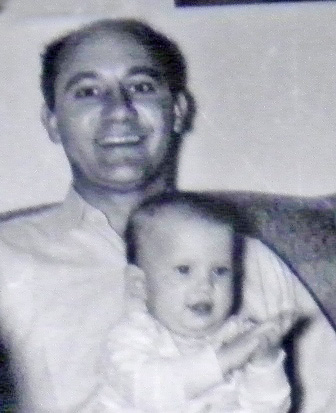
Current research by Harvard psychologist Daniel Gilbert shows that while we can see how much we have changed in the past, we never think we will change in future. (Hence that ill-advised tattoo you got when you were young and now wonder what you were thinking.) But this isn’t always true. I know how much I have changed in the past. I have a photo of me as a baby, and I can see the vast changes between me and that poor befuddled creature. I can also see how different I am today from what I was four years ago when I watched my life mate/soul mate’s slow descent into death, and I can see how different I am from what I was almost three years ago when grief catapulted me out of that shared life into a new one. I can extrapolate from those experiences of change that I will also drastically change in the future.

I always feel the same, of course. — just me. (There must be some sort of mechanism, like an internal gyroscope, that keeps us “us” no matter how we change.)

The point is that I cannot figure out now what I want my life to be when I am free to pursue that life because I don’t know who or what I will be at the time. Maybe by then, I’ll miraculously have developed grace and style, and will have become a dancing queen. Or not.

***

Pat Bertram is the author of the suspense novels Light Bringer, More Deaths Than One, A Spark of Heavenly Fire, and Daughter Am I. Bertram is also the author of Grief: The Great Yearning, “an exquisite book, wrenching to read, and at the same time full of profound truths.” Connect with Pat on Google+

Thirty-Four Months of Grief

desert roadThirty-four months ago today, my life mate/soul mate died of inoperable kidney cancer. For thirty-four months now, I have been posting updates on my progress through grief, and that astounds me. Thirty-four months? How is that possible? Written out, it seems such a short time for him to have been gone, and yet it feels immeasurably vast — so many minutes, hours, days, weeks, months, and now years, spent trying to come to grips with what happened to us. For most of our lives we were connected by some mystical bond, a cosmic twinning, that kept us together even when times were rough. And then suddenly, in a single breath, that connection was broken. I am here, alone, and he is . . . well, I don’t know where he is or even if he is.

I never had survivor’s guilt for the simple reason that I wasn’t sure which of us got the worst end of the deal, but I have felt uncomfortable going on without him, as if somehow I were being disloyal. We helped fight each other’s battles, sticking up for each other, caring for each other, waiting for whichever of us happened to be lagging behind, always taking the other into consideration, and it feels as if I should still be doing so. But he is beyond my reach, beyond my care, beyond my consideration.

I have come to see that continuing the disconnect that began with his descent into death is one of the tasks of my grief. (Grief seems to be not so much about passing through stages, but more about completing tasks, such as processing the loss and learning to live again.) Until I understand within my depths that for all practical (earthly) purposes we are not one, I will never be able to embrace fully what life has in store for me. We are separate persons, each with our own experiences, our own journey, and our own destination. For a while, our paths crossed, but now, I have to continue as me, alone. No matter what I do, or think or feel, it cannot change the past. No matter how much I hate that he is dead, no matter how much I rail against the unfairness, no matter how much I miss him or wish desperately for one more word or smile, he is no longer in my life.

For most of those thirty-four months, this disconnect has seemed an impossible task, but there is a bit of light illuminating my path. Last week, when I went to my Yoga class, they asked how I was, and I said, without thinking, “I’m doing great.” It stunned me to hear those words come out of my mouth, because for more than five years, during the last of his dying and these many months of grief, I have had times of feeling okay, and I thought that was the best I could do. But at that moment, I did feel great. It didn’t last long, only about an hour before I began sliding into sadness again, but that hour stands as a beacon for what might be.

Up until that class, this year has been one of increased sorrow and tears, and such grief upsurges often precede or follow a deeper level of acceptance. It’s not so much that I am learning to accept his death — I accepted the truth of it from the beginning, though I hate it and will never be able to comprehend it — but I am learning to accept that I am alive, and that is a much harder thing to accept.

***

Pat Bertram is the author of the suspense novels Light Bringer, More Deaths Than One, A Spark of Heavenly Fire, and Daughter Am I. Bertram is also the author of Grief: The Great Yearning, “an exquisite book, wrenching to read, and at the same time full of profound truths.” All Bertram’s books are published by Second Wind Publishing. Connect with Pat on Google+

Being Real Online: The Truth of Me

shadowIn a recent blog interview, someone asked me what I would do differently if I were invisible for a day, and I responded that for all practical purposes I am invisible. “Practical purposes” meaning “offline.” Some people responded that I was very visible, and they are right. I am visible online, but they (and you) don’t know if I’m visible offline, so basically, nothing would change if I were. I’d still be the same person — whoever that is.

I started out online with a certain persona — not fake exactly, but not entirely me. More of a slightly idealized version of me. The odd thing is that over the years, I have grown into that persona, so I don’t know which is the real me any more, but I think the fake one is the real one.

There’s been a lot of talk online lately about the truth of what we hear and see on the Internet, mostly because of Manti Te’o’s story. To be honest, I haven’t a clue he is or what is story is, but it did make me wonder if the people I meet are real.

I tend to take people at face value online, even though I suspect some of them are not who they say they are. For example, there are a few authors portraying themselves as hulking men with biceps and tattoos that I suspect are really women who are using not only pseudonymous names but also pseudonymous personas, but it doesn’t matter as long as they add a bit of color to otherwise staid discussions. And if they really are those men, that doesn’t that matter, either.

If the people who comment frequently on this blog — the ones I have come to think of as online friends — turn out to be not who they say they are, it wouldn’t change anything. Their insights add depth to the conversation and make me think. That is real even if they are not. But I would be willing to bet they are exactly as they seem.

I have met several people offline that I first became friends with online, and they were who and what I expected. In most cases, there wasn’t even a moment of uncomfortableness — we just continued our online relationship offline.

Of course, online we talked about books and writing, ideas and dreams, and that is hard to fake. I mean, if you don’t have ideas it’s hard to pretend that you do, or if you haven’t read books, it’s hard to make an intelligent remark about literary matters.

Maybe the point is that online we are who we say we are. Offline, we get so used to being what we’re not so that we don’t get in fights or so people don’t get angry with us or to get our way or so we can get a promotion or for any number of reasons, but online, what we are really doing is stream-of-consciousness writing, and that taps into the inner us.

If we are creatures made of stardust and electrons, if all our thoughts are particle waves or energy or whatever, maybe it’s easier to plug in to the essential spirit of people online since the Internet is an electronic medium. Online, you get a feel for people, for who they really are, not how they look or what they do for a living. Online, you’re not obese or crippled or ugly. Online, you don’t repel people with your awful smell or your terrible disease. Online, you’re just you.

Sometimes people take the freedom of the internet too far and, hiding behind fake personas, spew invective at the world. But that is true, too. It’s who they are. It’s the real people who are bogus, pretending to be affable when in fact, they are filled with anger and hate.

Are you wondering if I am real? You already know the answer. Whether I’m visible or invisible, fake or real, it’s my words that matter. My words tell you the truth of me.

***

Pat Bertram is the author of the suspense novels Light Bringer, More Deaths Than One, A Spark of Heavenly Fire, and Daughter Am I. Bertram is also the author of Grief: The Great Yearning, “an exquisite book, wrenching to read, and at the same time full of profound truths.” All Bertram’s books are published by Second Wind Publishing. Connect with Pat on Google+