What Makes Me Nervous

Daily writing prompt
What makes you nervous?

Appliances make me nervous. Not operating them. Not even so much the thought of their breaking down. But what comes after when they do malfunction.

I try not to worry, and mostly it’s easy. I just turn my thoughts in another direction. But when a particular appliance makes an unfamiliar noise or what sounds like it could be a vibration, then I go on alert.

My washing machine needs new rods or new bearings because unless the load is small and perfectly balanced, sometime during one of the final spins, it shakes and rattles so hard that it makes me very nervous. I’ll get a new machine soon because there’s no one around here that I know of who fixes washing machines (the one repair service in the next town over has never returned my calls). That’s what really worries me — having to deal with a machine that suddenly stops working with my wet apparel locked inside. Even worse is the thought of having to deal with all that buying a new washing machine entails, and all the decisions that have to be made until everything is settled down once again.

In rereading what I wrote above, I noticed that I used the words “worry” and “nervous” interchangeably, so I checked online to see what the difference is. Apparently, worry is long term, is mostly in the mind, and often centers on specific future scenarios. Nervousness is short term, primarily physical, and often centers on an immediate or unfamiliar situation.

So I suppose what it comes down to in my appliance scenario is that I am worried about being nervous about dealing with breakdown issues.

What does unequivocally make me nervous are appointments. I don’t care how important or trivial those appointments might be, I always find myself getting nervous. I suppose the nervousness comes not just from worrying about a perhaps negative outcome of the appointment, such as a dental visit or a DMV appointment to get my license renewed, but it’s also because of someone else being in control of the situation. I am lucky to be pretty much in control of my life. Admittedly, I have a self-restricted life — I don’t go out much, don’t party or “have fun” (whatever that is). I do simply things, try to be mindful of dangers that come with letting my thoughts wander, and generally take as good a care as possible of myself and my house and property. I am pretty much in control, barring accidents and appliances breaking down, so it makes sense that I’m nervous when I have to deal with an appointment where suddenly, I am not in control. Someone else temporarily gets to have a say in my life. So far, those “say”s have worked out, but that’s not always the case.

Oddly, the one appointment that did have a negative impact wasn’t even my appointment, but a friend’s. I’d accompanied her to the eye doctor, and while waiting for her, a woman sat next to me and began to chat with me. That wasn’t too much of a problem until she started coughing. Then she admitted she’d just come from her medical doctor and had been diagnosed with bronchitis, but that she wasn’t infectious anymore.

I moved away from her, of course, but it was too late. I’m still dealing with the lingering result of her uninfectious bronchitis.

It might seem as if my life is fraught with worry and nervousness, but the truth is, I am almost always focused on the moment, which brings, if not serenity, at least calm and a modicum of contentment.

Wishing the same for you!

***

Pat Bertram is the author of Grief: The Inside Story – A Guide to Surviving the Loss of a Loved One.

Creating Favorite Holidays

Daily writing prompt
What is your favorite holiday? Why is it your favorite?

My favorite holidays are the ones I created or created with the help of a friend. When I was young, I lived in Denver, not far from City Park where an ancient elm resided. A plaque beneath the tree said “Shakespeare Elm: The scion from which this tree was grown was taken from the tree at Shakespeare’s grave at Stratford-on-Avon.” The plaque also noted that the tree was planted on April 23, 1916, which is exactly 300 years after Shakespeare’s birthday — April 23, 1616. (And exactly 110 years before today —April 23, 2026, hence this post.)

How could such a momentous occasion not be celebrated? Many years ago — decades ago! — a friend and I baked elm tree cookies, made a “pin the leaf on the tree” game, stirred up gallons of green punch, even baked a tree shaped cake with candles. We sent hundreds of invitations to friends, family, Denver notables, the media, but on April 23, only family and friends showed up. And two cops.

The cops stood apart from all of us, though they did nibble on cookies and take tentative sips of punch. At one point, one of the cops turned to the other and said in amazement, “They really are having a birthday party for this tree.” Apparently, they had been dispatched to the site in case we were staging a drug rendezvous or some such. As it turns out, it was lucky that no one showed up. Since it ended up being simply a family picnic, we weren’t fined for putting on a public event without a license. Whew!

In honor of that tree and that friendship, I celebrate April 23 every year, if only with a nod to the past and a text to my friend.

I used to celebrate the birthday of “Pat Bertram,” the day I signed up for the internet and started a new life with a new name (Pat Bertram is my pseudonym, though it is a form of my offline name). Somewhere along the way I stopped celebrating, perhaps because that online persona gradually morphed into my offline persona. Still, next year will be the 20th birthday of that Pat, and it should be — will be — celebrated.

I never forget to celebrate the first day of winter. I call it the End of the Creeping Darkness because the nights stop growing shorter and light gradually begins returning to the world. Truly something to celebrate!

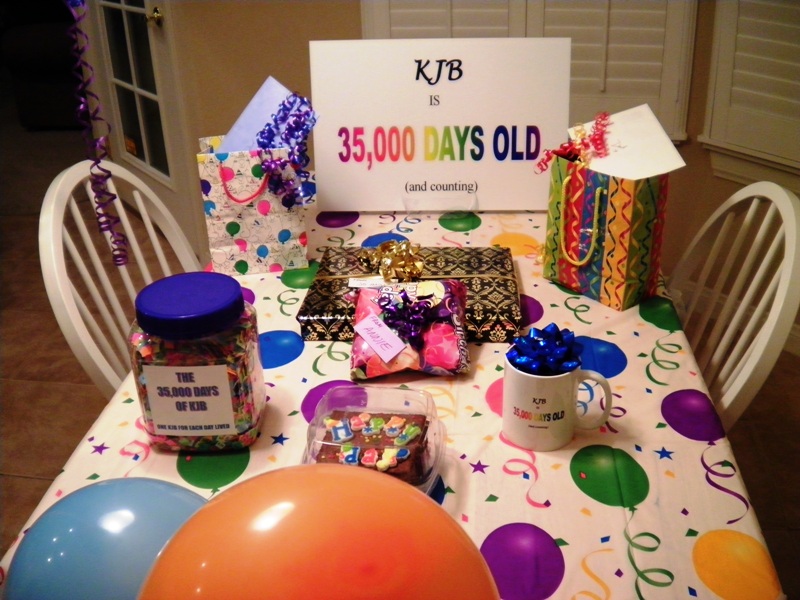
Perhaps my favorite holiday was one that could come only once in a lifetime — the day my father turned 35,000 days old. Of course, I had a party for him; how could I not!

And this isn’t the end, of course. There are always holidays to celebrate or create.

Until then, happy birthday, Shakespeare’s Elm!

Since I don’t have a picture of that Elm party, I’m attaching a photo of my father’s party.

***

Pat Bertram is the author of Grief: The Inside Story – A Guide to Surviving the Loss of a Loved One.

Cross Country Risks

Yesterday I wrote about my cross-country trip. As important as that journey was to me, I’ll ever do anything like that again, not just because my car and I are ten years older, but because risks I took back then could now land me in jail. Well, one particular risk could.

When Jeff and I traveled together and stopped at a truck stop to fill the car and unfill us, we found the difference in the use of male and female restrooms to be staggering. In a lot of cases, both had a single stall, which didn’t take in the reality that women needed longer in the little room. Or perhaps there were more women needing them. Whatever the reason, there were always long lines of women waiting their turn and generally no men. So one day, Jeff suggested I use the men’s room while he stood guard. I was in and out quickly, and despite my nervousness at having done something wrong, it all worked out. The women I passed on my way out, looked at me, looked at each other, looked at the men’s restroom, and suddenly there were two lines of women waiting for both restrooms.

When I traveled alone after he was gone, I continued to sail past long lines of women if there were no men waiting, and head directly to the men’s room. I figured that even if someone noticed, they would prefer my misuse of the restrooms to a puddle on the floor for them to clean up.

There was only one time that I met a man as I was coming out of the room, so I looked back at the designation on the door, shrugged sheepishly, and said, “Sorry.” (Occasionally, it truly was a mistake. When people got too cute about the male and female signs, sometimes it was hard to figure out which was which.)

What once could have gotten me a nasty look now could get me arrested.

When the debate about who can use what restroom started, I thought about those single side-by-side rooms and wondered why men would want to use the women’s restroom. Obviously, they never traveled much because who would want to wait in a long line of jittering women desperate to go when there was a perfectly usable room right next door. (Besides, the solution in those cases was easy — change the signs so that anyone could use either.) Admittedly, there were often several stalls in some restrooms, but there weren’t long lines at those stops, so it wasn’t an issue for me, though I can see where it would be an issue for others. New laws in some states now demand you use the restroom that matches your biological gender, and of all the risks I imagined while traveling, I’d never once considered having to stand before a judge and admit guilty to an overfull bladder.

Hmmm. Do I really want to post this? It’s not something I’ve ever talked about with anyone, and in fact, it’s a bit embarrassing, but what the heck. It’s not the most embarrassing thing I’ve ever posted, or the worst thing I’ve ever admitted, but at least the picture of my garden is pretty.

***

Pat Bertram is the author of Grief: The Inside Story – A Guide to Surviving the Loss of a Loved One.

In Ten Years

Daily writing prompt
Where do you see yourself in 10 years?

Where do I see myself in ten years? Alive. I hope.

My mother died at the age I will be in ten years, as did her mother, which makes me wonder if that’s an age written in my genes. My father’s family was long-lived, so that might be a mitigating factor, but I take after my mother more than I do him, so we’ll see. Of course, life might have other plans for me, so that ten years might not be a given. Still, I have what I always have . . . today.

Oddly, we don’t seem to be able to project the view of ourselves into an aged, weakened state, so the way I truly see myself in ten years is mostly the way I am today: knees that don’t always cooperate as well as they did when I was younger, foods that don’t always agree with me, but for the most part, my body works well. My mind, too, works well (at least as well as anyone can judge their own mental workings).

I see myself still living alone, still working in my garden, still grateful for my house, and still grateful for my life.

I can only hope that I really will be as I see that self. I’m to the age where the body doesn’t recuperate as well as it once did, and so minor ills will tend to add up to an eventual fragility, but I can’t “see” that. I suppose it’s a good thing we can’t even imagine what we will feel like and what we will be like when we are very old — it would make life feel . . . frantic, maybe, as we try to fit in everything we want to do before that decline. Or perhaps it would make life feel defeating as we try to overcome thoughts of our end.

So, unless there’s a blog prompt asking me where I see myself in ten years, the overriding factor is that I can’t see myself that far in the future. I don’t even bother to try.

I’m just glad I can see myself here today.

***

Pat Bertram is the author of Grief: The Inside Story – A Guide to Surviving the Loss of a Loved One.
Being Silly

Daily writing prompt
Describe something you learned in high school.

In high school, specifically the first couple of years, I learned to be silly. I’d always been serious, spending whatever time I could manage with a book, but then things changed. I changed.

I went to a high school where I knew only a couple of people, and we were in different classes, so I no longer carried the burden of eight years of being a social outcast. It was freeing, to say the least.

One friend I made seemed to bring out the silly in me. Our high school had a long, straight hand rail on the steps leading to the building, and one day we decided to slide down the banister. Unfortunately, it wasn’t slick enough. So the next day we brought some wax paper, which brings me to another thing I learned in high school — wax paper is a good polisher. After we polished that railing, we went sailing! I don’t remember if we got in trouble or not, but I vaguely remember a disapproving frown or two.

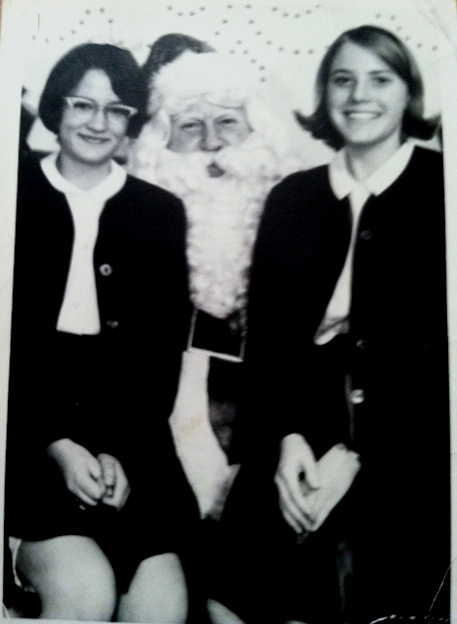
When Christmas came around, we got our photos taken with a department store Santa. I remember giggling about that, and even today, it brings a smile to my face.

She and I often talked about what we would do when we were grown up, and we thought that it would be fun to open a restaurant in Georgetown and sell things like Alferd Packer pancakes and Democratic sausages. That, too, makes me smile.

I managed to be silly on my own for a while after high school. One of my first jobs was at a fabric store. We got in a collection of appliques, and one of a smiling frog tickled me, so I bought it and pinned it on my dress. I wore that frog every day until I stuck myself with the pin. When people asked why I stopped wearing it, I told them that it bit me. I thought it was funny, but my boss didn’t. She thought I was crazy as in certifiably insane, but luckily, I managed to keep my job when I finally convinced her I was just playing and that I didn’t think the silly frog was real.

Like most lessons I learned in high school, I eventually forgot what I learned. Or maybe too many people like that boss helped quash the impulse, and I again became the serious person I was as a child. Occasionally I consider doing something silly, but it just seems too . . . silly. And anyway, being silly by oneself is no fun, to say nothing of the energy it takes.

***

Pat Bertram is the author of Grief: The Inside Story – A Guide to Surviving the Loss of a Loved One.

We Are Who We Are

Daily writing prompt
If you could be a character from a book or film, who would you be? Why?

If I could be a character from a book? That’s not a hard question for me because I am already a character in a book: Madame ZeeZee’s Nightmare, a novel about a murder that took place in a dance class. Sure, I wrote the book, but I am still a character in the story — the narrator, the one who set the murder in motion, the one who found out who the murderer was, the one who persevered while dealing with her own issues. And one of the dancers!

I discovered something interesting while writing that book — it’s much easier to write a novel when you’re the protagonist rather than making up a person to fill the role. I never had to figure out what the character thought — I knew exactly what she was thinking. I never had to create special internal conflicts for her because I have them galore. I never had to figure out her flaws because — well, I don’t have any flaws.

That started out as a joke, but it’s the truth. I don’t have flaws: I have personality traits and character traits that might not be the most admirable, but they are not “flaws.” They are part of what constitutes . . . me.

It’s why I hate the whole “flawed character” story structure. Authors don’t need to create explicit flaws for their characters. If the characters are real, they have traits that make up their personas. So what if they’re prideful or refuse to see anyone else’s point of view even to their own detriment? Those are still not flaws — they are intrinsic parts of who the characters are. They are what makes the characters come alive. If a peculiarity or failing is a part of the character, it can’t be a flaw because a flaw is a defect or a mistake or an imperfection, and since the traits an author gives a character are purposeful, they aren’t mistakes. And if the trait makes the character perfect for their role, then it can’t be an imperfection. Besides, who has the right to say that a certain trait is a defect? One person’s defect could be another person’s hard won survival mechanism.

As you can see, I take issue with that whole “flawed character” thing.

Luckily, I am not a flawed character! (Neither are you, if the truth be told. We are who we are.)

If I weren’t already a character in a book, who would I be? I wouldn’t. I have a hard enough time imagining me as me; imagining me as someone else would take more brainpower than I have at my disposal.

***

Pat Bertram is the author of Grief: The Inside Story – A Guide to Surviving the Loss of a Loved One.

A Day of Pointless Foolery

I’ve never been a fan of practical jokes. Not the crude ones like whoopie cushions. Not the mean ones like switching sugar and salt. Not the cruel ones like sending someone a fake love letter purporting to be from a person they’ve admired from afar. Not the disastrous ones like telling someone you were dying. And especially not the elaborate ones where the poor pranked person hadn’t a clue.

There was once a television show where the hosts played practical jokes on people. In one episode, a well-known actor had been wined and dined extensively by industry bigwigs as a prelude to his getting some important acting job. He played it cool, not getting excited, just accepting the scenario as possible since there was nothing out of the ordinary about the situation. At the end, when they told him it was all a joke, for a moment there was a blank look on his face, not embarrassment — just blank. As if the whole thing had been totally pointless, which such pranks are.

When I was growing up, we didn’t have a television because my father didn’t want us to be like everyone else, nor would he let us listen to the popular radio stations. Since I was naïve and out of the mainstream, kids often picked on me. One day, I got to school and found chalk hearts all over the playground with PB + EP inside. I couldn’t figure out what EP stood for since there was no one in the school with those initials, and no one would tell me what they meant. They laughed, thinking the whole thing hilarious. I don’t know how many days they strung out the joke until someone finally told me EP stood for Elvis Presley. I just stared at them, totally at a loss since I’d never heard of him. (Yep, I was that culturally isolated.) I still don’t understand the point of that incident; it just seems so utterly bizarre.

Today is April Fools’ Day, though in my world, it’s not something I ever bother to “celebrate” except in the way I celebrate anything — by learning about it.

Our April Fools’ Day probably came from a combination of two different historical events. The Romans held a Hilaria Festival on March 25, celebrating with masks, jokes, games, parades, the first day of the year where daylight was longer than the dark. Also, until 1582, people used a Julian Calendar, where the first day of the year was April 1. When they switched to the Gregorian Calendar, some people didn’t know that the first day of the year had been changed to January 1 and so continued to celebrate on April 1. They were considered fools, fair game for the pranks more enlightened folk played on them. Yeah, fun.

The only time I have ever been a “good sport” about a practical joke is when someone said something outrageous, then immediately admitted they were just joking. Anything longer is just . . . well, it’s just cruel. For the rest, being a good sport seems to mean that anyone can do anything to you and you’re supposed to take it with a smile, and that’s something I can’t do since it gives tacit approval to unkindness. Luckily, I’m old enough not to care what sort of sport people think I am and so can stop pretending that meanness is fun.

So, whatever the general meaning of this day, to me it only means staying inside by myself until the pointless foolery is done.


***

Pat Bertram is the author of Grief: The Inside Story – A Guide to Surviving the Loss of a Loved One.

Reading the Books I Wrote

I’m continuing to read my books. Not the books in my personal library (which consists of a single bookcase) but the books I wrote.

It’s funny to think that this is most I have enjoyed reading in years. Even though I read and wrote about the Wheel of Time book series, I’m not sure I actually enjoyed reading the books. It was more of a puzzle for me, a game, a thing to study and to learn from, a way to pass the time.

But my novels? Pure enjoyment! Admittedly, since I was the one who wrote the books, they probably find an echo in my psyche even though what I remember barely qualifies as an elevator pitch (a one or two sentence synopsis). But I don’t know if that matters. It feels as if I am coming to them fresh, not as if I wrote them, not as if I’d read them years ago, but as if I’d vaguely heard of them once upon a time.

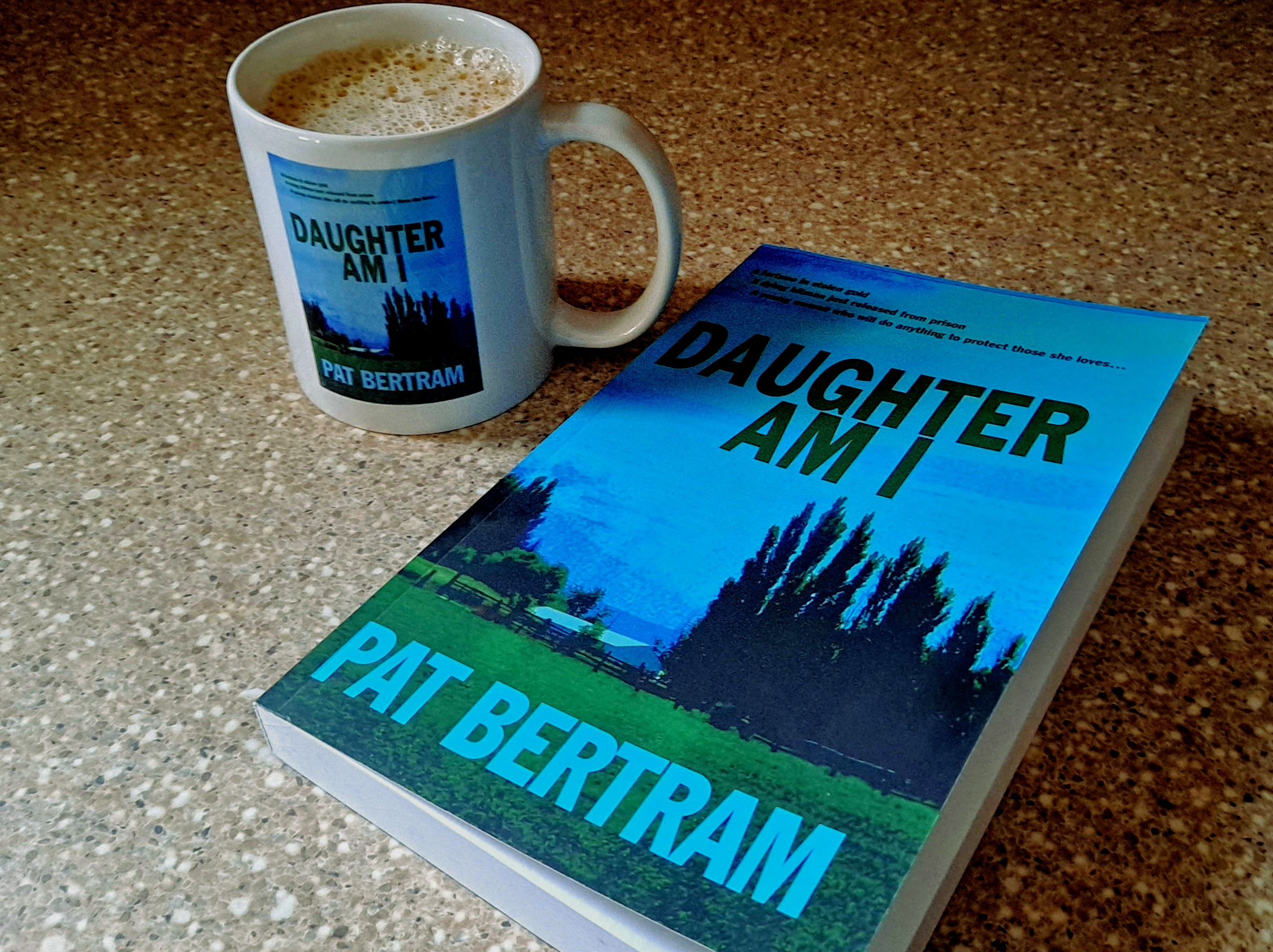
I’m working backwards. I started with the most recently published novel, Bob, The Right Hand of God, and am now reading Daughter Am I. There are only two more books for me to read — the first two I wrote — and I’m already feeling the loss. I was used to having nothing to read that I truly enjoyed — I just read for no other reason than to read — but already I have become addicted to the surprises inherent in my books.

The biggest surprise, of course, is how thoroughly I have forgotten these books. Odd, but true. The next biggest surprise is that I really do know how to write and know how to tell a story. I have no idea why I’d begun devaluing my writing ability over the years, unless it’s because of that non-selling thing. Still, other obscure writers manage to hold onto the idea of their own worth, so it’s good to at least get that feeling back. I do understand to an extent why the books languish. There’s nothing shocking, such as with the Shades of Grey franchise, to catapult them into fame. There’s no horde of people looking to read anything new in their preferred genre, such as with the Wheel of Time readers, because my books have no distinctive genre. And none of my characters are ever despicable enough to command bestselling attention. They are kind folk who are nice to each other. The stories are never about their interpersonal conflicts, but their joint conflict with an outside antagonist, who generally isn’t all that despicable, either.

Whether other people will ever come to like my books, it’s enough that I do. The stories are fun with plenty of twists and turns. Just when I think I know where the stories are going, they head in a different direction. And the endings have all come as a total surprise to me. Not just the ending, but the twist that comes after I thought it was all over.

Now that the shock of how much I enjoy reading my novels has passed, I find myself second guessing what I am reading. In Daughter Am I, is there too much story telling going on? The old gangsters that the hero Mary has managed to gather around her love talking about the old days, and one long-winded fellow named Teach lives up to his name and has tendencies to lecture. But is that a drawback or a necessary part of Mary learning who she is and where she came from? I don’t know. Luckily, the book is finished. Published. And all that’s left for me to do is what I did with the others — simply sit back and enjoy the ride.

And what a ride! At its most basic, Daughter Am I is a modern version of the Hero’s journey. The hero, Mary, goes on a dangerous journey to learn about her recently murdered grandparents. Instead of wizards and other magical folk, her mentors and allies are six old rogues (gangsters and con men in their eighties) and one used-to-be nightclub dancer. By journey’s end, all their lives have been transformed. For a more detailed description of the quest, click here: Daughter Am I and The Hero’s Journey | Bertram’s Blog.

***

Pat Bertram is the author of Grief: The Inside Story – A Guide to Surviving the Loss of a Loved One.

A Very Readable Hoot

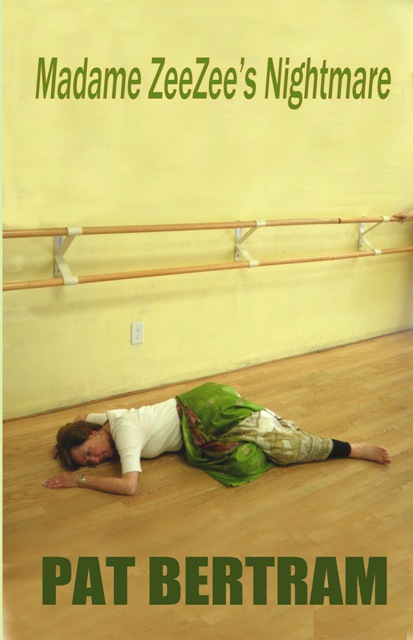
Before I moved back to Colorado, I was living in California and taking dance classes. When one classmate discovered I was a writer, she suggested I write a murder mystery about our class, and she volunteered to be the victim. I wasn’t sure I wanted to kill off someone I knew — words have power, and I didn’t want to unleash that power on even a suspecting victim. Despite my misgivings, I started to follow through, going so far as to take a photo of our lovely victim for the cover of the book. I’d expected to have to take several shots to get the pose I wanted, but she sank to the wooden floor as gracefully as she did everything else, and lay in the ideal pose. Right then I knew I could kill her. She was just too damn perfect.

After a lot of procrastination, I did end up writing the book, though funnily enough, after it was published, she asked “Why did I have to be the victim?”

Another member of the class belonged to a book club, and when it was her turn to choose the book, she chose the book I’d written, Madame ZeeZee’s Nightmare, and invited me to join them for the discussion. I agreed because I thought it might be fun, but when I arrived, I found out that the discussion was to be cut short because of a baby shower as well as a birthday party. They weren’t all that interested in discussing the book, anyway. Nor were they interested in anything I had to say. The only person who actually addressed me asked accusingly if I’d been my own editor. I mentioned that I had several copy editors, and she just made a rude noise and said we’d all done a lousy job because there were more typos than she could count. I did ask her to point them out, but she ignored me. So I thanked them graciously and left.

I’d had a lot of problems with my publisher during the publication process — he insisted on editing the book but ended up making many mistakes. After several heated discussions, he finally agreed to submit the manuscript as I had formatted it, but I had no idea if he had followed through, though when I got the final proof, it seemed okay.

As I’ve mentioned in the previous couple of posts, I’ve been reading my books, though always with a bit of apprehension. This one most of all since I didn’t want to face the “more typos that she could count.”

I also worried that since it was more or less a novelty book, it would seem silly or lacking any depth. But I shouldn’t have worried. After all, it is a “Pat Bertram book.”

As with the other of my books that I recently read, I was astonished by how good the writing was and by how much I liked the book. Except for the brief synopsis, I had completely forgotten the story. I hadn’t even remembered who did the deed, and wow! The ending really blew me away.

I was especially delighted by the sly mention of mystery genre tropes. For example:

The first thing you learn when you set out to write a novel is that you need a strong protagonist. No ditherers. No brooders. And I am both.

And:

I climbed into my ancient VW bug (no, I am not plagiarizing a well-known fictional detective, I really do own such a car—bought it new when I was young and never got another auto) and drove to the gas station.

And:

Like a fool in a bad drama, I stared at my phone. Huh? She expects me to drop everything and drive over there so she can tell me something she could just as easily have told me over the phone? With a shudder, I realized what had just happened. The worst cliché of all. So often in mysteries, someone makes such a call, and when the recipient arrives at the rendezvous, they find the person dead.

And:

In every mystery story, it seems, there comes a time when the author wants a way to present insights, needs to show state of mind, or simply gets bored with a straightforward narrative and plays at being creative, so the storyteller recounts a dream. Since I hate dreams, my own included, I usually skip those parts of a book, so I won’t bore you with the details of my dream.

There isn’t a lot of action in the book, it’s more of a psychological mystery, but it’s a fun story within a story — a writer writes a story about a fictional writer writing a story showing how life follows fiction.

As reviewer Malcolm Campbell wrote, Madame ZeeZee’s Nightmare is “a very readable hoot. In this dandy mystery, everyone has a secret, a reason for covering it up, and a possible motive. The characters are well developed, the introspective protagonist wonders if she inadvertently set the stage for a murder by agreeing to write a murder mystery based on the dance class, and the cops tell her that in real life, most amateur sleuths end up dead or worse. Readers who love mysteries will enjoy this book. Writers who write mysteries will consider being more careful when pretending to kill off their friends in a novel. And those who’ve been thinking of taking a dance class will see the story as a cautionary tale.”

And oh, yeah — there were typos. Three of them. One absent hyphen, one missing “not,” and one extraneous “a.” It’s possible there were translation errors in the ebook, which she had read, but that’s a mystery for another time.

***

Click here to read the first chapter of: Madame ZeeZee’s Nightmare.