Do Readers Have an Obligation to Writers?

In a current writing discussion on Facebook, authors are trying to figure out why so few readers leave reviews of books, even books the readers loved. This expectation of reviews seems just another example of the upside-down book world that exists today. Writers have come to feel that because they publish a book and make it available for people to read that readers have an obligation to them, but readers have no obligations to writers.

Writers have obligations to readers, and they often fail to honor those obligations. Writers have an obligation to make sure what they write is readable and free of error. They have an obligation to present a finished product, one that has been edited and presented in the best possible manner. And they have an obligation to fulfill the promise of the book. If a story starts out strong, tantalizing readers with a wonderful premise, the author has an obligation to fulfill the implied promise of an equally dazzling ending, but so often books simply fizzle at the end, as if the writer ran out of ideas. (Many big name writers do this, yet people still continue to buy their books. Maybe they keep hoping that one day the ending will be spectacular? I’ve given up hope, and no longer read books by these authors, but considering their continued success, I can see I am a very small minority.)

Writers ask readers for their money, for their time, for their suspension of belief. Even if the book is a free download or a library checkout, authors are still asking for time, and time is worth more than money these days. So why should readers be obligated to pay for the book — again — with a review?

Not only do many writers expect reviews, they expect readers to critique their books, to tell them what works and what doesn’t. This is one of the many ridiculous results of the current anyone-can-publish-anything world — people do publish anything. They publish first drafts as if the drafts were finished books and expect readers to tell them what works and what doesn’t. It is not the readers’ obligation to help writers hone their craft — it is the writer’s responsibility to present an already honed product. (Writers have actually told me they publish their book to get feedback. And they charge readers for the privilege. There is something dreadfully wrong about knowingly publishing a first draft and selling it as a finished book.)

It’s amazing to me not that so few readers follow through with reviews, but that so many do. I am grateful for every review I have received, and I am thrilled every time someone tells me they love my books either via email or through a review left on Amazon or Goodreads, but I don’t expect it. I know readers have no obligations to me as a writer, just as I have no obligation to the writers of the books I read.
A Kinder, Gentler Grief

A few days ago, I posted an article on this blog saying that a story begins when the world becomes unbalanced. If this is also true in real life, then my story began when my life mate/soul mate died. Nothing else I have ever experienced unbalanced my world the way his death did. It rocked me to my very core, and I am just now recovering a sense of equilibrium.

In a story, as the character strives to restore the balance, matters get worse. That usually happens in the case of grief, too (though generally not because of anything the bereft did — it’s simply the way life is). In some cases, the bereft had to move soon after the funeral, sending them further into grief. In other cases, more losses followed, leaving the bereft feeling as if they were drowning in death. Sometimes nothing happened, which at times is even worse, since it leaves the bereft alone in a limbo of sorrow.

I am on my way to finding a new balance, but I am not there yet. I still have upsurges of grief, though for the most part the surges are gentler and easier to handle. A few nostalgic tears, a brief indulgence of remembering, an acknowledgement that I miss him and want to go home to him, then I continue on with my life.

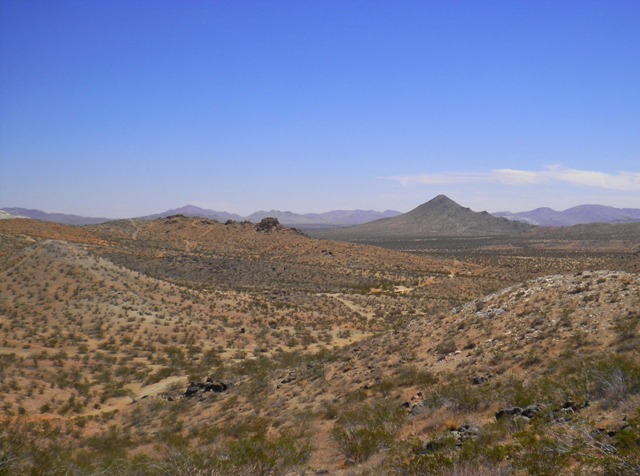
My most recent upsurge began on Saturday, always a sad day, and culminated in a walk in the desert. I haven’t called out to him in a long time, though I still talk to him, but today, I desperately needed to feel some sort of connection, so I yelled, “Can you hear me?” He didn’t answer, at least not in any way I understood.

I’m not sure how one finds a new balance after such a devastating imbalance as losing a life mate. Perhaps it’s a matter of making additional changes, the way small controlled fires can help put out major fires. Maybe it’s a matter of continuing to take one step at a time and waiting until the world rights itself. Or it could be a matter of being present, of being in one’s body, of simply being.

I’ve had to make changes, of course — I had to leave our shared home so I could look after my father — and I will be making other changes when this part of my life comes to an end. Meanwhile, I am trying to take life one step at a time, to capture each moment as it comes, to be present in my life, to be. In a story, of course, such passive actions don’t create a compelling plot, but in real life, sometimes “being” is the best we can expect at any given moment.

And anyway, my story hasn’t ended yet. In some respects, it feels as if this new story hasn’t even begun, as if I’m still in the first chapter, sorting out the imbalance.

Don’t Get in a Lather

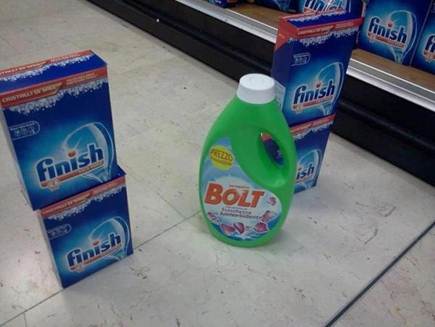
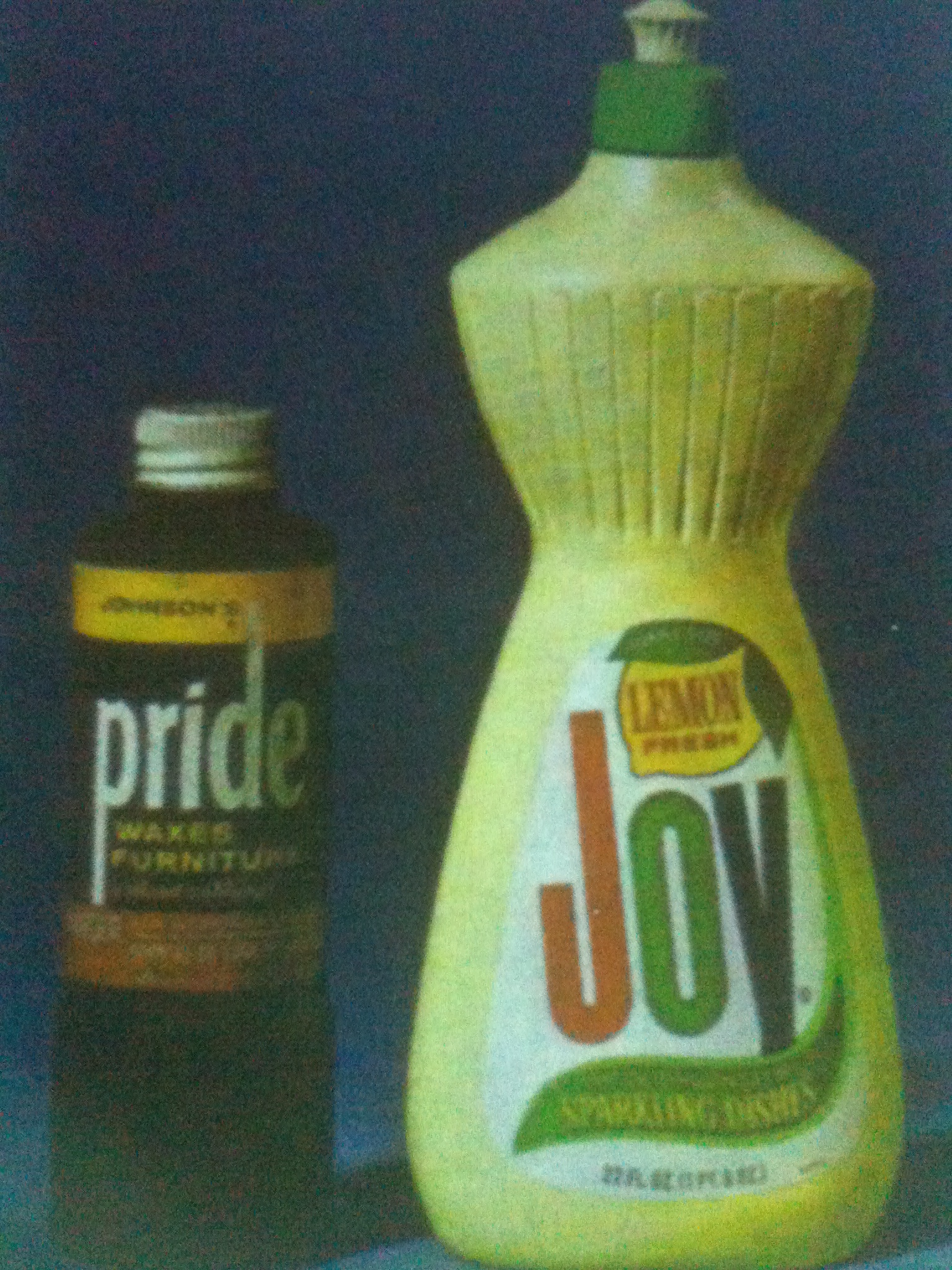
I got an email from my brother yesterday with “My Pride and Joy” in the subject line. I wondered if perhaps he finally got the dog he wanted, or even a new car, but this is what he sent:

He sent the same photo to a friend in London, and his friend paid him back with this photo of Bolt near the finish:

A fab idea dawned on me — I could play the game, too, and send him a photo to pledge good cheer. The thrill wasn’t there, though, and it would gain me nothing at all. The idea didn’t seem bold enough or have the right tone, and anyway, it might cause a cascade of suds as a payback. Still, someday or some era I might. Perhaps when the tide comes in.

The Denizens of Route 66

In previous posts, I talked about the Route 66 festival I attended this past weekend, but I didn’t really talk about the people I saw except for a brief mention of the beauty pageant entrants.  And I saw a wide variety of folks.

Some came alone and acted very strange, as if they were alien residents from another planet, but that is typical of the high desert, or so I’ve been told.

Others came in groups, such as the red hat ladies. I wonder what Jenny Joseph thinks of that society. She is the author of the poem “Warning” (When I am an old woman I shall wear purple/With a red hat which doesn’t go, and doesn’t suit me) which inspired the group. A society of women who all dress alike seems the antithesis of the spirit of the poem, which extols the virtue of shucking convention and striving for personal eccentricity. But then, I’ve never been a joiner and don’t much see the point of dressing like everyone else. (I’ve never owned a pair of jeans, so that tells you more about me than you would ever wish to know.) Still, it was interesting seeing a whole slew of purple-pant-suited women in red hats. Added a bit of color to the otherwise drab room.

I met a few writers, though that is nothing new — writers seem to be everywhere, especially writers who are looking for a publisher though they have not written a single word. It’s a good thing not many people showed up, otherwise you’d probably have heard my screams resounding around the word if I had to listen to one more stale and trite plot. (This is the real reason would-be writers are cautioned to read. If they’d been readers, they would know how typical their “brilliant” idea is.)

I sound a bit caustic, don’t I? Being around people does that to me. I did meet a few intriguing people — a couple of artists and a woman who reads Agatha Christie in Chinese for the fun and challenge of it. (I hope she doesn’t get upset with my revealing that, but she was such a fascinating woman, I’d hate to leave off any mention of her.)

One artist (Pete Morris) and I had a delightful conversation about truth in art and writing. He believes that if there is no truth, you have a pretty picture, but not art. The truth may be in the eye of the beholder, the truth might be the artist’s personal truth, or the truth might be a different perspective on a common theme, but there needs to be truth. It’s this lack of truth that bothers me so much about books today. Writers insist they write to entertain, which is fine, but I don’t read to be entertained. I read for truth — the writer’s truth, a different perspective on my truth, or some other facet of truth. I used to find truth even in genre fiction, though now I don’t see much even in literary fiction. (But maybe that’s more because of the vast numbers of books I’ve read than an actual dearth of truth in novels.)

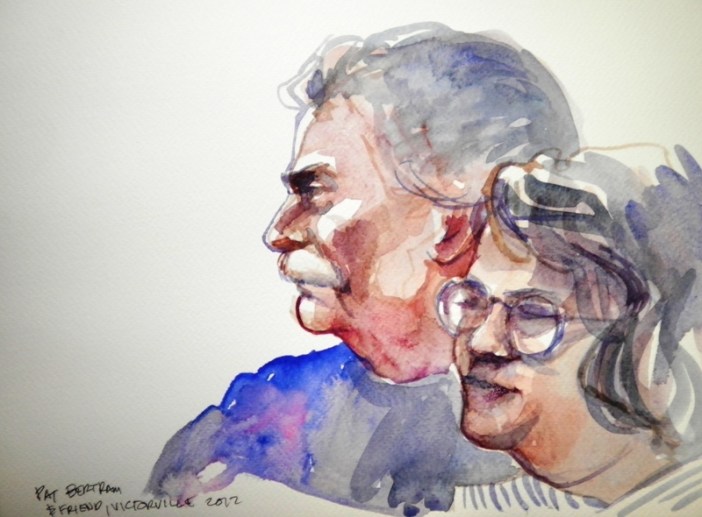
A friend came to keep me company on Saturday, which made the day go by fast, and Pete painted a picture of us. I don’t know what’s the truth of the painting, but the artist did it to preserve a good memory. (Later, he kindly offered the picture to me, but I am not one to have pictures of myself hanging on the wall, so I asked if I could take a photo instead. That way we were both happy.)

Here is the painting Pete did of me. I was so oblivious, I didn’t even know he did it until he showed it to me. If you’d like to see more of Pete Morris’s work, you can see a whole gallery of paintings on his website. (Click here and use the gallery controller to the left of the images to see his pictures.)

A Perfect Grasp of Storytelling

I don’t know who started the whole “characters need flaws” concept of writing, but whoever it was did a disservice to the writing industry. People keep saying that perfect characters are boring, but the way I see it, there are no perfect characters, only writers with an imperfect grasp of storytelling.

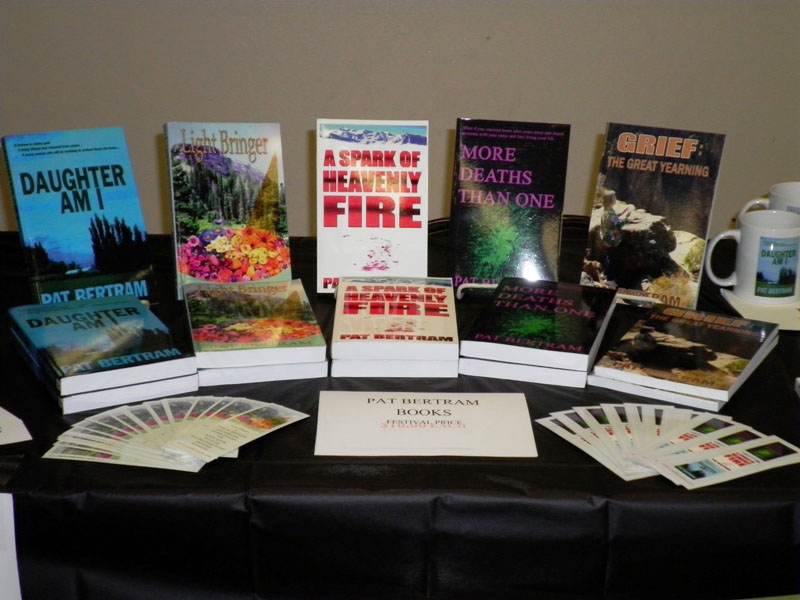
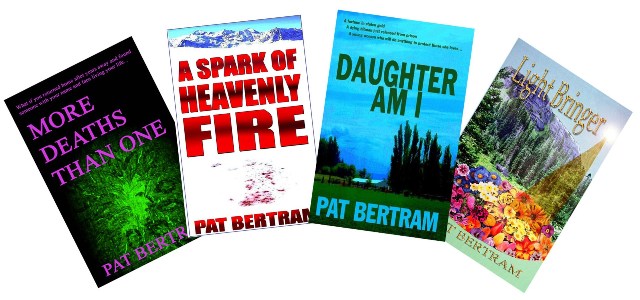
A story begins when the normal world becomes unbalanced. In A Spark of Heavenly Fire, the normal world of Colorado became unbalanced when a deadly disease decimated the population. In More Deaths Than One, the normal world of the main character became unbalanced when he found out the mother he buried twenty years before is dead again. In Daughter Am I, the world of the main character became unbalanced when she learned that the grandparents she’d been told had died before she was born had just now been murdered. In Light Bringer, the world becomes unbalanced in a variety of ways, each POV character experiences his or her imbalance, and the nearing of an unknown planet literally unbalances the earth.

A story continues with the characters’ efforts to restore the balance. These efforts result in a worsening of the balance, either in a ripple effect of actions, such as when Jeremy King decided to do anything he could to leave Colorado in A Spark or Heavenly Fire or when everything the character learns deepens the mystery, such as Bob Stark’s search for himself in More Deaths Than One.

A story ends when the balance is restored, a new balance is attained, or the world remains out of kilter. My books all fall in the middle category — things never go back to where they were, but the characters and their world do establish a new balance.

Without this unbalance, there is no story, and within this unbalance, characters change.

Which brings me to the point I want to make about perfect character vs. imperfect understanding of storytelling.

If you create a perfect character — a gorgeous woman with a stunning figure, perfect hair, smart, successful, athletic, kind, talented, knows how to do everything, has no addictions — that is merely the beginning. It is what authors do with such a flawless character that shows their writing skills. For example, if the character always remains the same perfect character in balance with her world, it is not the character’s fault that her perfection is boring. It is the writer’s fault for not unbalancing the character’s world.

A gorgeous, intelligent woman who can do anything is only spectacular in the presence of lesser beings. What happens if she is thrown into a world of people exactly like her? What would she do to preserve her self-image of being extraordinary when all of a sudden she is ordinary? How would she reestablish the balance in her world? For example, a high school cheerleader/student body president/valedictorian goes to an ivy league university and discovers she is just one of many such achievers. Or a stunning and talented young woman enters a beauty pageant, expecting to win the crown and scholarship and a boost to her career, and finds out that she isn’t anything special. Or a perfect human being ends up in a robotic world of perfection. How would she prove that her perfection was natural, that she was a human and not a robot?

Sounds to me as if in the write hands, such a flawless character would be . . . perfect.

Beauty Pageants, Route 66, Old Cars . . . and Me

I went to a Route 66 festival this weekend, and though it had its disappointments — relatively few people showed up and I sold only a few books — it also had a few highpoints — I met some old friends, I made some new ones, and . . . I sold a few books!

The beauty pageant that took place in the center of the artists’ and authors’ pavilion was too surreal to be a lowpoint and too bizarre to be a highpoint. The first pageant event seemed more of a bitty pageant then a beauty pageant since it featured babies barely able to walk (one needed her mother to hold her upright). I couldn’t help wonder how that crown would affect the rest of the winner’s life. Will it be the highpoint of her life even though she’ll never remember winning it? Or will it be the first of many wins, giving her an inflated sense of her worth?

It seemed to me that the older girls and women who entered did have an inflated sense of worth. (The preschoolers and girls in the early grades just seemed sad with their make-up, mincing walks, practiced smiles, and regal waves. And the 11-year-old winner looked terrified as if the responsibility of being a queen weighed heavy on her skinny little shoulders.) During the speech portion of the event, one of the older girls (a young women, actually), vowed that if she were to win, she’d uphold the integrity of Route 66. Typical budding politician, she never explained how she would achieve this grandiose and absurd goal. For cripes sake, most of the road no longer exists. (The longest parts of the road still extant are in San Bernardino County, probably because that section of Route 66 meanders through undeveloped desert.)

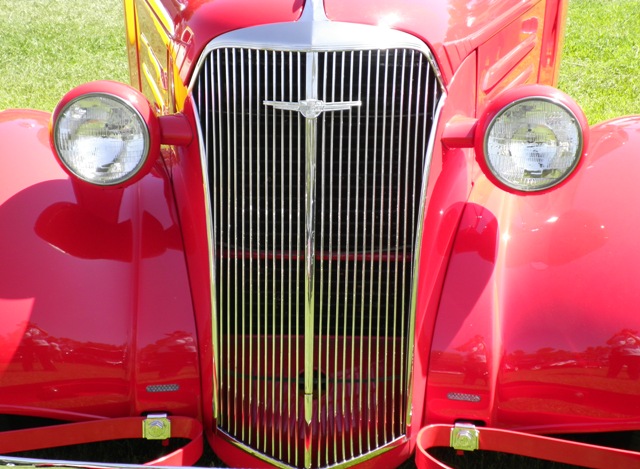
I guess I don’t get the mystique of any of it — beauty pageants, route 66, old cars (some of which are remade beyond any semblance of authenticity) — but I seem to be in a minority. The economic impact of Route 66 is huge — according to a recent study by The National Parks Service, Route 66 generates over $132 million per year in the communities through which it passes. The economic impact of beauty pageants is astronomical — over $5 billion!!!

By selling a few books at the festival, I added to that gross revenue, even if my income from those books was in the low two digits. Don’t know whether to be proud of that or not.

More California Dreaming on Route 66

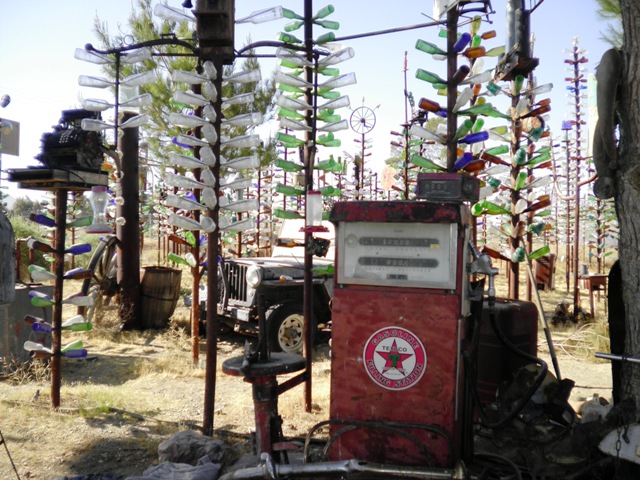
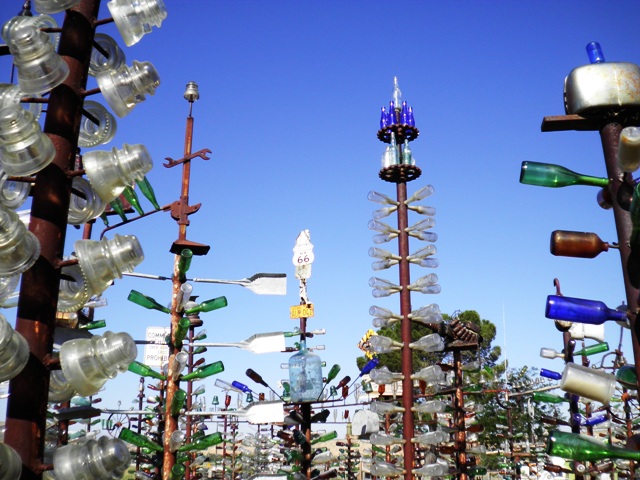
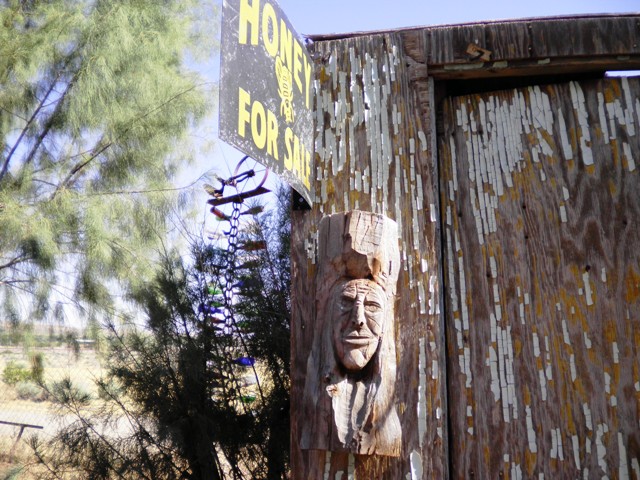
One of the oddest places I visited on Route 66 was the bottle farm outside of Victorville. All the sculptures were created from bottles and other artifacts found in the Mojave Desert.

I wish you could have visited this fascinating place with me, but maybe we’ll meet on Route 66 some other time when we are dreaming of the Mother Road and days gone by.

California Dreaming on Route 66

I am in Victorville. California at the San Bernardino County Fairgrounds, signing books at the Route 66 International Festival. Route 66 enthusiasts from all over the world are here to celebrate the Mother Road and a world gone by.

Ruins along Route 66 in California near Bagdad

The road that fueled dreams of a better life is mostly absorbed into the modern world of interstate travel, but there are still some remembrances of those nostalgic times.

Bagdad Cafe from the movie of the same name

The original Bagdad Cafe is long gone. This structure was the Sidewinder Cafe, renamed for use in the movie, and is located 50 miles west of where Bagdad once stood. Odd to see the screen come to life in this dusty, out of the way place.

Roy’s Motel and Cafe in Amboy on Route 66

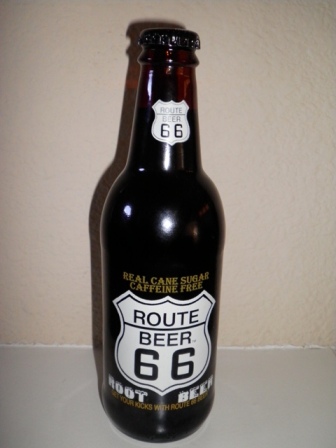
Roy’s Hotel and Cafe in Amboy, California, is being restored to it’s former glory (if such an elemental structure can be considered glorious.) The route beer I got at the small store at the gas station was glorious, or perhaps I was simply thirsty. I’m sure you’ve seen similar photos before, but I took this one. Well, I took all of them.

Route Beer. What writer could resist such a pun?

Getting My Kicks on Route 66

Each year,  the California Historic Route 66 Association selects one of the eight states through which Route 66 runs to host the Route 66 International Festival. This year, the festival will be held from August 9-12, 2012 at the San Bernardino County Fairgrounds in Victorville, CA. Making it an even more historic event, the fairgrounds are on old Route 66!  With the theme “California Dreamin’ on Route 66”, the Route 66 International Festival 2012 will attract thousands of Route 66 enthusiasts, historians, fans and custodians of the “Mother Road” from across the country; including international visitors from 17 different countries, as well as local residents. And me.

I’ve been accepted as a participant in the festival, and I’ll be there signing my books on August 10th and 11th. Except for Daughter Am I, the story of a road trip from Colorado to Chicago, my books don’t have anything to do with Route 66, but I’ve had little luck with writer’s conferences and library presentations, so I’m going to try something completely different. It should be interesting. I’ll have to stay for the two days rather than do what I normally do at festivals — walk around for a few minutes then leave. (I never did know how to have fun. At least not what other people consider fun.)

So, if you’re going to be in Victorville on August 10 and 11th, be sure to stop by the fairgrounds and look me up. I’m at the Alaska Pavilion, table 10. I’ll be waiting for you.

Reaching a Bridge in My Life

An online friend occasionally does free one-card tarot readings on Facebook. In April, I asked her, “Does the card promise me joy?” She drew the Sun Reversed card, and she explained, “Had this card been upright I would have said a definite yes, but the card is telling me there have been some disappointments from the past that still are with you. It says there can be happiness and joy, but for now it’s you that seems to be clouding it for yourself.” (You can read the rest of the response here: Being Open to the Possibility of Joy.)

The reading took place shortly after the two-year anniversary of the death of my life mate/soul mate, when I was still feeling very sorrowful, still subject to upsurges of grief. I was tired of feeling bad all the time, hence my question, but paradoxically, I had not yet reached a stage where I could welcome happiness. Grief continued to hold me in its embrace, but even more than that, I still felt the unfairness of it all — his life being cut short, my having to continue without him.

And then a few weeks ago, everything changed. It happened suddenly, almost from one minute to the next. Part of it came from an odd random thought that flitted through my mind, “He beat the system, he’s out of it now,” though why I thought he beat the system, I don’t know, when he suffered for years. But he’s finished with pain now, and I’m finished with my worry that he had been denied additional years.

I’ve also been spending time consciously being me. We’re always us, but we’re not always aware of it. I’m trying to feel how I fit with the world around me, so I go out in the desert and stand there, not thinking. A couple of times I’ve had the awesome feeling that I was exactly where I was supposed to be. Don’t know where all this is going to lead in the end, but it felt good at the time, and it’s helped me with the search for meaning that was such a weight after he died. If I am being me, I don’t have to search for meaning. Being is my meaning. Of course, one of these days, when my father is gone, I will have to search for a place to live and something to do, but for now, this is all I expect of me.

Last night, in an emailed conversation with my tarot-reading friend, I asked, “Does the tarot have any words of wisdom for me?”

Her response:

“I chose the Alchemical Renewed deck and as I was shuffling, the Lady of Vessels jumped out and her message to you is to be aware of your own feelings, appreciate your own talents and allow those inner thoughts, feelings and wisdom to rise and come to the forefront of your mind. What she is telling you is that this is a time for inner reflection and the ability to recognise and allow your intuition to guide you because that inner knowledge always knows what you should do and what is the best course of action for you to take. She also tells you it’s time to be self confident and let all that is good about you shine out.

“The Lady of Vessels breaks down to a 2, that’s the number of duality, compromise, balance and choice. What she tells you here is that it’s time to restore that balance, to settle down that duality that exists, and to bring together any opposing forces that exist so that they may work together for a more stable future. This is a time where you have reached a bridge in your life, and it is what you learn at this point that will carry you over that bridge and onto a new path.”

Isn’t that beautiful? The future spooks me if I think about it since I will be growing old alone, but the person who is growing old alone won’t be the me of today, it will be the me I become, the me on the other side of the bridge.

The Lady of Vessels seems to agree that I am where I am supposed to be, doing what I am already doing. Even though I would have continued following the same path, feeling and being me, it’s nice to know it’s in the cards.