Dealing With Grief During the Holidays

This is an excerpt from my book: Grief: The Inside Story – A Guide to Surviving the Loss of a Loved One:

***

The first year of grief after the loss of a spouse or a life mate is hard because our grief is so new and so raw that it’s all we can do to take one painful breath at a time. All the firsts we experience during this period can make things even harder.

The first holidays are painful. The first wedding anniversary, the first birthdays, the first major holidays. Each of these days brings a greater sense of grief because we are intensely aware that our life mate is not here to experience these once-happy holidays with us. Whatever traditions we developed together become obsolete when only one of us remains to carry on. The pain and the yearning to be together once more during these times can be devastating.

Thanksgiving, Christmas, Chanukah, New Years are the big holidays with the biggest challenges. These special days are family celebrations, and often we are left alone with our memories and our feelings, even if we are surrounded by family.

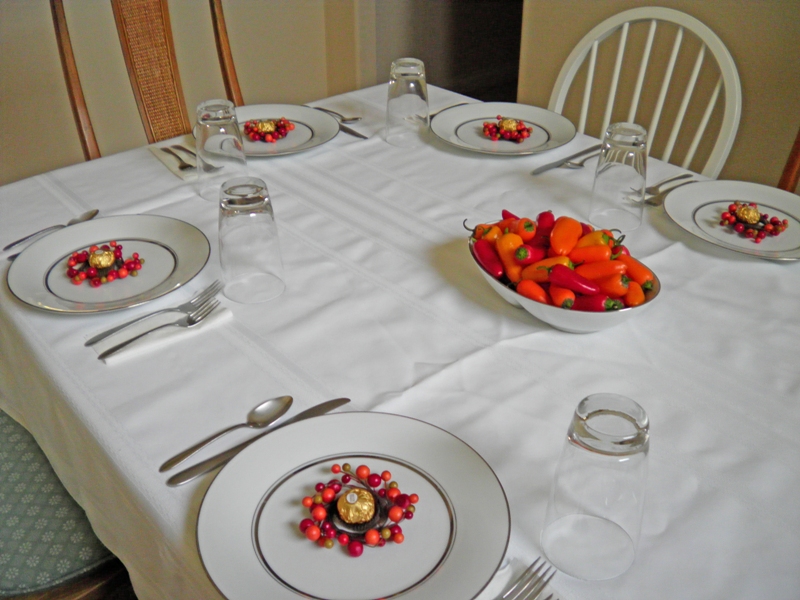
After Jeff died, I went to take care of my ninety-three-year-old father. That first Thanksgiving, my brothers and sisters-in-law came to have dinner with us. I felt awkward because my widowed father sat at one end of the table, and I sat at the other end in my mother’s place, even performed her hostess duties. Despite that weirdness, it was a nice meal, but as the guests were leaving, two by two, I fell into a deep crevice of grief that took a couple of weeks to crawl out of.

Christmas is even more challenging because if we do opt to join the family in festivities, assuming we have such an option and want to make use of it, our families don’t know what to say to us. They are afraid of saying “Merry Christmas,” because they know there can be no merriment for us. Their fumbling to find something to say makes us so much more conscious of our situation than the rote greeting, “Merry Christmas,” would have done. After all, no one truly is wishing us, or anyone, merriment. It’s simply the thing we say.

We each have to find our own way to deal with the holidays. Talking to someone about our loved one, perhaps sharing a special memory can help, and if there is no one to talk to, writing a letter to our deceased mate can make the upsurge of grief around the holidays easier to handle. There is great power in writing to our dead because it gives us a sense of connection and continuity. We are verbal creatures, so putting our feelings into words can be therapeutic and can decrease the stress of the holidays.

Sometimes we grievers find comfort in doing things the way we always did because it makes us feel closer to our departed loved one. Sometimes we need to create new traditions for us alone, which is how I dealt with the days.

Jeff loved Christmas lights, and since he still lived in my heart, or so people said, I took him for a walk that first Christmas Eve and showed him the abundance of lavishly decorated houses in the neighborhood. As fanciful a notion as that was, it helped.

Over time, as we build new memories on top of the old ones, the emotional resonance of the holidays and anniversaries diminishes, as does the dread leading up to these days. The upsurges of grief we experience soften to a feeling of nostalgia and even gratitude that once we were loved, once had someone to love, once had someone with whom to share our life.
***

Pat Bertram is the author of Grief: The Inside Story – A Guide to Surviving the Loss of a Loved One. “Grief: The Inside Story is perfect and that is not hyperbole! It is exactly what folk who are grieving need to read.” –Leesa Healy, RN, GDAS GDAT, Emotional/Mental Health Therapist & Educator.
Overcoming Inertia

You’d think, after all these years of doing things by myself, I wouldn’t have a problem with motivating myself, but I do. Ever since Jeff died, I’ve tried to be more spontaneous, but sometimes I simply cannot overcome inertia to just . . . go.

The Union Pacific Big Boy steam engine passed within seventy-five miles of here, and I sort of wanted to see it. But the time for leaving came, and I didn’t go. Apparently, “sort of wanting” is not enough motivation. If I had really, really wanted to see it, I might have gone — after all, I did go searching (in vain) for tarantulas. But maybe not. My days of simply hopping into my car and taking off seem to be diminishing — not just because of no motivation, but because the thought of pulling the cover off my vintage Beetle and folding it up seems too much of a big deal. Also, because I’m not driving all the time, I tend to worry.

Luckily, I can walk most places around here and save driving for the days when the ritual of uncovering and recovering my car doesn’t seem so daunting or if I simply want to drive, worry or no. It might be easier to go somewhere on a whim when (if?) my garage is done, but I doubt it. I won’t have to uncover the car (though a neighbor car guy recommends still covering it), but I will have to unlock and open the garage door and gates, then get out of the car and close them once I’m on the street. Just the thought makes me weary! It’s not an immediate problem, though, since my contractor has disappeared on me again.

Now that it’s getting dark so early, my activities are a bit curtailed — I’m not used to walking in the dark around here, and to be honest, I’m not sure it’s all that safe of a place to be on foot at night — so I don’t attend evening events by myself.

Although all this makes it seem as if I don’t do much anymore, that’s not true. There are many scheduled events I attend during the day, such as the art guild meetings. The meetings are on my calendar, so there’s no need to overcome inertia — I just go. Other times, I hitch a ride with a friend. For example, there was a community dinner last night, and a friend invited me to go with her. It was a wonderful meal, a full turkey dinner, though it amused me — there I was in a Baptist church, eating dinner with my friend and the Presbyterian minister. Only in a small town . . .)

And that won’t be my only Thanksgiving dinner. The senior center will be hosting a potluck dinner for all of us strays. They will provide the turkey; we will provide everything else. (My contribution will be my own creation — a cranberry/apple compote.) Although Thanksgiving as a holiday doesn’t hold the emotional hazards for me that it does for many who have lost their mates, it’s nice knowing I’ll won’t be missing out on anything (except maybe the contention that sometimes come with family get-togethers).

The dinner is already scheduled and circled on my calendar. I’m committed to bringing the compote, It’s during the day. And I can walk. So there won’t be any inertia to overcome.

But it’s not exactly spontaneous, either.

***

Pat Bertram is the author of Grief: The Inside Story – A Guide to Surviving the Loss of a Loved One. “Grief: The Inside Story is perfect and that is not hyperbole! It is exactly what folk who are grieving need to read.” –Leesa Healy, RN, GDAS GDAT, Emotional/Mental Health Therapist & Educator.
More Adventures in Baking

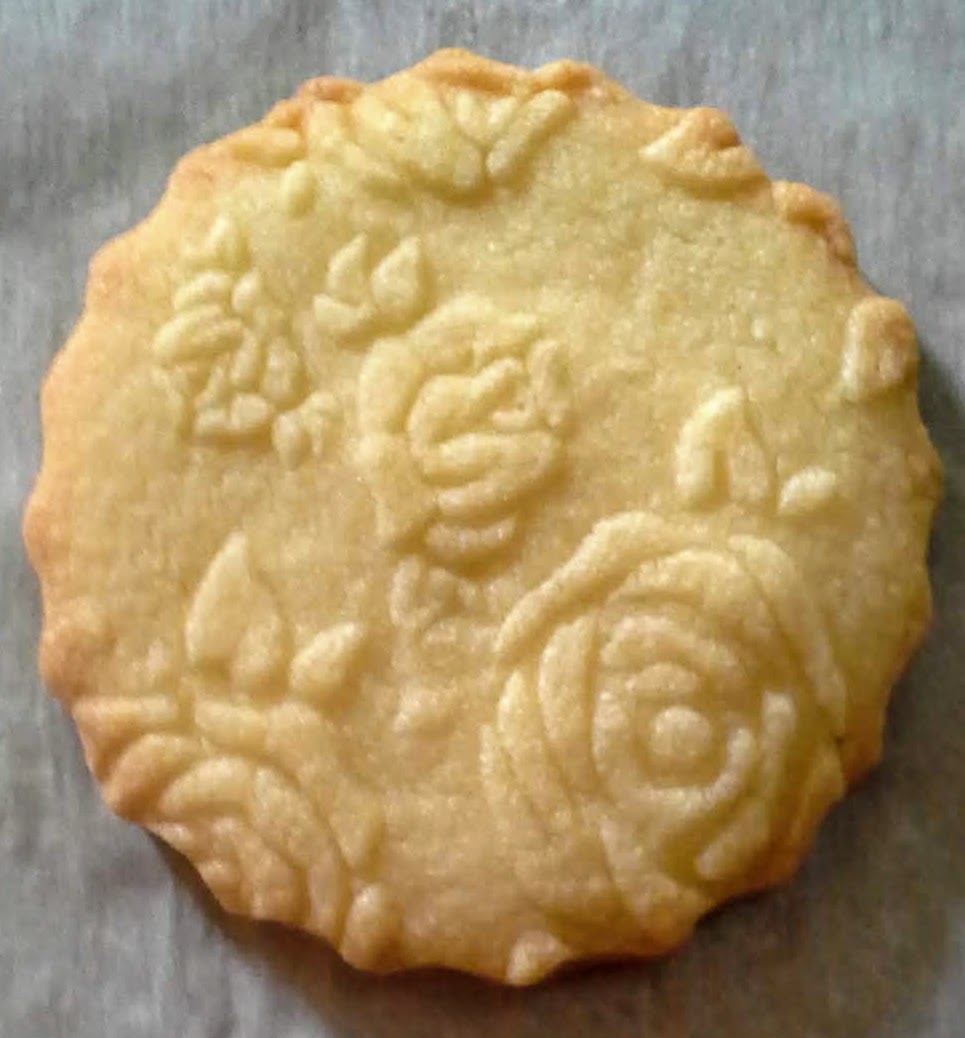
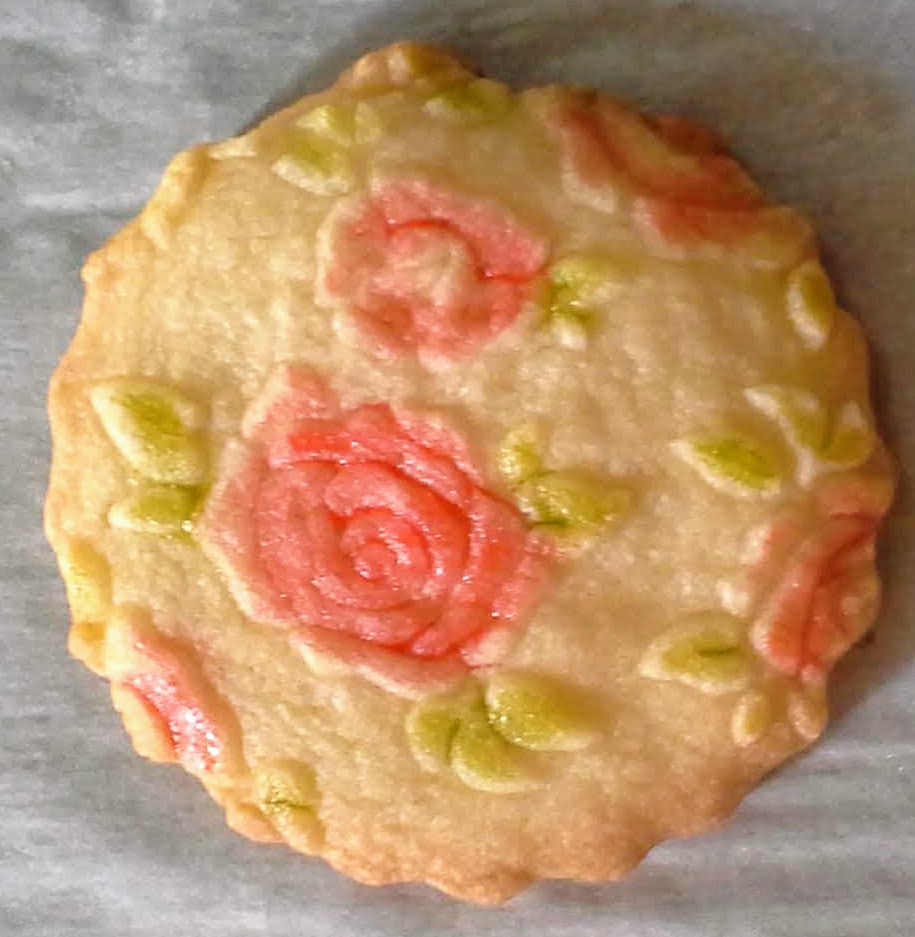
Yesterday I mentioned my woes in translating a cookie recipe from grams to cups and such to use with an embossed rolling pin, and today I decided just to wing it. My guesses as to amounts was pretty accurate, though the cookies aren’t really sweet and crisp enough, and the rose pattern does seem to thin out a bit, though I have to admit, they photograph extremely well!

My idea of painting the cookies before cooking worked, too.

I used only a small part of the dough since I didn’t want to waste it if the cookies didn’t work out, so there is still plenty to experiment with. Maybe refrigerating the cut-out cookies longer to keep the indentation from thinning out? Maybe pressing harder on the rolling pin to make a deeper impression of the pattern? Maybe more butter to make them crisper?

I’ll figure it out, but surprisingly, the cookies turned out great for a first attempt.

***

Pat Bertram is the author of Grief: The Inside Story – A Guide to Surviving the Loss of a Loved One. “Grief: The Inside Story is perfect and that is not hyperbole! It is exactly what folk who are grieving need to read.” –Leesa Healy, RN, GDAS GDAT, Emotional/Mental Health Therapist & Educator.
Adventures in Baking

I’ve wanted an embossed rolling pin for years, ever since I first saw them advertised, but it seemed silly to get a utensil that would sit unused in a storage unit. Now I have a kitchen and reasons to make cookies (ah, those ubiquitous pot lucks!), so I ordered the rolling pin from the original makers in Poland since I didn’t want a cheap knock-off, and wouldn’t you know, the recipe that came with the rolling pin is in grams rather than cups.

I wasn’t worried since I have the internet to help me make the conversions. So no problem, right?

Wrong!

According the conversion charts, one cup is equal to 201.6 grams (or maybe 198.6, depending on the website).

And yet, according to those same sites, 200 grams of butter converts to 14.109585 tablespoons or approximately 7/8 of a cup.

150 grams of sugar converts to 3/4 of a cup. But wait! The recipe calls for powered sugar, which converts to 1.3 cups.

400 grams of flour is 3 1/4 cups, but not always. If you scoop a cup of flour, sometimes that cup is 120 grams and sometimes its as much as 180, depending not just on the type of flour, but on whether it’s sifted, how much it’s sifted, and how full you filled the cup. The preferred way of measuring flour in a cup to get a consistent number of grams is to use a small scoop or spoon, shake the flour into the cup and then level off with a knife. This should yield 150 grams of all-purpose flour. Now I’m really confused about how much flour I need to measure. 2 2/3 cups?

As far as I know, an egg is an egg, and even though there are various sizes of eggs, apparently it makes no difference when it comes to cookies. At least I hope not. And a pinch of salt seems to be a pinch of salt in any measuring system.

The recipe calls for baking the cookies at 200 degrees. I presume that’s Celsius, since that temperature seems way to low to do anything but boil water (here at an elevation of 3,898 feet, water boils not at 212 degrees Fahrenheit but at 204.5 degrees.) 200 degrees Celcius converts to 392 degrees Fahrenheit. Is that even a possible oven temperature?

As if this weren’t bad enough, the recipe needs to be altered for high-altitude cooking, which means I need to decrease the butter by 2 to 4 tablespoons, decrease sugar by an unspecified amount, maybe add a tablespoon or two of liquid, increase flour by 1 to 2 tablespoons, increase baking time by 1 to 3 minutes, or perhaps decrease baking time by 1 to 2 minutes. Or maybe just increase the oven temperature by up to 25 degrees.

You think I’m making this up? Nope. Not even a smidgen (a smidgen equals .18 grams) of hyperbole.

But where does it leave me?

Looking for a good bakery!

***

Pat Bertram is the author of Grief: The Inside Story – A Guide to Surviving the Loss of a Loved One. “Grief: The Inside Story is perfect and that is not hyperbole! It is exactly what folk who are grieving need to read.” –Leesa Healy, RN, GDAS GDAT, Emotional/Mental Health Therapist & Educator.
Actually

After I made a comment to a friend the other day, she said, as if to herself, “Actually.” Then she smiled, not derisively, but in delight.

“Did I say “actually” too many times?” I asked. “I actually do have a tendency to overuse the word.”

She responded, “No, I like it. It’s not a word you hear that often.”

Well, if you hang around me, you will actually hear “actually” a lot. Since I actually do overuse the word, I actually have to go through my manuscripts try to edit “actually” out of my work. (See List From Hell to see what other words I tend to overuse.)

I’d actually never realized I had an actual problem until I once played back a blog radio show where I’d been interviewed. And there it was . . . actually. Actually, there were a lot of “actually”s. I don’t remember how many times I said “actually” in that half-hour segment, but enough that by the time the program ended, I was actually appalled.

The next time I was on blog radio being interviewed, I was very careful with my “actually”s. For a while, I actually tried to censor my everyday speech, but somewhere along the way I actually forgot, so now I’ve reverted to overusing the word “actually. Actually, now that I think of it, I even forgot to de-actually my last couple of finished manuscripts.

I actually don’t know why I use the word so much. It could be from my need to always set the record straight, but I don’t know for sure, actually.

***

Pat Bertram is the author of Grief: The Inside Story – A Guide to Surviving the Loss of a Loved One. “Grief: The Inside Story is perfect and that is not hyperbole! It is exactly what folk who are grieving need to read.” –Leesa Healy, RN, GDAS GDAT, Emotional/Mental Health Therapist & Educator.

Fun Raiser

Yesterday the art guild had a wreath-making day just for fun. (Not a fundraiser as we usually do, but a fun raiser.)

The art guild president (who happens to be half of the couple I bought my house from) set out tools and supplies along with tubs of ribbons and ornaments all sorted by color, and let us rummage for whatever we fancied. Apparently, I was in a blue mood — or mode — because the tub of blue sure caught my attention.

Although I’ve done many different crafts, I’d never made a wreath before, so I followed her instructions as best as I could and ended up with a froth of blue.

The color doesn’t match anything inside or outside my house — the outside trim is a completely different shade of blue — but I kept the wreath anyway. One day, if the foundation and floor of my garage are ever finished being fixed, I’ll be turning one wall into an art gallery for all the pictures and projects I’ve been collecting. Unlike most people, I prefer plain walls in my living quarters, and yet, the pictures and decorations deserve to be hung.

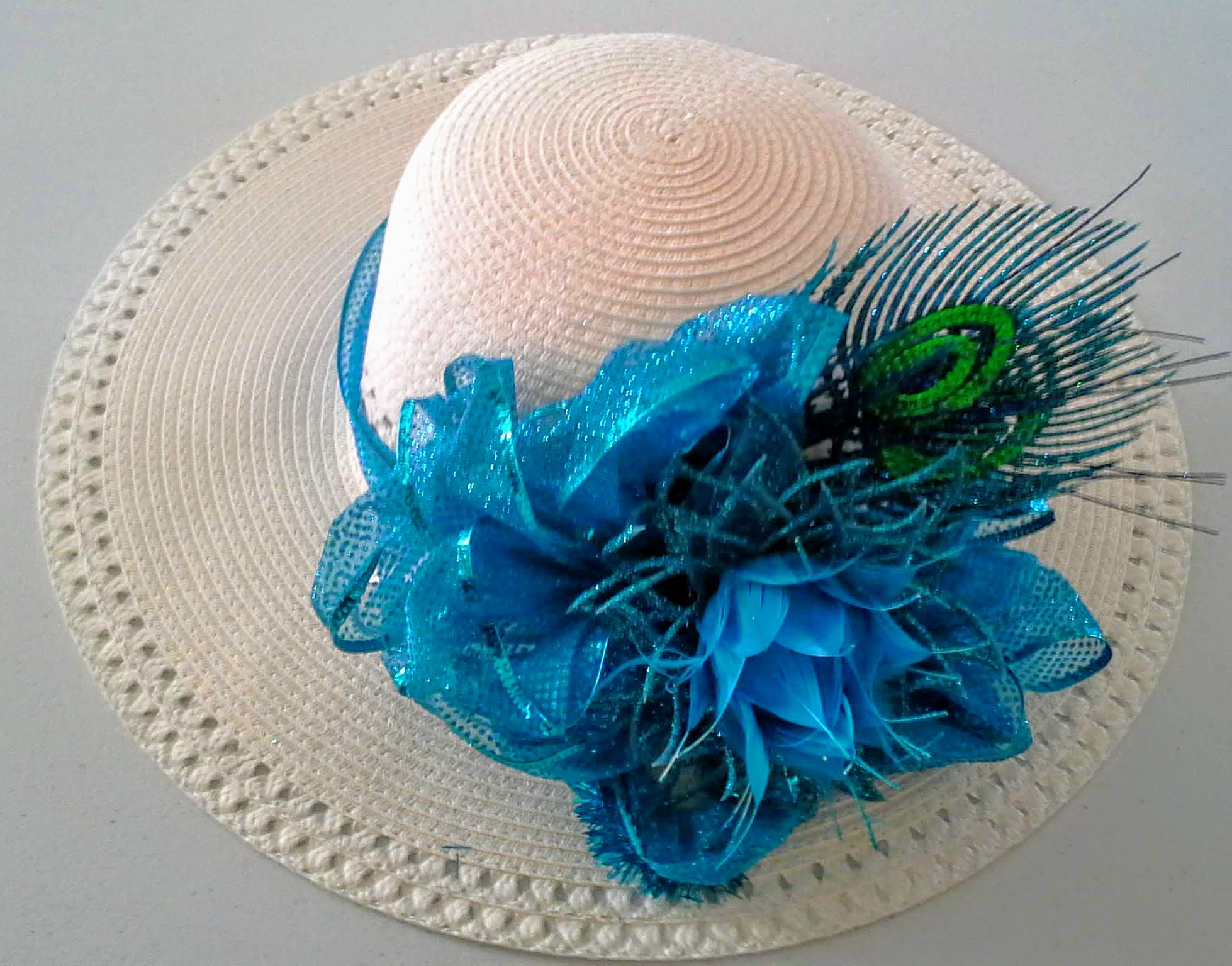
As if the wreath weren’t enough to satisfy my taste for blue yesterday, and since there was still time while the others finished their projects, I had to decorate a hat. (The folks around here call me Pat in the Hat for a reason!)

So, the day was a success. We not only ended up with several wreaths (and one hat) but we did what we intended, and raised some fun.

***

Pat Bertram is the author of Grief: The Inside Story – A Guide to Surviving the Loss of a Loved One. “Grief: The Inside Story is perfect and that is not hyperbole! It is exactly what folk who are grieving need to read.” –Leesa Healy, RN, GDAS GDAT, Emotional/Mental Health Therapist & Educator.

It All Matters

Some people take exception to the things I blog about, whether apples or tea, grief or gardening, writing or planning murder mystery games for local fundraisers. But whatever blog theme I choose to develop, it’s all life, and life matters.

Life can’t consist solely of immense and intense moments, such as love, dying, grief. Life is what we do and how we feel on a daily basis. Life is what we find important enough to disclose. Life is deadly serious, but it is also whim and whimsey — fanciful impulses and ideas. And life is, for a writer, a constant source of blog topics.

It’s a challenge for me to blog every day. Once, everything that happened to me was important — the death of my soulmate made it so. But now the only things that are important are the things I choose to spend my time on — making a home for myself, developing friendships, seeing beauty in the arid earth around me (rather than going in search of more majestic scenery).

When it comes time to blog, I think about something I did or thought or learned that day, and I try to show why it’s important to me, why you might want to know about it. Most people don’t want to know and don’t care, and that’s okay.

Because I care.

I care enough to choose my words carefully, to try to interject a bit of wit or whimsey when appropriate. I care enough to treat each blog with respect even if the topic borders on the inane.

I care because it’s life, and everything that makes up our lives is important for no other reason than because it is our life.

I’ve always wanted to live a life that matters, to do something significant, to learn something vital, to see beyond the trivial to something cosmic, but I’ve come to realize that it is not us that makes life matter; it is life that makes us matter (both literally and figuratively).

When I was dealing with the most angst-ridded part of my grief — learning to live without the one person who made my life worth living — I took heart from the words posted on the blog “Leesis Ponders”:

Life matters.
The search for self that blends into all matters.
The way we act towards others matters.

It’s taken me a long time to truly believe her words, but now I know. Life does matter. Whatever is important to us at any given moment — life, death, grief, growth, homes, writing, apples, tea, the significant experiences and the insignificant concerns — it all matters. It’s all worth blogging about.

***

Pat Bertram is the author of Grief: The Inside Story – A Guide to Surviving the Loss of a Loved One. “Grief: The Inside Story is perfect and that is not hyperbole! It is exactly what folk who are grieving need to read.” –Leesa Healy, RN, GDAS GDAT, Emotional/Mental Health Therapist & Educator.

Janus-Faced Town

Generally, a town with a low-rate of owner-occupied houses is a sign of a transient population and people who are not vested in the community. Because of this, I hesitated to move to this town since more than half of the houses are rentals; I thought it boded ill. But my house was here, and so now I am too.

For the most part, I’ve had a great experience, almost idyllic, and this is the face of the town that I generally write about.

But there is another face that makes me leery, such as a drug dealer who rents a house on the corner, who allegedly steals tools, and who plays his music way too loud (that thumping can be heard a block or two away, which someone told me is code for his “store” being open). Making matters more tense, his girlfriend is a dispatcher at the sheriff’s department, so the complaints of those who call seldom get past her, and, even worse, she knows exactly who is calling.

In a house across the alley, a pair of drug dealers apparently had a falling out right before I moved here, and one shot and killed the other. I don’t know the truth of that. Another story has it that the killer was never charged and that the dead guy is alive and living in a nearby town. The story goes that the two purported drug dealers were actually DEA agents scoping out the local drug scene, which seems specious at best, since they lived within sight of a known dealer.

Four marijuana shops are in the process of opening, and one friend, who moved here to get away from the legal marijuana trade is worried. It’s not those who buy for themselves that concern him, but he says that too often people “trade up,” buying pot and trading to the dealers for the heavy stuff, which increases the overall drug traffic.

Adding to this whole situation, not far from here is a residential program for the homeless, which helps them recover from any substance problems and then transitions them back to self-sufficiency. Hundreds of people are brought in from Denver and other big cities in Colorado, as well as veterans from all over the country. This is a great program, but people who drop out are not sent back where they came from, so they hang around here.

Worst of all, mostly because they are so ubiquitous, are the dogs. There is a leash law, but it is not enforced, and too many dogs end up roaming the streets. This is the only place I’ve ever lived where I feel the need to carry pepper spray.

A few months ago, a woman who lives at the far end of my street was ravaged by dogs, and her husband had to shoot one to save her. Nothing happened to the dog owners, but the husband is in big trouble for shooting off a gun within the city limits. And the dog owners are tormenting them. What they once thought was a Mayberryish town turned into a nightmare for them, so they are leaving.

It sounds like a horrible place, doesn’t it? And yet the life I am building for myself in this community really is close to ideal. My nearest neighbors are great, as are the people I see most frequently. When I was forced inside because of a bad cough, I had more offers of help than I did in all months I was dealing with a shattered arm. People I’ve never met recognize me. Almost everything I need is within walking distance. My house is lovely, it and feels safe (will even feel safer when the fence is finished.)

Maybe all places are like this — half horror, half heaven — but this seems a particularly Janus-faced town.

***

Pat Bertram is the author of Grief: The Inside Story – A Guide to Surviving the Loss of a Loved One. “Grief: The Inside Story is perfect and that is not hyperbole! It is exactly what folk who are grieving need to read.” –Leesa Healy, RN, GDAS GDAT, Emotional/Mental Health Therapist & Educator.
Tea Time Two

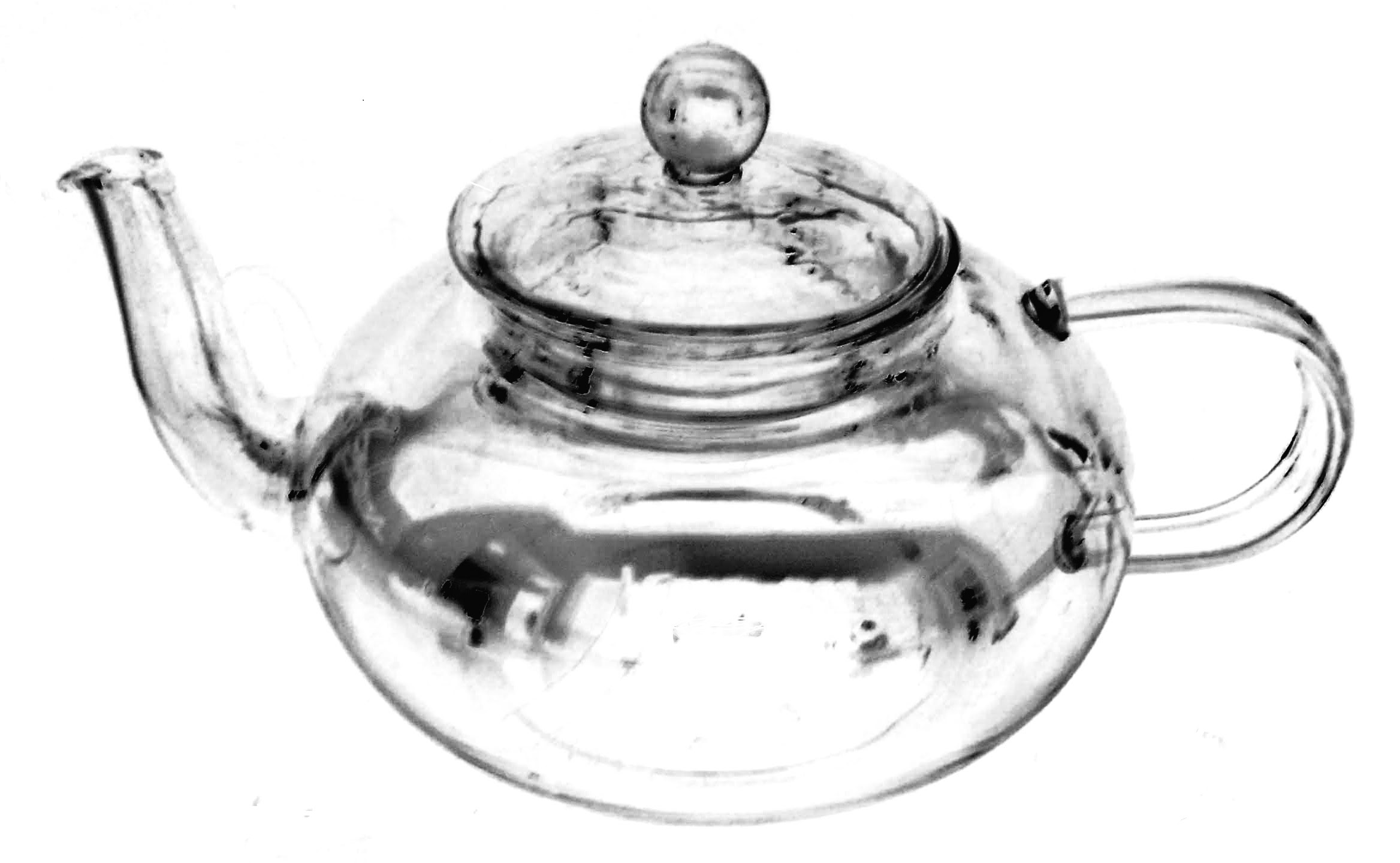
In a previous post, “Tea Time,” I mentioned a couple of different borosilicate teapots I’d ordered. The directions on one said it was okay to microwave but was not safe for stovetop use. The other said it was not okay to microwave but was safe for stovetop use. This understandably confused me because the whole purpose of borosilicate glass is that it is more resistant to thermal shock than soda-lime glass and will withstand high temperatures without cracking. In fact, the old pre-1998 Pyrex coffee pots, the ones my mother always used, were made of borosilicate glass.

I contacted the distributor and asked about the disparity in instructions. A customer service representative responded and said both pots were microwave safe since neither had any metal parts. When I asked about stovetop use, the representative said, “We made the decision a few years ago for safety reasons to not recommend using the teapots directly on the stovetop.” The teapot with instructions saying it could be used on the stovetop was an older model that has been discontinued, so those instructions had not been updated.

I figured that since both pots were made of the same materials, and the decision to not recommend for stovetop use seemed arbitrary and more of a legal matter than a problem with the pots, then both should be stovetop safe. Besides, borosilicate teapots are supposed to be safer to use than stainless steel or even iron (and vastly safer than aluminum) since they don’t leach minerals and contaminants into the water, and you lose that benefit if you can’t use the pots on the stove.

Although I’d been using the teapot that said it was safe for the stove, I hesitated to use the other pot on the stove since I didn’t want to throw away the money I’d spent on it if there really was a problem, so I researched the matter of safety.

It turns out borosilicate pots are perfectly safe when used on medium heat. If the heat is too high, it can heat up the handle and burn fingers. If you drop the pot because of the heated handle, you can burn more than just fingers. Also, pouring boiling water can be dangerous, so the recommendation I found was to let the pot sit for a minute before pouring the water into a cup.

Also, as it turns out, water for tea shouldn’t be heated to boiling anyway — boiling water can burn the delicate tea leaves so some teamakers say that to make a perfect cup of tea, it’s necessary to turn off the water right before it hits the boiling point, and if you wait too long and it boils, then let the water sit for a minute before boiling. A further word of caution: don’t reboil water. If there are contaminants in the water, boiling concentrates the contaminants, and reboiling concentrates them even further.

The upshot of all this is that I’ve been using the non-stovetop-safe pot on the stove, cooking at medium heat, trying to turn off the pot before the water boils, and if I can’t, then waiting for a minute to pour, and so far, no problems.

Despite all this, I ordered a whistling teakettle. Remember, I’m the same person who got distracted and blew up a pan of eggs. Twice. On the same day. Yep. Blew them up. Loud cracks of explosions. Bits of egg all over the kitchen. Borosilicate pots (any pot, actually) is not safe if you let the pot boil dry, and if I don’t want to hang around to watch the pot boil (and yes, despite the adage, watched pots do boil), I need the reminder. (It didn’t dawn on me until just now that I could figure out how long it takes to boil water here, and then set the timer. Duh.)

Well, now I have options.

I’ve spent so much time researching this matter, and the information borders on the esoteric, that I’ve been trying to figure out a way to use it in one of my books, but I can’t think of any way that any of this could help with a murder or solving a murder. It could go toward defining a character, I suppose, since I often try to give characters a small quirk, but such a small quirk doesn’t seem to merit all the time I spent on research.

So, please feel free to use this information if you want. Someone should get some use out of all my hard work!

***

Pat Bertram is the author of Grief: The Inside Story – A Guide to Surviving the Loss of a Loved One. “Grief: The Inside Story is perfect and that is not hyperbole! It is exactly what folk who are grieving need to read.” –Leesa Healy, RN, GDAS GDAT, Emotional/Mental Health Therapist & Educator.

The Roaring Twenties Return with . . . Murder!

In just a few weeks, the twenties will come roaring back. (You knew that, right?) To celebrate, the local Art Guild is going to be doing a murder mystery dinner with a nineteen twenties theme. And guess who has been elected to write this mystery?

I knew you’d guess it was me, so there was no reason for the mysteriousness except that I need to start cultivating the habit of finding mystery in small things. Otherwise, how am I going to come up with an appropriate story?

The challenge of the murder scenario I wrote for the museum was to offer clues that prove someone didn’t do the dastardly deed. (It’s easier to offer clues that they did, such as blood on a cuff.) The challenge here is to . . .

Well, to be honest, I don’t know what the challenge will be since I haven’t yet started developing the story. I do know who will be the victim. I know where all this takes place: one night at a speakeasy. I know an Italian dinner will be served. I know there will be a representation of at least some of the iconic elements of that 100-year-old decade besides the speakeasy: jazz, gangsters, flappers. (Am I missing an element? Prohibition, of course, but a speakeasy would include the idea of prohibition since without Prohibition, there’d be no need for a speakeasy.)

The main things I need to figure out are: why would anyone kill the doomed one? How does the setting fit in? How will the story unfold? Why would the killer do it in such a public fashion? (Other than the needs of the story, of course.) How will it be done? A gun would be obvious, and would add the startle factor, especially if it came from outside the room, but poison would make for a more mysterious death — the victim could be acting normally, then slip to the ground midst loud gasps of shock.

There’s no need to worry about alibis since the suspects are all in the speakeasy when the murder happens, so that’s a beginning.

There will be four to six suspects. An appropriate 20s theme or thread that holds the story together. A hook for the murder. A surprise ending. But what any of those things are, I have yet to figure out. Luckily, I have a few weeks until the end of the year. And I just have to come up with the story. I don’t have to write a book (though there is a possibility that eventually a book will work its way out of me).

Necessary characters: A flapper, the boyfriend, a gangster (who could be the boyfriend), a waiter, and . . . .?

Besides the characters themselves, I need reasons why all these folks wanted the victim dead.

Feel free to add your two cents if you wish, or even your twenty cents.

Don’t worry, I’ll keep you informed about my progress whether you want me to or not.

***

Pat Bertram is the author of Grief: The Inside Story – A Guide to Surviving the Loss of a Loved One. “Grief: The Inside Story is perfect and that is not hyperbole! It is exactly what folk who are grieving need to read.” –Leesa Healy, RN, GDAS GDAT, Emotional/Mental Health Therapist & Educator.