Forty Days and Forty Nights

For someone who is supposed to be in isolation, I have a rather active social life, at least I did today. I got one phone call from a friend, made a call to wish another friend happy birthday, got a few emails, and spoke to a few people out in the wilds of my neighborhood. Whew! That’s more socializing than I do when I’m not isolating myself!

It was such a nice afternoon, still and warm, that several people were out and about when I went for a short walk. When I stopped to talk, I made sure I was far away from them, at least twenty feet, so both parties were protected. Tomorrow will be a bit chillier, then the next two days will be warm again. After that, I’ll be out of isolation, but I’m sure it will feel more isolating than these past days because the temperature will drop, and we’ll all be isolating ourselves in the coziness of our homes.

It is interesting, though, that in the computer age, isolation feels a lot less like isolation than it did when quarantines were first created in the 14th century. I paused here to check the internet, and actually, I’m wrong about the isolating factor of quarantines. The practice of quarantine started during plague times. To keep the plague from spreading to Venice and other coastal cities, ships were required to sit at anchor for forty days before landing. So back then, people were quarantined en masse. No isolation for them. They certainly didn’t need computers and such to make them feel less alone.

Quarantine today is a matter of fourteen days, not forty, so I’m not sure the practice can still be called a quarantine since the word comes from the Italian phrase quaranta giorni, which means 40 days. I wonder if they knew that’s how long it would take the plaque to remove itself from the ships, or if it was a biblical thing since Noah endured 40 days and 40 nights of rain, and Jesus fasted in the wilderness for forty days and forty nights. (So why weren’t the ships kept at anchor for quaranta giorni e quaranta notti? Or maybe they were, and like everything else, over time the phrase was shortened to make it less unwieldy.)

Whatever the meaning of quarantine, and despite my rather social time of isolation, I’m glad I don’t have to be alone for forty days and forty nights. Not that the addition of “nights” matters — I’m always alone at night. And anyway, technically I’m self-isolating rather than quarantining since no one is keeping me at home but me, and I can go and do wherever I want as long I stay far away from people. Which tends to be my inclination anyway.

***

What if God decided S/He didn’t like how the world turned out, and turned it over to a development company from the planet Xerxes for re-creation? Would you survive? Could you survive?

A fun book for not-so-fun times.

Click here to buy Bob, The Right Hand of God.
Creatures of Words

I’ve long thought that what makes us human — and what separates us from other creatures — is our ability to tell and appreciate stories. From the beginning, as early humans huddled around the fire, they exchanged stories, and the best storytellers were revered.

Stories are our foundation, as necessary to us as love and probably always have been. Stories help us figure out who we are as individuals, and who we are as a people. Stories take us away from our problems, yet they also help us solve them because we can learn how to cope with tragedy, for example, from the stories of those who have dealt with a similar tragedy.

With all our sophistication and technology today, we haven’t come far from our primitive beginnings. Where once we huddled as a group around flickering fires, we now huddle singly before our flickering screens, but the need, the basic human need for stories is the same.

Underlying all this storytelling is language. Without language, there would be no stories. Some people believe that without language, there wouldn’t even be any thought because we need words for thoughts. Making the situation circular, without thought to think up words, there would be no language, either. Did the capability for language evolve at the same time as language itself? Did language create us as we were creating it?

There had to have been a time in our early history where communication was done by gestures and grunts, where any story had to be a simple matter of show rather than show and tell, but it’s hard to imagine such a time.

In trying to perceive a world without words, it becomes understandable that people who have to deal with various forms of dementia where they lose the ability to process words become isolated not just from others but themselves because more important than the stories we tell others are the stories we tell ourselves — about what we are thinking and feeling, what we want, what we hope for, what we regret, what we grieve for.

Memories aren’t just pretty pictures in our minds; since they are often accompanied by words, they too become stories we tell ourselves. In fact, stream of consciousness is all about the story of us that we tell ourselves, and stream of consciousness is words. The reverse is true, too. Without memory, we have no story to tell ourselves.

Words help us define what we are feeling, help us connect to those feelings, and ultimately help us leave those feelings behind. Without words, a feeling is simply that . . . a feeling.

Words must have some sort of survival benefit, otherwise they probably would never have come about, but as I once wrote:

Is language a tool of human evolution, or is it a tool of devolution? Are words a way of dumbing us down while smartening us up? Words seem to keep us focused on the humanness of our world, keep us connected to each other both when we are together and when we are far apart. But are those very words keeping us from a greater connection? Some people believe Earth is a living, breathing creature. Some people think solar systems and galaxies are also alive. Some even believe the universe  — all that exists, ever existed, will ever exist  — is a living, sentient being. If this is true, are words filling our heads and airways with so much noise that we can no longer feel the breath of Mother Earth, can no longer hear the music of the spheres?

I don’t suppose any of this matters. We are creatures of words. Words create us, and we create them. And even in a world where the spoken word seems to be in danger of being displaced by the various tools at our disposal, those tools themselves — texts, emails, blogs — need words to work.

In other words, words — ever changing though they might be — are here to stay.

***

Pat Bertram is the author of Grief: The Inside Story – A Guide to Surviving the Loss of a Loved One. “Grief: The Inside Story is perfect and that is not hyperbole! It is exactly what folk who are grieving need to read.” –Leesa Healy, RN, GDAS GDAT, Emotional/Mental Health Therapist & Educator.

Dauntless Days

For many years, I faced daunting days, not just Jeff’s ill health, but his death, my grief, caring for my father, becoming more or less homeless. (Not homeless in the living on the street sort of way, but homeless in not having any particular place to live or to be.)

Today was not one of those days. For the second or third or fourth morning (I’ve lost count), I’ve woken up to days that in no way daunt me. Nothing to do but minimal tasks, no appointments, no concerns except to isolate myself and try to keep well. Even the weather does not daunt — chilly enough in the morning to need a coat to water my newly sodded lawn, warm enough in the afternoon to take a refreshing walk.

Because of this lack of dauntingness, I intended to entitle this piece “Dauntless Days,” but according to the various online dictionaries, dauntless is not the opposite of daunting.

Daunting means intimidating and seemingly difficult to deal with.

Dauntless means showing fearlessness and determination.

Undaunting means undiminished in courage or valor; not giving way to fear.

Weirdly, then, on all those daunting days, I had to be dauntless to even get up in the morning and undaunting to get through the waking hours.

So what is the opposite of daunting? Apparently, there is no word with “daunt” as a base to mean what I mean about today not being a daunting day. Some antonyms are: nice, pleasing, calming, comforting. None of those words have the euphoniousness of “dauntless” when paired with “days” that I would have liked for a title.

So, even though this was not a dauntless day (I needed no show of fearlessness or determination to get through the hours), I did speak of the term, so I decided to stick with the title.

And anyway, does anyone but me and a few other logophiles care whether the title is accurate or not? But whatever the title, the meaning of this piece is still the same: today was not at all a daunting day.

***

Pat Bertram is the author of Grief: The Inside Story – A Guide to Surviving the Loss of a Loved One. “Grief: The Inside Story is perfect and that is not hyperbole! It is exactly what folk who are grieving need to read.” –Leesa Healy, RN, GDAS GDAT, Emotional/Mental Health Therapist & Educator.

Dark Too Soon

I don’t mind being alone, don’t mind the reason behind the isolation (a huge upsurge of Bob activity in this area), but having to do it in the dark seems a bit much. I’m not really in the dark, since I can turn on lights, but the sun sets at 4:44 pm. It seems as if the day is no sooner getting started than it’s ending.

Even that, I suppose, isn’t such big a deal, but when it gets dark too soon and I haven’t done my daily blog post, then I panic. Where did the day go? What did I do all day? How can I write if I can’t remember?

I’m glad, of course, that my days are so uneventful. I’ve had enough trauma to last me a lifetime, and even though some friends are going through disastrous experiences, I am at one remove from their situations. A lesson I learned from my grief days (days? No. Years!) is to let people have their own sorrows. I empathize, of course, but I can’t take on their sadness — it belongs to them. Come to think of it, I’m even at one remove — or several removes — from my own grief. In four months, it will be twelve years, and that is a long time. (To put it into perspective, that’s the time it takes for nine-year-old children go through puberty then the teenage storms and finally to reach adulthood.)

The only thing of note I did today was turn my Suspense/Thriller Writers Group on Facebook from public to private. FB is changing the way they do groups, so now if you have a public group, anyone can join immediately without being vetted. Considering how many spammers find the group (not just robots but also authors who only want to promote their books), it would turn a rather innocuous and inert group into a nightmare. Besides, since my blog URL is still blocked, I have little interest in spending any time on FB. For now, I reblog this blog to another blog and post that URL on FB, but when they discover my ruse, and block the reblog, then I’m finished with them.

Although it’s not particularly noteworthy, since it’s something I do every day, I did go out and water my lawn. It still astonishes me that I did that — add a bit of lawn. I wanted just a small corner of grass in my yard (else what’s the point of having a lawnmower), but since I didn’t know how big of an area a pallet of sod would cover, I agreed to buy the two pallets a local landscaping company had left over from another job. I worried that it wouldn’t be enough to cover the 400-square-foot corner; instead it covered 1,000 square feet, if not more, especially since they had a partial pallet left over they threw in at no cost.

I suppose 1,000 square feet isn’t all that much lawn, though it seems huge when it needs to be watered.

Oh, and I did manage to blow most of the leaves off my rock, but a big wind will simply blow them back. So here’s hoping the winds remain fairly calm until the leaves settle in.

I hope you’re doing better with the early dark than I am. And to think it will continue getting darker for the next six weeks! Hmmm. Perhaps I shouldn’t think about that.

***

What if God decided S/He didn’t like how the world turned out, and turned it over to a development company from the planet Xerxes for re-creation? Would you survive? Could you survive?

A fun book for not-so-fun times.

Click here to buy Bob, The Right Hand of God.

Righteous Exhaustion

With all the work I’ve been doing to landscape my yard, as well as tracking in dirt into the house via my shoes (even though I leave them at the door, the dirt seems to spread throughout the house), I’d pretty much given up housework as a lost cause. Well, today, that cause ceased to be lost and instead became found. And ai yai yai, what a task!

I hadn’t actually planned to clean the house, but I have been in the habit of doing something physical in the mornings. It was too cold to go outside and sitting down to read so early in the day smacked of wanton idleness, so I decided to get rid of the worst of the dust. Well, one thing led to another, and two hours later, I was still working.

This is a small house, and I have various modern cleaning tools at my disposal, so it shouldn’t have taken me very long, but the place needed a thorough cleaning. Apparently, I stopped seeing the dust on the flat surfaces and building up in the corners. Or more to the point, I didn’t want to see because there was nothing I could do (or wanted to do) about it since I was exhausted from my outside activities.

And now I’m exhausted from inside activities.

To be honest, I think all the digging and planting I’ve been doing were easier than cleaning house. Admittedly, everything is brighter now without dust dulling floors and furniture, but still, it was hard work. Now that most of the outside chores are done — only watering my newly sodded lawn and eventually sowing wildflower seeds remain — I should be able to go back to playing house more frequently rather than working at it as I did today.

Wait . . . I just thought of another outside chore I will have to begin doing as soon as the leaves on the neighbors’ trees are gone — blowing leaves off the ornamental rock around my house and garage. I’m not real anxious to attack that job because I have a feeling not all the leaves will blow off since they didn’t on a trial run, but all I can do is the best I (and my tools) can do. The leaf blower blows hard, so that’s not the problem. In fact, on the high setting, it’s enough to blow the rocks around, but some twigs and leaves still remain.

But that’s not a problem for today. Today I just want to bask in righteous exhaustion and the thought of a job well done.

***

Pat Bertram is the author of Grief: The Inside Story – A Guide to Surviving the Loss of a Loved One. “Grief: The Inside Story is perfect and that is not hyperbole! It is exactly what folk who are grieving need to read.” –Leesa Healy, RN, GDAS GDAT, Emotional/Mental Health Therapist & Educator.

My Butterfly Mind

I read not simply for the story or context but also to give my conscious mind something to do while my subconscious does the work of processing the thoughts that flit like butterflies through my mind. The problem nowadays is that my shortest-term memory is shot, so as I watch those butterflies feast on each thought, if one catches my attention, a moment later, it’s gone, leaving me with the feeling that I was supposed to remember something that I forgot.

Usually the thoughts are not important. For example, the thought today that I sought to recapture and only remembered much later was to remember to take the vitamins and minerals that are supposed to boost the immune system. Actually, the stray thoughts are always relatively unimportant. If they were important, such as remembering that I have something cooking on the stove, then I immediately get up, forgetting the rest of my train of thought.

Hmm. Sounds as if I am mixing my metaphors, a butterfly mind with a train of thought, but I suppose a mixture is better than continuing to beat the first metaphor into redundancy. (Was that a third metaphor? Does it matter?)

You can tell that today was a relatively uneventful day since the only things on my mind are thoughts about thoughts. An uneventful day is good for me, though not so good for this blog. But then again, I am sure you are sick of my less-than-exciting treatises about my adventures in gardening.

I did speak to a couple of people today when I was out walking, making sure to keep my distance, so that was nice. It doesn’t take much to make me feel as if I am not totally alone. And I talked to a couple of people on the phone yesterday as well as received some texts. But still, I am mostly isolated with thoughts generated only by my own mind, and I follow along those thoughts as they flit about, gathering what nectar and nourishment they can, until . . .

Wait, what was that I just thought? I forgot, but I’m sure it was unimportant. Or not.

***

What if God decided S/He didn’t like how the world turned out, and turned it over to a development company from the planet Xerxes for re-creation? Would you survive? Could you survive?

A fun book for not-so-fun times.

Click here to buy Bob, The Right Hand of God.
In Isolation Again

For the first time since this whole “Bob” mess started, it feels like an epidemic to me. Until now, I knew only a few people who got sick and though I didn’t personally know anyone who died, I was acquainted with a couple of women who lost their husbands, but each of those incidences seemed tragic and remote as if they were unconnected to anything else going on. Now, however, almost everyone I know is sick, helping to take care of someone who is sick, self-quarantining because of a positive test result, or exposed to someone who tested positive and is waiting to see if any symptoms show up. A lot of people who are negative have a cold or some other illness that prompted a test. And people are dying, though oddly, not from The Bob. Most are elderly people who sailed through the pandemic only to die of age-related illnesses.

As for me, I am fine, though needless to say, I am in isolation. There is simply too much illness out there for me to want to deal with anyone in person. I even returned my library books today so that I don’t slip up and accidentally go to the library during business hours. Luckily, I have a few emergency books, and I have been toying with the idea of reading The Wheel of Time series once more, which would see me through a couple of weeks.

I finished planting my bulbs today, though I have admit, I got careless, and in a few places, I dug up a daylily. When they are small, they look like grass, and since most of the weeds were a grassy type (prostrate knotweed), it was an understandable mistake. I did replant them, so I hope they survive. If not, I can replace them next year.

I had to laugh at myself (the only risible moment of the day) when I saw an ad for lily trees and clicked on the link to order them, but better judgement prevailed. I will wait until I see what and where and if any of the bulbs I planted come up in the spring, then decide what to do. After all, gardening is a project for a lifetime. It doesn’t all have to be done right now.

Although I wore myself out today, not wanting to have to deal with planting bulbs again tomorrow, I took a short stroll this afternoon to enjoy the lovely weather. Eighty degrees!! The last such warm day for the year, I’m sure, since tomorrow will hit seventy, and then fifties and sixties will be the highs for a while before the temperatures drop to winter lows.

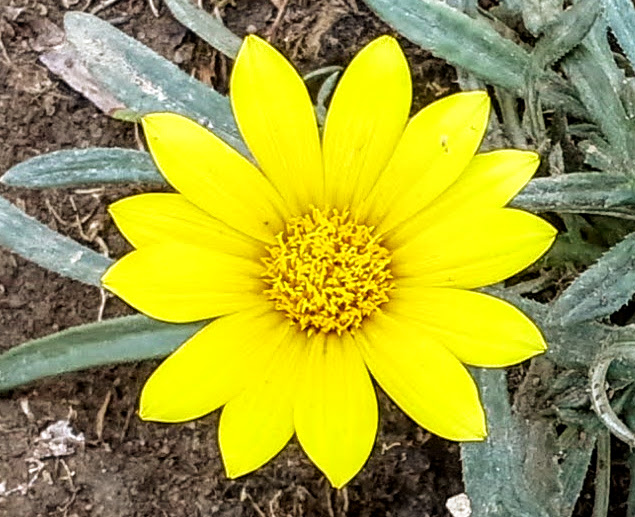
I’m waiting for the eve of the first snow so I can plant my wildflower seeds, and then I will be finished with planting for the year. I will still have to water my new grass most days for a while, though I imagine that when the ground freezes, I’ll be able to skip that chore. For now, though, it’s a pleasant enough task, feasting my eyes on all that green as well as a flower or two, such as this Colorado Gold Gazania I found today.

I hope you all are staying well and safe and enjoying your day the best you can.

***

What if God decided S/He didn’t like how the world turned out, and turned it over to a development company from the planet Xerxes for re-creation? Would you survive? Could you survive?

A fun book for not-so-fun times.

Click here to buy Bob, The Right Hand of God.
Warm Novembers

The warm weather we’ve been having, while unseasonable, is not unprecedented. I remember another such November — I was young and becoming more in tune with my surroundings as I became more in tune in with myself. I walked miles and miles that November. I remember walking the five miles from my apartment to my parents’ house to celebrate Thanksgiving. It felt so good to be out unburdened by a coat or a sweater, it was if I were dancing all the way.

So much of my distant past is lost in the shadows of time, but I distinctly remember that walk, and how lighthearted I felt.

Here I am, decades later, enjoying that same sort of warm spell. This year, Thanksgiving won’t be as warm as the one I remember, but these recent days sure have been.

I feel almost as lighthearted as I did then — apparently, this weather has that effect on me — but I feel leaden footed without a hint of dance to my step. Of course, that is probably due as much to age as to the hours spent working in my yard earlier today.

I decided to dig up the lily bulbs I planted too shallowly, so I dug up the entire lily garden. To my surprise, I could only find about half the bulbs. Even the ones I clearly remember planting were missing. It’s possible I planted some deeper than I thought I did, especially since I did dump more dirt on top of the garden, but still, I should have found more of them. Well, I’ll have to wait until spring to see what happens, and if necessary, I can order a few more next fall to fill in empty areas.

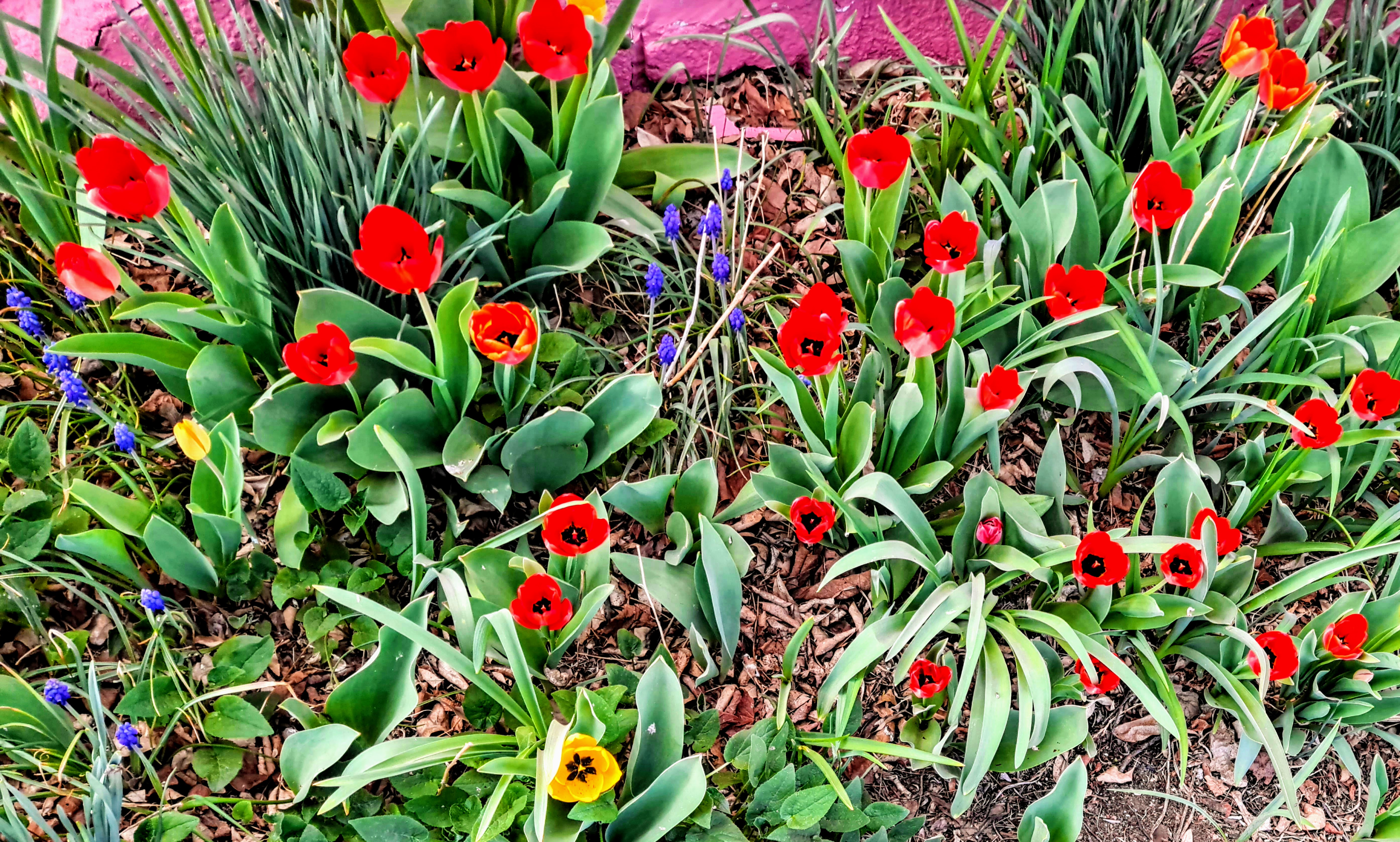
After that, I planted a couple of dozen tulip bulbs, then I watered the lawn. Not exactly a day to remember decades from now, but a lovely day nonetheless.

I keep telling myself that this will be the last year I do this sort of planting, and that might be true, but I realized when I was out there earlier that the place where the shingles for my gazebo are being stored (they were actually dumped there, but saying they were stored makes it seem less haphazard) would make a perfect daffodil garden — a bright spot for the spring blooms, and yet out of the way for when their season has passed.

Even if the weather is back to normal or unseasonably chilly next year, I should be able to manage to plant one small garden.

Meantime, the next two days will be much like today, which will give me a chance to finish planting the tulip bulbs before the temperature begins dropping again.

***

Pat Bertram is the author of Grief: The Inside Story – A Guide to Surviving the Loss of a Loved One. “Grief: The Inside Story is perfect and that is not hyperbole! It is exactly what folk who are grieving need to read.” –Leesa Healy, RN, GDAS GDAT, Emotional/Mental Health Therapist & Educator.

Underestimating Gardening Tasks

I am enjoying the unseasonably warm temperatures. The late mornings are still a bit chilly when I go out to work in my yard, so I don’t get the full benefit of the 70+ high temperature, but it’s still nice to be able to work without freezing my fingers and toes.

I have learned that when it comes to gardening, I always underestimate the time it takes to any task, and planting this last batch of bulbs is no different. I am placing them between the daylilies I planted a couple of months ago, so I figured the ground would be easy to work, but unfortunately, I let the prostrate bindweed take hold. I started out digging it up, but discovered that I was also digging up the newly planted daylilies, so I decided to wait until it was time to plant the tulips and do it all at once (weed and plant). And so I really have my work set out for me.

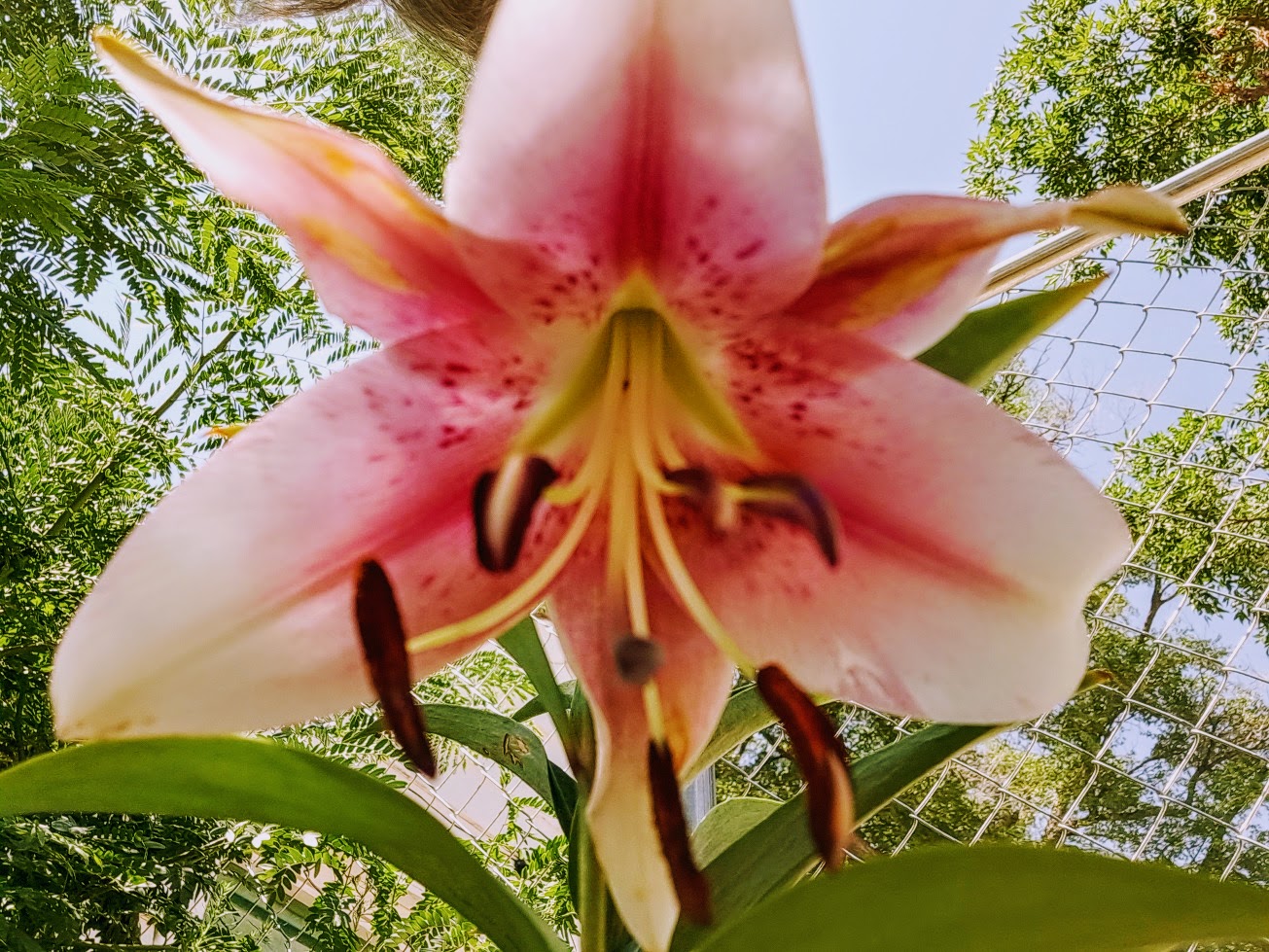
I also have to decide what to do with the lily trees I planted. The first twenty had a note on the package to plant 3” deep, which I did. A second batch from another company that I received ten days after the first batch said to plant 6” deep, which I also did. Concerned about the disparity of depths, I checked online, and the online instructions from the company where I bought the first twenty said to plant 10” deep. If I can figure out where the bulbs are (I raked the area flat, so it’s anyone’s guess), I might try to dig them up and replant them, but if the cooler weather comes too quickly or if my knees give out, I will have to wait until next fall and buy the bulbs again. Which I do not want to do because they are relatively expensive.

I am so not a gardener! Though I suppose, by the time I get my yard landscaped, I’ll at least know a bit more about what I am doing. It’s too bad about the lilies — I was really looking forward to an eventual lily tree forest of six-foot-tall plants. Apparently, the plants die back every winter, and every spring for three or four years, they come back taller than ever until they eventually grow to their full height. Planting new bulbs next fall would put the “forest” back another year so I wouldn’t see the full growth until the fourth year.

The good news is that if I decide to try to replant, and if I can find the bulbs, it should be an easy enough task since the ground was worked to at least a 6” depth.

But then, there is that comment I made earlier, that I always underestimate the time it takes to do any gardening task. Still, I can take comfort from knowing that at least the weather will be warm for a my bulb hunt.

***

What if God decided S/He didn’t like how the world turned out, and turned it over to a development company from the planet Xerxes for re-creation? Would you survive? Could you survive?

A fun book for not-so-fun times.

Click here to buy Bob, The Right Hand of God.
Dona Nobis Pacem

I joined the peace bloggers in 2012. And every November 4th since then, I have blogged for — and about — peace.

This year’s theme is “Courageous Peace in a Time of Great Change.” I believe in personal peace, in finding peace within ourselves no matter what happens to provoke us into chaos. In fact, I think personal peace is the only peace attainable because it’s the only sort of peace we have any control of. Wanting world peace is a cliché, a coward’s way of putting evading responsibility and putting the onus on others, and those others generally use “peace” as a club to beat the unpeaceful into submission. But taking responsibility for oneself and finding personal peace? That takes courage. Eschewing the outrage so prevalent today? That, too, takes courage. And finding peace in a time of great change? That takes the most courage of all.

I have been folding a senbazuru, which is 1,000 origami cranes, in my effort to find my own peace, a sort of mindfoldness. (As of today, I have folded 992 cranes.) Traditionally, the crane has been a symbol of success and good fortune, and supposedly, if you had the patience and commitment to fold l000 paper cranes, your wish would come true. (It’s no wonder that one of the first books about origami, published in Japan in the late 1700s, was entitled, How to Fold 1000 Cranes.)

In the last century, however, the crane became a symbol of peace because of one girl, Sadako Sasaski, a victim of Hiroshima. Dying of leukemia, she started folding a senbazuru in the hopes of getting well. When she realized she wouldn’t finish the task before she died, she switched her focus to peace. Legend has it that on her deathbed, she held one of her cranes and murmured, “I will write peace on your wings and you will fly all over the world.”

Today is the annual Blog Blast for Peace, a time for finding the courage to write peace on our own wings as we go about our busy lives.

Dona nobis pacem.

***

Pat Bertram is the author of Grief: The Inside Story – A Guide to Surviving the Loss of a Loved One. “Grief: The Inside Story is perfect and that is not hyperbole! It is exactly what folk who are grieving need to read.” –Leesa Healy, RN, GDAS GDAT, Emotional/Mental Health Therapist & Educator.