I Am So Romantic!

sleeping bearNichole Bennett, author of Ghost Mountain and Sleeping Bear, wrote a blog post in honor of Valentine’s Day next month, entitled Are you romantic? Or romantic? She admits that she’s not romantic, “at least not in the “wine me, dine me, we live happily ever after” way. Then again, if you mean “romantic” in the Edgar Allen Poe, basing your writing on the Supernatural, I’m so romantic it’s not even funny.”

I can relate to that. I used to enjoy a bit of traditionally defined romance in movies, books, and in my own writing, but I’ve noticed lately that I’ve become something of a romance-phobe. I think it has to do with dealing with my loneliness, getting on with my single life, and accepting aloneness as my current normal.

I first noticed a change about a year ago. I could no longer handle books with a happy ending for the romance subplot (I don’t read romances per se; the romance always has to come as an adjunct to a more compelling story.) I didn’t like that the character got to have a romance when I no longer could. (It made me cry, if you must know.) On the other hand, if there was no happy ending to the romantic subplot, well, that made me cry too, and quite frankly, I’m sick of crying. So . . . no more reading.

Lately I’ve noticed that the romantic subplot in movies makes me itchy. Not only does secondhand romance seem pathetic, it makes me feel lonely, and I certainly don’t need anything to a) remind me that I don’t have a romantic relationship and b) make me feel lonelier than I already am.

Which brings me to writing. I’ve been thinking about writing fiction again. I want to find time and space (mental space, that is) to write the dance murder mystery that was once suggested to me, but beyond that, I haven’t a clue what to write. My work-in-progress features a necessary romance (necessary because they have to have a baby. Although that baby doesn’t show up until the very end of the book, he is the crux of the story). But I begrudge those poor characters their romance and so the book remains a work-in-pause. In two other WIPs, the poor girl goes off into the sunset by herself, which at one time fit my idea of romance, but now just seems . . . lonely.

So . . . no books, no movies, no writing. No coupling of any kind. If that’s romance, then yes, like Nichole, I am so romantic it’s not even funny.

Click here to read Nichole’s post: Are you romantic? Or romantic?

Click here to read an interview with Nichole R. Bennett, Author of “Ghost Mountain”

***

Pat Bertram is the author of the suspense novels Light Bringer, More Deaths Than One, A Spark of Heavenly Fireand Daughter Am I. Bertram is also the author of Grief: The Great Yearning, “an exquisite book, wrenching to read, and at the same time full of profound truths.” Connect with Pat on Google+. Like Pat on Facebook.


Grief: The Great Learning, Day 445

I’ve saved the letters I wrote to my life mate/soul mate after he died, thinking that one day I would write a sequel to Grief: The Great Yearning, the story of my first year of grief. I’d planned to call the sequel Grief: The Great Learning, and detail the lessons gleaned from the second and third years of my grief. Because I no longer want to keep revisiting such angst, there will be no sequel, so I’m publishing the letters here on this blog as a way of safeguarding (and sharing) them.

Although this letter was written three and a half years ago, it reflects much of what I am thinking about now. My father recently died, and now I am facing what I could only think about back then — the vast open plain of the future before me.

I am packing to leave this house and go . . . I know not where. I’ll probably stay around here for a while. I have made new friends after those referred to in this letter disappeared out of my life, and it just occurred to me that I can speak about all of my concerns to at least one of those women. It’s nice and helps offset the loneliness that still hits me every evening.

And oh, yes. I still keep hoping for major changes — good changes.

###

Day 445, Hi, Jeff.

I’ve been going through an upsurge of grief, missing you so damn much. It stuns me, like a snake stunned by a rock thrown at it, to think I’ll never see you again. You’d think I’d have come to an accommodation with that, but such ”acceptance” of that fact does not bring acceptance of what it means — death for you, loneliness for me.

Life involves people, doesn’t it? I’m trying to “people” my life, but it’s not the same thing as being connected to one specific person. We were often lonely even when we were together, but this loneliness is incomprehensible. I’m considering staying here after my father dies because at least I know people here, but so many of the people I have met, especially those from my grief group, have already faded from my life. And if the rest disappear, then what?

It should be exciting to have the vast open plain of the future before me, but all I see is bleakness and aloneness. I have no one to talk to about my concerns. I don’t know how to cope with that. I keep hoping for major changes (good changes), but all that seems to be happening is a slow descent into inevitability.

I hope you’re not lonely. I couldn’t bear that.

***

Pat Bertram is the author of the suspense novels Light Bringer, More Deaths Than One, A Spark of Heavenly Fireand Daughter Am I. Bertram is also the author of Grief: The Great Yearning, “an exquisite book, wrenching to read, and at the same time full of profound truths.” Connect with Pat on Google+. Like Pat on Facebook.
Decluttering

In between bouts of sorting and packing my stuff (which in many cases entails finishing started projects so I can store the equipment and supplies in their appropriate boxes), I’ve been clearing out my father’s stuff. I’m leaving the furniture in the house for now because supposedly it’s harder to sell completely empty houses, but even though my father lived sparsely, there are still many things to be sorted through and given away or boxed up for donation— medical and first aid items, bedding, towels, office supplies, dishes and kitchen tools, books, and on and on. And then there are the personal and household cleaning products that can only be tossed away. (I donated his clothes to a rescue mission a couple of months ago.)

I’m making procleangress on clearing out the house. In fact, most of the rooms except the linen closet and the kitchen (and my rooms, of course) have been decluttered. Nothing personal remains to destroy the fictive dream of prospective buyers. (Apparently, house hunters need to see themselves in the house, and other people’s possessions keep them from doing so.)

Strangely, after all these years, I’m falling in love with the house. I’ve appreciated the shelter, but never had any fondness for the house itself. It has been a sad place for me, the place I came to nurse my grief, to look after and then nurse my father, to deal with my abusive/alcoholic/schizophrenic brother. But as I am cleaning out the stuff in house, I am also cleaning out my “stuff” — my grief for my deceased life mate/soul mate, my despair over my brother, my complicated dealings with my father.

When my dysfunctional brother was here and banned from the house, he often expressed outrage that I lived like a millionaire and never felt grateful for the great gift I’d been given. I used to think, “No millionaire has ever had to look after both an abusive brother and a dying father, being torn between the two of them.” But what do I know. Maybe that’s what being a millionaire is all about.

Now however, I am living like a millionaire, reigning over a house full of empty rooms that speak to me of peace and comfort, of expansiveness, of new possibilities. (It is ironic that I so love empty rooms because I live in a clutter of projects-in-progress.)

Although the house is more than ten years old, there has never been a fire in either fireplace, nothing has been cut on the cutting board, the Jacuzzi has only been used a couple of times, there has never been more than one car in the three-car grease-free garage. Someone, somewhere, will be getting a lovely barely-used house to turn into a home.

And me? Well, I’ll be . . . somewhere. But I’ll always be grateful I had this time to declutter.

***

Pat Bertram is the author of the suspense novels Light Bringer, More Deaths Than One, A Spark of Heavenly Fireand Daughter Am I. Bertram is also the author of Grief: The Great Yearning, “an exquisite book, wrenching to read, and at the same time full of profound truths.” Connect with Pat on Google+. Like Pat on Facebook.

My Problem With Men

Lately I’ve been noticing a strange thing about men. If I get upset by something they say, even if they are simply imparting information and not saying anything to purposely hurt me, they respond, “I shouldn’t have told you.”

Huh? Just because I don’t like the news doesn’t mean they shouldn’t have told me. Just because I get upset is no reason to keep me in the dark. Are men so fragile they can’t handle anger, tears, heartbreak, even if it’s not directed at them? Or even if it is directed at them? (To tell the truth, I’m not sure I could handle anger or tears if they were directed at me, but if I did something to provoke those reactions, I sure would do something to try smooth things over.)

I seem to have lost the ability to deal with men, assuming I eCowboyver had the ability to begin with. I’ve lost a friend who was dear to me because he couldn’t handle my emotional reactions. He didn’t seem to think I had the right to be angry or feel hurt by anything he did, or maybe it was just that he didn’t like my show of emotion. For a while, I thought my problems with him were more of a personal nature, but now I see that the problems stemmed from a basic conflict — he is a man and I am a woman. We might not be from Venus or Mars or whatever planets we are supposed to be from, but there is a distinct difference in the way we see things.

Today, another man told me that my neighbors were hurt by my not telling them about my father’s funeral, though I had done so. They had been shunning me, turning around and walking the other way when they saw me or when I spoke to them, and even though I was upset by what he said, I needed to know because his words explained their actions. When I made the comment that it was my father who died, I got tearful as I always do now at the reminder of death. He immediately said, “I shouldn’t have told you.”

So what if I was upset? So what if I cried a bit? So what if I was momentarily angry at the unfairness of it? It’s not like I’m going to spend the rest of my life agonizing over the neighbor’s snubbery. (My word processor doesn’t like my making up words. It keeps changing snubbery to snobbery.) Luckily, my emotional reaction passed as quickly as it came, and luckily he was reasonable so we were able to get beyond our differences.

My real problem with men and emotions comes when I interject my emotions into the middle of a story or explanation. I don’t know whether it’s the interruption that upsets men or that the interruption is emotional. (I never notice this with women.) I don’t deny that my emotions are close to the surface now, and they pop up when and where they will without waiting for the end of a tale. I suppose I should try to cap my emotional responses, but I’m not sure I want to. It’s easier to get beyond life’s sad/bad parts if I can emote a minute (or a lot of minutes) and then let go.

There is a lesson in all this, though I’m not sure what.

***

Pat Bertram is the author of the suspense novels Light Bringer, More Deaths Than One, A Spark of Heavenly Fireand Daughter Am I. Bertram is also the author of Grief: The Great Yearning, “an exquisite book, wrenching to read, and at the same time full of profound truths.” Connect with Pat on Google+. Like Pat on Facebook.

Letter to Jeff, Day 435


Day 435, Hi, Jeff.

Another Saturday. I’m tearing up again, though I’m not sure why. Loneliness, I guess. Feeling sorry for myself. I need to get on with my life, concentrate on myself. But how lonely is that? Perhaps it’s better to have no hope. Just try to take the days as they come. It sounds a lot easier than it is. The damn emotions get in the way.

Will this sorrow ever end? Will anything good ever happen to me? Do you miss me? Do you still exist? Will I ever love again? Will anyone ever love me? Is this all there is — this emptiness? I can fill the emptiness with doing things — reading, writing, walking, whatever comes my way — but as soon as I stop concentrating on the “fill,” the emptiness shows up again.

I need something to hold on to. I need something concrete to build my life on, but there isn’t anything but maybe survival. Survival — that’s what your life ended up being about. Is that all there is? Survival until there is no more survival?

How did you manage to survive as well as you did? Was it worth it living with such pain? I guess, in the end, there isn’t really a choice. You have to play out the hand you’re given. Damn. I wish I weren’t so lonely. I might be able to deal with your being gone if not for that. And I really should be able to deal with it. For cripes sake, I am not a child.

What a mess my life is, well, if emptiness can be called a mess. I wish I cared about something. I wish I could talk to you. I wish you weren’t dead. I wish you hadn’t been so sick for so long.

Maybe I’m being insensitive, whining about my life when you no longer have a life. But then, maybe you got the better end of the deal. I hope so.

I love you.

***

Pat Bertram is the author of the suspense novels UnfinishedMadame ZeeZee’s Nightmare, Light BringerMore Deaths Than OneA Spark of Heavenly Fireand Daughter Am IBertram is also the author of Grief: The Great Yearning, “an exquisite book, wrenching to read, and at the same time full of profound truths.” Connect with Pat on Google+. Like Pat on Facebook.

We Are Not All Created Equal

Despite what the U.S. Declaration of Independence states, all men are not created equal. Nor are all women. Ideally, people are equal under the law, but even that is a specious claim since so often rich folk who can hire high-priced attorneys with dozens of partners and associates are more equal than those who have to make do with overworked public defenders.

But this bloggery isn’t about such grand matters. It’s more about the little things that makes us so very different from one another.
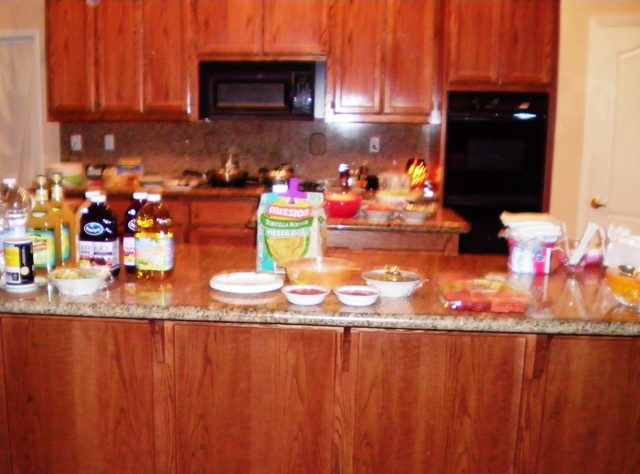
People who love Mexican food are often perplexed by my dislike of cilantro. “How can you not like cilantro?” a friend asked me in accusatory tones, as if she thought I were being contrary by choosing to dislike something most people loved. I retaliated by asking her what cilantro tasted like to her. She said it tasted citrusy, slightly bitter and very refreshing. But that is not how it tastes to me. To me, it tastes like soap. Cilantro contains chemical compounds called aldehydes, which are also present in soaps and other cleaning agents, and apparently I don’t have the enzyme that breaks down the soap-like compounds of the herb into a tasty seasoning, so I get the full soap taste.

Regardless of what she seemed to think, I was not being contrary. Just unequal.

A similar situation happened when I drove a friend to her mountain home this weekend. In a couple of instances, I had to drive down very steep roads that made me feel as if I were free falling down an elevator shaft. She made a few comments about my nervousness, and she didn’t seem to believe me when I told her I wasn’t nervous, that it was a physical reaction. I explained it using the example of a level. Some people are born with something similar to the bubble in their center, so they always know where they are in relation to the earth. These people can turn cartwheels, ride roller coasters, descend steep slopes, and never lose their equilibrium. I on the other hand, have no bubble, so I never know where I am in relation to the earth. (It’s an inner ear thing, or so I have heard.) I remember once as a very small child, maybe 5 or 6, I took tumbling lessons, and I couldn’t do what the other kids did. I got too disoriented, and feared I would break my neck. (They always say kids that young don’t know there is such a thing as necks breaking, but I bet others who lack an inborn plumb bubble also were aware of the possibility.)

Again, I wasn’t being contrary by repudiating her calling me nervous, I was simply explaining our inequalities. Some things I can do, others can’t, and some things others can do, I can’t. It’s that simple.

I’m not sure that being equal is an important matter, anyway. We all wish to be treated the same as others in similar circumstances, and we should be. But other than that, it’s the ways we are unequal that make us who we are, and that is something to celebrate.

***

Pat Bertram is the author of the suspense novels Light Bringer, More Deaths Than One, A Spark of Heavenly Fireand Daughter Am I. Bertram is also the author of Grief: The Great Yearning, “an exquisite book, wrenching to read, and at the same time full of profound truths.” Connect with Pat on Google+. Like Pat on Facebook.

I Am Truly Blessed

As I was setting up for my party last night, cooking the various taco fillings, chopping the many garnishes, and arranging everything in a pleasing and practical manner, I thought about all the people I had invited, and what they meant to me.

First were the people from my grief group. When I came here after the death of my life mate/soul mate, I joined a grief group to be with others in the same hideous and incomprehensible situation, and they helped me get through that awful time. I’m still friends with some of those folks, though I don’t see them very often, and it was nice to think of seeing them again.

Then there was the group I went walking with. Through the hugs we shared and the stories we exchanged during the three-mile walks, these friends helped see me through the torments of dealing with my dysfunctional brother and dying father.

And finally, the dance group, especially our teacher, who helped me see that life was still worth living, that there were still things to be learned and much joy to be experienced.

Although I hadn’t planned the party to be anything other than a simple get-together with friends, it turned out to be more than that — a chance for me to say thank you and to let everyone know how much they meant to me.

While I was making my little speech to my guests, I realized the truth: that although the past five years as I lived them seemed to be one trauma after another, in retrospect, because of these people, those years seem pretty damn wonderful.

I am truly blessed.

???????????????????????????????

***

Pat Bertram is the author of the suspense novels Light Bringer, More Deaths Than One, A Spark of Heavenly Fire,and Daughter Am I. Bertram is also the author of Grief: The Great Yearning, “an exquisite book, wrenching to read, and at the same time full of profound truths.” Connect with Pat on Google+. Like Pat on Facebook.

Phones and Other Connections

When did talking to someone on the phone become something that people did while doing something else?

I have a friend who calls me only while she is walking. I have another friend who calls me only when driving. I just talked to someone who put me on the speaker so she could make her bed while we chatted. I know several people who play computer games while on the phone. In other words, no one really talks to anyone anymore. They justphone seem to be filling in what might otherwise be almost-empty time.

I no longer feel slighted by this disregard as I once did, but I am egotistical enough to want people to want to talk to me, to want them to want to connect on a more personal level rather than using me to keep from being boring by mundane activities. (Or — perish the thought!! Could they be doing those other things to keep from being bored by me?)

I do realize time is at a premium in this insanely busy world, that sometimes people can only converse during barely-used moments, but still, it would be nice to feel as if what I have to say — or what people have to say to me — is important enough to experience unaccompanied by the huffs and puffs of the walkers, by muttered comments to other drivers, by computer beeps and dings.

We’ve come a long way from the days of being tethered to stationary phones, but still, it seems as if we’ve gone too far. Just because we can drive and talk on the phone, or walk and talk on the phone, play games or do housework and talk on the phone, it doesn’t mean that we should.

Or maybe I’m being too unrealistic and should be grateful for any moment of another person’s attention, no matter how divided.

***

Pat Bertram is the author of the suspense novels Light Bringer, More Deaths Than One, A Spark of Heavenly Fire, and Daughter Am I. Bertram is also the author of Grief: The Great Yearning, “an exquisite book, wrenching to read, and at the same time full of profound truths.” Connect with Pat on Google+. Like Pat on Facebook.

As Long As We Are Alive, We Are Alive

During the last months of my life mate/soul mate’s life, his brain was so riddled with cancer, he lost the ability to hold a thought long to enough to have a conversation, so his communications seemed more like lectures than exchanges. I remember bristling during those lectures — gritting my teeth and clenching my fists. It seemed as if he were being paternalistic, as if he didn’t trust me to take care of myself.

I knew he was ill, of course, though at the time, I didn’t know how bad off he really was. He’d been ailing for so long, I thought that’s the way it would always be, his getting weaker and weaker, maybe for many more years. But he died, shocking me to my core. And then guilt and regret descended on me. How could I not have listened to every single word he spoke during the time of his dying? How could I not have treasured his concern for me? How could I have been so impatient, so irritable, so resistant to what he had to say?

In the five years since Jeff’s death, I’ve worked through my guilt and regrets, even came to the realization that it wasn’t he I was resisting but his dying. Still, it wasn’t until my father’s death when my personal history repeated itself that I truly understood the dynamics of what had happened between Jeff and me. (In the case of my father’s last days, he wasn’t lecturing me so much as expecting to be waited on, and I simply did not want to do for him what he could do for himself.)

In my writing, I’ve been calling the last months of both men’s lives “the time of his dying,” but it was only their “dying” in retrospect. It was actually still a time of living for them, which makes my less than perfect behavior understandable. We were still involved in our relationships and roles, and it was only death that made my reactions seem horrific. If they both had continued to live, of course I could not have tolerated spending many years being lectured to or being expected to wait on someone who was able to do things for himself. These are just normal conflicts of living. And though they dying, they were still alive. Still living. And so was I.

I remember crying to the hospice social worker after Jeff died, lamenting his ill health. “He never had much of a life,” I wailed. She said, “He had a life. Being sick was his life.”

It seemed like such a terrible thing to say, but now I understand what she meant — that he was alive until he wasn’t.

This is one case where understanding can’t change anything. If I am ever thrust into such a situation again, I’d still do the same thing — carry on as if the person were alive and going to be alive for a long time. The one change will be that I won’t have regrets. Although my regrets over Jeff loomed large, I have no regrets over anything I did or did not do for my father. We were involved in playing out our roles the best way we could up to the end. And there is nothing to regret in that, nothing to feel guilty about.

I did learn something from both men, though, and that is to live until the very end. As long as we are alive, we are alive.

***

Pat Bertram is the author of the suspense novels Light Bringer, More Deaths Than One, A Spark of Heavenly Fire, and Daughter Am I. Bertram is also the author of Grief: The Great Yearning, “an exquisite book, wrenching to read, and at the same time full of profound truths.” Connect with Pat on Google+. Like Pat on Facebook.

Tears. Again.

If you’re sick of hearing about my sorrow, you can leave. I don’t mind. I’m sick of my grief and tears, too, but I’m stuck with them.

Ever since my father’s death two months ago, I’ve been in a strange state. Not only has his death brought back the memory of the death that devastated me (the death of Jeff, my life mate/soul mate), it’s set in motion a whole new set of changes in my life. I came to look after my father after Jeff died, and now that they are both gone, I have to look to my own life and figure out where I want to go and what I want to do.

Do you really think I want to walk the Pacific Crest Trail, live a nomadic life in some sort of camper/van, or any of the other things I blog about? Of course I don’t. But the one thing I do want — to go home to Jeff, the Double Rainbowonly person who truly understood me — is forever denied me. And so I try to find new wants, which isn’t easy because I’m not a person who wants. (I never wanted anyone, either, but like a mythical being clothed in light, Jeff appeared in my life one incredible Saturday morning in August thirty-eight years ago. And then, almost five years ago, he left to go back from wherever he came.)

I’m fine most of the time. Really, I am. But today, I was with friends watching a movie — Patrick Swayze’s The Last Dance — and one woman piped up, “Divorce is so much worse than death.” I’d heard her make that same stark remark many times before, but today, I couldn’t let it pass. I said, more sharply than I intended, “You keep saying that, but it’s not necessarily true.” She went on her normal spiel about how when someone is dead, they don’t keep coming back, and I again spoke sharply. “Don’t you think I would give anything if Jeff came back? Your ex-husband has finally left you alone, but Jeff is still dead.” Her response was her oft-repeated, “But you didn’t have to deal with him rejecting you.”

I could have told her about the thousands of rejections one has to deal with when someone is dying, how they leave you every single day, how they have no time to think of you because their own concerns loom so large, how your heart breaks and breaks and breaks with the constant rejection until finally you don’t feel anything any more. I could have said a lot of things, but I wasn’t able to continue the conversation. I’d started crying when I spoke the simple words, “Jeff is dead,” and I couldn’t stop.

I pulled myself together to take my leave after the movie, but I cried all the way home, and I’m crying still.

How is it possible that almost five years later, I can be pulled back to the pain of his dying so quickly? Sometimes I wish I were as stoic as I once thought I was — I presumed I’d take his death in stride — but grief is more than simply feeling sad or rejected. It’s even more than those insipid 5 (or 7) stages of grief that everyone seems to believe in. Sure, we feel shock, denial, anger, guilt, sadness, depression, and acceptance, but most of us also feel anxiety, frustration, loneliness, confusion, despair, helplessness, panic, questioning (both as a need to know why and as a cry of pain), loss or gain of faith, loss of identity, loss of self-esteem, resentment, bitterness, isolation, inability to focus, suspended animation, waiting for we know not what, envy of those who are still coupled or who have yet to suffer a loss. And we suffer myriad physical symptoms such as queasiness, dizziness, sleep problems (too much or too little), eating problems (too much or too little), bone-deep pain, inability at times to breath or swallow, exhaustion, lack of energy, restlessness, and seemingly endless bouts of tears. (Yes, I know, those who get divorced also feel many of these things, and I empathize with them, but they do not have to deal with the angst of death, which adds a whole other layer of pain to the equation.)

My grief has mostly wound down since I’ve dealt with so many of the various aspects of grief, but still, days like today remind me that I will never be over Jeff, never stop missing him. And so I try to be tolerant of other’s condescension, try to create new possibilities, try to want something enough to make a life out of it.

And yet, no matter what I do for the rest of my life, he will still be dead. Nothing will ever change that — not my thoughts of an adventurous future and most certainly not my tears.

***

Pat Bertram is the author of the suspense novels Light BringerMore Deaths Than OneA Spark of Heavenly Fireand Daughter Am IBertram is also the author of Grief: The Great Yearning, “an exquisite book, wrenching to read, and at the same time full of profound truths.” Connect with Pat on Google+. Like Pat on Facebook.