Job Shadowing

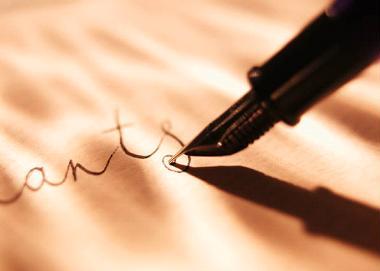
A guidance counselor at the local grade school contacted a woman I know and asked her to speak to one of the students about being a writer. This woman’s expertise is in journalism, which is one thing the boy is interested in, but the counselor also wanted an author to talk to him, so my acquaintance passed the request along to me. (The subject line of the emails that were copied to me is “job shadowing,” hence the title of this blog.)

I’ve been ignoring the whole situation because I’m truly hesitant about encouraging anyone to be a writer. I’m of the same mind as Dorothy Parker; “If you have any young friends who aspire to become writers, the second greatest favor you can do them is to present them with copies of The Elements of Style. The first greatest, of course, is to shoot them now, while they’re happy.”

People who want to write will write despite any encouragement or lack thereof, so I certainly wouldn’t blight the kid’s interest in writing by not talking to him, but apparently he isn’t interested in the craft of writing so much as writing as a job, and I can’t tell him anything about the job aspect. (Except to tell him that to make money as a writer, he needs to find another job, such as plumber or electrician.)

I can tell people how to write better, I can tell them how to develop a story, I can tell them any number of things about the craft of writing, but I have no idea how to make a living at being a writer. Besides, I tend to think any writing advice I have would go over the head of even the smartest kid, since so much of what I know is obviously over the heads of the most well-known and wealthiest writers today because so few of them practice what I would preach. Being a good writer and being a successful author have little correlation to one another. Rather than expertise, it is luck and phenomenal marketing skills that determines a successful writer.

Making the situation worse, nowadays success seems to be about sliding in on the coattails of another writer. It used to be that there was a turnover in bestselling authors as they died or retired, but the trend now is to continue the name ad infinitum. And ad nauseum.

I did give a speech to students not that long ago about the importance of writing, but that’s different from talking one-on-one.

Writers, if you were presented with this dilemma, what would you do?

***

Pat Bertram is the author of Grief: The Inside Story – A Guide to Surviving the Loss of a Loved One. “Grief: The Inside Story is perfect and that is not hyperbole! It is exactly what folk who are grieving need to read.” –Leesa Healy, RN, GDAS GDAT, Emotional/Mental Health Therapist & Educator

Mystery Script

[For those who couldn’t make it to the murder mystery dinner, or who did but couldn’t hear what people were saying, the following is what I’d written. I wanted the people with scripted parts to be placed around the room to make it seem as if it weren’t a play — which it wasn’t; it was supposed to be an interactive game — but things didn’t work out that way. Still, one way or another, it did work out.]
DOLLY CARSON introduces herself as The Mistress of Ceremonies of the Lost Souls Underground Club, extends a welcome along with a wish that her guests enjoy their evening, introduces Felix Tucker as a card dealer, Win Winslow as a bookie taking book on an upcoming boxing match, then raises a finger to her lips and cautions everyone to “speak easy.”

After everyone has their dinners, DOLLY CARSON introduces POPPY O’HARE as the Lost Souls own songbird.

When Poppy finishes her song, BESS JORDAN approaches her on the stage.

BESS JORDAN My name is Bess Jordan, and I have a petition to get more rights for women. Would you sign it?

POPPY O’HARE: I’m an emancipated woman. I don’t need anyone’s help. (She flounces off)

BESS JORDAN: (Calls after her) The nineteenth amendment giving women the vote is only the first step.

FLORENCE NASH: Poppy’s emancipated all right. She emancipated her way into my husband’s bed. My name is Florence Nash. I’ll sign.

CARMEN TRUJILLO: I’m Carmen Trujillo. I’ll sign, too.

During the meal, there is more talk about women’s rights instigated by BESS JORDAN , flirtatiousness from POPPY O’HARE, who is Win Winslow’s girlfriend, and snide remarks about flirtatious poppy from FLORENCE NASH, but most of the conversation is about the money everyone lost at the horse race that morning, when the least favorite (Milk Money) beat the favorite (Dandy Lion) at 50 to 1 odds.

It is widely known that a mysterious person known only as “Mr. Big” runs the rackets in the County, and it had been rumored that Mr. Big had fixed the race so that Sugar Beet (third place contender) would win. No one knows who to be angry with: Mr. Big for selling them out, a second person who sold out all of them, including Mr. Big, or the jockeys who only did what they’d been bribed to do.

When the meal is almost finished, DOLLY stands up and flings out her arms:

DOLLY CARSON: That was the slowest horse race in history.

CARMEN TRUJILLO: My husband is going to kill me when he finds out how much I lost.

JAMES PROWERS: I lost more than anyone.

CARMEN TRUJILLO: What are you talking about, Mr. Prowers? Milk Money won.

JAMES PROWERS: Call me James. James Prowers. Milk Money is my wife’s horse.

FELIX TUCKER: So? What’s hers is yours.

JAMES PROWERS: Milk Money is the worst trotter ever. Couldn’t beat a donkey.

FELIX TUCKER (bellowing): Shut up everyone, I want to hear this!

CARMEN TRUJILLO: Then why did she win?

JAMES PROWERS (points to Frank Faraday): Ask him. Frank Faraday. He’s the nincompoop who rode her.

FRANK FARRADAY: (Stands up) I didn’t mean to, Mr. Prowers. Honest. It’s just that all the other racers were so far behind. Usually I’m the one behind, on account of I’m bigger than all the other jockeys, and I didn’t know what else to do.

JAMES PROWERS: That’s why I hired him. He never wins. I figured with him on that dobbin I couldn’t lose. See, my wife wants to help me train horses, and she kept nagging me and nagging me, so I agreed that if Milk Money won, she could help.

FELIX TUCKER: I heard that Mr. Big fixed the race and that Sugar Beet was supposed to win. That’s why I bet on Sugar Beet. I only bet on sure things.

FRANK FARRADAY: Mr. Big did fix the race, but then that gambler Win Winslow came around and bribed the rest of the jockeys to lose. He tried bribing me, too, but Mrs. Prowers had already bribed me to win, and I am honest. Honest, I am.

WIN WINSLOW (who is at a different table, stands up): Are you talking about me?

FRANK FARRADAY: Yes, Mr. Winslow. Sorry.

WIN WINSLOW: No problem. I don’t care if everyone knows what I did

POPPY O’HARE: You’re not scared, baby? What if Mr. Big finds out?

WIN WINSLOW: Mr. Big has been running things too long. It’s time for new blood in this town, and I intend to be the new top dog.

FELIX TUCKER: So you’re the one who made the killing at the track?

WIN WINSLOW: That was me! I placed my bet under a phony name so that Mr. Big wouldn’t know who won, but now that I have my money and everyone knows I’m Mr. Bigger, it doesn’t matter. Mr. Big wouldn’t dare touch me.

POPPY O’HARE: But what about people who lost their money, like Felix Tucker or Carmen Trujillo? Won’t they come after you?

WIN WINSLOW: They can’t. They know if they did, they’d never be able to gamble in this town again.

JAMES PROWERS: I wouldn’t mind if something happened to you. My wife is at home right now, painting the barn pink.

WIN WINSLOW: (laughs): I hear you. That’s a fate worse than death. Hey, Effie! Bring me some of my Amaretto!

EFFIE tOWNSEND (bartender): Sure, Mr. Winslow. I’ll go get your special bottle (Goes in the back room.)

CARMEN TRUJILLO: I like pink.

JAMES PROWERS: A pink barn. I will be a laughingstock.

EFFIE tOWNSEND: (placing a glass in front of Win Winslow next to one that’s already there): There was only enough in the bottle for one drink, so this is the last of it.

POPPY O’HARE: I don’t know why people have to gamble. Why can’t they just watch the pretty horses run?

WIN WINSLOW: Without gambling, there is no horseracing.

POPPY O’HARE: (snuggling up to Win): But gambling upsets people too much.

WIN WINSLOW: I have business to conduct, Dollface Why don’t you go sing us a song?

POPPY O’HARE: Okay, Snookie. (She picks up a glass and takes a swig.) Ooh, that’s horrible stuff! (Goes to the stage area and begins to sing. After a verse or two, her words falter, she stumbles, and collapses.)

DOLLY CARSON rushes to the fallen singer, but she’s pushed aside by CHARLES PRESTON.

CHARLES PRESTON: Step aside. I’m a doctor. Dr. Charles Preston. (He bends over the body.) This woman is dead. Murdered. I can smell the bitter almonds from cyanide. Call the cops.

(General pandemonium, and cries of “No cops” and “No pigs” “No Coppers” and “I have to get out of here.”

Dolly CARSON: Sit down.

FELIX TUCKER (bellowing): Everyone sit down and shut up!

Dolly CARSON: Thanks, Felix. We don’t need the coppers. We can figure out who killed her and then turn the murderer over to the cops ourselves. (Points to Florence Nash who has been badmouthing Poppy all evening.) You didn’t like the victim, did you?

FLORENCE NASH: She was okay.

Dolly CARSON: That’s not what you were saying earlier.

FLORENCE NASH: Okay, you’re right. I didn’t like her. She was a flirt. And more. She was always going after my husband, and he left me, thinking she meant she wanted to be with him. But she was just playing around, and now I’m all alone. But I didn’t kill her.

Dolly CARSON: Do you know anyone beside you who would want her dead?

FLORENCE NASH: Everyone. All the women anyway. She flirted with our husbands.

BESS JORDAN: She put the woman’s movement back twenty years.

Dolly CARSON: You didn’t like her, did you, Bess?

BESS JORDAN: No. Didn’t hate her enough to kill her, either. We don’t need people like her. The woman’s movement is becoming stronger all the time. We can do anything men can, and better.

WIN WINSLOW: In your dreams!

Dolly CARSON: She was your girlfriend, Win, but you didn’t really like her, did you?

WIN WINSLOW: She was a flirt. And a gold digger. But she was beautiful and fun.

Dolly CARSON: Is that why you killed her? Because the fun was over?

WIN WINSLOW: I didn’t kill anyone. I don’t need to. I got guys for that. Besides, poison is a woman’s weapon.

BESS JORDAN: No, poison is a woman’s privilege, but men poison, too. We are all equal.

Dolly CARSON (Points to people at random and asks them questions): You didn’t like the victim, did you? What was your beef with her? Do you know anyone besides you who would want her dead? Do you have any information relative to this investigation?

Dolly CARSON (turning to Mildred Boggs): Mildred Boggs, you were sitting across the table from Poppy. Did you like her?

MILDRED BOGGS: No, but . . .

Dolly CARSON: What was your beef with her?

MILDRED BOGGS: Same as everyone else. With women like her around, no one’s husband is safe, but . . .

Dolly CARSON Do you have any information relative to this investigation?

MILDRED BOGGS: Yes. That’s what I’ve been trying to tell you. I don’t think Poppy was supposed to be the victim. I think it was Win Winslow. She drank from his glass.

Dolly CARSON: The bottle was in the storeroom. Anyone could have spiked it with cyanide. It could have been Felix Tucker. James Prowers. Carmen Trujillo. Effie Townsend. Or anyone here. So, Win, who wanted you dead?

WIN WINSLOW: No one wants me dead. Everyone likes me. I’m a likeable guy.

Dolly CARSON: Does anyone else have anything to say? (If there’s no response, or when the discussion dies down, Dolly holds up a ballot.) We don’t want to call the cops, and since no one has any pertinent information, and since no one is confessing, let’s take a vote.

While the votes are being tallied, people go get dessert.

After the votes are tallied, Dolly announces the winners of the voting for Most Dastardly Villain, Best Costume, and Best Role Playing, and thanks everyone for being such Keen Detectives.

After the applause dies down, it’s time for the truth to come out. If the right person was chosen to be the villain, the killer takes a bow and explains why he or she did it. If the wrong person is chosen, the real villain tells the truth.

***

So, who do you think is the killer?

***

Pat Bertram is the author of Grief: The Inside Story – A Guide to Surviving the Loss of a Loved One. “Grief: The Inside Story is perfect and that is not hyperbole! It is exactly what folk who are grieving need to read.” –Leesa Healy, RN, GDAS GDAT, Emotional/Mental Health Therapist & Educator.
Mystery Evening Critique

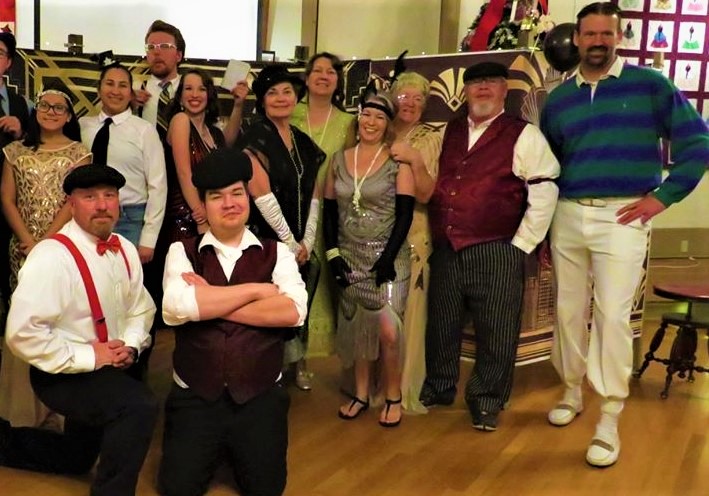
The Roaring Twenties mystery fundraiser was a success. It had the biggest turnout to a local event that I’d seen, it made money, and people had fun. At least, they had fun to the extent that the evening met their expectations. The people with no expectations and those who were willing to get into the spirit of the game had the most fun. Those who expected to sit and watch a play were not quite as satisfied.

People’s comments to me revealed their expectations, and said more about them than it did about my writing. Some people said I did great, and I could see they meant it. Some people avoided me. Others damned me with faint praise: “It was good for a first attempt.” Or “You’ll do better next year.” Others said it was fun, but that they couldn’t hear most of the play.

A friend warned me about this — how nerve wracking it was for scriptwriters who had to sit back and see their dialogue not working the way it was supposed to. I’d glibly responded to him, “If it doesn’t work, I’ll get to blame the role-players for not doing their job of engaging the audience.”

And so it was.

Few people, even those to whom I had explained the concept, got the point — that it was a game, a role-playing game, with some scripted parts to keep things going. Everyone who came was supposed to play a role, and to that end, each had been given a cheat sheet with a bit about their character. For example: You bet on Sugar Beet since it was supposed to be a sure thing, and now you think Mr. Big sold you out. Or You strongly approve of the suffragette movement, and you think flirts like Poppy give women a bad name.

The people who played the various scripted characters were supposed to sit among those without lines and get them involved. Only a couple of women did this, and did it admirably, but I could see the strain it was for them since so few responded to their attempts. Some of the younger people who volunteered to play a part were great, but others huddled in a corner with their friends instead of getting the non-scripted folks to participate, and they kept sitting when they too-quietly spoke their lines rather than standing up when they were supposed to speak.

After the murder, non-scripted people were supposed to have been interrogated, but that part was dropped, maybe because of the problem with getting attendees into the spirit of the game.

I’d thought that during the event the characters would become less my creation and more theirs as they adlibbed, took things further than what I had suggested, and got other non-scripted guests to participate. None of that happened. And since I wasn’t one of those who were supposed to be chivvying others into participating, there was nothing I could do about it. Nor was there anything I could do about lost lines, swallowed punchlines, clues that no one could hear, participants with jitters and nerves, and people who wanted to do things their own way.

That the evening was a success was due to the efforts of those who did get into the spirit of the thing and who so wonderfully (and in the case of the bartender, so chillingly, and in the case of the jockey, so charmingly) delivered their lines.

From a personal standpoint, I enjoyed the evening. It was interesting to see how far I had come in the eleven months since I’d moved here — how many people I knew or recognized, how many people knew or recognized me.

From an author standpoint, it wasn’t nearly as enjoyable, mostly because of my own expectations. The game never took on a life of its own, as I had hoped. I’d seen it as sort of a flash mob thing, where scripted characters, seemingly from the audience, would jump in with their lines as if on the spur of the moment, which never happened because of the aforesaid huddling. And I woefully overestimated how many attendees would get into the speakeasy attitude and play along. (I should have known what would happen when only a smattering of people with non-scripted lines made any effort to dress the part.)

So what’s the solution? Insist on having greater control of the process? But then, this wasn’t really about me as an author, but about the community. Give explicit instructions to the scripted players, making sure they sit among the “audience,” and write additional lines so they aren’t expected to adlib? When people make a reservation, ask if they are willing to say a few lines, and then give them specific things to say? Wait to see who shows up in costume, and give those people lines? The characters who were the most enthusiastic and who really carried the evening were those who had been coopted almost at the last minute, so is the solution to coopt more people like these, people with big voices and bigger personalities? Or is the answer to give up on the idea of an interactive experience and give people the play they expected?

But then, that raises the question: Is this who we have become? A people who would rather simply sit and watch rather than get involved?

I don’t know the answer, and I don’t need to since my scriptwriting days are done.

Besides, the evening really was a success, and in the end, that’s all that counts.

***

Pat Bertram is the author of Grief: The Inside Story – A Guide to Surviving the Loss of a Loved One. “Grief: The Inside Story is perfect and that is not hyperbole! It is exactly what folk who are grieving need to read.” –Leesa Healy, RN, GDAS GDAT, Emotional/Mental Health Therapist & Educator.

Kicks and Kick-offs

While people were preparing for kick-off yesterday, I was getting a kick of a different kind. The enjoyment kind. The amusement kind. The small town kind.

Yesterday was a gorgeous day, the warmest in months, and since it was also shortly before the super bowl kick-off, the local grocery store was packed. If I’d considered super bowl preparations (and why would I since the super bowl is just another day to me), I would, of course, have waited until everyone was ensconced in front of their televisions to venture forth, but then I would have missed out on the kick of a small-town experience.

I happened to see the mayor in the store, and we stopped to chat a moment. (Think about that. How often have you met your mayor at a grocery store, and he — or she — not only recognized you and knew your name, but stopped to chat with you? Ah, small town living!) He introduced me to his wife, and I blurted out, “She’s your wife?” He said, ”You seem surprised.”

And I was. Not that she was his wife, but at the coincidence of having met her for the first time at the library a couple days previously. She’d looked at the titles of the stack of books I was checking out and said, “I’ve read all those.” That seemed astonishing to me, not that she read, but that her reading tastes were as eclectic as mine — everything from cozy mysteries to deadly thrillers, from women’s fiction to hard-hitting novels.

Then she added, “Except the Michael Crichton one.” It wasn’t really a Michael Crichton book that I was getting, just a sequel to The Andromeda Strain someone else had written. She mentioned that she didn’t read books like that, and I had to admit I didn’t like them either, but I needed another book to balance out my bookbag. (I use a BackTPack, which has side packs instead of a single back pack, which is supposed to be a better arrangement, orthopedically speaking. Being a well-known library book consumer, I am allowed to take more than the allotted five, which is great, because it’s hard to balance five of something.)

Then the woman (the mayor’s wife, if you’ve lost my train of thought) showed me the book she had just returned and said I would like it, so I went ahead and checked it out, too. But now my packs were unbalanced, so I had to repack to put two slim volumes on one side to balance the Crichton book on the other.

To be honest, I would have done better to leave the pseudo-Michael Crichton book at home. It was truly awful. If you subtract out the ridiculous Andromeda strain story, what you have left with is a mysterious man (though to whom he’d be mysterious, I don’t know; his identity was obvious almost from the first page) who meets a dedicated woman. Together they vanquish the villain and *Spoiler Alert* end up as parents to a foundling. Yep. Awful. Trite. Bad writing. Unnecessary embellishment. Meaningless action. Simplistic storyline.

Before I completely derail my original train of thought about the kick I get out of small town living, I better go back and finish the grocery story.

Anyway, there I was in the grocery store, talking to the mayor and his wife, and he mentioned he hadn’t known I was an author until he’d seen a post of mine on Facebook. (He also said he’d asked his wife, a great reader, if she’d ever heard of me, which she hadn’t — no big surprise there — but when he showed her my FB photo, she recognized me as the woman she’d met at the library.)

Since the topic of writing had came up, I told them about the mystery I wrote for the dinner this Sunday and urged them to come. It would be nice if they could put in an appearance (the more the better — for fund raising efforts, if nothing else), but if they are unable to attend, it does not in any way diminish the potent kick of this small-town experience.

What makes it all the more interesting, this small-town experience, is that I’ve lived in small towns most of my adult life, though apparently they were either too big for the experience to manifest itself (10,000) or too small (800). Apparently, this town is just the right size for me.

And that, too, is a kick.

***

Pat Bertram is the author of Grief: The Inside Story – A Guide to Surviving the Loss of a Loved One. “Grief: The Inside Story is perfect and that is not hyperbole! It is exactly what folk who are grieving need to read.” –Leesa Healy, RN, GDAS GDAT, Emotional/Mental Health Therapist & Educator.

Playing at Being an Author

Yesterday was a true delight. I went to the museum where the upcoming murder mystery dinner will take place and met with Art Guild members as well as those who had volunteered to act in my skit. It was a thrill to meet the various characters, especially when I realized how perfect the casting was — as if I had written the parts specifically for those people.

The mistress of ceremonies of our fictional speakeasy explained how the room would be laid out, the seating she had planned for several of the key players, and what would happen after the murder. (We couldn’t let the poor victim lie there unmoving for the rest of the evening!)

After the logistics session, I explained the basic scenario for the story, and then we began to read through the script, with each person saying their lines. And oh, wow! What a rush! Hearing the words I had written coming out of the mouths of other people made me feel like such a Svengali (a Svengali who was kind and had no sinister purposes, that is), as if I were controlling, for the moment, all those lives.

Everyone seemed pleased with their parts, and as we read through the few pages of scripted dialogue, they really got into it. I could feel the smile on my face when I realized this mystery could really work. (I wasn’t too worried since I knew adrenaline and excitement would carry everyone through the evening, but I had no experience with this sort of mystery game, had no idea how to go about creating one, and wasn’t sure how the finished game would play out.)

During the actual event, the words (and characters) will become less my creation and more theirs as they adlib, take things further than what I had suggested, and get other non-scripted guests to participate.

I am looking forward to the experience of seeing my characters in full costume take on a life of their own. Writing is generally a solitary activity, even something like this mystery. I did have some input from other Art Guild members, but mainly it was me, my computer, and whatever I could pull from my mind and from my copious research into the 1920s, horseracing scandals, the woman’s movement after the nineteenth amendment had passed, and especially — most especially — how to create a murder mystery dinner.

During all the research and thinking and grabbing at words, we writers don’t necessarily feel like authors. We are so tuned to what we are doing, we feel the work rather than feel ourselves doing the work. After the writing is finished, and (if we are lucky) people read our creation, we don’t necessarily feel like authors because we don’t see people reading what we wrote, and if we do, we can’t see what is going on in their head while they are reading, nor do we hear what they are experiencing because reading is generally a silent activity.

So to hear one’s words? To see the effect of one’s writing on others? To have a chance to actually play at being an author? Utterly priceless.

***

Pat Bertram is the author of Grief: The Inside Story – A Guide to Surviving the Loss of a Loved One. “Grief: The Inside Story is perfect and that is not hyperbole! It is exactly what folk who are grieving need to read.” –Leesa Healy, RN, GDAS GDAT, Emotional/Mental Health Therapist & Educator.

Whose Story Is It?

I woke this morning with the perfect plot for my next book, though I’m not sure I can write it because it’s not my story. In the writing, it will become my story, of course, taking the characters in directions they wouldn’t go in real life, but the people involved in this would-be plot are the starting point, and one person already told me he didn’t want me to put him in book. Or maybe he said he didn’t want to be the villain. Or the victim. One of those. Then he sort of backtracked and said it didn’t matter, so I don’t know where I stand.

Even without his permission, I could still write the book and see what happens. If none of the characters are recognizable in the end, then it wouldn’t matter whose story I started out with in the beginning.

Figuring out who the story is about is one of the first steps to putting a book together. And in this new book, as in Madame ZeeZee’s Nightmare, the story would be mine and the main character me. Or not. Let’s just say a character named “Pat” with a penchant for hats, who might or might not be me, would be the narrator.

This fictional Pat would buy a house in a town where many people had lived their entire lives (some returning as older adults to the very house where they’d grown up). During renovations of the house and property, many small mysteries would arise. The house itself would be a character, the way it wraps itself around Pat and makes her feel at home, and conversely, the way a visitor was made to feel unwelcome by a ghost only the visitor could see. And the fellow who didn’t want to be in the book would be there in spirit if not in a fully-developed character because he’s the one who, in fixing the place, finds many of the puzzles.

It’s possible there would be enough with just the house and possible ghost to write a cozy mystery, leaving the harder-hitting story I thought of this morning for a later book, but I don’t have all the pieces to the ghost story yet.

And then there’s the additional matter of not having the push to write — getting the house and garage fixed, daily blogging, and attempting to get back into an exercise routine — takes up most of my available “push.” For now, I’ll let both stories stew in my brain pan and see if they coalesce into one cohesive whole or if they remain two different stories with many of the same characters.

The only books I’ve written since Jeff died were all grief infused, even the fiction. Some people thought the grief in Madame ZeeZee’s Nightmare misplaced because it overshadowed some of the lightheartedness, but that’s what the narrator “Pat” was feeling at the time. Besides, I do find it ludicrous that so many mysteries and thrillers are steeped in countless deaths, and no one gives even a passing thought to the emotional toll.

It would be worth writing another book just to see where that “Pat” is now, and if her new-found peace shows up in the story.

***

Pat Bertram is the author of Grief: The Inside Story – A Guide to Surviving the Loss of a Loved One. “Grief: The Inside Story is perfect and that is not hyperbole! It is exactly what folk who are grieving need to read.” –Leesa Healy, RN, GDAS GDAT, Emotional/Mental Health Therapist & Educator.


UNFINISHED

Amanda Ray thought she’d grow old with her pastor husband David, but death had other plans. During David’s long illness and his withdrawal from her, Amanda found solace in the virtual arms of Sam Priestly, a college professor she met at an online support group for cancer patient caregivers. Amanda thought that when their spouses were gone, she and Sam would find comfort in each other’s arms for real, but though David succumbed to the cancer that riddled his body, Sam’s wife, Vivian, survives. Vivian had been in the process of divorcing Sam when she fell ill, and after the diagnosis, Sam agreed to stay with her until the end. Since Sam plans to continue honoring his vow, Amanda feels doubly bereft, as if she is mourning two men.

Rocked by grief she could never have imagined, confused by her love for Sam and his desire for her to move near him, at odds with her only daughter, Amanda struggles to find a new focus for her suddenly unfinished life. As if that weren’t enough to contend with, while clearing out the parsonage for the next residents, Amanda discovers a gun among her devout husband’s belongings. Later, while following his wishes to burn his effects, she finds a photo of an unknown girl that resembles their daughter.

Having dedicated her life to David and his vocation, this evidence that her husband kept secrets from her devastates Amanda. If she doesn’t know who he was, how can she know who she is? Accompanied by grief and endless tears, Amanda sets out to discover answers to the many mysteries of her life: the truth of her husband, the enigmatic powers of love and loss, and the necessity of living in the face of death.

Although the feelings of grief Amanda experiences are based on my emotional journey during my first two months of profound grief, the story itself is fiction. I can’t imagine what it would be like to have to deal with not only the loss of one’s mate, but the loss of the idea one had of one’s mate. Well . . . yes, I guess I can imagine how it would feel, because I wrote the novel! I hope you will read UNFINISHED. It’s an important book because too few fiction writers portray the truth of new grief, and that lack leaves the newly bereft feeling isolated and as if they are the only ones dealing with grief’s craziness.

You can you can purchase both a print version and Kindle version of UNFINISHED (published by Stairway Press) on Amazon:  https://www.amazon.com/dp/1941071651/

***

Pat Bertram is the author of Grief: The Inside Story – A Guide to Surviving the Loss of a Loved One. “Grief: The Inside Story is perfect and that is not hyperbole! It is exactly what folk who are grieving need to read.” –Leesa Healy, RN, GDAS GDAT, Emotional/Mental Health Therapist & Educator.

Being Centered

After Jeff died, I feared I would stagnate, so I tried to get into the habit of saying “yes” to invitations and to following people’s suggestions about things to do. This led me to many interesting activities, including a short road trip along Route 66, learning to shoot various guns, and many meals with friends. (Going against people’s suggestions also netted me interesting activities, such as my cross-country road trip. Many people warned me of the dangers and said I couldn’t go alone, but I could and I did.)

More recently, ever since I heeded the suggestion to buy a house in southeastern Colorado, I’ve again been saying a lot of yesses. These yesses, too, have let me to interesting activities, including a train ride through the Royal Gorge, artistic endeavors such as painting gourds and making wreaths, and many, many meals with friends.

During the ten days after Christmas, there were no activities, so I spent the time by myself. It felt good. Centered. As if I were pulling my life back into my life.

It felt especially good to be able to structure my days. A bit of writing in the morning, walking around noon when the sun had taken the chill off the winter air, making raw vegetable salads and other healthy things in the afternoon. And reading in the evening.

I am so often torn — being disciplined or treating myself; being alone or visiting with friends; being structured or acting spontaneously. Being centered helps to mend the tear, to find a balance between what I want to do and . . . well, what I want to do. I want to do all of it, because obviously, if I didn’t want to be disciplined, I wouldn’t even try. If I didn’t want to treat myself, I wouldn’t give in. If I didn’t want to be alone, I would add to my activities, if I didn’t want to be with people, I’d say “no” more often.

Daily blogging began the process of centering me. It’s both a discipline and a treat, a way of being alone and visiting, a way of being structured and spontaneous. Writing has always been important to me, and it’s good to have an excuse to indulge myself (though truly, one needs no excuse to write).

A center needs to be held loosely — if you hold on too tightly, the pressure can blow it apart. If you hold on too loosely, it turns in “a widening gyre” and the center cannot hold. Still, without doing any harm, I can certainly be more careful what I say yes to. I’ve backed away from one of the clubs I joined, will back away from some shared meals, and am backing into a healthier regime.

Oddly, I no longer fear I will stagnate. Perhaps what I called stagnation was simply being centered.

***

Pat Bertram is the author of Grief: The Inside Story – A Guide to Surviving the Loss of a Loved One. “Grief: The Inside Story is perfect and that is not hyperbole! It is exactly what folk who are grieving need to read.” –Leesa Healy, RN, GDAS GDAT, Emotional/Mental Health Therapist & Educator.

Think

Whenever someone in offline life tells me they read my blog, I find myself scrabbling around in my mind frantically trying to remember if I’d said something that could hurt them. If I think I might have, I review the blog and sigh in relief if whatever I’d said that seemed so vile turned out in retrospect to be rather mild. Only once did I hurriedly edit the piece to tone down a comment, though whatever I’d said had been the truth, just not necessarily kind.

I suppose I should think about such things before I write, or at least before I hit “publish,” and I generally do, but my posts reflect whatever happened to me or whatever I’d been thinking, and I get caught up in telling my story. Often my posts are emotionally driven. Even more often, the posts are moral-driven — not moral as in virtuous, but moral as in finding lessons in the little things, such as removing a potential hazard when I notice it rather than after it does its damage as I wrote in The Trip of a Lifetime.

An acronym for “think” is True, Helpful, Inspiring, Necessary, Kind. Supposedly, before we say something, we need to T.H.I.N.K. To ask: is it true, is it helpful, is it inspiring, is it necessary, is it kind? If we stopped to remember all that, we probably would forget what we were saying in the first place, and for sure it would add an uncomfortable lull to the conversation (assuming that people would wait patiently for us to speak).

And the same goes for blogging. If I paused to reflect on every sentence I write, I would forget the next thing I planned to say since for me, blogging is strictly stream of consciousness: what I think ends up in the article. If I dam the stream, obviously nothing would come out.

But that whole THINK thing is only part of the issue of being connected online to people I know offline. Since most people who read my blog are people I don’t know, people I have never met in real life, or people I seldom see, I feel comfortable (or at least more comfortable) turning myself inside out than I do for people I see almost every day. No one wants to wear their heart on their sleeve (I had to stop here and look up that saying. It’s from Shakespeare. Othello.)

No one wants to feel exposed.

And yet . . .

Why not?

Those who would be most likely to peck at my poor exposed heart are those who wouldn’t be reading what I wrote anyway. Besides, if everyone wrote a blog from the heart every day, life would be so much easier since we would know what the people around us are really thinking.

The great benefit of my writing without always second guessing myself or doing too much thinking is that every once in a great while I end up writing something inspiring. And being able to inspire someone is worth any discomfort that might come from being so exposed.

I hope it’s also worth any hurt feelings I might inadvertently engender.

***

Pat Bertram is the author of Grief: The Inside Story – A Guide to Surviving the Loss of a Loved One. “Grief: The Inside Story is perfect and that is not hyperbole! It is exactly what folk who are grieving need to read.” –Leesa Healy, RN, GDAS GDAT, Emotional/Mental Health Therapist & Educator.

Powdered Coffee Creamer? Eek!

I always thought the danger in powdered coffee creamer was in the ingredients, such as partially hydrogenated oil, cottonseed oil, high fructose corn syrup solids, sodium caseinate, dipotassium phosphate, and other unpronounceables, but in a novel I am reading, the cop asked the character if she was armed, and she said “I have coffee creamer.” The cop just stared at her, and the character said, “Look it up.”

I don’t know if the cop Googled “powdered non-dairy coffee creamer self-defense,” but I sure did. And guess what? This kind of creamer can be used as a weapon. In fact, it’s banned in many prisons for that very reason. If someone doesn’t have the supplies to make a flame thrower to direct the flaming coffee creamer, such as PVC pipe, end caps, pressure gauges, air hoses, couplers and a whole bunch of other things cheaply and readily available at the hardware store, all you have to do is throw a handful of the powder in the air and light it. Oh, my!

Powdered non-dairy coffee creamer is used by hikers and campers to start a fire. They use less than a teaspoon, let one spark hit it, and it will stay lit longer than a match. Of course, you have to be careful. If you accidentally lit the whole container, you’d end up with a fireball. (Here’s a video from mythbusters showing the firepower of a whole lot of creamer: https://www.youtube.com/watch?v=yRw4ZRqmxOc&feature=related.

I doubt such a weapon would be much of a deterrent since not that many people would know to be afraid of coffee creamers (though now I am!). “Stop or I’ll creamer you,” doesn’t have the same impact as “Stop or I’ll shoot.” Besides, by the time you threw the coffee creamer at the assailant and thumbed a lighter, you could be dead, either from a bullet or from an ill-fated wind sending the creamer bomb back to you. Still, it’s an interesting idea to store away for some future book.

***

Pat Bertram is the author of Grief: The Inside Story – A Guide to Surviving the Loss of a Loved One. “Grief: The Inside Story is perfect and that is not hyperbole! It is exactly what folk who are grieving need to read.” –Leesa Healy, RN, GDAS GDAT, Emotional/Mental Health Therapist & Educator.