Oops

Oops. I’d completely forgotten I was supposed to be writing a 1920s murder mystery for a dinner in February, and it needs to be done by the middle of January.

When I agreed to do write the mystery, I had plenty of time, but I frittered that time away on . . . well, on living. So now I’m trying to catch up.

I sort of have an idea of who will be the victim, who the killer is. I know where all this takes place: one night at a speakeasy. I know an Italian dinner will be served. I know there will be a representation of at least some of the iconic elements of that 100-year-old decade besides the speakeasy: jazz, gangsters, flappers. Other than that, I haven’t a clue how to go about concocting such a mystery. Obviously, the first part of the dinner is about laying the background for the characters and why someone wanted to do the dastardly deed. Then, even more obviously, there needs to be a dead body. And finally, at the end, there needs to be a way for everyone to figure out who did it.

I’m not sure how to lay the clues. Or what the clues should be. I could write this as a mystery story, and then extrapolate the guessing game from that, but considering how long it takes me to write fiction, it might not be done until next year, especially since they want it to be funny, and funny takes longer.

Still, that’s not a bad idea, writing the mystery as a story. Once I have the whole story, I could possibly work backward. More importantly, it would give me bits of dialogue to hand out to guests, because it’s hard to tell people what they need to be saying if I don’t know.

All done in less than a month? With Christmas coming? Yikes!

Maybe I can start tomorrow. But no, I am helping with a fundraiser at the museum. Maybe Monday? But Monday I am going to the big city (or what passes for a big city in these parts) with a friend who has a doctor appointment. Maybe Tuesday? But Tuesday, I am going to a meeting to help brainstorm ideas for AARPs Livable Communities program.

It’s beginning to look as if the mystery will have to write itself.

***

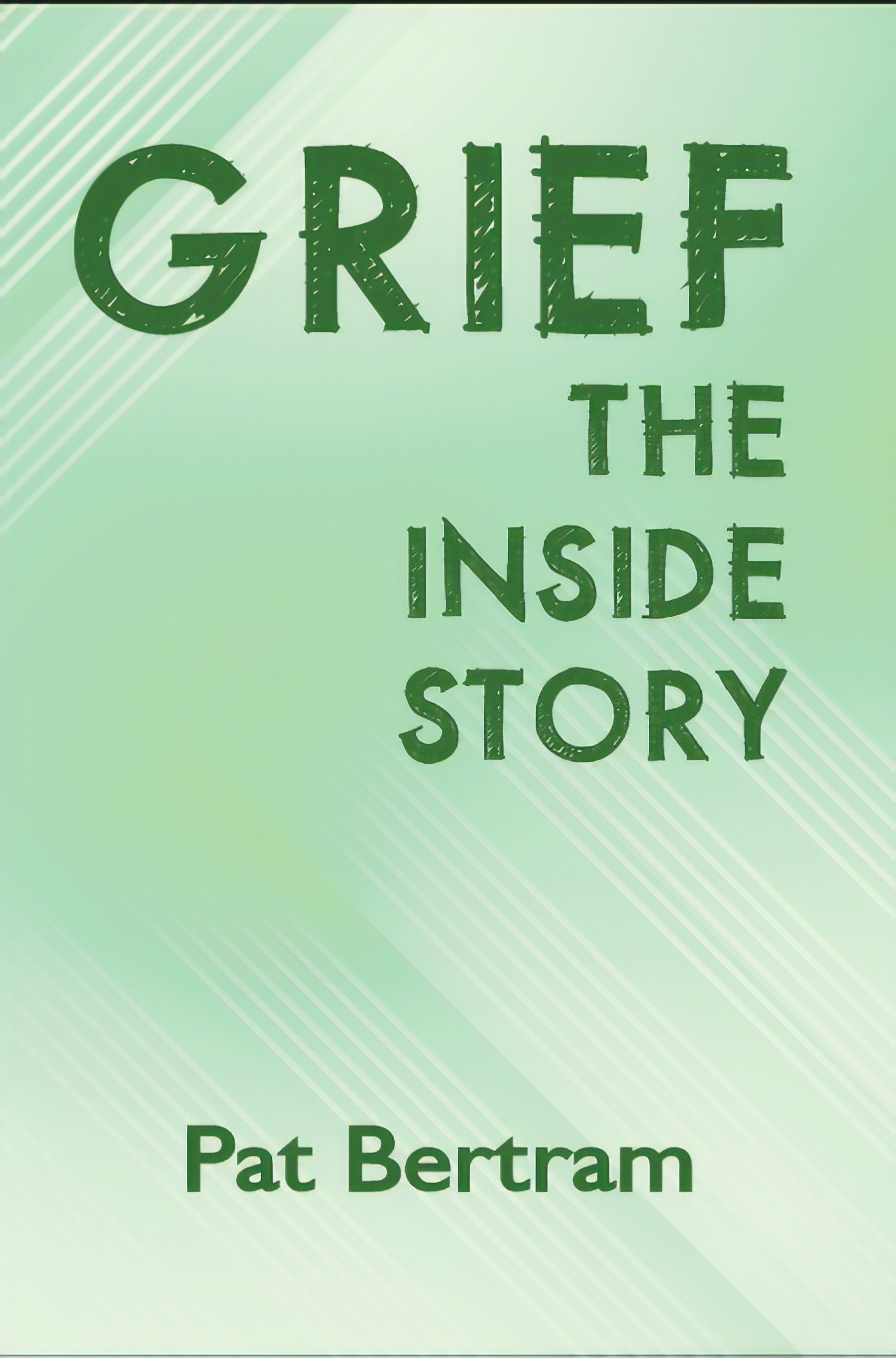
Pat Bertram is the author of Grief: The Inside Story – A Guide to Surviving the Loss of a Loved One. “Grief: The Inside Story is perfect and that is not hyperbole! It is exactly what folk who are grieving need to read.” –Leesa Healy, RN, GDAS GDAT, Emotional/Mental Health Therapist & Educator.


Writing is a Super Power

Last night, I gave a brief speech to the seventh graders essay winners, though as it turned out, there were way more family members than there were school kids, so as I talked, I had to adjust what I was saying to address everyone. The following is as close as I can recall to what I actually said:

When I was asked to talk to you about the importance of writing, I immediately sat down and began writing. I listed all the ways writing was important, then I asked my writer friends what they thought was important.

I condensed all of that down into a few points I thought might be of interest. I’d geared this talk to the essayists, but what I have to say applies to everyone. I was going to try to memorize what I wanted to say, but then I realized [I waved my page of notes] what I have here is an example of writing and why it’s important. Writing helps us condense our thoughts and helping us remember. But writing is more than that. 

I’m sure all of you have read stories or seen movies about wizards and magic, super heroes and super powers and have wished you could have a super power too. Well, you do have a super power. Writing might not be as dramatic as poofing someone or something to change them, and it’s much slower, but what we write can change people, events, the world, and ourselves.

Writing is magic. At its core, writing is the ability to transform thoughts, ideas, and emotions into to written word. It takes what is in your mind and allows other people to experience a part of you.

When we talk of writing, we often mean writing stories, writing to entertain people.

To a large extent, what makes us human, what connects us to one another, is our ability to tell a story. A joke is a story. What you tell your friends or your parents about your day is a story. Something you post about yourself online is a story. An advertisement is a story — it tells a story of what your life will be like if you buy that product.

Your essays told a story.

Writing isn’t only about telling stories. It’s about us. About life. About communicating with one another and even with ourselves.

Some of you are going through changes in your lives. You might be experiencing more than you can explain using an emoticon. You can be happy and sad, angry and confused, all at the same time. Sometimes you won’t know how you feel. But writing what you are feeling can help you understand what you are going through, and that will help you to deal with it.

On a broader level, writing is an essential life skill. It is the primary basis upon which you and your work will be judged—in school, in a job, and in the community. If you write well, you can communicate well. If you can communicate well, you can succeed.

Writing is at the center of everything we modern humans do. Language is part of our DNA. It is part of our birthright as human beings. Whenever you write, whatever you write — a story, a diary entry, a post on the internet, an essay, you are engaging in a form of wizardry using letters and words.

And that’s your super power.

Thank you.

***

Pat Bertram is the author of Grief: The Inside Story – A Guide to Surviving the Loss of a Loved One. “Grief: The Inside Story is perfect and that is not hyperbole! It is exactly what folk who are grieving need to read.” –Leesa Healy, RN, GDAS GDAT, Emotional/Mental Health Therapist & Educator.

Small World

I noticed in the local weather forecast, that one day the winds would come from the north, the next day from the south, the next from the west, and it got me curious about what all those winds mean. After an hour or so, I’m still not sure. Too much of the information seemed roundabout and obfuscating, such as “the north wind blows from the north.” Despite this, I have gleaned enough to guess that the north wind brings cold, the south wind brings dampness, and the west wind brings dryness. These guesses might not be correct, but I got tired of researching a rather meaningless topic — after all, the wind will blow when and where it wants, and there’s not a whole lot I can do about it. As long as it’s not huffing and puffing enough to blow my house down or my roof off, it doesn’t really matter.

During the course of this hunt, I stumbled across something that amused me:

Sanandaj, Iran (7,028 miles away); Shāhreẕā, Iran (7,343 miles); and Alik Ghund, Pakistan (7,671 miles) are the far-away foreign places with temperatures most similar to the town where I am living.

In the annals of vital information, that has to be far down the list of importance, much further down even than wind direction.

Does knowing this get me anything besides amusement? To a degree, yes. It ties the world together in a way I hadn’t expected. Those towns I had never heard of, those townspeople I could never in my life have even imagined, are experiencing same weather today that I am.

Apparently, it is a small world after all.

***

Pat Bertram is the author of Grief: The Inside Story – A Guide to Surviving the Loss of a Loved One. “Grief: The Inside Story is perfect and that is not hyperbole! It is exactly what folk who are grieving need to read.” –Leesa Healy, RN, GDAS GDAT, Emotional/Mental Health Therapist & Educator.

100 Word Story: A Different Perspective

Tom milled around the prison yard with the other inmates, waiting for the sound of death. There would be no stay of execution for their condemned friend, who would die in a most barbaric way.

“They don’t care that he’s innocent,” Tom said. “As are we all. The system is guilty, but no one wants to buck tradition.”

The thud of the axe made him flinch. He bowed his head out of respect for the dead.

In the silence, he heard the executioner’s voice drifting through the chicken wire fence. “It’s a big turkey. We’ll have a grand Thanksgiving feast.”

***

Pat Bertram is the author of Grief: The Inside Story – A Guide to Surviving the Loss of a Loved One. “Grief: The Inside Story is perfect and that is not hyperbole! It is exactly what folk who are grieving need to read.” –Leesa Healy, RN, GDAS GDAT, Emotional/Mental Health Therapist & Educator.

Why is Writing Important?

I’ve been asked to give a brief talk to seventh graders about the importance of writing, which has led me to question if writing really is important. Luckily, the ceremony has been postponed for a week, which gives me plenty of time to come up with an appropriate answer.

Only a small percentage of writers have ever made a living at writing (and most of those were people who wrote books on how to make a living at writing), and that percentage seems to be shrinking. More than 80% of books sell fewer than 100 copies. Maybe 50% sell only about ten copies or so. So, why write? The wonder of writing fiction is that a story born in one mind grows to full power in another mind. But what if you don’t have readers, or at least not many? And why take the time to learn the craft since some of the books that do sell are poorly written tripe?

In the end, it’s the writing that counts. The story.

So much of communication for us humans is story telling. A joke is a story. What you tell about your day is a story. Something you post about yourself online is a story. An advertisement is a story — it tells a story of what your life will be like if you buy that product.

But writing isn’t only about story. It’s about us. About life.

Writing is a super power. What we write can change people, events, the world, and even ourselves.

Writing is the primary basis upon which our work is judged—in college, in the work place and in the community.

Writing is magic. At its core, writing is the ability to transform thoughts, ideas, and emotions into to written word, into something tangible.

When we talk of writing, we often mean writing stories, writing to entertain people. This sort of writing truly is magic since the story that is born in one mind grows to full power in another mind.

Writing, whether fiction, nonfiction, blogs, or social updates is about communicating. Writing helps us with communication and thinking skills. If we write well, we communicate well. If we communicate well, we can succeed.

Writing brings worlds to life and recalls them from ages long past.

Writing makes our thoughts, our learning, our memories permanent and visible to others.

Writing can preserve thoughts, emotions and ideas long after the writer has left this earth. Sometimes, other people’s writing is all we have to learn about previous eras.

Writing helps us develop our ideas and allows us to explain those ideas to others and to ourselves. Writing expresses who we are as individuals and as a people. Writing can help us understand our lives.

Writing is good for health. It helps relieve stress, improves our mood, and increases brain function. And since writing helps us understand our life, it improves our mental health and guides us through traumatic times.

Writing is a left-brained structured/regimented activity that can marry with right-brained images/insights/artistry and create something powerful and life-changing

Writing is at the center of everything we do. Language is part of our DNA. It is part of our birthright as human beings. Whenever we write, whatever we write — a story, a diary entry, a post on the internet, an essay, we are engaging in a form of wizardry using letters and words.

***

A special thanks to Rami Ungar and everyone else who contributed to this list.

***

Pat Bertram is the author of Grief: The Inside Story – A Guide to Surviving the Loss of a Loved One. “Grief: The Inside Story is perfect and that is not hyperbole! It is exactly what folk who are grieving need to read.” –Leesa Healy, RN, GDAS GDAT, Emotional/Mental Health Therapist & Educator.

Giving a Talk to Seventh Graders

If you were giving a talk to seventh graders about writing, what would you focus on?

The historical museum sponsored an essay contest, and tomorrow night is the award ceremony. A woman from the museum will be talking about the historical aspect of the contest, and I have been invited to talk about the writing aspect.

One suggestion was for me to talk the importance of writing, and how it could lead to a writing career, but I so do not want to disillusion the poor kids before they find out that writing is a career for only a select few. For so many of us, writing is important in various ways, and though we would like to make a living at it, writing itself has to be the reward.

Another suggestion was to talk about how the grasp of writing is important in getting a job, but I don’t know if that’s still true. Is it? The world is changing so quickly that much of what used to be considered slang seems to be acceptable (like, duh). Now it’s anyone’s guess as to the place writing will have by the time these kids enter the job market.

If it were a group of adults, I could talk about the importance of writing (journaling) when one is going through a crisis, but I certainly can’t talk about how writing can help one deal with the loss of a spouse, and I certainly won’t give them nightmares by talking about writing in dealing with the possible loss of a parent.

I could talk about the importance of story, but “story” isn’t always about writing — it can be also be visual or spoken. (Or unspoken if one has ESP) Or I could talk about the importance of writing as communication, but again, there are other ways of communicating besides just writing.

The talk doesn’t have to be very long, but it needs to be fun, entertaining, and helpful. And something seventh graders can relate to. Eek. How did I get myself this situation? Oh, right — I agree to do it.

So, any suggestions for what should I say?

***

Pat Bertram is the author of Grief: The Inside Story – A Guide to Surviving the Loss of a Loved One. “Grief: The Inside Story is perfect and that is not hyperbole! It is exactly what folk who are grieving need to read.” –Leesa Healy, RN, GDAS GDAT, Emotional/Mental Health Therapist & Educator.

Actually

After I made a comment to a friend the other day, she said, as if to herself, “Actually.” Then she smiled, not derisively, but in delight.

“Did I say “actually” too many times?” I asked. “I actually do have a tendency to overuse the word.”

She responded, “No, I like it. It’s not a word you hear that often.”

Well, if you hang around me, you will actually hear “actually” a lot. Since I actually do overuse the word, I actually have to go through my manuscripts try to edit “actually” out of my work. (See List From Hell to see what other words I tend to overuse.)

I’d actually never realized I had an actual problem until I once played back a blog radio show where I’d been interviewed. And there it was . . . actually. Actually, there were a lot of “actually”s. I don’t remember how many times I said “actually” in that half-hour segment, but enough that by the time the program ended, I was actually appalled.

The next time I was on blog radio being interviewed, I was very careful with my “actually”s. For a while, I actually tried to censor my everyday speech, but somewhere along the way I actually forgot, so now I’ve reverted to overusing the word “actually. Actually, now that I think of it, I even forgot to de-actually my last couple of finished manuscripts.

I actually don’t know why I use the word so much. It could be from my need to always set the record straight, but I don’t know for sure, actually.

***

Pat Bertram is the author of Grief: The Inside Story – A Guide to Surviving the Loss of a Loved One. “Grief: The Inside Story is perfect and that is not hyperbole! It is exactly what folk who are grieving need to read.” –Leesa Healy, RN, GDAS GDAT, Emotional/Mental Health Therapist & Educator.

I Am an Escribitionist

Escribitionists are those who blog about themselves, their experiences, and their reflections. It sounds like such a bad thing, connoting, as it does, exhibitionism, but it’s simply a way of distinguishing the diary-like bloggers from those who write from a more journalistic point of view.

The danger of being an escribitionist is that it leaves a blogger vulnerable, not just emotionally, but also physically. People have been known to retaliate offline for online disagreements and, more commonly, people with a felonious bent will take advantage of those bragging about being the Bahamas for a week. So not a good idea to advertise when your house will be vacant!

In the beginning, I was very careful not to say anything of a personal nature. I didn’t make my birthday known, where I went to school, where I lived. For a long time, I didn’t post photos of myself, and I protected my gender (some people were shocked when they found out I wasn’t who they thought). I even refrained from offering opinions about anything but writing and books (but even then, I sometimes got an argument from those who misunderstood what I was saying. See: “Ah, the Difference a Comma Makes!”)

I was especially careful during the years of Jeff’s illness, particularly the last few months when he was so bad off, not to write anything about my life. I was trying to establish myself as an author at the time, perhaps with a male pseudonym, and we both agreed a professional demeanor would be best. Besides, I felt it would be a betrayal of him to talk about what we were going through, and he was afraid I would seem pathetic.

After he died, though, all that care we had taken in laying the groundwork for my career as an author no longer mattered. I was in such terrible pain and so bewildered by what I was feeling (I’d never before encountered even a mention of the utter mental, physical, emotional, spiritual agony of profound grief), that my pain burst out of me. First I screamed my pain offline (I was pacing the house one day, feeling as if I needed to scream; when I realized no one could hear me, I just let the pain rip out of me). Then I spewed my pain onto this blog.

That’s when I discovered the adage “we all grieve differently” is wrong. Many people told me that they experienced the same thing that I did. We might show our emotions differently, but the pattern of grief for a spouse, life mate, or soul mate often follows the same timeline.

By the time my pain became manageable, I was in the habit of talking about my life, so I wrote about my experiences taking care of my nonagenarian father and my frustrations with my abusive homeless brother. I wrote about my travels (making sure always to post after the fact so that no one would know where I was at any given moment).

If I made a mistake and gave too much information, it didn’t matter because I was never in one place long enough for my indiscretion to catch up to me. But now that I am in my final home and not going anywhere, I can’t run away from the mistake of giving out too much information, though I fear it’s too late.

I do try to be careful, but any hope of anonymity (at least pertaining to geography) is long gone. Too many online friends have become offline friends. Too many offline friends have become online friends. Anyone who is paying attention can string together the crumbs of my life that I scatter online, and find me if they really wanted to, though why anyone would want to go through all that trouble, I don’t know.

Still, it is a concern. Unfortunately (fortunately?), it’s way to late to change my ways. If we writers are supposed to write about what we know, well, I know writing, grief, and me. Few people like to read posts about writing (they are either writers themselves who know it all already or non-writers who don’t want to know). I’ve said all I can possibly say about grief in my five hundred grief posts (https://bertramsblog.com/archives-grief-posts/) and my two books about grief: Grief: The Great Yearning and Grief: The Inside Story – A Guide to Surviving the Loss of a Loved One.

So that leaves . . . me.

It’s always hard to admit the truth, but there’s no getting around it. For better or for worse, I am an escribitionist.

***

Pat Bertram is the author of Grief: The Inside Story – A Guide to Surviving the Loss of a Loved One. “Grief: The Inside Story is perfect and that is not hyperbole! It is exactly what folk who are grieving need to read.” –Leesa Healy, RN, GDAS GDAT, Emotional/Mental Health Therapist & Educator.

The Roaring Twenties Return with . . . Murder!

In just a few weeks, the twenties will come roaring back. (You knew that, right?) To celebrate, the local Art Guild is going to be doing a murder mystery dinner with a nineteen twenties theme. And guess who has been elected to write this mystery?

I knew you’d guess it was me, so there was no reason for the mysteriousness except that I need to start cultivating the habit of finding mystery in small things. Otherwise, how am I going to come up with an appropriate story?

The challenge of the murder scenario I wrote for the museum was to offer clues that prove someone didn’t do the dastardly deed. (It’s easier to offer clues that they did, such as blood on a cuff.) The challenge here is to . . .

Well, to be honest, I don’t know what the challenge will be since I haven’t yet started developing the story. I do know who will be the victim. I know where all this takes place: one night at a speakeasy. I know an Italian dinner will be served. I know there will be a representation of at least some of the iconic elements of that 100-year-old decade besides the speakeasy: jazz, gangsters, flappers. (Am I missing an element? Prohibition, of course, but a speakeasy would include the idea of prohibition since without Prohibition, there’d be no need for a speakeasy.)

The main things I need to figure out are: why would anyone kill the doomed one? How does the setting fit in? How will the story unfold? Why would the killer do it in such a public fashion? (Other than the needs of the story, of course.) How will it be done? A gun would be obvious, and would add the startle factor, especially if it came from outside the room, but poison would make for a more mysterious death — the victim could be acting normally, then slip to the ground midst loud gasps of shock.

There’s no need to worry about alibis since the suspects are all in the speakeasy when the murder happens, so that’s a beginning.

There will be four to six suspects. An appropriate 20s theme or thread that holds the story together. A hook for the murder. A surprise ending. But what any of those things are, I have yet to figure out. Luckily, I have a few weeks until the end of the year. And I just have to come up with the story. I don’t have to write a book (though there is a possibility that eventually a book will work its way out of me).

Necessary characters: A flapper, the boyfriend, a gangster (who could be the boyfriend), a waiter, and . . . .?

Besides the characters themselves, I need reasons why all these folks wanted the victim dead.

Feel free to add your two cents if you wish, or even your twenty cents.

Don’t worry, I’ll keep you informed about my progress whether you want me to or not.

***

Pat Bertram is the author of Grief: The Inside Story – A Guide to Surviving the Loss of a Loved One. “Grief: The Inside Story is perfect and that is not hyperbole! It is exactly what folk who are grieving need to read.” –Leesa Healy, RN, GDAS GDAT, Emotional/Mental Health Therapist & Educator.


It Is That Season

The VFW sponsors a youth essay contest, and this year I was asked to help judge the local entries. Hearing so much about schools nowadays, and how kids aren’t learning anything, I felt some trepidation, but I was surprised. Each essay in its way was very good. A few seemed age-appropriate, but others seemed adult in both ideas and writing style, which could just have been a matter of number of years of schooling since the entrants ranged from 6th to 8th grade.

Still, I was impressed with the essays. And, I have to confess, I felt a bit impressed with myself that I actually agreed to be a judge. It is so not something I like doing!

But then, I end up doing a lot of things I never thought I would do.

This is the season when all the charitable organizations make a concerted effort to solicit donations. Without a lot of research, it’s hard to know how much of the money you donate actually goes to the people it’s supposed to help, but this year, I don’t have to research. I know.

One of the organizations I joined is the Woman’s Civics Club, which raises funds and then distributes those funds to various local organizations. Often, those funds are solicited directly from the members. (For example, instead of having a bake sale, the Civics Club has a non-bake bake sale. They found that considering the cost of the goods, the time to make them, the effort to sell, it’s simply easier just to donate the amount of money the baked goods would have brought in.) With the treasurer’s report that is read at every meeting, I know exactly where the money goes. Same with the art guild.

I’m sure that the international charity organizations do good, and that not all the money goes to the CEOs and exorbitant operating costs as is sometimes bruited about, but it’s so much nicer to worry only about the local community. A community I am part of.

Does it seem as strange to you as it does to me, that I am part of a community? That I participate? That I even judged kids’ essays?

But maybe it’s not strange. Maybe it is that season — that season of my life.

***

Pat Bertram is the author of Grief: The Inside Story – A Guide to Surviving the Loss of a Loved One. “Grief: The Inside Story is perfect and that is not hyperbole! It is exactly what folk who are grieving need to read.” –Leesa Healy, RN, GDAS GDAT, Emotional/Mental Health Therapist & Educator.