Creating Incredible but Credible Characters: Keeping your Characters Consistent

Consistency makes for a good lemon meringue pie—you don’t want globules of lemon ruining the texture of the smooth filling. And consistency makes a good story—you certainly don’t want globules of untruth ruining the texture of your readers’ belief. I admit I’m stretching for an analogy, but still, the point is that readers will forgive a writer almost anything except inconsistencies that interrupt the flow of the story.

I once started to read a book where a man spirited away the Shah of Iran. According to the author, the Shah lived fifteen years beyond his supposed death in 1980. The operation was so secret and so successful that no one knew about it. But… It took only this one very high profile achievement to assure a solid client base for the man. Supposedly, word travels quickly in the very elite circles of power, and so the demand for the man’s services was always in excess of his ability to produce.

What??? If no one knew that the Shah survived his death, how could word travel? And if word did travel, how could high massesprofile clients remain “dead,” especially since most of them were hiding from those in the elite circles of power? The inconsistency took me out of the story, and I never did finish reading the book.

It’s almost impossible to keep inconsistencies from slipping into a story, which is why self-editing, though vital, cannot be the final editing process. We writers see consistency because we see what we meant to say. Others only see the inconsistency. I am grateful to one of my editors for finding one particular inconsistency in Daughter Am I. The editor wrote, “It’s not clear here whether or not Mary completely removed her shirt. If she did, when she stood up and ran to the bathroom, then turned around and had the conversation with Tim, she’d have been completely topless. Given their feelings for each other, and their state of undress, it seems unlikely they would have been able to have such a lengthy conversation without biology taking over sooner.”

Oops. I completely missed that. Mary took off her shirt so Tim could massage her sore back, and when the massage turned heated, Mary (engaged to someone else) runs from her feelings and hides in the bathroom. Inadvertently, I had her brazenly opening the bathroom door, standing half-naked, and starting a casual conversation—not at all what my poor innocent Mary would have done. After traveling halfway across the country in the company of seven old gangsters (well, six gangsters and one aged ex-night hall dancer) she’d lost most of her naiveté, but still, she would not have flaunted her naked breasts.

Naked breasts may pale in comparison with unsecret secret operations, but the inconsistency could have dammed the flow of the story for discerning readers. So, the moral of this tale is, if you remove your heroine’s shirt or other apparel, make sure you remember her state of undress and write accordingly.

***

This article is anthologized in the Second Wind Publishing book: NOVEL WRITING TIPS AND TECHNIQUES FROM AUTHORS OF SECOND WIND PUBLISHING, which was the 100th book released by Second Wind.

“As someone who constantly evaluates novels for publication, I was astonished at the breadth and clarity of the wonderful advice contained in this handbook. It addresses concerns as grand as plot development and as simple but essential as formatting your submission. It offers crucial advice on literary topics ranging from character development to the description of action. Virtually every subject that is of great concern to publishers — and therefore to authors — is covered in this clear, humorous and enormously useful guide.” –Mike Simpson, Chief Editor of Second Wind Publishing

***

Pat Bertram is the author of the suspense novels Light Bringer, More Deaths Than One, A Spark of Heavenly Fire, and Daughter Am I. Bertram is also the author of Grief: The Great Yearning, “an exquisite book, wrenching to read, and at the same time full of profound truths.” Connect with Pat on Google+. Like Pat on Facebook.

Creating Incredible but Credible Characters: Purposely Flawed Characters. Or Not.

Interesting characters make interesting stories, not the other way around. An author develops interesting characters by putting them under pressure, giving them much to lose, and allowing them to change because of their experiences. And the author makes these characters at least a bit larger than life. Who wants to read about characters who sit around watching television all the time or who repeatedly have the same tiresome argument with their children or who can’t resolve their problems? We deal with that every day. We don’t need to read about it. On the other hand, if the traits are too idealized, characters come across as comic book silly.

Depth of character is revealed in the choices a character makes while at risk. Without the element of risk, there is no real story, only a string of episodes. Think what Superman would be like without Kryptonite—totally uninteresting and flawed flawedin his perfection. But Kryptonite is a purposeful flaw, put there to make Superman more interesting, which makes him seem even more of a comic book character. Oh, wait. He’s supposed to be a comic book character!

To offset the problem of idealized characters, many writers try to create a purposely-flawed character, such as a boozing cop or a mother who can’t communicate with her teenager, but this seems an unnecessary distraction unless, of course, it is a vital part of the character’s motivation. So many flawed characters, particularly heroes with a drinking problem, have been done so often they have become nothing but cardboard cutouts. There is a long tradition of hard-drinking detectives, but there has to be a more creative way of giving characters flaws. Or not. Writers are often enthralled with the idea of flawed heroes, that they are missing the point. They don’t have to give their heroes obvious flaws. By making their heroes realistic, the heroes are automatically flawed.

A character must lose occasionally or make mistakes. Where is the suspense if every time a character attempts to do something she succeeds? And in that loss is a shadow of the flaw, because the setback must be realistic. Did the character lose because of arrogance, assuming she knew what to do when she didn’t? Did the character lose because she wasn’t physically fit or knowledgeable enough? Did the character lose because she didn’t plan correctly, because she was unfocused, because of her inner conflicts? Such losses force a fully realized character to change so in the end she can succeed.

In the beginning of Daughter Am I, twenty-five-year-old Mary Stuart has no real direction, no purpose, but when she learns she inherited a farm from her recently murdered grandparents—grandparents her father claimed had died before she was born—she becomes obsessed with finding out who they were and why someone wanted them dead. She drives halfway across the country with a feisty crew of octogenarians, friends of her grandparents, and even though she discovers they all had ties to the mob, she doesn’t let her good sense override her obsession. This understandable obsession is her flaw, and if she didn’t grow during the course of the story, if she didn’t learn from her setbacks, the obsession could have become a fatal flaw. Fatal or not, flaw or not, Mary’s obsession makes her real, makes her a bit larger than life, and makes her interesting.

To be real, a character must have strengths and weaknesses, but it’s not enough simply to assign a special strength or weakness to a character—the quality needs to be tested. You can do this in one of two ways—play on the strength or play on the weakness. For example, if a character is smart but lacks physical strength, you can either place the character in a situation where the character’s intelligence saves the day or you can put him in a situation where he is forced to rely on physical abilities he doesn’t have.

Strengths are arbitrary and can easily become flaws. Independence can become an inability to depend on others, an ability to cope can be seen as indifference, high ethical standards can become intransigency. Which is great for a book—the resulting misunderstandings can cause conflicts among characters allows the plot or subplots to thicken. And your characters become even more credible.

***

This article is anthologized in the Second Wind Publishing book: NOVEL WRITING TIPS AND TECHNIQUES FROM AUTHORS OF SECOND WIND PUBLISHING, which was the 100th book released by Second Wind.

“As someone who constantly evaluates novels for publication, I was astonished at the breadth and clarity of the wonderful advice contained in this handbook. It addresses concerns as grand as plot development and as simple but essential as formatting your submission. It offers crucial advice on literary topics ranging from character development to the description of action. Virtually every subject that is of great concern to publishers — and therefore to authors — is covered in this clear, humorous and enormously useful guide.” –Mike Simpson, Chief Editor of Second Wind Publishing

***

Pat Bertram is the author of the suspense novels Light Bringer, More Deaths Than One, A Spark of Heavenly Fire, and Daughter Am I. Bertram is also the author of Grief: The Great Yearning, “an exquisite book, wrenching to read, and at the same time full of profound truths.” Connect with Pat on Google+. Like Pat on Facebook.

Creating Incredible but Credible Characters: What Does Your Character Want?

The most compelling characters are those who want something desperately and who will do anything to get it, which is why Scarlett O’Hara is such a perennially popular character. Frankly, my dear, I find her a bit over the top—selfish and greedy and way too egocentric. Still, her wanting does make for a compelling character.

At its most basic, a story is about want. The main character wants something, and someone or something is preventing her from getting it. The want can be as simple as a good night’s sleep, as personal as a lover, or as complicated as world peace. In the end, the character gets what she wants or she doesn’t get it. Sometimes she gets what she needs, which is just as satisfying for the reader because such an ending gives a story a sense of rightness, of poetic justice.

BOB STARK, the point-of-view character of More Deaths Than One, wants serenity, though what he gets are nightmares, both the sleeping and the waking kind. Debilitated by headaches, he doesn’t have the energy to discover the truth, but Kerry, a young woman he meets in a coffee shop, goads him into it. When Kerry is threatened, though, he becomes what he needs to be to keep her safe.

A Spark of Heavenly Fire has four point-of-view characters, all of whom want something.

All KATE CUMMINGS wants is a good night’s sleep.

Her husband, a semi-invalid, committed suicide thirteen months ago. Many times during the years of his illness she could have treated him a little better than she did, and she is haunted by her own mean spirit.

wantThen the red death descends on Colorado, the entire state is quarantined, and martial law is declared. As a patient’s advocate and an insomniac, forty-two-year-old Kate sees more than her share of the horror. People with bright red eyes spewing blood, then falling down—dead. Tanks and trigger-happy troops patrolling the streets. Men in biohazard suits throwing bodies into the back of delivery vans.

Now she wants not to be afraid.

All JEREMY KING wants is to leave Colorado.

He has everything. Two Oscars for best actor. A vast Montana ranch. Wife, son, daughter. He also looks better now, at fifty-eight, than he did when he was young.

Having grown up poor in Grand Junction, he hates Colorado, and only came to Denver to finish a film. As soon as the director yells cut, he’s in his rented Lexus on his way to the private airfield where his jet is supposed to be ready for take-off. It isn’t. Instead, armed National Guardsmen inform him that airspace is restricted. Furious that he’s being treated like one of the peasants, he decides to drive home, but the mountain highway is clogged with a thousand cars going nowhere. He returns to Denver, determined to leave Colorado if it’s the last thing he ever does.

All GREG PULLMAN wants is to know the truth.

Since childhood he’s been consumed with the need to know why creatures act the way they do. It is no different with the red death.

After discovering that the disease is a bio-engineered organism, he tries to find out who would develop such a thing, and why. He learns that despite the ban on bio-warfare experimentation, all over the world deadly organisms are being produced and stockpiled. Bubonic plague. West Nile fever. Green monkey virus. Combinations such as smallpox with Ebola and encephalitis.

Burdened by the awful truth, he turns to his friend Kate for comfort, and finds he wants her, though he is engaged to Pippi O’Brien.

All PIPPI O’BRIEN wants is . . . well, she doesn’t know what she wants.

After college, she wanted a job at a New York television station, but accepted a position as weathergirl in Denver. Now, at thirty, she wants to marry handsome Greg Pullman, but when he takes the hint and proposes, she says she’ll think about it. A few days later, deciding she does love him after all, she says yes. While waiting in a bar for him that very evening, she meets Jeremy King. Feeling the full force of his personality, she leaves with him, forgetting about Greg. Now she has a new dream: lovely consort to the charismatic King.

She is signing autographs with Jeremy on a downtown street when UN soldiers arrive, level their weapons at the assembled fans, and order everyone to drop to the ground. Fighting back the urge to scream, she obeys. Those who don’t obey are immediately gunned down.

Now all she wants is to accompany Jeremy on his quest to escape from Colorado.

So, that’s what the characters of More Deaths Than One and A Spark of Heavenly Fire want. What do your characters want? What do they need? And in the end, do they get what they want, or do they get what they need?

***

This article is anthologized in the Second Wind Publishing book: NOVEL WRITING TIPS AND TECHNIQUES FROM AUTHORS OF SECOND WIND PUBLISHING, which was the 100th book released by Second Wind.

“As someone who constantly evaluates novels for publication, I was astonished at the breadth and clarity of the wonderful advice contained in this handbook. It addresses concerns as grand as plot development and as simple but essential as formatting your submission. It offers crucial advice on literary topics ranging from character development to the description of action. Virtually every subject that is of great concern to publishers — and therefore to authors — is covered in this clear, humorous and enormously useful guide.” –Mike Simpson, Chief Editor of Second Wind Publishing

***

Pat Bertram is the author of the suspense novels Light Bringer, More Deaths Than One, A Spark of Heavenly Fire, and Daughter Am I. Bertram is also the author of Grief: The Great Yearning, “an exquisite book, wrenching to read, and at the same time full of profound truths.” Connect with Pat on Google+. Like Pat on Facebook.

Creating Incredible but Credible Characters: Names Matter

Scarlett O’Hara was originally called Pansy. If Margaret Mitchell had kept that name, would her epic novel ever have become so popular? A character with the name of Pansy could be sweet and biddable with rare moments of stubbornness, but since “Pansy” lacks the harsh consonants of “Scarlett,” the name doesn’t sound as if it belongs to an iron-willed character who could catch and keep the attention of such a worldly man as Rhett Butler.

ThUncertaintyough Scarlett fits the name of the character in Gone with the Wind, it could not be the name of a medieval heroine. In those days, the most popular name was Mary, with Elizabeth coming in a distant second. I suppose if Gone with the Wind were written in the 1980s, Scarlett’s name would have been Heather. Odd to think that in another forty years, youth will scorn that name as being old-fashioned, fit only for elderly women, like the name Effie is today.

I had fun naming my aged gangsters in Daughter Am I. In keeping with the times of their youth—bootlegger times, that is—I gave them nicknames that matched their characters. I called my wise old conman “Teach,” my dapper little forger “Kid Rags,” my ex-wrestler “Crunchy.”

And then there’s my hero, poor Mary. She starts out so young and innocent, and ends up on a road trip with six feisty old gangsters and one ex-nightclub dancer. I had not intended for her to keep the name Mary. It’s so not the name of a heroine of today! Nor is my Mary a medieval maiden. I named the character Mary Stuart after Mary Stuart Masterson in the film Bed of Roses because both Marys were strong but vulnerable when it came to love, both were very smart yet a bit naive. I never did change my Mary’s name. By the time I finished the book, the character and the name were inextricably entwined. At least it’s fairly innocuous. Like Margaret Mitchell, I could have named my heroine Pansy. Ouch.

***

This article is anthologized in the Second Wind Publishing book: NOVEL WRITING TIPS AND TECHNIQUES FROM AUTHORS OF SECOND WIND PUBLISHING, which was the 100th book released by Second Wind.

“As someone who constantly evaluates novels for publication, I was astonished at the breadth and clarity of the wonderful advice contained in this handbook. It addresses concerns as grand as plot development and as simple but essential as formatting your submission. It offers crucial advice on literary topics ranging from character development to the description of action. Virtually every subject that is of great concern to publishers — and therefore to authors — is covered in this clear, humorous and enormously useful guide.” –Mike Simpson, Chief Editor of Second Wind Publishing

***

Pat Bertram is the author of the suspense novels Light Bringer, More Deaths Than One, A Spark of Heavenly Fire, and Daughter Am I. Bertram is also the author of Grief: The Great Yearning, “an exquisite book, wrenching to read, and at the same time full of profound truths.” Connect with Pat on Google+. Like Pat on Facebook.

Creating Incredible but Credible Characters: Gender

To create a character, we begin with gender. If your character is of the opposite gender than yours, make sure you know how the other half thinks, feels, and speaks, otherwise your character might seem more of a caricature than a real person.

There are basic differences between the genders. For example, women have better peripheral vision, so while both men and women ogle each other with the same frequency, men are caught gazing more often than women are.

Brain scans show that women have between fourteen and sixteen areas that evaluate others’ behavior, while men have only four to six. Because of this, women are better at juggling several unrelated topics in a single conversation. They also genderuse five vocal tones to make their points. Since men can only identify three of those tones, they often miss what women are trying to say. So men accuse women of not being direct and women accuse men of not listening.

Women ask questions to show interest in the person; men ask questions to gain information. Women find that talking about a problem provides relief; men feel that talking about a problem is dwelling on the negative. Women think that continuing to discuss the problem demonstrates support; men want to make a decision and forget it. Women provide peripheral details because they want to be understood; men just want them to make their point. Women think that talking about a relationship brings people closer; men generally think it’s useless.

There is a wide spectrum of both male and female behavior, though, so you can write a character however you wish as long as you can make it work.

You make it work by ensuring there is a reason—a motivation—for your characters behavior. We learn much about characters from their actions, but what the character does is not the defining element. The defining element is why the character does what he does. Characters can do anything, though the actions must be psychologically true and consistent. A character who is cowardly but does not hesitant to rescue someone from danger without any reference to fear or a believable reason for the action is not a well-written character.

When it comes to storytelling, character is all. The characters and plot (what the characters do and why) should be so intertwined that we never see them as separate.

***

This article is anthologized in the Second Wind Publishing book: NOVEL WRITING TIPS AND TECHNIQUES FROM AUTHORS OF SECOND WIND PUBLISHING, which was the 100th book released by Second Wind.

“As someone who constantly evaluates novels for publication, I was astonished at the breadth and clarity of the wonderful advice contained in this handbook. It addresses concerns as grand as plot development and as simple but essential as formatting your submission. It offers crucial advice on literary topics ranging from character development to the description of action. Virtually every subject that is of great concern to publishers — and therefore to authors — is covered in this clear, humorous and enormously useful guide.” –Mike Simpson, Chief Editor of Second Wind Publishing

***

Pat Bertram is the author of the suspense novels Light Bringer, More Deaths Than One, A Spark of Heavenly Fire, and Daughter Am I. Bertram is also the author of Grief: The Great Yearning, “an exquisite book, wrenching to read, and at the same time full of profound truths.” Connect with Pat on Google+. Like Pat on Facebook.

Creating Incredible but Credible Characters: Resist the Urge to Explain

People often tell me they feel they know my characters, as if my story people were a part of their lives, which is always wonderful to hear. It means I did my job. And it means the readers did their job. Incredible but credible characters are a combined effort. Characters are conceived in the author’s imagination, but they come alive in readers’ imaginations.

A character’s story begins with a gleam in her parents’ eye and ends with her death. The story we telistenll is but a fraction of that life, and where we choose to begin and where we, the writer, choose to end defines the story. If we begin with a crime and end with a resolution of that crime, we have a mystery. If we begin with a girl meeting a boy or a woman meeting a man and end with happily ever after, we have a romance. If we chronicle the rise and fall of the character’s fortunes, we could have a tragedy, a family drama or any number of stories.

The illusion of a well-told story is such that, whatever the genre, by the end of the book readers know the character as well as they know themselves and their friends. Readers know, or think they know, everything in the character’s life that brought her to crisis and how everything in the character’s life will work out after the story problem is resolved. By giving readers the essence of the character, we give them the means to continue the character’s story long after the book has come to an end.

How do we work this sleight of hand? By showing the character in action and in relationships. By defining the character through decisions in moments of crisis.

In the prologue of Light Bringer, Helen comes home from working a double shift at the hospital to find a baby on her doorstep. She shows her nurturing characteristics by taking care of the child, Rena. She shows the beginning of a metamorphosis from staid nurse to loving mother by putting off calling the authorities so she can enjoy the child bit longer. But what really defines her is how she acts in a moment of crisis. Rena, a magical child, or at least a precocious one, tells Helen they have to leave, that her invisible playmate says “they” are after Rena and when they find her, they will kill Helen. Helen doesn’t hesitate. She packs up her car and her life and escapes with the baby.

Helen’s decision defines not only her own character, but also the character of the baby, the character of the invisible playmate, and perhaps even the story itself. It is through such defining moments that we can create a character so real readers believe they know more about the character than was ever actually written.

In older novels, especially the classics, authors wrote page after page of character description, telling us who their characters are. Those authors dissected their characters’ motivations, told us their every thought, explained every feeling. Today’s readers, myself included, have no patience for such long drawn-out static passages. We want to get right into the heart of the story. We want to learn who the character is by what she does, who she knows, and how she acts and reacts.

Showing, not telling, is a basic axiom of writing for today’s market, but it is often hard to resist the urge to explain since you know far more about your characters than you can or should put in your novel. Still, by restraining yourself and letting readers be part of the creation process, letting them find their own explanations for what your characters do, you give them a stake in the characters and the story. And so your characters come alive.

***

This article is anthologized in the Second Wind Publishing book: NOVEL WRITING TIPS AND TECHNIQUES FROM AUTHORS OF SECOND WIND PUBLISHING, which was the 100th book released by Second Wind.

“As someone who constantly evaluates novels for publication, I was astonished at the breadth and clarity of the wonderful advice contained in this handbook. It addresses concerns as grand as plot development and as simple but essential as formatting your submission. It offers crucial advice on literary topics ranging from character development to the description of action. Virtually every subject that is of great concern to publishers — and therefore to authors — is covered in this clear, humorous and enormously useful guide.” –Mike Simpson, Chief Editor of Second Wind Publishing

***

Pat Bertram is the author of the suspense novels Light Bringer, More Deaths Than One, A Spark of Heavenly Fire, and Daughter Am I. Bertram is also the author of Grief: The Great Yearning, “an exquisite book, wrenching to read, and at the same time full of profound truths.” Connect with Pat on Google+. Like Pat on Facebook.

A Letter to the Authors Who Spam Me

Can I be a curmudgeon today and say how sick I am of author-related spam? Every day I get more and more emails and FB messages from other authors telling me about their books, asking me to download a free version, requesting a “like” or a look at a page/blog/video. And I’ve had enough.

I’m sending an open message to all the spammers in my life. Well, I’m not sending it — that would be spamming the spammers, and I can’t be party to such hypocritical shenanigans, so I am posting the message here:

For cripes sake, if you know me, then you know I do not appreciate being spammed. You also know I have never in my entire online life sent such an email, never spammed anyone. I realize spamming people is still the premier way of getting known and selling books, but if you already know me, then give me a break. I am well aware of you and your books, your extracurricular activities, your videos, and I do not need to be reminded. If I wanted to check them out, I already have. If I don’t know you, then what business do you have asking me, a stranger, for favors? If your book is free, it’s still spam. It’s still a promo. It’s still asking a stranger for a favComputer attackor.

What? You think you’re special because you self-published a book and are giving it away free, and so I should be groveling in gratitude that you gifted me with a download of your ebook? You’re one of millions. Even if you were a brand name, even if you were Stephen King (especially if you were Stephen King) I would not download your book. I do not have a Kindle, a Nook, a Sony, a tablet, an IPhone, or any other means of reading an ebook besides my computer, and I cannot read long works on my computer. If you knew anything about me, you would know that, and wouldn’t waste your time and my good graces on such an email.

I promote authors sight unseen via my various blogs and social networking sites. This isn’t enough for you? You want more? Why? I already spend most of my online life promoting you and other authors. I thought that the favor would be returned, and guess what? It seldom is. Most writers who make use of my favors aren’t aware that I am a published author. (A darn good one, too.) Most see nothing but a spot of free advertising. I don’t mind that, truly I don’t. I’ve always felt it was the right thing to do. If it did matter, I’d make my favors quid pro quo. But regardless, I don’t deserve to be paid off in spam.

Like Santa, I’m making a list and checking it twice. Unlike baseball, in my game you only get two strikes. One spammy email could be considered a mistake. Two and you’re out. Period. I don’t care if you’re my best friend. And oh, by the way, you’re not. Best friends don’t spam best friends. Friends don’t spam friends. If we’re on an emailing basis and you want to crow over a new book, just mention it in the context of an email. You don’t have to add me to your mailing list with gazillions of other people. Believe me, it doesn’t make me feel special.

***

Pat Bertram is the author of the suspense novels Light Bringer, More Deaths Than One, A Spark of Heavenly Fire, and Daughter Am I. Bertram is also the author of Grief: The Great Yearning, “an exquisite book, wrenching to read, and at the same time full of profound truths.” Connect with Pat on Google+. Like Pat on Facebook.

Today I Will Be . . .

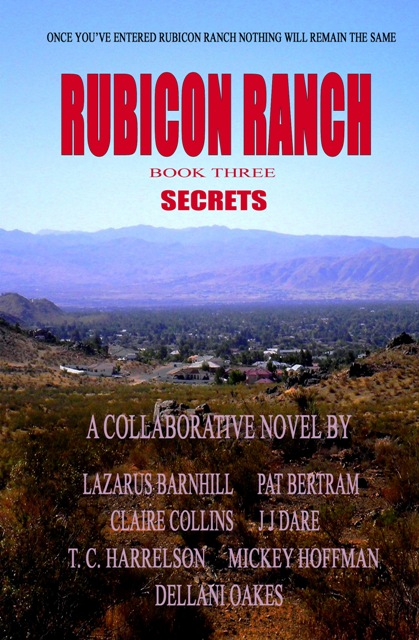
I’ve gotten in the habit of posting a daily resolution on Facebook, which has been a good discipline for me. I spend a minute or so thinking about what challenges I will be facing that day, and then I post the appropriate resolution. For example, today I will need to have more generosity of spirit to get through a trying situation, so the resolution I just posted says: Today I will be . . . munificent. Yesterday I had to write a chapter for Rubicon Ranch, the online collaborative serial I’m writing with other Second Wind authors, so I posted the resolution: Today I will be . . . creative. Other days I have resolved to be bold or diligent or grateful or (just for fun) enigmatic.

In fact, I even use an all-purpose resolution, a bit of word art I created, for my Facebook profile:

Today I will be . . .

I don’t know if these public daily resolutions make a difference because obviously I don’t know what my day would have been like without them, but I like posting the resolutions. It makes me appreciative of the day despite any challenges or hardships that I am facing, Makes it seem as if with a bit of a boost, I can surmount all problems or at least accept them. So although I already posted a resolution for today on Facebook, I am posting a special one here:

Today I will be . . . appreciative.

***

Pat Bertram is the author of the suspense novels Light Bringer, More Deaths Than One, A Spark of Heavenly Fire, and Daughter Am I. Bertram is also the author of Grief: The Great Yearning, “an exquisite book, wrenching to read, and at the same time full of profound truths.” Connect with Pat on Google+. Like Pat on Facebook.

Suspense/Thriller Writers Self-Promotion Extravaganza!

Every Saturday, I host a self-promotion extravaganza for my Suspense/Thriller Writers Group on Facebook. The extravaganza takes place in a separate group page since there is no promotion allowed on the wall of the Suspense/Thriller Writers group. So if you are an author with a book to promote or a reader who likes to find new books and great blog posts,  you can find the find the event here: Suspense/Thriller Writers Self-Promotion Extravaganza! Just click on “join” and tell us about your book. It’s an open group, so unless you want to post something, you’re free to roam among the selections. I hope you will join us today!

You already know my books, but I’m listing them here as a reminder. If you’d like to read the first chapter of any of the books, just click on the cover.

Light Bringer: Becka Johnson had been abandoned on the doorstep of a remote cabin in Chalcedony, Colorado when she was a baby. Now, thirty-seven years later, she has returned to Chalcedony to discover her identity, but she only finds more questions. Who has been looking for her all those years? Why are those same people interested in fellow newcomer Philip Hansen? Who is Philip, and why does her body sing in harmony with his? And what do either of them have to do with a shadow corporation that once operated a secret underground installation in the area?

DAIDaughter Am I: When twenty-five-year-old Mary Stuart learns she inherited a farm from her recently murdered grandparents — grandparents her father claimed had died before she was born — she becomes obsessed with finding out who they were and why someone wanted them dead. Along the way she accumulates a crew of feisty octogenarians — former gangsters and friends of her grandfather. She meets and falls in love Tim Olson, whose grandfather shared a deadly secret with her great-grandfather. Now Mary and Tim need to stay one step ahead of the killer who is desperate to dig up that secret.

More Deaths Than One: Bob Stark returns to Denver after 18 years in Southeast Asia to discover that the mother he buried before he left is dead again. He attends her new funeral and sees . . . himself. Is his other self a hoaxer, or is something more sinister going on? And why are two men who appear to be government agents hunting for him? With the help of Kerry Casillas, a baffling young woman Bob meets in a coffee shop, he uncovers the unimaginable truth.

A Spark of Heavenly Fire: In quarantined Colorado, where hundreds of thousands of people are dying from an unstoppable disease called the red death, insomniac Kate Cummings struggles to find the courage to live and to love. Investigative reporter Greg Pullman, is determined to discover who unleashed the deadly organism and why they did it, until the cost — Kate’s life — becomes more than he can pay.

***

Pat Bertram is the author of the suspense novels Light Bringer, More Deaths Than One, A Spark of Heavenly Fire, and Daughter Am I. Bertram is also the author of Grief: The Great Yearning, “an exquisite book, wrenching to read, and at the same time full of profound truths.” Connect with Pat on Google+. Like Pat on Facebook.

Where Would We Be Without Words?

We create with words. Even non-writers create worlds, meanings, stories with their spoken words. When we are not speaking or writing our own words, we are steeped in the words of others — books, songs, movies, telelvision, overheard conversations. Words — and the stories/anecdotes we create with those words — are what makes us different from other creatures here on Earth.

today's wordsNot only do we create with words, we also create the words themselves. Language is evolving every bit as much as if it were a living creature, becoming more diverse, more specialized, more colorful, more adaptable.

Despite what it might seem, this isn’t going to be a laudatory post about the wonder of words. I’ve written that here: Giving Thanks for Words. Instead, I want to explore the possibility that words are creating us as much as we are creating them — for better or for worse.

I think in words — in fact, using words helped me get through my terrible grief after the death of my life mate/soul mate. By putting my feelings into words, I could make sense of what I felt, and because of it, I connected with others who felt the same way. That seems to be the main purpose of language and words — connecting with others. A means of survival. By being able to express ourselves in words, from not having to rely on grunts and gestures, we’ve built a human world that spreads across the entire planet.

Which came first, the potential for world building or the potential for word building? Did the capability for language evolve at the same time as language itself? In other words, did language create us as we were creating it? I don’t suppose it matters. Today, right now, we have both the capability and the language, and we use them copiously.

But here’s what I’ve been wondering. Is language a tool of human evolution, or is it a tool of devolution? Are words a way of dumbing us down while smartening us up? Words seem to keep us focused on the humanness of our world, keep us connected to each other both when we are together and when we are far apart. But are those very words keeping us from a greater connection? Some people believe Earth is a living, breathing creature. Some people think solar systems and galaxies are also alive. Some even believe the universe — all that exists, ever existed, will ever exist — is a living, sentient being. If this is true, are words filling our heads and airways with so much noise that we can no longer feel the breath of Mother Earth, can no longer hear the music of the spheres?

Where would we be without words?

***

Pat Bertram is the author of the suspense novels Light Bringer, More Deaths Than One, A Spark of Heavenly Fire, and Daughter Am I. Bertram is also the author of Grief: The Great Yearning, “an exquisite book, wrenching to read, and at the same time full of profound truths.” Follow Pat on Google+. Like Pat on Facebook.