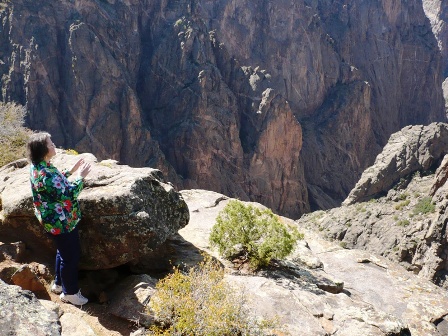
Getting a Life

When I mentioned to a new acquaintance that I often walk two hours a day, she gave a snide little laugh and said, “You have no life.”

Getting a life seems to be a common concern in recent years, but what is a life? And where do you get one? Lifes R Us?

I don’t know how that odious terminology came into being or what it means. Often, especially in movies, “Getting a life,” refers to dating and looking for a mate, but since the woman who accused me of having no life had also recently lost her mate, that couldn’t be what she meant. Does having a life mean having a job? I’m in a transitional stage right now where I don’t have a job, and am not currently looking. And anyway, I’ve never found working for others to be particularly satisfying, so a job can’t be categorized as a “life.” Could “a life” refer to emotions, to feeling? Well, recently I’ve had enough emotions to fill an oil tanker, so that can’t be what she meant, either. Could “having a life” mean having fun? But that takes us into a whole other discussion: what is fun? Most of what people do for fun seems torturous to me, so I’ll stick to walking.

I’m only being a bit facetious here. The truth is, if you are alive, you have a life. It might not be satisfying — it might even be painful — but it is a life. Life is experiences, both good and bad. Life is waking and sleeping. Life is being with friends and being alone. Life is reading and writing. Life is eating and dieting. Life is success and failure. Life is tears and laughter. Life is everything we are and everything we wish to be. Life is. 

Get a life? I have a life. And so do you.

Grief: The Great Yearning

Now that my grief for my lost soul mate is evolving away from a focus on all I’ve lost and the accompanying pain, I can see the process more clearly. Perhaps for some people the stages of grief — denial, guilt, anger, depression, acceptance — hold true, but for me and for most of the bereft I have met on this journey, those stages have little meaning. For most of us, anger and even guilt are more like quickly passing moods than lingering phases. Some of us get depressed, but most of us don’t. We’re just get damn sad, which is not the same thing as depression. I’ve been in that dark pit and I know what it’s like. This sorrow, no matter how intense, is not depression. And acceptance is not the end — in itself acceptance brings no peace. What does bring peace is feeling the grief and letting it evolve into something we can live with because the loss — the yearning — will always be a part of us. Getting to that point can take years, depending on the depth of the relationship.

Grief is an incredibly complex state that constantly changes and constantly brings changes. The underlying emotion of grief is yearning, not guilt or anger. Even after we’ve put our shattered psyches back together as best as we can, even after we’ve come to an acceptance of our new situation, the yearning to see our loved one last time can be overwhelmingly painful at times. The yearning (such a mild word for the ache or craving or hunger that tears at us) is often manageable, other times it shoots through us like a geyser bursting out of calm waters. Even decades after losing a spouse, or so I’ve been told, we bereft still feel the loss, still yearn for our mates.

A friend who lost her life mate four months after I lost mine, told me how much she hates people telling her to “move on”. She’s not like me, spouting her pain into cyberspace for all to see. If you didn’t know she’d experienced such a soul-shattering loss, you’d never be able to guess it — she’s keeping her grief to herself lest it burden others. She’s taking care of her family. She’s accepting the responsibility for an aging parent. She made the holidays special for those around her. She’s writing. She’s even going out and having fun, or at least as much as is possible considering her situation. In fact, she’s doing all that she ever did, and doing it well. Yet people tell her to move on with her life. What else is there to move on to? Her grief in no way debilitates her. It’s simply a part of her life, this ache to see her mate one more time.

Searching is another major component of grief that is ignored in the “stages” concept. We bereft search for our mates in crowds. We cry out for them, especially at the beginning. We search for them in our dreams. Of course we know we won’t find them. This isn’t a mental aberration, and it certainly isn’t denial. It’s simply a way of coping with the unthinkable. How can our loved ones be gone so completely? It’s the goneness that confuses us, pains us. It destroys everything we always accepted about the world. (Of course we knew all lives end in death, but we didn’t KNOW it.) As the search for our lost one diminishes, we begin searching for ourselves, for our place in this new, unthinkable world.

It would be so much easier to deal with grief if we had a list of stages to go through and to check off as we experience them, but that simply isn’t the case.

So we yearn, and we search, and we go on living.

Grief Takes as Long as It Takes

I’ve been thinking about writing a book about grief, combining my grief blogs, the letters I’ve written to my dead mate, the journal I kept those first few months after he died, and the various bits of information about dealing with grief I’ve collected during the past nine months. Now I’m wondering if anyone will want to read such a depressing book.

This morning, for the first time, I read some of those letters I wrote, and I couldn’t believe the raw pain. The writing chronicles my journey, and perhaps people will see beyond the pain to the insights and the struggle to find meaning after such a soulquake, yet jeez! It’s so damn sad. On the other hand, people might find comfort knowing they are not the only ones going through such trauma. On the other other hand, I might want to bury my head in the sand before I get halfway through putting the book together. On the other other other hand, it could be cathartic.

I did notice something interesting, though. The letters I first read this morning were the ones I wrote four or five months ago. Since those were so agonizing to read, I was afraid of looking at the first ones, but I held my breath and jumped in. Oddly, those first letters are more chatty than angst-ridden, like I was writing to someone who was only going to be gone for a short time. I remember the pain hitting me right after his death, which it did, but apparently it kept on growing until by the end of the first month (when I naively thought I’d be over it) I was so desperate, I went to a grief support group hoping someone could tell me how to survive. They couldn’t tell me, of course. They could only show me by their progress that it is possible to survive.

Good thing I don’t have to make a decision about the book for another three months. Or even longer. I don’t want to write it before the first year of grief is up because I don’t want to skew my healing, and besides, I’m hoping that after a year I’ll be more hopeful, wiser, stronger. Seems to me I’ve been saying that very thing for months. First, it was the end of the first month that was supposed to bring me hope, wisdom, strength. Then I thought I’d have achieved those things by the third month, then the sixth, the seventh, the ninth. Maybe twenty-four or thirty-six months is more realistic. Unfortunately (or perhaps fortunately?) grief takes as long as it takes.

New Year, New Beginning?

I’ve never put emphasis on the new year because it’s a relatively arbitrary date. The calendar numbers change, but that’s all. It’s not a universal new beginning. The Chinese New Year this year is on February 3, the Jewish New Year is on September 28, and various communities in the Hindu religion have different dates — January 15, March 22, April 14, April 15, August 17, October 27. January 1 is not even the beginning of a new seasonal cycle. Nor is there any personal demarcation — no black line separates the old from the new. You carry the old year with you because you have the same problems, sadnesses, hopes, fears. In other words, you are still you. 

There is a newness to January 1, though, and that is the newness of a new day.  Unlike the year, each day is a new beginning. You wake up, and for a second everything is untouched — like new fallen snow — and you almost believe you can be anyone you want to be, do anything you want to do. Then the truth hits you.

Still, there’s hope, so I make daily resolutions instead of yearly ones. I have a list of a dozen do’s and don’ts that I would follow in a perfect world. I’m lucky to do about half of them each day, but it varies. Two days ago I did only a couple. Yesterday I did all but two. Today, of course, I resolve to follow everything on my list. The list includes such things as weight lifting and stretching, walking, writing, blogging, promoting, eating a big salad, drinking lots of water, staying away from sugar and wheat. As I said, in a perfect world . . .

Despite that, I did toast this new year, more as a symbol of newness than the reality of it. I’ve learned that since nothing seems important any more, I have to make something important every day. And toasting the new year seemed as good as anything to importantize.  (Yeah, I know — there’s no such word as importantize, but just for today —  this new day — there is.)

Building Hopes and Creating Dreams

And so ends the worst year of my life.

Last year was a time of soul-shattering loss, grief, and strange blessings. It was a time of despair and self-realization, transition and adjustment. But of course, you know all that — I’ve made no secret of my ordeal, chronicling every painful stage of my journey. Many people endure worse traumas than the death of a soul mate, and they continue living without whimpering, which has made me feel a bit self-indulgent and whiny with my grief bloggeries, yet that was never my intention. The impact of grief after a major loss seems to be one more thing that has been discounted in our discount culture, and I simply wanted to tell the truth.

Oddly, I still don’t know the truth of it. It seems unreal at times. Was I really that woman? That woman who watched a man slowly die, who wanted the suffering to end, yet whose love was so ineffectual she couldn’t make him well or take away a single moment of his pain? That woman so connected to another human being she still feels broken nine months after his death? That woman who screamed the pain of her loss to the winds?

I’ve always considered myself a passionless woman, so how can that woman be me? During periods when I don’t feel the weight of his absence (I never feel his presence, though sometimes his absence feels normal, as if he’s simply in another room), during periods of emotional calm, my stoic side rules, making my grief feel fake, as if it’s something I’m doing to make myself seem important. Yet other times the desperate need to go home to him, to see him one more time, claws at me, tearing me apart.

Making the situation even more unreal, I can barely remember what he looked like — I do not think in images, so it’s understandable (though distressing) that I have no clear image of him in my mind. Even worse, I don’t have a photo that matches what I remember of him. (The only one I have was taken fifteen years ago.)

Nor do I have a clear sense of time. Sometimes it feels as if he died just a couple of months ago. Sometimes it feels like years. The demarcation between our shared life and my solitary life was once so stark it was like the edge of a cliff. All I could see was the past and what I had lost. The living I have done in the past nine months has blurred that edge, adding to the sense of unreality.

I have learned much this year. I learned the importance of importance. If there is nothing of importance in your life, you have to find something and make it important. I learned the importance of goals, even if it’s only the goal of getting through one more day. I learned the importance of hope, though hope for what I still don’t know, but that is part of the journey – building hopes, creating dreams, finding reasons to live.

And so begins a new year.

I Am a Nine-Month Grief Survivor

Thirty-four years ago, I walked into a health food store, and my world was never the same. It wasn’t love at first sight, this first time I saw the man with whom I would share more than three decades of my life. It was a primal recognition. Something deep inside me, something beneath consciousness, wailed, “But I don’t even like men with blond hair and brown eyes.”

I had no expectation of ever spending my life with this radiantly wise and intelligent man. It was enough to know he was alive. The world, which had seemed so inhospitable, became a place of hope and possibilities simply because he lived. Over the months our connection grew, and gradually our lives became entwined.

It confused us at times, our connection. Neither of us were particularly romantic, and we didn’t bring each other fairy-tale happiness. But we were together, and in the end, as at the beginning, being together was all that mattered.

But we aren’t together any more. Nine months ago, he died. And my world will never be the same.

I am doing okay — can even go for a week or two at a time without a major grief attack — but I still feel as if parts of me are missing. Grief shattered me, and I’ve put the pieces back together as best as I can despite those missing pieces. I now get glimpses of hope, of possibilities, of building a new life for myself. I know  there will be times of overwhelming grief and times of peace, times of sorrow and times of gladness. But he isn’t here to share those times. That I cannot comprehend.

Until I became one of the bereft, I thought grief was self-centered and self-pitying, and there is some truth to that. I do feel sorry for myself at times, but mostly I struggle to comprehend the meaning of our connected lives, his dying, and my continued life. I struggle to accept that while (perhaps) there is a second chance of happiness for me in this life, there is none for him. I struggle to understand his goneness. Sometimes the need to go home to him overwhelms me, and I have to learn — again — that his being gone from this life means I can never go home. He was my home. Someday I might learn to find “home” within myself, but until then, I am adrift in a world that once again feels inhospitable.

During those first days and weeks of struggling to survive grief, I kept screaming to myself, “I can’t do this.” I still feel like screaming those words occasionally, but I have learned that yes, I can survive this, because I have. And I will continue to survive.

A Gift For You!!

Wishing you a warm and safe holiday weekend and a new year filled with possibilities.

 Click on the gift to open. Have fun!

Getting Sass From My Character

Sometimes when I can’t think of where I am going with a story, I talk to my characters. Sort of. My characters don’t take on a life of their own — I am always aware they are my creations — but sometimes when I begin to make choices for a character, the character seems to be determining her own fate. If a character has a particular daughter, a particular problem, a particular job, then all those things bind the character and make her act a particular way.

In the case of poor Amanda, the hero of my newest work in progress (the one that got its start as a NaNoWriMo project), her life is bound by a dead husband, a rebellious twenty-something daughter, and an online lover she’s never met. Once a preacher’s wife with an entire support system, she now has to deal with everything on her own. In addition, she’s going to have to leave the parsonage where she’s lived for the past fifteen years, and she barely has enough energy to get out of bed in the morning. All these problems bind the poor woman, creating more dilemmas than she can handle. Still, with all her trauma, she seemed boring to me, so I sat her down and tried to find out why I am having a problem with her. Don’t know if I solved the problem of why I find her so boring, but at least I got a better understanding of who she is and where to go with the story.

Bertram: I can’t get into writing your story. You’re nothing special, just a woman grieving. Boring.

Amanda: Sam thinks I’m special and unique.

Bertram: Who’s Sam?

Amanda: Don’t you know?

Bertram: Of course I know. I created him. I just wondered if you knew.

Amanda: I know he’s a special man. We met online at a support group for people whose mates are dying of cancer. His wife and David—my husband—were both told they had three to six months to live. Having something so real to talk about cut through all the usual crap people go through when the meet, even online, so we got to know each other very quickly. And we fell in love. Took us both by surprise. Neither of us were looking for that, and we didn’t know you could develop such powerful feelings without ever having met.

Bertram: What happened to Sam’s wife?

Amanda: She rallied. Is in remission right now. Still not well, but doesn’t seem to be terminal. Sam is staying with her. We want to get together, but he lives halfway across the country. In Ohio. I need so much to feel his arms around me. I am stunned by the depth of my grief for David. I thought I was over him—he took such a long time to die, you see. Over a year. I thought I’d finished with my grief and moved on, but when he died, it felt as if I were dying, too. If I didn’t love Sam, I couldn’t have gone on.

Bertram: I don’t understand how you can love one man while mourning another.

Amanda: I don’t understand it either. Sam says I’m a complicated woman. He says that there’s a part of me that will always belong to him, a part David never knew. Apparently I need to men to fulfill me. Yet here I am . . . alone. And grieving.

Bertram: What part belongs to Sam?

Amanda: The passionate part. I always thought I was a passionless woman—I’d have to be, being David’s wife. He wasn’t much for sex. I think it had something to do with his childhood, something that happened to shape his life, but he never talked about it. I’ll find out, though—it’s important to the story. See, when I find out that he’s different from the man I knew, then I panic and wonder who I am. For most of my adult life, I defined myself by my relationship with him. He gave my life focus and meaning. Which is why finding out the truth about Davis is important. I need to know who he is so I can find out who I am.

Bertram: And who are you?

Amanda: I don’t know. Isn’t that your job, to create me?

You can read the entire conversation here: Pat Bertram Introduces Amanda Ray, Hero of a New Work-in-Progress

The Gift of Possibilities

I have been given a very special and unwelcome gift this year — the gift of possibilities.

Thirty-eight weeks ago my life mate — my soulmate — died. During the previous few years, the constraints of his illness bound our lives, and it felt as if we were doomed to an eternity of decreasing possibilities. Every day he became weaker, could do less, had fewer options. We could not plan for our future, knowing each day was all he might have. We could not even spend much time together — it took all his strength and concentration just to make it through another hour.

And so we lived. Waited.

His death brought enormous changes to my life, but during these months of grief, I have focused on the  impossibilities. It is impossible for him to come back to me and it’s impossible for me go home to him. It’s impossible for us ever to have another conversation, watch a movie, play a game, take a trip, start over in a new location as we so often did during our decades together. It’s impossible for me to stop missing him, impossible to conceive of living in a world from which he is absent. It’s been impossible, too, to concede that perhaps my life could be easier without him. What difference does that make when our being together was all that ever mattered to me?

And yet, and yet . . .

I am getting glimmers of myself now, myself alone. I no longer have the financial and emotional burden of his illness. I am no longer weighted down by my own grief, though it is still a part of me, and probably always will be.

I still feel as if I am waiting, but I’m beginning to feel as if I’m waiting for something rather than simply waiting, though I don’t know what I am waiting for. I do know that — slowly — the world of possibility is opening up to me again. I might not be able to do whatever I want — people are so wrong when they say anything is possible — but many things are probable when you’ve been given the gift of possibilities.

Time to Change Your Password!

The most used passwords at Gawker Media were recently released. These are the top 10:

  1. 123456
  2. password
  3. 12345678
  4. lifehack
  5. querty
  6. abc123
  7. 111111
  8. monkey
  9. consumer
  10. 12345

Also on high on the list were: princess, 1234567, f—you, and michael

Last year, the most used passwords at RockYou.com were posted on the internet. These are the top 10:

  1. 123456
  2. 12345
  3. 123456789
  4. password
  5. iloveyou
  6. princess
  7. rockyou
  8. 1234567
  9. 12345678
  10. abc123

Also on high on the list were: monkey, querty, and michael.

Last year, the most used passwords at hotmail.com (perhaps hacked from a phishing kit) were posted. These are the top 10:

  1. 123456
  2. 123456789
  3. alejandra 
  4. 111111 
  5. alberto 
  6. tequiero 
  7. alejandro 
  8. 12345678 
  9. 1234567 
  10. estrella 

Also high on the list were: iloveyou and 12345

Not sure what this means, except that if you use any of these passwords, perhaps it’s time for a change!