Unfriending Facebook Un-Friends

I’ve been doing a series of posts on the effectiveness of Facebook as a promotion tool for authors, based on my research and my experiences. Some people have taken these as complaints and negativity, but I’m just trying to make sense of a confusing world.

There are four billion users on Facebook, yet most authors seem to be shunted off into a corner of the FB world with other writers. While I’ve gotten to know a lot of great authors this way, I’ve found few readers, which makes sense when you think of it. Authors want something — readers — so we frantically add friends in an effort to reach readers. Readers, on the other hand, don’t frantically friend unknown authors. Most readers stick with previously read authors, or find books by word of mouth, blog reviews and book websites, local bookstores, online stores, the library. (This information is from an informal poll I once did: How Do You Choose the Books You Want to Read?)

When I first joined Facebook, I was guilty of adding as many friends as I could since I thought that was the purpose of social networking. In fact, I almost reached the cut-off point of 5,000 friends. (I’m sure you’ve noticed that some people have more than 5,000 friends. That’s probably because of inactive accounts. I go through my friend list periodically and delete inactive accounts. The only serve to swell numbers and make FB even more unwieldy than it already is.)

When I realized that social networking is about being social, I stopped sending friend requests, and started trying to get to know the people I am connected to. In the process, I am gradually culling my friend list. If someone has four or five thousand friends and has never once bothered to respond to anything I have done on Facebook, I unfriend them. If someone whose friend request I have accepted (I have not sent a friend request to a stranger in over three years, so I know that any friends made in those years are at their behest) spams me or ignores me, I unfriend them. If they are multi-level marketers or any other such blatant scammers, I unfriend them.

This sounds harsh, doesn’t it? But if Facebook hasn’t created a mass of readers for me, then it’s mostly for fun, and if it’s mostly for fun, there is no point in being connected to people who do not enrich my life. (I hope you don’t think I am unfriending everyone. I still have almost 2,000 friends, a good percentage of whom I actually talk to.)

Of course, some people think unfriending is silly, because what difference does it make how many friends you have, especially since you see so few of them anyway, but it does make a difference. When I had close to 5,000 friends, every time I tried to individually invite friends to an event, it crashed my computer. (Except for the Suspense/Thriller Writers Self-Promotion Extravaganzas on Saturday, I don’t bother to do events any more. Where hundreds of people used to respond, now only a handful do.)

Also, too many friends clogs the news feed with posts I have no interest in. It is possible to hide those posters from my newsfeed, but if I have no interest in people’s posts, why am I connected to these un-friends? Why not just unfriend them? So I do.

People do the same to me. One woman told me she unfriended me because I never participated in any of her events. It was a valid observation. At the time, I had 4,000 friends, and couldn’t keep track of them all. All I did on Facebook at the time was keep my writing discussion going, so the people I was most interested in were the people who participated in my discussions. (I hate to admit it, but I still don’t participate in other people’s events; there are simply too many. And anyway, I still prefer to spend most of my time with my discussion group. It’s a small space of sanity in the choatic FB world.)

Perhaps none of this matters. Perhaps unfriending is just a game or a phase I am going through. But the truth is . . . hmmm. I don’t know what the truth is. Maybe I don’t like being ignored. Or maybe I have had a surfeit of inanity and negativity. (What many people consider as positive thinking, I often see as inane, and inanity feels to me like negativity.) Or maybe I’m fighting a system I have no way of beating. Or maybe I’m getting curmudgeonly. Or maybe I’m trying to do FB over, and do it right this time. Or maybe, just maybe, I’m positioning myself for success, making room for the thousands of new friends I am going to make through my writing.


Trying to Be Heard Above the Facebook Noise

I’m sure it seems as if I’m obsessed with Facebook, considering all the posts I’ve been writing about the site lately, but the truth is, it confuses me. What’s the point of having thousands of friends if only a few of those “friends” show up in our news feeds, and our posts show up in only a few of theirs? Why do we have to post silly sayings and quotes by other people to attract attention to our own writing? Why are we supposed to upload colorful images and share cute pet photos? What does any of that have to do with our books? Shouldn’t the books be enough to attract attention?

I do know the answer to that last question. If you are James Patterson, mention of a book is news, but if you are Pat Bertram, it’s blatant self-promo.

There is so much noise on Facebook, with everyone screaming “Looka me, looka me,” like kids on a playground, that it’s almost impossible to hear the quiet writers who just want people to check out their books.

I thought if I posted intelligent questions, I’d attract intelligent friends, and the ones I interact with are exceedingly intelligent. The trouble is, they are in the same position I am in — looking for quiet readers in a noisy world.

I’m a writer, right? I should be able to think of witty things to say that will make people want to get to know me and my books, but my wit deserts me when it’s most needed. When I do think of something witty, it’s at three o’clock in the morning. I’m not about to wake fully, turn on the light, write down my witticism, and then lie there for hours, waiting in vain for sleep to return. (My wit centers more on puns, anyway, such as: Waiting in vein. Is that what vampires do? Well, maybe “wit” is a bit of an exaggeration.) So what passes for wit, passes with the night, and in the morning I don’t remember. (Probably just as well if “waiting in vein” is the best I can do.)

One of my favorite people on Facebook, who manages to be intelligent and witty and post cute pet photos, is Malcolm R. Campbell. (He also happens to be a darn good writer.) Malcolm once said that he’s written more to promote his books than he did to write them. (See? I told you he was witty. Or at least truthful.)

It’s kind of pathetic when you think about it — you rip out your heart and throw it into your book, and then you have to take what’s left of you and spent it on sites like Facebook. Is it worth it? I’m not sure. For a long time, I thought it was. I was having fun, and there was always the hope of hitting some sort of friending jackpot. But now? It seems like . . . noise. Something to block out.

Still, wit aside, I do have a modicum of intelligence, a bit of computer savvy, a tinge of knowledge about the workings of the human psyche, so I should be able to make my voice heard above the noise, right? But in the back of my mind is the small question, what then? My books aren’t the next erotic vampire bondage serial killer novelty, so will my being heard make any difference?

Why Facebook is Not the Great Promotional Tool It Once Was

Are you one of those authors who joined Facebook, hoping to find fame and fortune, and have only found . . . Facebook?

After my books were accepted for publication, and while I waited for them to become available, I spent a lot of time researching how to promote online. The first unanimous suggestion was to get a website, the second was to maintain a blog, and the third, of course, was to create a presence on social networking sites. I’d already done the first two, so that left the third option. How hard could networking be? Add the maximum number of friends, post status updates and blog links, create discussion groups as a way to get to know other authors. Sounded like fun.

At first, it worked the way it was supposed to — I made a lot of friends, had some great discussions, promoted my online release party via Facebook and MySpace. I even sold some books.

And then . . . nothing. Sure, I still had friends, but sales dropped off, and when my next release party came around, almost no one stopped by. (By then, MySpace was practically defunct — everyone I met on MySpace had migrated to Facebook.)

Many authors have had the same experience as I did. So what happened? Why, after all those articles about how great Facebook was for promotion, didn’t we get the results we hoped for? Because of the ever-changing face of Facebook, that’s why.

When I joined Facebook, it was at the tag end of the free-for-all, where anyone could post anything and all of your “friends” would see it. Events and requests to “like” a page weren’t hidden in your notifications as they are now, but were almost impossible to miss. You pretty much had to respond one way or another. Groups were much more effective than they are now. Group administrators could send a message to everyone in the group, and there were group discussions boards (which is what I used the group messaging for — to announce the weekly discussion).

One by one, all the functional parts of Facebook (those that worked best for promotion, that is) have disappeared, to be replaced by . . . not much of anything, actually. If you post something on your fan page, it shows up in the news feed of only a small percentage of people. They say 10%, but it’s more like 2%. My current reach — the maximum number of people per week who could have seen my posts — is 285. Considering that I post something every day, that means FB shows each post to only about 40 people a day, which is a very small fraction of my 1487 “likes.” If I want more people to see my posts, I can pay to get more views. Bizarre, isn’t it?

I don’t know the statistics for profile views since they aren’t posted on the site, but going by my own feed, not many people at all see anything — just the same few people every day. And now that anyone has the ability to shut off the posts of anyone they want, you could be seeing their posts, and they won’t see anything of yours.

Apparently, Facebook read the same books and articles we did about how to promote on the site, and they are doing everything they can to prevent our promotion efforts from being very effective. (They want to be the only ones making money.)

The first self-published millionaire who subsequently wrote the book about how to make a million via FB, cheated by maxing out multiple accounts — you can only have 5000 friends, so he had more than one account going at the same time. But that should come as no surprise now that he has been outed as having purchased scads of reviews.

So, if you are not getting the results you hoped for by promoting your books on Facebook, don’t be too hard on yourself. It’s not your fault at all. It’s the fault of all those who came first and scammed the system before you had a chance.

Is Facebook Still Cool?

For years now, writers have been told that to promote their books, they need to sign up for Facebook, mostly because when Facebook was new, very few authors used social networking sites to engage with readers so those who did found a goldmine. Ever since then, authors by the hundreds of thousands have joined Facebook to find readers and found only other writers. Why? Unless you are a known writer, readers aren’t searching you out. Writers try to connect with everyone FB suggests or anyone they come in contact with, but readers don’t. They have no reason to connect because they have nothing to gain by it.

Because of the peculiarities of Facebook, I am connected to very few people outside the writer’s community (and those few non-writer connections are mostly family or real life friends). It’s hard to believe that with over 900 million users, I can’t break out of this tight enclave into the mainstream of Facebook, but I have nothing to say to anyone besides what every other author says, “Buy my books,” and even I know that doesn’t sell books. Mostly what I do is use Facebook as a bulletin board to post links to my blog posts. I also scan my feed to see if anything interesting is going on, (so-and-so’s book is being given away free on Amazon, such-and-such a book is on sale for 99¢ . . . yawn) and finally check in with my writing discussion group.

Shouldn’t there be more to such a vast network than a writer’s group? But then, I have made a lot of online friends through Facebook, I keep up with many of my fellow Second Wind authors on Facebook, and I try to get to know the people I am connected with. Considering that joining Facebook used to be a coming-of-age ritual for thirteen-year-olds, it’s amazing I’ve found anything to do on the site! I mean really, what could I possibly have in common with such new and untried persons?

Along with all the other problems Facebook is having (such as not finding enough ways to gouge money out of us via ads), they now have to contend with the loss of their youngest members. Among some young teens, it’s no longer considered cool to join facebook — they prefer to text or to join sites where they are not pressured to connect to everyone in their class. No wonder there are so many offline traumas instigated by online life. The unpopular kids can never get away from their unpopularity. And anyway, why would they join a network that is aging? Facebook is eight years old, which in online years has to be closing in on 57. (Assuming web years are equivalent to dog years.) Even worse, from the point of view of a young teen, is that more than one-fourth of FB users are 50 to 64 years old.

I’m not sure where I’m going with this post. It started out as a light-hearted commentary about the whole Facebook phenomena, and I planned to end up with saying that there are worst things that joining Facebook to connect with readers and finding only writers of a certain age, but I’ve since discovered a fb author friend plagiarized something I posted on Facebook, which is so not cool. So now I have no end to this post. Except maybe to say that I need to stop spending so much time online.

How To Do an Online Interview

I have a couple of blogs where I promote other authors, and so few authors follow the directions, I’ve become convinced writers have no idea how to read. Or perhaps they believe the directions don’t apply to them? Even so, bloggers cannot post what they do not have. So, for all you authors out there who are promoting your books, if you wish to be a guest on someone else’s blog, please follow the bloggers’ directions. The directions are there for a reason, partly to make it easier for the blogger, but mostly to make the interview or guest post as pleasing and compelling as possible to attract readers for your books.

If bloggers ask for a link to your book cover, please provide one. You have posted your book cover somewhere on the internet, right? So, provide that link. (For example, I have posted all of my book covers on the right sidebar of this blog and on my website, so I could provide either link.) If bloggers are going out of their way to promote you and your book, don’t make it harder by making them search for a photo or a link because generally, they won’t take the time. And, as I said, bloggers cannot post what they do not have.

If the blogger gives you an option where you can choose from a list of questions, please choose questions to which you can give full answers. Responding, “I don’t know” to a question is a waste of your time, the blogger’s time, and the reader’s time. If you don’t know, pick a question to which you do know the answer. Giving monosyllabic responses is just as bad. You’re a writer, right? Supposedly you know how to hook readers. So hook them. Tell them something interesting. Most writers say they have no message in their books, that they just want to entertain, so be entertaining.

Almost as bad as “I don’t know” is saying “It’s difficult to describe.” You’re a writer. Take the time to find the necessary words. And please, do not respond to a question with, “You’ll have to read the book.” There are 130,000,000 published book as of this very moment, so people have plenty of options. They don’t have to read your book. You have to make them want to read your book.

For my Author Questionnaire, I begin with the question, “What is your book about?” It’s the hook, the reason why we are all at the blog — to know about your book. So, please, don’t start your interview with boring questions like, “Is this your first book?” Why would the reader care if it’s your first book if they don’t know what it is about? And please give the title of your book. If you’ve done your job right, people are going to want to learn more about your book, but if you haven’t provided a title, how will readers know what it is?

Proof your interview or guest post. If your interview is full of typos, people will assume that your book is full of typos. If your grammar is sadly lacking, people will assume your book is as ungrammatical. And if your interview is boring, people will assume your book is also boring. So please, spend time on your presentations. It does you no good to carelessly throw together an interview, guest post, or excerpt, and expect readers to instantly fall in love with you and your work.

But most of all, follow the directions. I ask people to submit their interview as a comment reply on the blog, yet every day I get a message from someone asking for my email address so they can send me their interview. Um. No. If I wanted it sent via email, I would have provided the address.

Only about 10% of the people who do interviews for me provide everything I ask, which is why I am writing this blog. It’s a way of getting rid of my frustration and at the same time remind people to FOLLOW DIRECTIONS!

(If I haven’t scared you off, click here to find the directions for my Author Questionnaire.
Click here to find the directions for my Character Questionnaire.
And click here to Let me post your excerpt!)

Virtual Book Tours

Virtual book tours became prevalent very quickly. I’ve heard how great they are — mostly from the major publishers who don’t want to spend the money to send their authors on an unvirtual tour — that I wonder how worthwhile blog tours really are. I know the most popular book blogs do help get the word out, but it’s hard to get a guest spot on those blogs unless you have a publicity department behind you. Some people who have done tours think the tour helped with sales, other says not. Me? I’m still not sure. I did two tours, and neither seemed to make any difference in sales.

I’ve read that for most authors, the real benefit of doing a book signing in an offline store is the connection one makes with the bookseller, and perhaps the same holds true with a virtual book tour. I’ve made connections with other bloggers, introduced my books to people who would not otherwise have discovered them, and talked about my books with those who have read them.

Setting up a blog tour is easy, though time-consuming. You need to research blogs to find the best fit, and then you need to query the blogger. If you are invited to be a guest on the blog, you need to find out what is expected of you — an article, an interview, a giveaway — and you need make sure that every article you write, every response in an interview is different and appealing.

People will not follow your blog tour if you keep recycling the same article. Make sure you send your guest post, a bio, a photo of you, a photo of your cover days in advance. Then on the day the article is posted, you need to visit the blog several times and respond to comments.

A disconcerting aspects of my tours was how few bloggers did anything beyond posting the article. No mention on Facebook, no Twitter, no promotion of any kind. So, the main thing is, make sure you do what you can yourself to promote. Which meant, for me, two blog articles a day, one for the host, and one for my blog to promote the host. Plus Facebook status updates, posting the link on my profile, and Twittering.

The tours were fun and challenging, and I’ve certainly did what I could to launch my last two novels, but will I do it again? Possibly. I have a hunch the benefits of a tour are long term, and the more one does to get their name out there, the better the chance of getting known, but I’m still not convinced they were worth all the effort.

Dear (Deleted) — Conversation With a Marketing Expert

One of my blogs is Book Marketing Floozy, a compendium of articles I collected to help authors learn how to market their books. Every time I see good information, I ask the writer for permission to post their article on the blog. (If you’ve written an article about some facet of book marketing, please let me know. I’ll be glad to post it on the site.) The articles all credit the writers and provide whatever links the writers wish. It’s one of my efforts to help promote other authors.

A month ago, a promoter contacted me asking for my help in promotion. This promoter owns a word of mouth marketing company that connects businesses with consumers and consumers with businesses. I thought you might appreciate the irony of our emailed conversation. I’ve deleted names to protect . . . me.

Dec. 27 — Pat, Your website & blog came across my search today — excellent recommendations on here for a niche marketing in the literary world!  How long have you been blogging?

I was curious to know if you might be interested in linking to an online degree program. I work in affiliation with (deleted) College and I wanted to make a recommendation to include the (deleted) College Marketing Management degree in your link list.

***

Dec. 30 — Dear (Deleted): thank you for your interest in Book Marketing Floozy. I’ve been blogging for three years, and Floozy is just one of the blogs I run (though it isn’t a blog so much as a resource — I post articles sporadically, and most are written by other authors.)

If you’d like to write an article for me to post on the site about some facet of marketing, I’ll be glad to include any links you want. The only condition is that the article has to be informative and helpful — a how-to — rather than simply self-promotion. –Pat

***

Jan 5 — Pat, We can certainly provide some content for a post.  If that’s the case, ideally would like to provide a link in the post content as well as have a sidebar text link on your homepage or blogroll.  Is this possible? Let me know your thoughts. When would this post?

***

Jan 5 –Dear (Deleted), I can give you whatever links you want in the content, but I don’t have a blogroll on that site, just a list of my blogs.

If the content is acceptable (helpful rather than self-promoting) I can post it whenever you want me to. –Pat

***

(Jan 20) Pat, Apologies for the delay in responding:

Attached is good solid information about the course program we discussed.  It’s factual, so hopefully this is acceptable for your blog.

(What she sent was a list of courses along with a list of possible careers.)

***

Jan 20 — Dear (Deleted), I’m sorry, I didn’t make myself clear. The article has to be a how-to of some facet of promoting. I will then include links for people to get further information about your program. What you sent me is nothing more than an advertisement. Free promotion for you. Book Marketing Floozy is (at least up front) a compendium of articles to help people learn about promotion. The back end, of course, is promotion for you, but you have to give them something to attract their interest. –Pat

***

Jan 21 — Pat, Below is an informational document about a career in Marketing.  Let me know your thoughts on this – hopefully this is something you can incorporate into your blog!

(This time she sent an expanded version of the course syllabus, explaining the career paths that will be open to students once they have their degree. A very expensive degree, I might add — tens of thousands of dollars in tuition.)

***

Jan 21 — Dear (Deleted), This article is still a promotion for your program. It doesn’t tell the blog readers how to market their books. That is the whole point of Book Marketing Floozy. To tell people how to do some facet of promotion. Once they see the wisdom in your how-to article, they might click on information about your program, but you have to give them something to get something. You of all people should know that.

Please read the articles at book marketing floozy to see what I mean. http://bookmarketingfloozy.wordpress.com. I really would like to help you, but Marketing Floozy is a compendium of how-to articles. –Pat

***

Jan 24 — Pat, Thanks for the opportunity of posting on your website.  However, the whole point of us placing a link is for some type of promotion.  The article was written with the intent of being informational about various marketing careers. We will pass on this opportunity then.  Best wishes to you in the new year!

***

That was the end of the conversation.

So, there you have it: a marketing company trying to promote a marketing program on Book Marketing Floozy, and the marketer hadn’t a clue what I was talking about. But then, maybe I’m the one who doesn’t know what I’m talking about.

Surviving Facebook

Social networking is now touted as one of the best ways for authors to promote themselves, and perhaps it’s true. If most of us primarily sell books to friends, it makes sense, and sometimes even cents, that the more friends we have, the more books we will sell. So we sign up for MySpace and Goodreads, Twitter and Facebook and start collecting friends like so many stamps. If a thousand friends are good, then two thousand are even better. If two thousand are good, then let’s aim for ten thousand.

While frantically collecting friends, we forget two things. First, social networking is about being social. It does no good to have connections if, to them, we are merely a nameless face, or worse, a faceless name. Too many people use their book cover for an icon, though it seems to me it defeats the purpose. How does one make friends with a book cover? You are, or should be, aiming for long-term relationships. You don’t have to waste your time playing games with your connections, but you can comment on their status updates and photos, you can post interesting links and notes on your profile, you can participate in discussions.

Second, we forget that these online sites, especially Facebook and Goodreads, were set up for real-life friends to interact. They were not set up for promotion.

Goodreads automatically limits your activity, so it’s hard to abuse their system, but Facebook is a different matter. Several of my friends have had their Facebook accounts disabled because of “abusive” behavior, though they were doing what we all do — making connections with strangers. I have become good friends with many of the strangers to whom I sent friend requests, so by limiting myself to people I know would have greatly limited my Facebook experience. Still, Facebook says they aspire to be an environment where people can interact safely with their friends and people they know. Accordingly, they expect accounts to reflect mainly “real-world contacts.” They do not endorse contacting strangers through unsolicited friend requests as such requests may be considered annoying or abusive.

To prevent this type of behavior, Facebook has limits in place that restrict the rate at which you can use certain features on the site. Your account can be disabled if Facebook determines that you were going too fast when sending friend requests despite being warned to slow down, or because your friend requests were being rejected at a high rate. Your account can be disabled if you send too many of the same message, post too often to other people’s profile, or indulge in repetitive, promotional activities.

The problem is that Facebook does not tell you ahead of time what their limits are, so it’s a matter of guessing.

So far, I have survived Facebook. I have over 4, 000 friends. I administer one group and co-administer three others. I send weekly group messages informing people of the featured discussion. I have a fan page. I post daily status updates, feed my blog into my profile page, post links to sites where I am a guest.

So, how did I do it?

Every day, I added ten to fifteen friends — no more. When I reached 2500 friends, I stopped sending requests. The rest of the connections came from my accepting others’ requests. At the beginning, I accepted everyone, but now that I am nearing the limit Facebook allows, I am a bit more careful whom I accept. For example, I won’t accept requests from icon-less people unless I know them personally. (Here is the dichotomy of Facebook. You are allowed 5,000 friends, who are supposed to be people you know personally, but who in the offline world has that many friends and connections?)

Although it’s one of the things marketing coaches recommend, I never thanked people for accepting my friend request. Besides emphasizing that you’re not friends, the comment can trigger a warning from Facebook, especially if you post too many similar comments in one day. You can post almost anything you want on your own profile, but you are constrained by Facebook’s unwritten rules as to what you can post on other people’s profiles.

The best thing I can tell you about surviving Facebook is this: if you get a warning, stop. Do not use Facebook for at least a week. If you don’t heed this advice, and you get another warning within that time, your account will be disabled, and all your work will be wasted.

add to del.icio.us : Add to Blinkslist : add to furl : Digg it : Stumble It! : add to simpy : seed the vine : : : TailRank : post to facebook

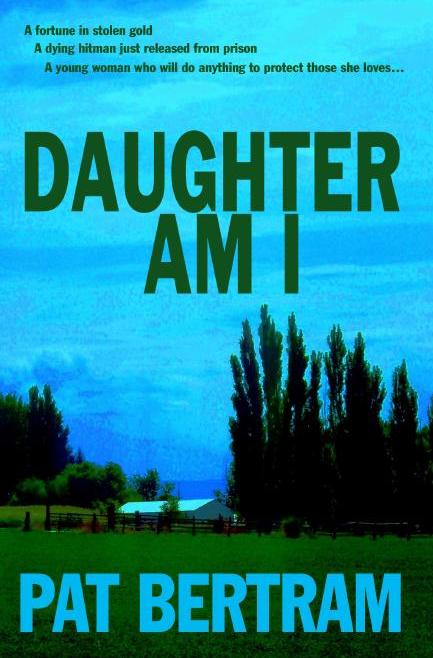
Daughter Am I Blog Tour — Final Week!

My Daughter Am I blog tour is winding down — I have seven days to go (eight if you include today) and I don’t know whether to be sad or to rejoice. Since my promotion motto is “Promotion is just another word for party,” I decided to rejoice and have an end of blog tour party on the 22nd and 23rd. You are all invited, of course.

The most interesting aspect of the tour has been coming up with unique guest posts that highlight various elements of the story. Unique, in this case, meaning that all the posts for the tour were different. I range from talking about the hero’s quest, to gangsterism, to descriptions of my characters, to researching the book. This should, ideally,  give prospective readers a better idea of the story than a simple blurb.

I didn’t have a real tour for my first books. I just did a guest appearance on a few of my blogger friends blogs, but that was more of an international get-together than a real tour. Always one for a challenge, I halfway considered going ahead and doing a tour for those books now, but then I really would never get back to writing and, as hard as turning off the computer in the evening is going to be, I am ready to finish my work-in-progress. If nothing else, its completion will be another excuse for a party!

The point I’m stumbling over here is that I’m thinking of doing a series of articles in December similar to my blog tour posts, but focusing on my first two books, especially A Spark of Heavenly Fire. After all, odd though it may seem considering that I decimate Colorado with a bioengineered disease, it is a Christmas story. Since the story leads up to Christmas, I wonder if my blog could mirror those fictional December days without my giving away the story. Something to think about.

DAIClick here to find the Daughter Am I Blog Tour Schedule 

Click here to buy Daughter Am I from Second Wind Publishing, LLC. 

Click here to buy Daughter Am I from Amazon.

add to del.icio.us : Add to Blinkslist : add to furl : Digg it : Stumble It! : add to simpy : seed the vine : : : TailRank : post to facebook

Thinking Inside the Box

Sometimes it amazes me that there is an entire world one can enter through the portal of a electronic box. The only reason this doesn’t always amaze me is that I tend to take the Internet for granted, which, perhaps, is a sign of my addiction. The cyber world is infinitely fascinating and filled with exciting possibilities. A potential friend could lurk behind an anonymous blog view. A possible fan might discover one of my books because of a guest appearance on a blog. I might learn something new on a discussion thread, or I might read a comment that fires my imagination.

I’ve put my addiction to the Internet to good use. I’ve wanted to do all I can to give my books a good send-off, and since I started from zero, I had to learn how to blog, to discuss, to connect on the internet. That in itself satisfied my creative bent for a long time, but now the doubts are starting to creep in. I’m getting known as a blogger and a promoter, but am I getting known as an author?

At Sun Singer’s Travels, author Malcolm Campbell asks: Are you tired of spending more hours a week on Facebook than you are writing? Are you tired of writing more words on all your blogs than you’re writing in all your novels? And, do you ever wonder if you’re becoming less yourself by trying to think of a constant stream of posts, status updates, comments and links that match all the latest trends enough that somebody will notice and stop and look for a moment?

Such interesting questions, ones I hadn’t asked myself until recently. I used to think that I am more myself online than offline, but now I am beginning to wonder if I am losing my offline self. Are my posts and comments reflecting me, or are they creating me? Am I still a writer, or have I simply become a blogger? I know that whatever I am doing is helping establish my online presence, but will it sell books?

I do believe in the Internet. I think the future of books (or at least my books) will come from online promotion, but I’ve begun to realize that promotion is a marathon, not a sprint. It also seems silly at times, a matter of “The House that Jack Built.” Every day I write and promote an article on my blog that promotes the blog where I have another article that’s supposed to promote the book that I wrote. Whew! Sometimes I even write a second article to promote the one on my blog that promotes the one on someone else’s blog that promotes the book that I wrote.

I have ten days left of my Daughter Am I blog tour, and then it will be time to re-evaluate my online life.

All these words just to announce today’s blog tour stop: The Challenge of Research. You can also register to win a free print copy of Daughter Am I.

Description of Daughter Am I: When twenty-five-year-old Mary Stuart learns she inherited a farm from her recently murdered grandparents — grandparents her father claimed had died before she was born — she becomes obsessed with finding out who they were and why someone wanted them dead. Along the way she accumulates a crew of feisty octogenarians — former gangsters and friends of her grandfather. She meets and falls in love Tim Olson, whose grandfather shared a deadly secret with her great-grandfather. Now Mary and Tim need to stay one step ahead of the killer who is desperate to dig up that secret.

Daughter Am I is Bertram’s third novel to be published by Second Wind Publishing, LLC. Also available are More Deaths Than One and A Spark of Heavenly Fire.

add to del.icio.us : Add to Blinkslist : add to furl : Digg it : Stumble It! : add to simpy : seed the vine : : : TailRank : post to facebook