I Had an Epiphany Today!

For the past six to eight months, I’ve been trying to figure out how to sell books online. I’ve been roaming the internet, experimenting with various social networking sites, but everywhere I went I ended up in a writers’ community. Not that it’s a problem — I’ve met many fine authors, found some good books, learned much about writing. Still, I want my novels to find a readership, so I roamed further afield, signed up for some author/reader sites. And guess what — there I found those same authors. Finally I decided to spend my time on Goodreads and other book sites and have found mostly . . . yep. Authors.

I’m exaggerating here. Of course I’ve met readers, voracious readers. The problem many readers are struggling with is that they already have stacks of books to read, or they read constantly and can’t afford to buy all the books they want to read so they haunt libraries and used bookstores, or else they set up books blogs and do reviews and get so many free books they don’t need to buy any. Readers also tend to stick with a single genre and the authors they’ve already read. Many, of course, are adventuresome, and will try new books by new authors, but these readers are so overwhelmed by the incredible number of books available, that the chances of them finding your book are zero to zilch.

So, what do we poor authors do? Ah, here’s where I had my epiphany. Promote to non-readers! Sounds silly, doesn’t it? Think about it though. We all talk about there being so few readers in the world, yet DB has sold zillions of books. Who is he selling the books to? It has to be people who seldom read. Somehow, someone convinced those non-readers that they had to read his books, and they rushed out to buy the novels.

How does one reach these non-reading readers? If I knew that, my name would be as well known as Dan Brown’s.

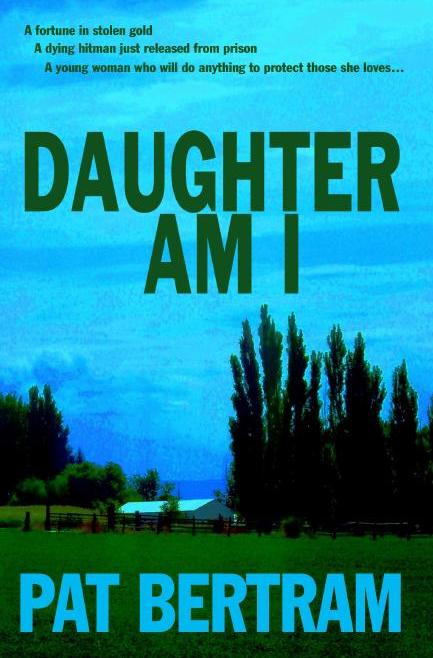
DAIDaughter Am I, my young woman/old gangsters coming of age adventure, will be available from Second Wind Publishing in two weeks!

add to del.icio.us : Add to Blinkslist : add to furl : Digg it : Stumble It! : add to simpy : seed the vine : : : TailRank : post to facebook

My Fruitful Summer

We are now officially into autumn, and where are the words I planned to write? Not in my head, not on paper. A Facebook friend emailed me the other day and asked if he could be part of the blog tour for my new book. All of a sudden it dawned on me that I have done no promotion for Daughter Am I, my young woman/old gangster coming of age tale. I’ve been so caught up in the edits, in making the book as perfect as possible, that I conveniently forgot that the finish line for one heat of the race is the starting line for another. To my dismay, I’ve discovered that getting published does not end the querying — I’ve spent the past few days trying to find bloggers willing to host my tour, and at the rate I’m going it will take many more days of querying to find enough hosts to make the tour interesting.

I did have a fruitful summer, though — I went to a u-pick cherry farm a mile down the road, (took pictures, have a great title for the photo essay, but the words to said essay are buried in the back cabinet of my brain with the rest of the words I’m not writing). I also picked plums — greengages — just a few yards from my house. Now that particular photo essay I managed to do while I was procrastinating on writing this discussion: Plum Tuckered.

Bear with me. There is a writing discussion in this.

All that fruit picking made me think that once upon a time food was free for the picking. Literally. That realization helped put me in my hero’s frame of mind — he is going to be living in the wild when I finally get back to my WIP. It also gave me a totem or token or symbol for the second part of the book (the token in the first part was a specific type of candy). And finally, it made me wonder about the use of fruit in stories. The only thing I remember about a certain book I read when young was a mention of greengages. “The children were sick from eating too many greengages.” That’s it. I don’t remember anything else — not the title, not the author, not the story.

So, has any fictional fruit made an impression on you? Eve’s apple, of course. Snow White’s apple. Apple sellers in the Depression era. Oranges in Victorian Christmas stories.

Has fruit ever played a part in anything you’ve written? Did you have a fruitful summer in any meaning of the word? What are you working on? How was your writing week? Did you accomplish what you wanted? Did you make any interesting discoveries? Did you have fun or was it a chore?

Let’s talk.

add to del.icio.us : Add to Blinkslist : add to furl : Digg it : Stumble It! : add to simpy : seed the vine : : : TailRank : post to facebook

“Now That My Book is Out, What is the First Thing I Should Do?”

A newly published author asked me an interesting question today: “Now that my book is ‘out,’ what is the first thing I should do?” I ought to know the answer to that since I was in the same position not that long ago and will be again next month when Daughter Am I is released, but I’m still a bit mystified about how to promote effectively online.

So much of book promotion on the internet depends on social networking sites, which means that one’s promotion efforts have to start long before the book is ever published because you need people to promote to. That was the big lesson I learned during my first months as a published author. The internet is so vast that any message thrown casually out into cyberspace has about as much impact as a child’s balloon set free to drift on the wind. If you hand a child a balloon, however, at least one person for sure will see it, maybe even two or three. If you have “friends,” on social networking sites perhaps a few of them will see the messages you post on your profile and be glad for you. Or at least they will pretend to be glad for you since chances are they are promoting a book, too, and responding to such messages is part of their promotion campaign.

(Do I sound cynical? I don’t mean to. I am a bit disappointed that promoting on the internet hasn’t had the impact on my sales that I’d hoped, but on the other hand, I’m having a wonderful time meeting new people, discovering new books, rediscovering old friends, creating new relatives. In essence, I’m developing a whole new life, which is a thrill in itself.)

Some new authors send email messages to all their contacts, but unless you know the people personally, I don’t think it’s such a good idea. I’m hearing through the grapevine that spamming generally doesn’t have much impact on sales, and it only irritates people, which might cause a backlash. On the other hand, status updates on MySpace, Facebook, Goodreads, Twitter are good, especially if you link the update to a blog article that tells about your struggles to get published or something else of an equally personal or helpful nature.

The secret to social networking is to be social. I admit I don’t do the one-on-one thing that well. I have a huge list of people I owe blog comments to, but somehow the days pass, and the list keeps getting longer. I’ve started responding to comments on my blog, though, which is a big step in the right direction. I used to think it was better to give commenters the last word, but recently my blog readers have convinced me they like a bit of dialogue, if only to let them know I read and enjoyed their comments. And I do. Read them and enjoy them, I mean.

I’m starting to ramble a bit here.

The point is . . . heck, if I knew what the point is, I’d be sitting back and counting my millions. Still, I have learned one thing — websites, blogs, tweets and status updates all work together to create something more than the individual parts. Who knows, that something may eventually turn out to be book sales.

Daughter Am I will be released by Second Wind Publishing, LLC in October, 2009

add to del.icio.us : Add to Blinkslist : add to furl : Digg it : Stumble It! : add to simpy : seed the vine : : : TailRank : post to facebook

Writing, Blogging, Promoting — My Aha Moment

Fellow author Dale Cozort recently returned from agent Donald Maass’s High Tension Workshop. (Okay, it wasn’t recently —  it was back in April, but who’s counting?) Cozort reported that according to Maass, the keys to keeping modern readers’ interest are finding something fresh — a different way of looking at events — and finding ways of getting the reader to identify with the character or with the scene.

According to The Everything Blogging Book by Aliza Sherman Risdahl, the key to keeping blog readers’ interest is “Taking hobbies and interests and finding a different way of looking and talking about them.”

In a recent comment, blogger extraordinaire and my marketing guru Sia McKye wrote, “There’s only so many ways to market things. If you observe, market and promotion tend to follow certain patterns. That’s because those ways work.” This seems a bit depressing to me. If everyone is doing the same things, then how does anyone ever stand out in a crowd?

Then I had my aha moment. If the key to writing is to find a different way of looking at things, and if the key to blogging is to find a different way of looking at things, then obviously, the key to promotion is to find a different way of looking at things. I know this syllogism would never pass muster in a logic class, but there is little logic to be found in writing, blogging, and promotion. Hence, at least in my mind, the conclusion works.

I am aware that those of us who are published by small independent presses are at a disadvantage when it comes to selling books. The publishing corporations and the major independent publishers use resources to which we have no access. Still, I have never been one to let such minor considerations get in the way of my dreams, and I intend to do everything I can to become unobscure.

So the question arises — how does one find a different way of looking at those promotion and marketing patterns? I’m sure you will be as glad as I am when I hit upon the solution. At least you won’t have to listen to my constant yammering about finding ways to promote.

add to del.icio.us : Add to Blinkslist : add to furl : Digg it : Stumble It! : add to simpy : seed the vine : : : TailRank : post to facebook

A Shocking (And Embarrassing) Reality

I received my second royalty check yesterday and was shocked (and a bit embarrassed) by how few books I had sold online in the past couple of months. I’ve been a big advocate of online promotion, and I’ve had a great time connecting with people on Facebook, Gather, Twitter, Goodreads, this blog, and other sites. Apparently, however, while I’ve been making friends, I haven’t been making sales. I realize the economy is bad, that people are spending money for vacations and back to school clothes, that many people are without work, but that can’t be the total answer since 30% of each of my books is available as a free download on Smashwords. And people aren’t downloading them.

I’ve been saying all along that I’m missing a piece of the on-line promotion puzzle, and this just proves that I am right. To be honest, I still don’t know what that missing piece is. I get dozens of emails from authors telling me about their books, giving a synopsis and a plea to buy. I won’t follow their example. Such emails might work — people are kind and often will follow through — but I find them intrusive. And annoying. So annoying that I don’t even bother to read them. Since I won’t do unto others what I won’t let them do unto me, emailing people is out.

I know many authors who continually speak and write of their books, cramming them down our gullets until we want to scream. We can’t scream, of course, because that book is gagging us. That’s why you never hear a protest against this sort of tactic.

I could do what other authors are doing — give up on promotion to concentrate on writing another book that might be “the one.” The problem with this (for me, anyway) is that I already have two more books that will soon be published. Daughter Am I (sort of a gangsterish book with my own twist on the bootlegger story) will be published in August, and Light Bringer (sort of a science fiction, alternate history, retelling of human history novel, with my own twist on the past), will be published in November.

I can see one problem — I can’t write an elevator speech! After all this time, I still don’t know how to describe my books in a single sentence. Nor have I figured out my genre. One reader emailed me (yes, I do read and respond happily to emails from people who aren’t trying to sell me something unless it is one of those endlessly forwarded messages that no one ever reads). She commented: I now see what you mean about an unnamed genre. Kind of a big picture conspiracy, behind the scenes machinations and how that affects the little guy (or gal) on the street. (Thank you, Wanda!)

So, what’s the answer? I promise, when I figure it out, I will let you know. By November, I hope. Light Bringer is my magnum opus (of the four people who have read it, two called it brilliant; the other two merely said it was wonderful), but how magnum can an opus be if no one reads it?

Meantime, my fame, such as it is, is spreading. In the past few days, I found my name in four different blog posts and links to my blogs in a couple of surprising places:

Murder in the Wind — I won! Thank you! By Sheila Deeth

I blog, you blog, we all blog — Why? By Claire Collins

To Kindle or Not to Kindle by Norm Brown

Interview with Alan Baxter on Smashwords

Bookselling Links on the New Atlantic Independent Booksellers Association website

Yahoo Answers

It’s a good beginning.

add to del.icio.us : Add to Blinkslist : add to furl : Digg it : Stumble It! : add to simpy : seed the vine : : : TailRank : post to facebook

Cashing in on the Book Business

I’ve been looking for book review sites, trying to find places to send my books for review when they are finally released in January or February of next year. There are so many people with published books trying to get them reviewed that most of the good places aren’t accepting or else they charge exorbitant fees. Even the not-so-good places have a waiting list, and many of them charge a fee, too. (Rule of thumb: don’t pay for a review on a blog with less traffic than yours.)

The problem? When self-publishing first became popular, the authors were more or less satisfied with selling 100 copies to family and friends, but now they are learning how to promote. With the big guys making most of their debut authors do their own promotion, writers are beginning to wonder why they should bother with traditional publishers — if authors have to do their own promotion, they might as well get paid. Several bloggeries I’ve read mentioned an expected explosion of self-published books in 2009, and that a large percentage of those books will be aggressively promoted by their authors.

Makes me wonder if the whole book business could implode, with more writers than readers. Many of the people I’ve come in contact via this blog are readers as well as writers, but at least half of the writers I meet elsewhere do not read books. Nor do they buy them.

In the future, perhaps more money can be made reviewing books than writing them. I’ve mentioned before that I’ve been toying with the idea of becoming a reviewer. It’s tempting — especially if I could find others who would be willing to review the genres I don’t read. It’s one way to eventually cash in on the superabundance of published, POD, and self-published books out there, and I’d never lack for reading material. I have only a few objections: I’d have to review for nothing until I could build up a reputation, and I’d have to give strangers my address. Also, I am so jaded when it comes to reading that I’m not sure I could think of anything nice to say about any book, and if I tried to say something positive about a book with negative appeal, would it harm my (so far non-existent) reputation? Even worse, all that reading would take me away from writing, and I have enough distractions as it is.

But still, it’s something to think about as I try to figure out how and where to promote my books.

Is Writing Worth the Effort?

A friend asked me if trying to become a successful author is worth the investment of time and money. Not only do writers have to hone the craft, they need to attend conferences, workshops, hire editors and publicists, build websites and promote.

I wish I knew the answer to my friend’s question. Now that my books are nearing their release date, I’ve been spending most of my time on the internet researching how to promote. And I still don’t know how to do it. Blogging, of course. Publishing articles. Making connections on Facebook and Gather. But to become successful, writers need to go beyond the obvious. Nor do I have the money necessary to do all that is required, including attending conferences, joining national writing groups, traveling to booksignings. So I have to do it on the cheap.

Is it worth it? I won’t know for a year or two or ten if I’m going to be a successful author, so right now,  I’ll leave you with the daunting facts: one and a half to two million books are written every year. 150,000 are published (about half of those are self-published), and since many carry over from year-to-year, I figure that at least a million are being peddled as we speak. 75% of published books (including some with big advances) sell less than 500 copies. 85% of published book sell less than 1000 copies. 84% of books in a bookstore sell less than 2 copies. A book is considered successful if it sells a total of 5000 copies. Considering the time it takes to write, edit, and promote, that comes to about $1.00 an hour for the author. Woohoo. (And that doesn’t take into consideration the sometimes hefty amounts people shell out for conferences, editing, classes, etc.)

Because time as well as money is at a premium, we feel guilty when we promote and let the writing lie fallow. And we feel guilty when we write and don’t promote. Juggling with fire would be easier, and less complicated, especially when the fireballs being juggled include jobs and family.

On the other hand, what choice do we have? We are writers. We need to write, and we need readers.

Writing Discussion With Cliff Burns — Part III

When I asked Cliff Burns, author of So Dark the Night, if he’d like to guest host my blog, he responded that he’d rather have a discussion. I was thrilled. I enjoy talking about writing, but even more than that, I love learning how other writers approach the craft. This is the third and final part of the discussion.

BERTRAM: National Novel Writing Month is coming up, and its adherents are a heated bunch — they don’t seem to like anyone questioning the process. You’re one of the few I’ve come across who speak out against it. 

BURNS: I know people have really taken me to task for lambasting NaNoWriMo and its adherents. To me, the concept is a stupid one — write a novel in a month, give me a break! It devalues the professionalism of the vocation, the enormous amount of time and energy authors put into learning and developing their craft. Anyone can claim to be an “author” or “artist” — the arts seem to condone this sort of thing. I suppose I’m an elitist and a snob. It took me ten years of daily writing and scores of credits before I was able to call myself a writer without feeling self-conscious and phony. As I wrote in a recent post: you’re not a plumber if you unclog a toilet and you’re not an electrician if you screw in a light bulb. Each of those trades requires training, a lengthy apprenticeship period. Why should the arts be any different? 

BERTRAM: I can’t even imagine what it would take to write a novel in a month. The writing of a novel takes me a year, and some of the research I’ve done has taken more than that. But then, I am not an intuitive writer. I have to drag each word out of hiding and find its place in the puzzle that is a novel. I suppose two types could write 50,000 words in a month — the intuitive writers who spew out words, and the logical writers who have the whole thing outlined before they begin. Me? I fall somewhere in the middle. I so hate tossing aside my hard work that I habitually rework my writing as I write. (Though I have rewritten one of my novels four times, and deleted 25,000 words from another..)

BURNS: My first drafts come out in a huge gout of words — I try to get it all down as quickly as I can.   I think I wrote the first draft of one of my novels in 45 days. But . . . then I spend the next eighteen months (or more) revising, editing, polishing, going over each syllable with painstaking care. I outline a little bit, scribble down character names, some ideas for certain scenes, but that first draft usually becomes the outline I work from. It’s incredibly labour-intensive but the only method that works for me.. I would say only a few words or phrases survive from my first draft by the time I’m finished. It’s only a roadmap, nothing more. And I never grow attached to a character or scene — “everything in service to the story”, that’s my motto. All else is expendable.

BERTRAM:  I was going to ask if you push for a daily word count, but you mostly answered that. So how about: do you write at the same time and in the same place and in the same manner (computer, pen/paper) everyday?

BURNS: My office is right across from our bedroom so it’s the first place I visit in the morning. Moving things around on my desk, gearing up for the day. I play lots of music to get warmed up, start the juices flowing. Commence work when my family leaves for school or work, break for lunch, maybe tea later in the day, popping downstairs when my family returns. We have supper together and then often it’s back to the office to square things away, tie off loose ends and set things up for the morrow.

BURNS: First drafts are almost always handwritten (even my 450+ page novel So Dark the Night) and then tapped into my ancient Mac computer with fingers swollen and aching from arthritis or nerve damage.  Twenty-five years or more of three or four-fingered typing has taken its toll. How does that compare to you? I hope you’re a lot saner in your work habits than I am. You strike me as a pretty levelheaded individual . . . or am I wrong?

BERTRAM: You’re not wrong, but when it comes to writing, I’m not so much level-headed as undriven. Each of the words has to be dragged out of me, an act of will. And sometimes the words are not there. But I don’t sweat it; I edit, I blog, I promote. And when the words come, I’m ready. I also write handwrite my first drafts — I think one reason for the crap published today is that authors lack the brain/finger/pencil/paper flow. I read once that the only place other than the brain where gray matter is found is on the fingertips. May or may not be true. But it feels true.

BERTRAM: When does a writer become an author? I used to think it was when a writer got published, but now that anyone can get published, it’s not much of a criterion. Nor does a writer become an author when they can make a living at it; good writers seldom can. The hacks usually do.

BURNS: A writer writes. That’s it. Every single day. Publication credits are meaningless (especially today) and critical acclaim doesn’t amount to a hill of beans. Sales figures? Well, Dan Brown sold millions, as did Stephanie Meyer and, in my view, their work is sub-literate.  he way you can tell is read it out loud. Just one page, any page will do. If you’re not crying with laughter after a couple of paragraphs, it’s time to get a funny bone transplant.

BURNS: Aspiring authors: apply yourself to the task of writing with discipline and courage and perseverance. I love the quote from Nabokov about “writing in defiance of all the world’s muteness”. Not just scribbling the same thing, working to the same formula but trying to stretch your talent as far as it will go . . .. and beyond. Working outside your comfort zone, writing prose that scares and intimidates you. But it’s the daily practice that, to me, reveals those who are serious and distinguishes them from the wannabes I loathe.

BERTRAM: is possible to become an author people will read even without the “help” of corporate publishing?
 
BURNS: I self-published my first book back in 1990 — it sold out its print run in less than 5 months and earned praise from various reviewers, as well as Governor-General Award-winning writer Timothy Findley. I started my blog, “Beautiful Desolation” 18 months ago and since then I have ceased submitting work to other venues — my work (including 2 novels) now goes directly to my blog and I’ve never been happier. Corporate publishing is dying, the profit margins aren’t big enough and soon the Big Boys will be dumping their publishing arms. The new technologies allow writers to have access to readers around the world–I only wish this stuff had been around ten years ago, it would have saved me a lot of frustration and fury. Kindle? E-books? POD? Why not? Anything that allows the writer to get a bigger slice of the pie is all right with me…
 
BERTRAM: How did you promote your self-published book in 1990? What would you do differently today?
 

BURNS: That was my book Sex & Other Acts of the Imagination and a lot has changed since then. For one thing there are far fewer independent bookstore and those were the folks who sold the lion’s share of Sex. I took copies with me everywhere I went–Saskatoon, Regina, Edmonton, Vancouver, Toronto–approached every indie bookstore I could and sold them (usually on consignment). The vast majority of those book stores are gone now, sad to say. Sex cost $3000 to publish, my second collection, The Reality Machine, cost $6000 in 1997. Nowadays print-on-demand might save me some money–that’s something I’m looking into, likely using Lulu.com. Can’t quote you any price for that (as yet) but I’ll be using my blog and the vast reach of the internet to spread the word..

BERTRAM: Is there one website more than another that brings you readers? Any suggestions for authors just starting to promote?

BURNS: Hmmm . . . well, I try to reach out to sites that discuss writing and publishing and I have a RedRoom authors page. I comment on a lot of blogs, replying to posts that amuse or annoy me for one reason or another. My blog, Beautiful Desolation, is my primary promotional venue, to tell the truth. I’m also on LibraryThing, a place where bibliophiles can hang out and chat. They don’t encourage “blog-pimping” (a term I loathe, by the way), which is ridiculous because often I’ve written a lengthy post on “Beautiful Desolation” regarding a point under discussion. So I refer people to the post anyway and slap down anyone who dares accuse me of self-promotion.

BERTRAM: Thank you for taking the time to talk with me.

BURNS: Interesting the similarities and differences in our approaches and processes, our views toward the life and business of writing. Thanks for the discussion, it helped me better define and synthesize my thoughts.

Writing Discussion With Cliff Burns — Part I

Writing Discussion With Cliff Burns — Part II