Pets: The Good and the Bad

Daily writing prompt
What animals make the best/worst pets?

I can think of a lot of animals that would make the worst pets. Even without really thinking, the wooly mammoth, the saber tooth tiger, and the pterosaur come to mind. Truly, not good pets. For one, their size would make them hard to house. Sure, you could keep them as outside pets, but you’d still have the problem of feeding them. A mammoth eats about 400 pounds of vegetation a day, which would be complicated even in the country, but in the city? Couldn’t be done. And then there’s the pterosaur. With a wingspan of 35 feet and an exceedingly high metabolism, they need to eat continually. And they eat meat. So what happens when they run out of meat, when your neighbors have all mysteriously disappeared, and there’s only you left? I tend to think there wouldn’t be a whole lot of affection going on. Same with saber tooth tigers — high metabolism, voracious meat eater, and oh, yeah — those teeth.

Good thing all those creatures are extinct. But there are some extant creatures that would be every bit as bad. A blue whale, for example. It weighs more than thirty elephants. Yikes. Where would you keep such a thing? I imagine a goldfish bowl would be a tad small. A hippopotamus is much smaller than the blue whale, but due to their bite force and jaw structure, they’re considered one of the most dangerous creatures in the world, so not good pet material. The mosquito, not surprisingly, is the most dangerous creature of all, killing as many as a million people a year. (Humans only manage to kill about a half a million.) Besides the lethality, there doesn’t seem to be any way to domesticate a mosquito, so when considering the worst animals for pets, the mosquito would have to top the list. They might be easy to feed — I’m sure you have a bit of blood to spare — but keeping them caged would present a problem.

The best pets, at least in my opinion, are the legendary kind. Dragons. Unicorns. Griffins. Pegasi. Even though some of those creatures are said to be dangerous (red-hot breath anyone?) their non-corporeal aspects make them easy to take care of. And ignore. I’m not one to enjoy sharing my space with other creatures — large or small — so for someone like me, any of these fantastic entities would make a good pet.

For you and everyone else, the best pet, of course, is the one you love the most.
***

Pat Bertram is the author of Grief: The Inside Story – A Guide to Surviving the Loss of a Loved One.

The Bob

Daily writing prompt
How have you adapted to the changes brought on by the Covid-19 pandemic?

I was going to make this a lighthearted post because I’ve adapted well to the changes brought on by the “Bob.”

In case you don’t know, I call it the “Bob” after an excerpt in my novel, A Spark of Heavenly Fire, where protagonist Greg, and his boss, Olaf, are discussing research papers. Olaf says:

“Convoluted writing and obscure terms are a way of intimidating the uninitiated, keeping the profession closed to non-scientists, and adding to the scientific mystique. Just think, if diseases had names like Bob and Carol and Ted and Alice, doctors wouldn’t make anywhere near the amount of money they do now.”

Greg laughed. “That’s an idea. They do it for hurricanes, why not everything else?” He mimed seizing the phone and dialing. “Mr. Olaf? I can’t come in today. I’ve got the Bob.” He hung up his imaginary receiver and looked inquiringly at his boss.

Olaf nodded. “Works for me.”

All during the worst of the shutdown, I hated giving the malady — both the physical ailment and the widespread cultural and financial ill — the hated name. I didn’t want to grant the horror more power than it already had and, too, I didn’t want to surrender to the fearmongering. At least, not for myself. I don’t get the flu, and besides, I’d made a vow never allow myself to get caught up in another scarifying scheme such as happened with the Swine Flu fiasco of 1976. Outwardly, I made a point of following their dictates. I stayed home. (Yay!! Such a good excuse to take a break from socializing.) I made sure to stay 6 feet away from anyone I did happen to see. (Again, yay!! I’ve never liked people standing on my heels while waiting in line.) I wore the mask. (Another yay! I liked the anonymity.) And I always made sure I had an easy answer when asked if I’d gotten the vaccine. (It wasn’t a lie, but not the strict truth, either.) And even though we’ve been paying for the stimulus checks with inflation for the past few years (each of us has probably spent more in inflationary dollars than we ever received for “free”), they were a nice bonus for me at the time.

So, for me, it wasn’t a hardship. The worst thing, I think, was keeping from getting caught up in the fear. And the best thing was having an excuse to be alone, and that still holds true to this day.

So why did I change my mind about a lighthearted post? Because other people weren’t so lucky. I know several women who lost their husbands and subsequently their way of life. (Too often widows end up in financial straits, as if losing that one special person isn’t trauma enough.) I know others who have lost beloved family members. And I know still others who have become lost in a cycle of never-cured illnesses.

If this had been a naturally occurring illness, there might be some sense of fatalism to help with acceptance, but I doubt there’s anyone out there who still believes it “just happened.” We (the people) might never know the truth. Might never know who to blame. Might always be shadowed by the spector of “if they did it once, they can do it again.”

One thing I do know: we — individually and as a people — will always be changed forever by the “Bob.”

***

Pat Bertram is the author of Grief: The Inside Story – A Guide to Surviving the Loss of a Loved One.

What My Life Is Like Today

Daily writing prompt
What’s something most people don’t understand?

Today is the sixteenth anniversary of Jeff’s death. I’m sitting here mindlessly playing a game and scrolling through a few articles, trying to decide if I want to write about this anniversary. I will remember him, of course, and think of him and all he brought to my life, but I’m not sure it’s something I should still be talking about it. After all, his death belonged to him, not me. Still, I suppose I should at least mention the anniversary — for years I wrote about my grief, laid it all on the line (laid it online?), so it’s only fair that I talk about what my life is like today.

Life, that’s what it’s like.

Too many people bury their grief, letting others tell them how long they should grieve, how long it’s acceptable to talk about their feelings, how long they’re allowed to feel whatever it is they feel. But that is a disservice to grievers. I truly believe it’s important to feel all the myriad emotions, physical sensations, and mental fogs so that the body and mind can work its way through the changes to end up . . . renewed. Or if not renewed, then at least able to go through life without holding in the stress of grief like a too-tight girdle.

Despite the importance of that message, I still wavered about doing another grief post until I happened to notice today’s blog prompt: What’s something most people don’t understand? Such a blatant sign shouldn’t be ignored, especially since there is something I know about that most people don’t understand — Grief, especially grief at the death of child, a spouse, a soul mate.

Everyone thinks they understand grief because most people have felt sadness and despair and even shed tears at the loss of an acquaintance or a job or something else important to them. But not all grief is the same. Not all losses are the same.

The reality is, the most stressful event in a person’s life by far is the death of a life mate or a child. The reality is, such a death is so devastating that the survivor’s death rate increases by a minimum of 25% percent. The reality is, such grief brings about brain chemistry changes and lowers the capacity to function. Someone who hasn’t gone through the trauma of dealing with all the losses those deaths bring about — not just the body and mind changes, but the loss of identity, one’s way of life, sometimes income, and a thousand other changes — cannot understand and so has no business telling anyone how long to grieve or how to grieve. Grief belongs to the griever, not to the onlookers to people’s grief. Admittedly, no one likes to see others in pain, but that pain is often made worse by having to hide it to keep from bothering others.

People who are allowed and who allow themselves to go through the process of grief — because, at its most basic, grief is a process, a way of moving a person back into a semblance of life — end up able to simply live.

For years, I felt as if I were living as a reaction to Jeff’s death or in spite of it, felt as if grief bound me to him and to a way of life that had died with him, but now — I feel as if I am simply living. Maybe I’m just used to that deep undercurrent of sadness, but even so, it doesn’t change the fact that after sixteen years, what my life is like today is . . . life.

***

Pat Bertram is the author of Grief: The Inside Story – A Guide to Surviving the Loss of a Loved One.

Creating a Peaceful Place

Daily writing prompt
Describe the most ambitious DIY project you’ve ever taken on.

The most ambitious DIY project I’ve ever taken on? That’s easy. Landscaping my yard.

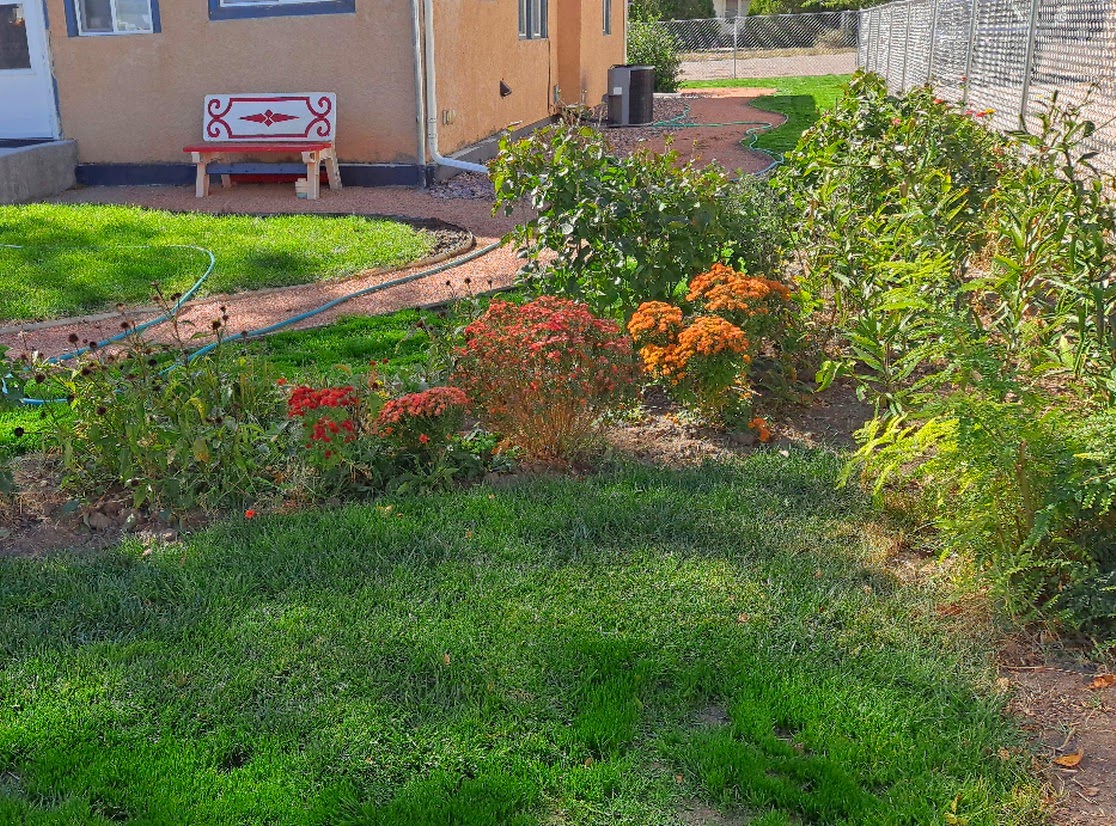
When I moved here, the yard was dirt and weeds. It looked okay because the weeds had been cut down to make the house look good when it was put on the market, but still, just weeds. I hadn’t planned on doing anything to improve the property because I didn’t want to have to take care of a yard, but there were things that needed to be done, such as rocks laid around the house to protect the foundation. Then, when I found out I was tripping on all the holes and rocks among the weeds, I decided I needed walking paths of crushed rock to keep from falling and breaking my neck. Or a hip, anyway.

Admittedly, I didn’t do any of the rock labor, but the finished work gave me a sort of yard pride that seemed to demand further work. So gradually, I planted a few bushes, a few flowers, filled in some of the gardens that were created by the walkways, and things escalated from there.

I had a lawn mower, so I put in a bit of a lawn since I didn’t want the mower to go to waste (a silly reason for a lawn, I know, but it’s the truth). I had sod put in, but when that all died (the people I hired put in the wrong grass), I dug it up and planted a more heat-resistant strain of grass.

And so it goes . . .

What makes this DIY project so ambitious is that there doesn’t seem to be an end to it. There’s a lot of work just involved in maintenance, so that keeps me outside for a couple of hours each day, which makes me see how much more I can improve. I can see spots that need to be filled in or bits of color that will improve the looks of one of the gardens. And then there are container gardens and hanging pots to be replanted every year.

Yep, an unending project when in fact, what I had wanted was a yard that took no work.

Oh, well, there are worse things than a garden demands attention. And truly, I can’t think of a better use of my time than creating this peaceful place.

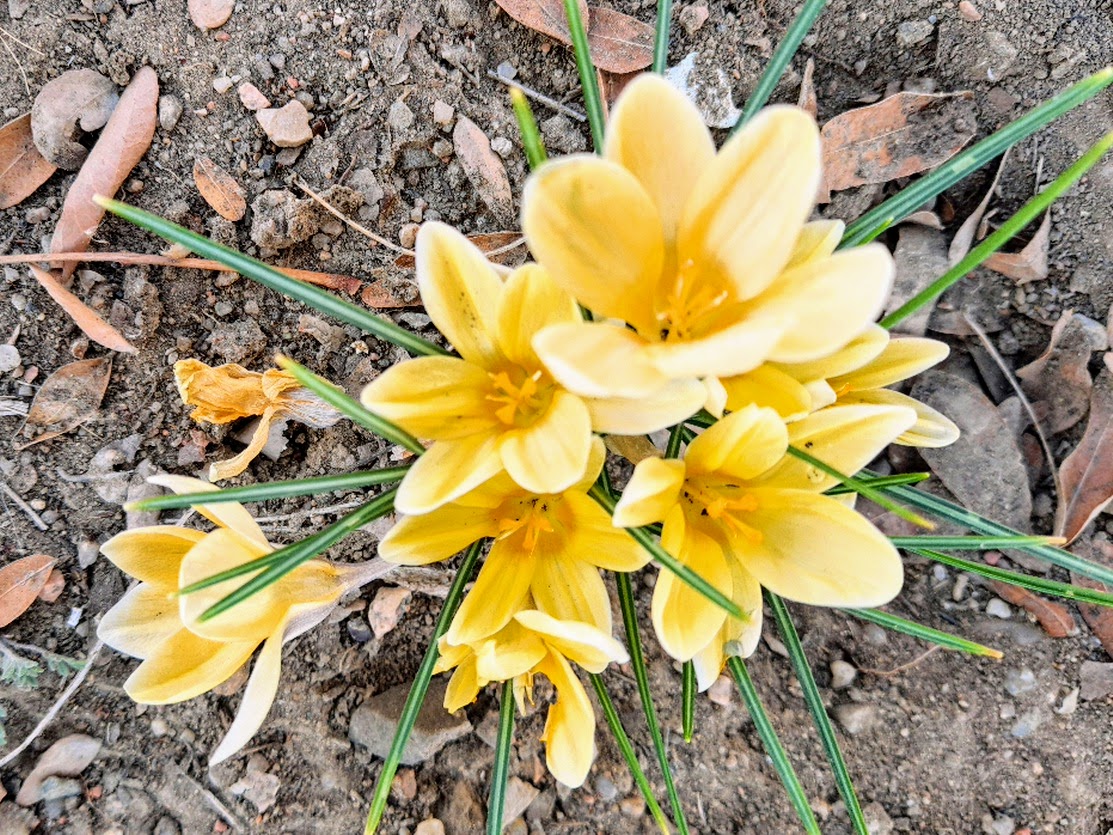
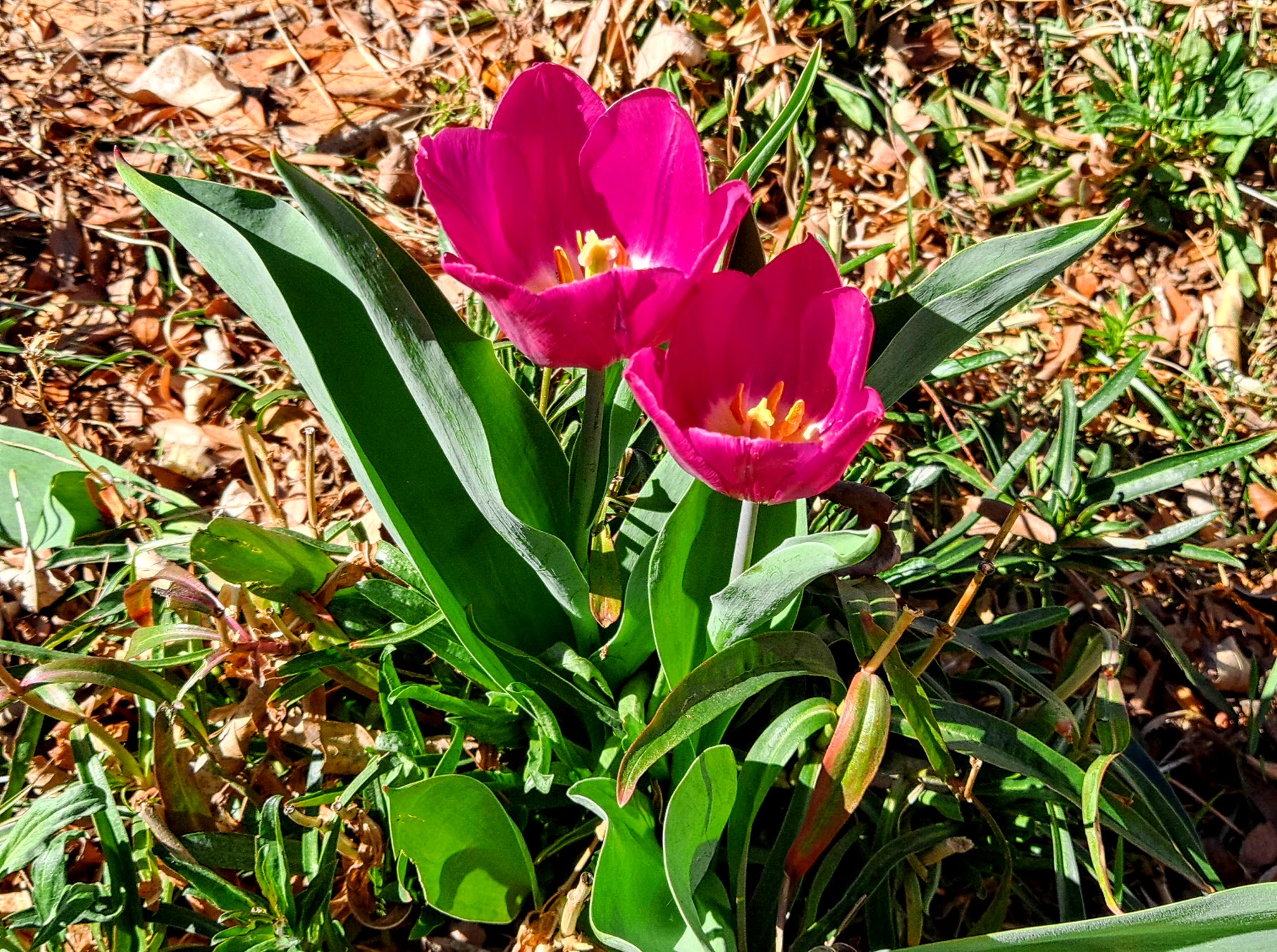
Besides, there all are the surprises I find, like this morning. Look! Crocuses!

***

Pat Bertram is the author of Grief: The Inside Story – A Guide to Surviving the Loss of a Loved One.

Finding a Purpose

Daily writing prompt
What is the biggest challenge you will face in the next six months?

Ever since I watched monks Walk for Peace with such purpose and dedication, I’ve been thinking I need to find a purpose rather than just living simply from day to day. (This can be construed as simply living from day to day or living simply, and both would be correct.) And that’s what I came here to say, that the biggest challenge I will face in the next six months is finding a purpose.

But do I need a purpose? Does anyone? A sense of purpose might make someone feel good, feel as if their life was worth living, maybe even make them feel important, but the purpose itself might not be a good thing. For example, a pattern killer (the current appellation for a serial killer) generally has a strong sense of purpose, which is good for the killer, but not the victims.

(I was going to use more specific examples, such as the protestors who felt their purpose was to interfere in the arrest of a child rapist and murderer, and so the perpetrator got away. I am sure the protestors felt so proud of themselves for fulfilling their purpose that they would never see how their actions led directly to more heinous crimes committed by that perpetrator. But I decided not to use such examples because I can never be sure if people would read my words and their intent as I meant them, or if they would read their own emotions into the example. Hence, my example of the pattern killer because I’m sure most of us can understand that in such as case, a sense of purpose and where it leads is not a good thing.)

Oddly, while thinking about finding a purpose, I came across something called “purpose angst,” which is “the stress, frustration, and worry stemming from the intense pressure to find, define, and live a meaningful life.” That, too, made me wonder how important it is to find a purpose. If the search for a meaningful life is such a dire burden, maybe it’s the search that’s the problem. Maybe we’re not supposed to search for meaning in our lives. Maybe our lives themselves are the meaning.

In reading people’s reactions to the Walk for Peace, I saw an interesting comment. The commenter said that people who talked about the walk and how it affected them mentioned things like the monks’ dedication, their perseverance, their kindness. But he said the real reason the walk touched people was the simplicity. Everything about modern life is noise and chaos, but then came the monks. They simply walked in single file in silence. No noise, no chaos, no bunching up. Just that single orderly line. Simple. Touching.

Although their message was peace, that the way to peace is to find it is within ourselves, maybe the true message was simplicity.

In which case, there is no need for me to find a purpose. I am living that purpose: a simple life lived simply.

So, since finding a purpose is a challenge I won’t be facing in the next six months, what challenge will I face? I can’t think of any offhand, but life has a way of surprising us. I’ll let you know six months from now what, if any, challenge I faced.

***

Pat Bertram is the author of Grief: The Inside Story – A Guide to Surviving the Loss of a Loved One.

That “R” Thing Again

Daily writing prompt
If you could permanently ban a word from general usage, which one would it be? Why?

There are many terms that really get on my nerves, words and phrases I don’t use and would like expunged from the English/American language: “110%” (a physical impossibility); “intestinal fortitude” (just have the guts to say “guts”); “veggies” (the very sound of that mawkish word gags me), and “climate change” (the term is redundant. Climate is change. Climate is always changing).

Recently I have expunged another word from my vocabulary, and though I would like it banned from general use, simply the idea of suggesting banning it would seem to prove the very thing I would like banned.

It’s that “R” thing I wrote about yesterday. The word is so dangerous, so powerful and pejorative that just being called that “R” thing will bring down collective wrath on your head. It’s the one thing that is outside the normal rule of “innocent until proven guilty.” If you’re called that “R” thing, whether or not you did anything to earn that slur, that’s what you are. End of story. Except it’s not the end. Just being called that “R” thing can get you banned from social sites online and community groups offline, can get you ostracized from family or friends, and can sometimes get you fired from your job. It also subverts the law — too many district attorneys refuse to charge criminals for minor crimes and even great crimes, and they ignore fraudsters for stealing billions because they don’t want to be tarnished with the brush of that “R” thing.

I’m not saying the “R” thing doesn’t exist, but that the word itself has become something separate from the behavior it describes. It’s become such a triggering word that the true definition has all but been lost — there seems to be a disconnect between how easily the word is thrown out there and what it actually means.

People have become hyper-vigilant toward cultural nuance or slight and what can be perceived as aggression (even if it’s not directed at them), and they are quick to point it out. At the same time, we have become hypersensitive to and fearful of being called that “R” thing. In a world where words are considered an instance of violence, this could be the most violent. It’s also a weapon, a sure-fire way to silence opposition, to shut down any discussion, and with it any hope of true understanding because it’s an attack on the speaker, not on what is spoken.

Nowadays, it seems as if everything is viewed through that “R” lens, even when unnecessary, even if what you say is true or is not in any way divisive or derogatory.

Yesterday, I posted a blog about the conservative black commentators I have been following. As far as I can see, there was nothing discriminatory about what I wrote, and yet I hesitated to post it because of that “R” thing. I’d already been slandered on Facebook for simply sharing a post from a black commentator, and I didn’t want to continue being slandered. On the other hand, why should I not be able to write what I think just because others might see that “R” thing in my words?

Anyway, whatever anyone else does, in my little world (basically just me and this blog), I am getting rid of that word. There are plenty of other words to use to describe that particular attitude, words that aren’t as incendiary, words such as prejudiced, biased, intolerant, discriminatory, xenophobic, ethnocentric. Too bad I can’t also get rid of the emotional connotations attached to being called the “R” thing, but I’m afraid it’s now embedded the world today, and even in my own psyche. Still, there’s hope . . . well, probably not. I’ve always been sensitive to any sort of slight, and I don’t see that changing any time soon.

***

Pat Bertram is the author of Grief: The Inside Story – A Guide to Surviving the Loss of a Loved One.

Favorite Drink

Daily writing prompt
What is your favorite drink?

My favorite drink? As in favorite everyday beverage? Or as in adult beverage?

For an everyday drink, I generally stick with a cup of tea in the morning, or perhaps a weak milky coffee, and then drink water the rest of the day. Boooring!

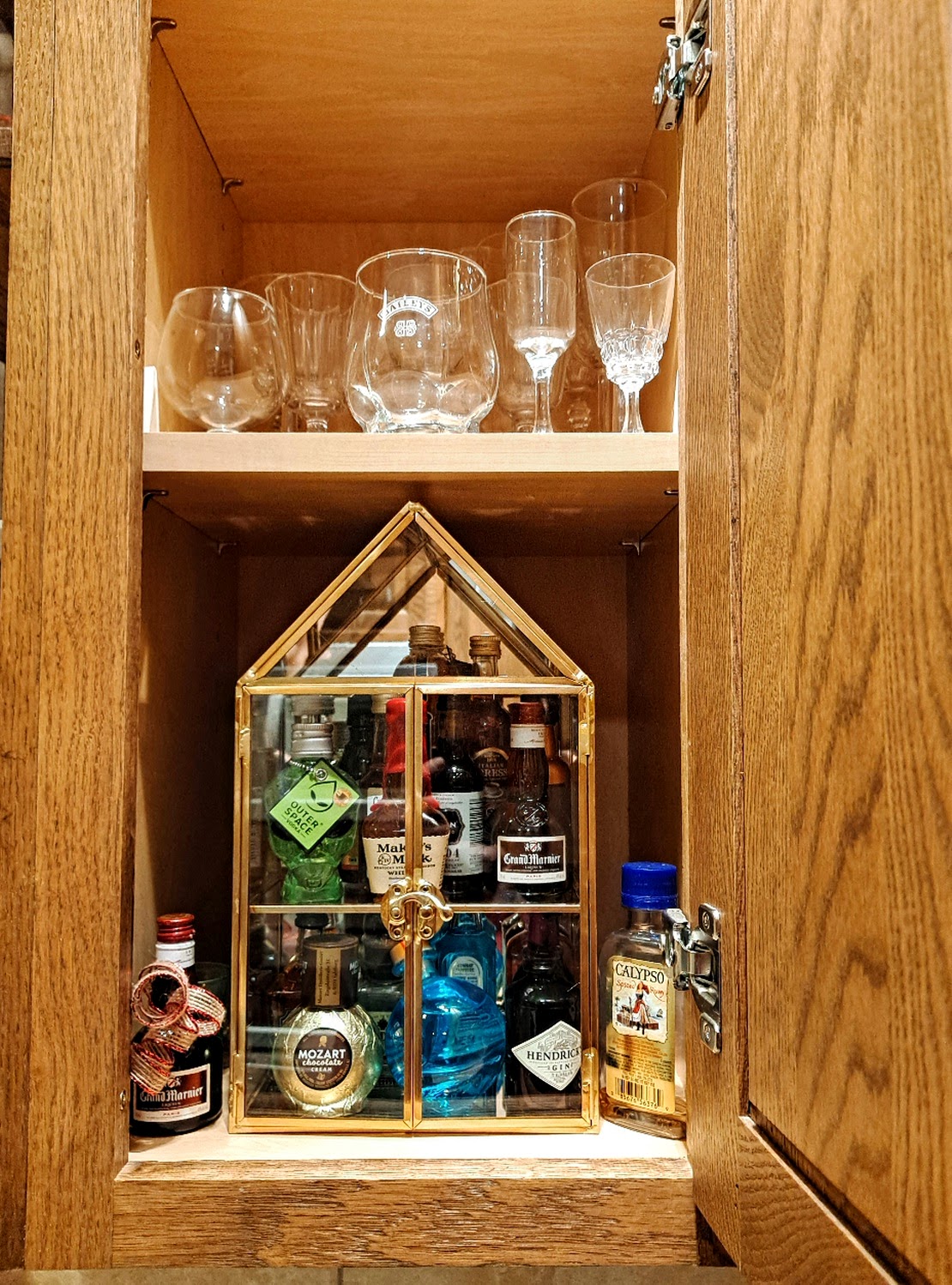
So I won’t talk about that — I’ll talk about my favorite “drink” drink. As in alcohol. To be honest, I barely drink, even though my sister once gifted me with a lovely miniature liquor cabinet, something I always wanted. (Yeah, I know — weird for a self-proclaimed hardly-ever drinker to want something like that, right?)

A couple times a year, if I’m feeling under the weather, I’ll make myself a hot toddy with a fiery ginger tea, lemon, and spiced rum, but that’s for medicinal purposes. And every once in a great while, I’ll take a nip of something in my liquor cabinet just to experience my wild side.

Though I seldom drink even them, there are two drinks I do like, but mostly because they come with memories.

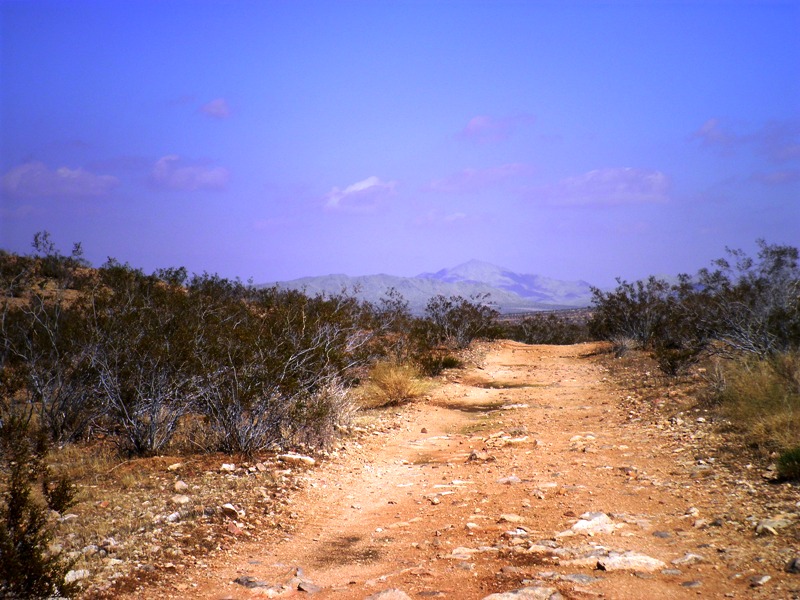
Exactly ten years ago today, I camped at Organ Pipe Cactus National Monument on my travels across the county. Stunning scenery, beautiful weather, congenial fellow campers. One evening, a camper (drawn by my car, more than me), who was exploring the south and west on his motorcycle, brought a bottle of Grand Marnier to my campsite. He and I sat under the bright stars with the glow of Mexico to the south, sipped our drinks, and chatted. It was such a magical experience that even today, a sip of Grand Marnier will take me back to that warm star-lit night.

I also occasionally have a sip of Bailey’s Irish Cream, but mostly, I save what I have so I can drink a toast to my mother on her birthday or deathday as a memorial, since it was her favorite drink. The glass I use is a regulation Bailey’s glass that once belonged to her. (She used to have a cupboard full of unmatched stemware. I kept those goblets when I cleaned out the house after my father died, and so now I, too, have a cupboard of unmatched glassware.)

Even considering those special two drinks, that little glass display case sits in my kitchen cabinet mostly unused but delighting me with the thought of finally having my very own miniature liquor cabinet.

***

Pat Bertram is the author of Grief: The Inside Story – A Guide to Surviving the Loss of a Loved One.

Dreaming up a Home

Daily writing prompt
Write about your dream home.

I’m sitting here with a smile on my face, thinking about my dream home. For me, my dream home isn’t a fantasy, it’s a reality. It’s the very house I am now sitting in. What makes it a dream home is that I dreamed it up.

Years ago, I went through a huge change in my life. My life mate/soul mate of thirty-four years, Jeff, died, leaving me stranded here in this world without a home (he was my home) and with a single responsibility left to me — to go and help care for my aged father. I also was left with a sense that somewhere after the dark present, there would be a brighter future for me. During those long years of grief, I held to that thought. After my father died, I was adrift again, becoming a serial nomad — renting rooms and taking long trips.

I never thought of owning a house. It seemed too far from reality to even dream of it — just the thought of the upkeep seemed burdensome to say nothing of all the financial obligations a house engendered.

I spent years trying to figure out what to do, then when a relative suggested buying a house, it hit a chord. I had a bit of savings, but nowhere near enough to buy a house, or so I thought. Except, there was one corner of the world where house costs were still unbelievably low. I visited the area, and it was okay — way out on the plains, far from any major city, but I didn’t care. I just needed a place to live out my years.

A realtor took me around, and though I didn’t find a house I liked or could afford or that was still on the market a day or two after it was listed, I made friends with the real estate agent. Then I went home, thought about all I’d seen, and I dreamed.

I dreamed of a house with a new galley kitchen, a bathroom that would still be accessible no matter what old age brought, a living room with lots of screened windows,

an office with a day bed for reading and working/playing on the computer. Oh, I dreamed and dreamed, dreaming every single detail of what I would like into existence.

Then one day I got an email from Zillow though I’d never signed into that real estate site and certainly never signed up for emails. The email showed a simple house and said I might like it. I checked out the photos of the inside and gasped in disbelief. There it was — exactly what I’d dreamed up.

It wasn’t so much the looks of the house that got to me but the inside since I live in rooms and don’t spend a lot of time looking at the outside of where I live. I immediately called the realtor. She went to look at it, told me what she found, arranged for an inspector, and when I asked her to arrange the sale, she panicked and had me sign an affidavit that it was my choice to buy the house unseen. But I knew it would work out okay. After all, it was my house.

Three things were not in the dream — 1) the town itself because at that point I didn’t really care where I lived, I just wanted not to have to worry; 2) friends because I moved for the house and my future; the friends I’ve made have been a true blessing; 3) a landscaped yard because I didn’t want to have to take care of a lawn or a garden, and yet, over the years, I’ve created a beautiful outdoor space for myself.

So here I am, sixteen years after Jeff’s death, seven years after the Zillow email, living in that brighter future I’d believed would come. Living in the very house I dreamed up.

***

Pat Bertram is the author of Grief: The Inside Story – A Guide to Surviving the Loss of a Loved One.
Holding the World Together

Daily writing prompt
The most important invention in your lifetime is…

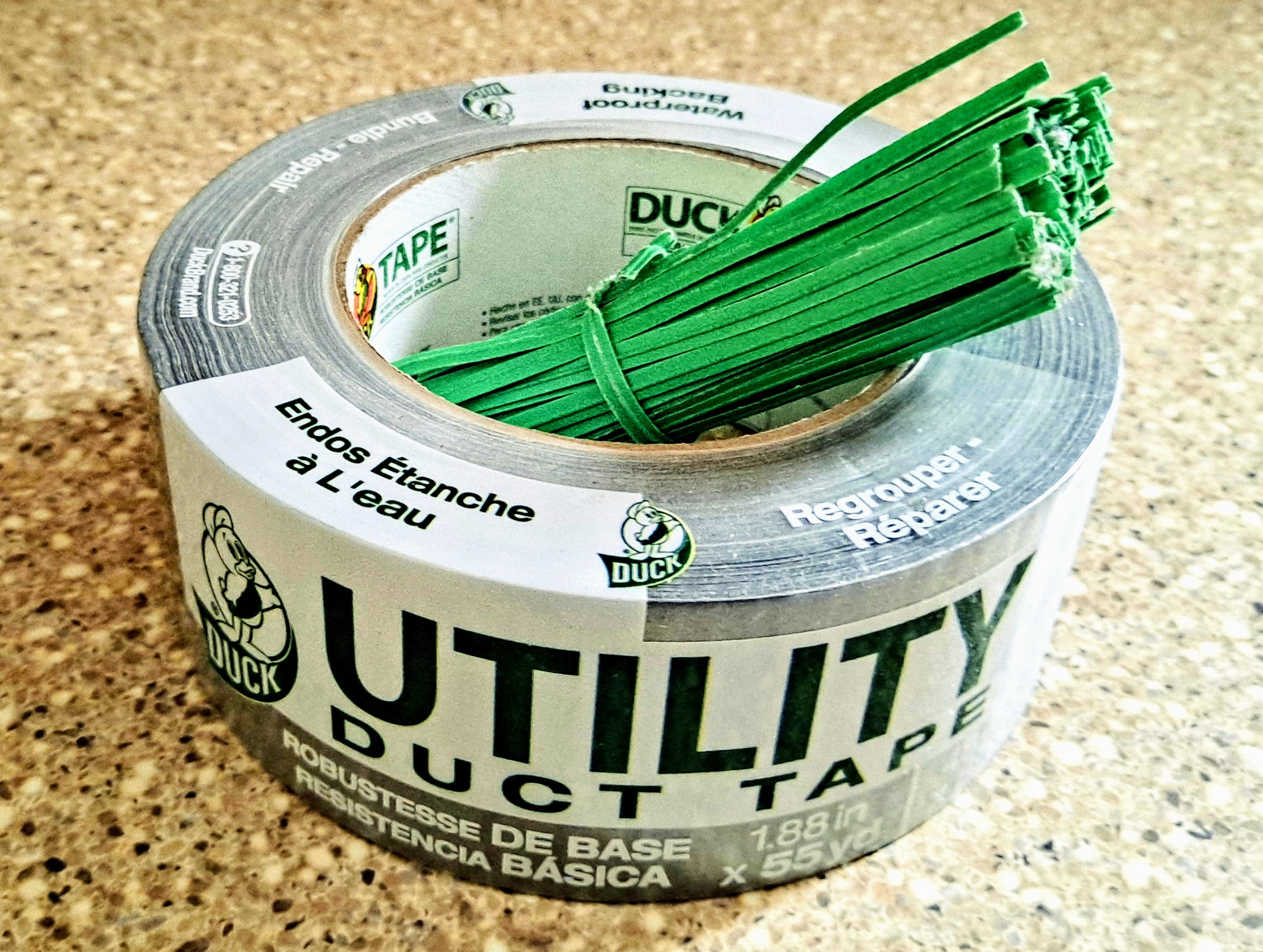
The most important invention in my lifetime? That would be easy if it weren’t a toss-up between duct tape and twist ties. Still, together they make up the most important invention because between the two of them, you can fix just about anything.

A broken tool handle? Duct tape! A hose that’s sprung a leak? Duct tape! A quick fly trap? Duct tape! Blisters when hiking? Duct tape! A tear in your slippers? Duct tape! No packing tape? Duct tape!

I am using the name “duct tape” here, which is supposedly the correct term, though one use for duct tape that is not recommended is sealing ducts since the adhesive can come loose with heat. The name by all rights should be “duck tape” since the original cloth-backed tape was made with duck fabric — a heavy-duty cotton cloth. Either way, duct tape or duck tape, that ubiquitous product has many uses. People used it in crafts so often that now it comes in a multitude of colors or patterns. But I stick with the gray. It’s easy to use and so cheap I can keep one roll in the house and one in the garage.

As for twist ties? Again, a multitude of uses.

Need to stake plants? Twist ties! Electric cords a mess? Twist ties! Zipper pull broken off? Twist ties! Not enough tree ornament hangers? Twist ties! Cables and charger cords unorganized? Twist ties! No binder for loose leaf paper? Twist ties! Twist ties tangled? Twist ties!

I’m sure there are plenty of important inventions in my life time, but these are the two holding the world together.

Oops. I did a bit of research and discovered that both were invented earlier than I thought, though the form of those inventions we use today was developed during my lifetime

Duck tape (the original tape using army-green duck fabric) was invented during World War Two as a way of sealing ammunition boxes to prevent moisture. However, in my lifetime, the green duck became the grey duct that we are all so familiar with.

Twist ties — paper-wrapped wire pieces — were invented in the 1920s and patented in the 1930s, but it wasn’t until the 1960s that a specific twist-tie machine was invented to create the better design that we use today.

Still, whatever their history, I stand by my premise that without these two inventions, our world would fall apart.

***

Pat Bertram is the author of Grief: The Inside Story – A Guide to Surviving the Loss of a Loved One.

My Every Day

Daily writing prompt
Describe your most ideal day from beginning to end.

My most ideal day? Well, that’s simple enough to describe — it’s pretty much my every day so far this year:

Get up. Do stretching exercises. Make the bed. Have a cup of tea. Play a bit of a hidden object game. Write a blog post. Read. Have breakfast. Read. Have lunch. Read. Take a short walk. Read. Rest a bit. Read. Have a quick snack. Read. Check online to see what if anything is going on with my blog. Read. Read some more until it’s time to go to bed, then read until lights out.

Well, that’s my every day except for the walk. I keep trying to get back into walking every day, but I can’t seem to always find the energy. Of course, in an ideal day, I’d have plenty of energy, no sinus issues, and the get up and go to just get up and go. Sometimes, of course, my ideal day involves a visit with a friend or neighbor or whoever else I might encounter during the walk, but apparently not today.

I used to play the hidden object game a lot more until much of that online time got supplanted by blogging. Odd how that happened. I never actually decided to start posting every day as I used to. I just . . . did.

I must admit, blogging does help make my day an ideal one. It feels like coming home, in a way, a comfortable way to spend time, a pleasant way to communicate without having people cut me off while I am speaking if they disagree. (You might cut me off and stop reading, but since I’d never know, it’s not hurtful.) It also gives me something to think about other than the state of the world and the lack of common sense (though why something that’s in such short supply is called “common,” I don’t know, and neither does anyone else, apparently, since this is a sentiment I encounter so often that it’s embarrassingly trite). Best of all, blogging allows me to play with words, like above when I wrote “the get up and go to just get up and go.” I tend to be too serious, so word play lets me indulge my fantasy that I’m witty and charming and lighthearted. (And no, that fantasy is not part of my ideal day since ideally, I need to be what I am, whatever that might be.)
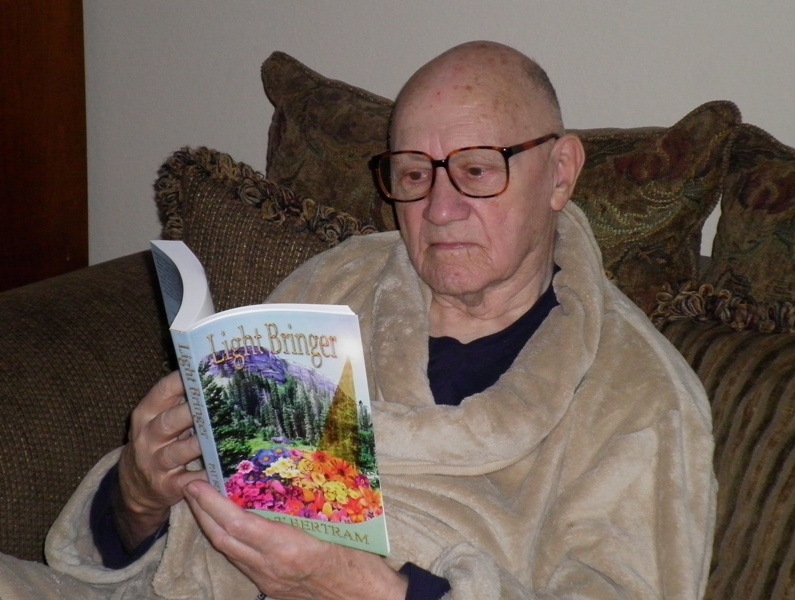

Well, this part of my ideal day has been fulfilled. Now on the next part: Reading!!

(I couldn’t find a photo of myself reading, so here is the next best thing: my 97-year-old father reading one of my books during his last days.)

***

Pat Bertram is the author of Grief: The Inside Story – A Guide to Surviving the Loss of a Loved One.