Conceptions of Happiness

Daily writing prompt
What’s a common misconception people have about happiness?

I’m not sure what misconceptions people have about happiness since I don’t know how they perceive happiness.

I do know that happiness is elusive. If we go chasing it, we don’t always find it. If we stop chasing it, happiness often finds us. And even if happiness doesn’t find us, there are other things that are just as important: contentment, being at peace, meeting challenges, living a meaningful life, making a difference to someone, helping others find happiness, creating something, growing a garden.

Sometimes, too, not being particularly happy is a proper response. Most reasonable people, in a tornado, try to get out of the wind, not revel in the devastation. Most reasonable people do not revel in misfortune, theirs or others. And, unless laughter is one’s way of dealing with anything intense in life, unhappiness during a time of grief is an entirely appropriate and reasonable response.

Neither happiness nor unhappiness is a constant state. Both are in flux and either can change in a moment. And so can one’s perception.

Studies have indicated that happiness is found mainly in retrospect. For example, happy children don’t know they are happy. They simply are. It’s only later, when they look back, perhaps after a terrible time in their adult lives, that they realize they had been happy in their early years. For another example, when someone is involved in a challenging situation that takes all their time and energy, they don’t realize until later they were happy. In fact, often while going through this situation, people thought they were decidedly unhappy.

Think of some of the happy times in your life. Back then, were you aware you were happy? Chances are, you were involved in living and didn’t bother to stop to think how you were feeling at the moment. You just lived. Not pursuing happiness as such, just simply living with whatever happiness came your way.

Oddly, happiness can also be found in anticipation. When a person is going through a difficult time, sometimes they get through the days by looking ahead to future happiness. Those who are grieving can hope for a time when joy might come again. If work is difficult, people can find happiness in planning a vacation.

In other words, happiness is not generally found in the present; it’s a construct of both the past and the future, which seems to make happiness irrelevant to the present.

Perhaps oddly, I have never considered happiness something to pursue. Even before I realized happiness was something lived in retrospect, I never thought it was relevant. I thought other things were more important. Trying to be a good person, for example. Doing the best I could for myself and others. Learning, for sure — I have always pursued knowledge, have always searched for a deeper truth.

I wasn’t happy very often, but it didn’t seem to matter. In fact, being not happy (neither happy nor unhappy) is my default state, so perhaps I’m not the best person to be blogging about happiness.

Still, having said all this, whatever your conceptions of happiness are, I hope you find what you are looking for.
***

Pat Bertram is the author of Grief: The Inside Story – A Guide to Surviving the Loss of a Loved One

Growing

Daily writing prompt
What is one way you have grown this year?

One way I have grown this year? Older. I’ve grown older. I don’t really feel any older than I did a year ago, but there is one indication of that growth: some things don’t heal as fast as they once did. Well, one thing — sinus congestion. So far, I’ve tried just about every possibility, both medical and natural, and still, I have that sinus pressure and post-nasal drip. I’m waiting it out now, hoping it will cure itself. It did once upon a time — when I was young, I had allergies so bad I was almost comatose, but for some reason, I got over it. Maybe I will again.

Maybe not.

That acceptance of what life deals out is part of growth, I suppose, though such acceptance isn’t a recent growth experience for me — it came from years of grief over my various losses and all the living that followed.

I’m sure this blog prompt is about personal growth, though I tend to think I’ve grown up as much as I am going to get. I’m not even sure I want to develop further. At this point, will any sort of growth make my life better? I suppose it’s possible, but I also suppose it’s possible that a period of de-growth will be coming as I continue to age. I hope not — I appreciate the lessons I’ve learned in life, and I hang on to whatever wisdom I gleaned from them. I’d hate to think I’d forget those lessons and have to learn them again. It was painful enough the first time!

Personal growth supposedly contributes to fulfillment, self-awareness, mindfulness, well-being and happiness, which I’m all for when it comes to younger people, and was all for when I was young. But me now? I’m as self-aware as I want to be (any more awareness would turn me too far inward); I try to be mindful whatever I am doing for safety’s sake if nothing else; I have as much fulfillment as I can handle; and my sense of well-being is doing as well as can be expected. Does that sound smug? I don’t mean to be. I am grateful for where I am in life.

Gratitude. Acceptance. Mindfulness. Those are all lessons I’ve learned, things I practice. That seems enough. For now, anyway.

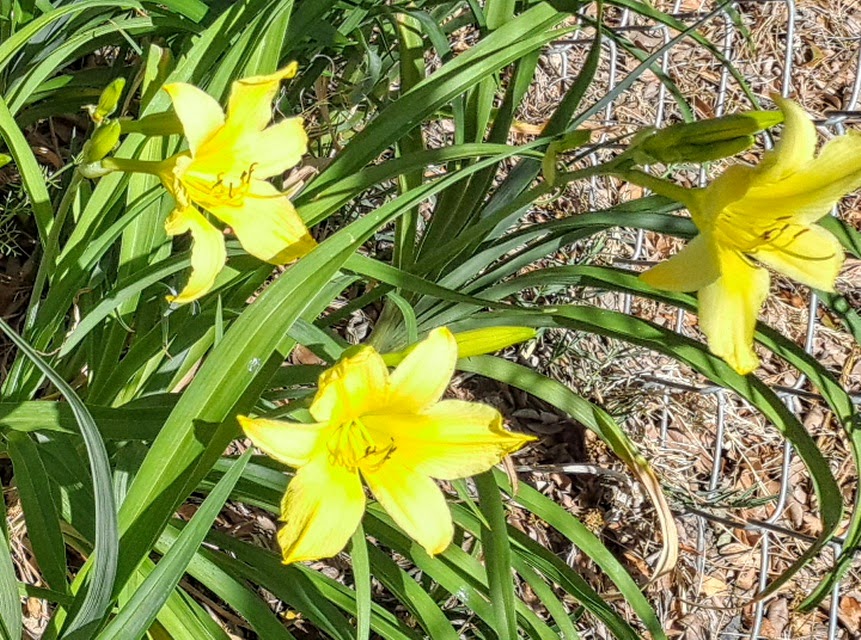
As it is, the only growth I celebrate is what is in my garden. That sort of growth I can get behind!

***

Pat Bertram is the author of Grief: The Inside Story – A Guide to Surviving the Loss of a Loved One

No Regrets

Daily writing prompt
Describe a risk you took that you do not regret.

I don’t like taking risks. Too often I’ve seen people taking risks, such as with their investments, because as “everyone” knows, the bigger the risk, the greater the rewards. Except, of course, when those risks don’t deliver the sure thing people are expecting. Quite frankly, I’m not sure “everyone” knows what a risk is — if they don’t get the outcome their bravery at taking the risk seems to call for, then they’re shocked and they get upset. But that’s what a risk is — you take a chance, and it might work out or it might not.

In my case, I never take a risk if I can’t handle the negative outcome. Which means, I don’t take risks.

And yet . . .

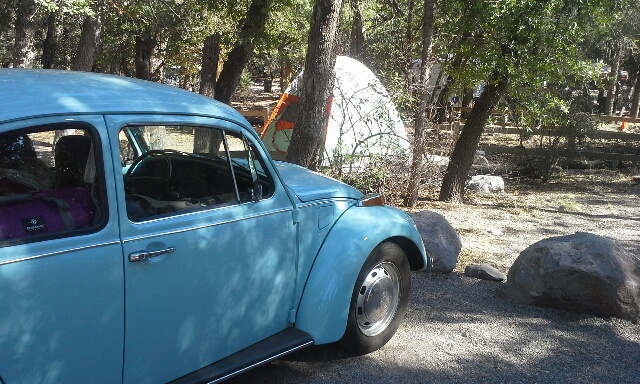
I’ve done a few things that other people considered extremely risky, though I didn’t. Ten years ago, when I planned a cross-country trip in my vintage VW bug, people were horrified and kept telling me I couldn’t do it, that it was too dangerous for me to go alone. Of course, none of those people offered to go with me to mitigate the danger, but it wouldn’t have mattered. The point was for me to do it by myself.

I wasn’t foolish about the trip. I had my car restored, a new engine put in, bought reliable camping equipment, and stocked up on emergency supplies for when unexpected and perhaps dangerous things might happen. And dangerous things did happen, but I handled whatever came along. To me, it was all part of the adventure, that willingness to go wherever the road took me and to live with the uncertainty (and consequences) of each day. Even more than that, it was a way of reclaiming my life after the death of both Jeff and my father. (After Jeff died, I was left homeless, so I went to take care of my father, and after he died, I was left homeless again.)

Perhaps the trip was a risk, but I didn’t see it as such. I wouldn’t do a long trip again, though just writing this I think maybe . . . someday . . . Still, the car is ten years older, as am I, and I’m not willing to put myself in the danger a trip could bring, not just the driving danger, but the uncertainty of the situations I might encounter — the USA isn’t the same as it was ten years ago, and even back then there were times I wasn’t sure what country I was in.

Besides, I’m homeful now, not homeless, so there is a lot more at risk than there was a decade ago.

Another risk I took was when I bought this house sight unseen. I’d seen photos, of course, and had an inspector check out the house, but I never saw it as a risk. The way I figured, it was my house, and I’d do whatever needed to be done. Other people were appalled at what they thought was my lackadaisical outlook, and the realtor made me sign a document absolving her of any responsibility if things didn’t work out.

I don’t regret either of these risks. Both worked out, but however they would have worked out, they would have worked out. I’m just glad, and so very thankful, to have had both these experiences.

Nope, no regrets at all!

***

Pat Bertram is the author of Grief: The Inside Story – A Guide to Surviving the Loss of a Loved One.