Skimming

I have the terrible habit of ingesting books whole without actually reading the words. I’ve never been able to explain how I read — it’s not skimming exactly, but if I read every single word individually as if reading aloud, the meaning of what I’m reading gets lost in the words themselves. Maybe the way I read is a form of meditation. Or daydreaming without visuals. (I have aphantasia — the inability to form images in my mind.) Despite having said that, I do occasionally skim, especially scenes of violence or sections that don’t keep my interest, and considering that I have read more than 25,000 books of all genres, unless the writing is better than merely competent, most books have huge sections that don’t keep my attention. Also, when it comes to fiction, there are few plots or characters that don’t echo in my head — some because I’ve read those very books before; some because they are similar to those books.

Which is why it surprises me that the Wheel of Time saga has caught my imagination enough to allow for rereads. Though there are chunks of the middle books that I can’t bring myself to read again, or even just to skim, I find myself trying to slow down and savor the rest of Jordan’s words. (Even subtracting out the last three unreadable books written by the substitute author as well as the chunky parts of Jordan’s books, there are still approximately three million words that I do read. And if half of those are used for prosaic storytelling, there are still one and a half million of Jordan’s words to savor.) A lot of his writing is truly beautiful. The subtleties are beguiling. And there is much to puzzle out as I deconstruct Robert Jordan’s world and his writing.

Sometimes I miss little things if I get to skimming a section I remember well, until something draws me back. For example, in a passage I read today, a character noticed the hero’s guards/ guardians/ personal army outside the hero’s room quietly playing a finger game: knife, paper, stone. A little later, three of those people entered the hero’s room to deal with his latest infraction of their “honor.” As they left him, one said they’d won the right to punish him and warned him not to dishonor them again. Written out like this, it’s obvious that their game (their version of rock, scissors, paper) was to choose those three, but when these elements are separated by several pages, the association becomes so obscured I missed it in previous rereads.

Admittedly, the situation wasn’t important to the overall story, but it tickles me to find such correlations. Because of this, I’m training myself not to skim, but that will work against me in the long run — without skimming, most books are not worth my time to read.

When I was young, I often read as a way of expanding my mental horizons — a way to work out in advance how I would deal with the circumstances the characters are faced with — but that’s no longer an issue with me since most fictional situations are now either somewhere in my past or will never be in my future. A choice between love and a career? No longer applicable. What to do with an unexpected pregnancy? Definitely not applicable! Taking revenge on someone? Not something I would ever do. Save the world from the forces of evil? Only applicable if that evil appears in my own backyard and even then it’s not something I want to contemplate. (I’m wary enough of thoughts to think that thinking itself can bring down upon my head whatever it is I am thinking of.)

Without any necessity for reading myself into the story, most novels become ho-hum, especially if the writer can’t make me care for the characters. Without skimming at least a part of the book and skipping other sections completely, I’d probably never have read most of the books that I did. Not finding other books of interest to me could be why I’m caught in the spokes of the Wheel of Time.

I’m not sure where I’m going with this, and since you’re probably skimming this essay anyway, I doubt it matters.

***

Pat Bertram is the author of Grief: The Inside Story – A Guide to Surviving the Loss of a Loved One.
Deciding Not to Decide

I seldom get past the first chapter of new books anymore. Too many authors eschew the traditional past tense, third-person limited point of view and write in the clunky present tense first person point of view. (Or a mixed bag, which is even worse) Too many try to write in a roundabout style rather than beginning at the beginning and continuing until the end. Then there is a weird undercurrent of . . . nastiness, perhaps, or maybe just uneasiness to most books nowadays. I don’t know if it has to do with the difference in young authors today (and “young” to me includes those who are in their middle years), with the difference in mores, with too much artificial intelligence help, with the difference in the new generation of acquisition editors. Or if it’s just me with my now outdated values. But whatever the reason, I haven’t enjoyed any book written after 2022. And not a lot before then, either.

Because of this, I no longer feel like looking for books at the library. I figure I’d perused those same shelves over 700 times since I’ve been here, and I just couldn’t search them anymore. Too many shelves are full of whole series of books I have no intention of reading —- the entire Patterson oeuvre, all of Stuart Woods’ books, all the popular romance authors, and dozens of others. Too many other shelves are full of books I’ve read or reread.

So I stopped going to the library. I never made the decision not to go, I simply didn’t go, which is weird.

Visiting the library had been a major part of my outside activities ever since I got here to this town. It was such a treat because there hadn’t been a library near where I lived in California, so I went years without reading much. (That doesn’t seem right. Maybe I bought books. I know I bought word puzzles magazines, wrote books, and went through the video tapes Jeff had collected, but it seems odd to think of not be as caught up in reading as I’d always been.)

I’ll finish this current reread of The Wheel of Time, reread the other few books I’ve collected, read the alchemy books inherited from my older brother, maybe read the books I wrote, and then . . . I don’t know. I’ll figure out something to do. I’ll have to — I’ve stopped going online except to blog or play a game for a little while because I simply don’t want to know what is going on anymore. Which leaves me a lot of free time!

It’s funny how different this year is. I used to agonize over any decision, and yet suddenly, here I am — blogging without ever having decided to blog daily, not going to the library without ever having decided to stop, staying away from news without ever having decided to do so. (Staying away from news was my New Year’s resolution, which lasted all of two weeks, and yet now, two months later, I’ve started honoring the resolution again.) Come to think of it, I never decided to do this current reread of The Wheel of Time either. I just did it.

This is a good time to make changes — with spring coming, I’ll be spending more time outside, and with nothing calling me back inside, maybe I’ll enjoy the work this year. (I didn’t last year. It just seemed to be too much trouble.)

Makes me wonder what other things I will start (or stop) doing without ever making a conscious decision. Should be interesting to see what life deals out.

***

Pat Bertram is the author of Grief: The Inside Story – A Guide to Surviving the Loss of a Loved One.
White House vs. White Tower

More and more, I see The Wheel of Time saga as an allegory of our time.

In the story, there is a powerful group of women, called “witches” by some, who use the energy of the universe to sometimes help, sometimes hinder humans. It used to be that men used one side of the power and women another (think yin yang), but the men’s side became tainted and unusable, leaving women the sole users of power. The women power wielders live in a town more or less based on the Vatican, in a building called “The White Tower,” that supposedly was based on the Padgett-Thomas Barracks at the Citadel, Robert Jordan’s alma mater. This white tower also invokes images of “ivory tower” because of their detachment from the world and their arrogance in believing that despite their insularity, they know better than everyone else. And, in being a seat of power, it also invokes images of the White House.

The leader of these women is called the Amyrlin Seat, which is both her title and the name of her position. (Can you see the similarity to “Merlin?” That’s the fun puzzle part of the books for me.) Although many of the various factions of this White Tower hate the woman who holds the office of Amyrlin Seat, they still respect the position because the position itself is more than the current leader. Leaders change, but the position remains, and it’s the position itself that’s important.

I’m sure you know where this is headed. When did we come to see the position of president as solely the person who holds the position rather than the position itself? This was so very obvious during the State of the Union Address. Half the politicians completely and totally disrespected the presidency. Not just the man. The position. The institution. (And the constitution itself, since the State of the Union Address is a constitutionally mandated report from the president to Congress.) I can understand not respecting the office holder, but to disrespect the office itself, the “position of the president” seems . . .

I had to stop there and think. I don’t know what it seems. Uncalled for, certainly. Defiant, probably. Childish, perhaps. I do wonder though: if one faction can’t respect the position, if they demean it so publicly, why would they expect anyone to respect them when they attain that position?

The position itself should garner some respect even if the person holding the position doesn’t. Or maybe I’m wrong. Or the wrong generation. I don’t know.

In The Wheel of Time, the tower splits, and each side chooses a different Amyrlin Seat, basically running two different governments under the same name. Each Amyrlin claims she is the true leader and the other is the rebel, which leaves most of the common folk crushed between the two of them.

In the USA, we still have just one president, but half the government doesn’t even seem to acknowledge, let alone respect, the elected leader, which gives us two factions, each acting as they are the “real” leader.

Doesn’t sound as if this bodes well for us common folk.

Or maybe it will end well. After all, the White Tower was eventually reunited under one Amyrlin, so perhaps we’ll eventually find some sort of unity.

It could happen.

***

Pat Bertram is the author of Grief: The Inside Story – A Guide to Surviving the Loss of a Loved One.
 

Would-Be Fantasy Writer

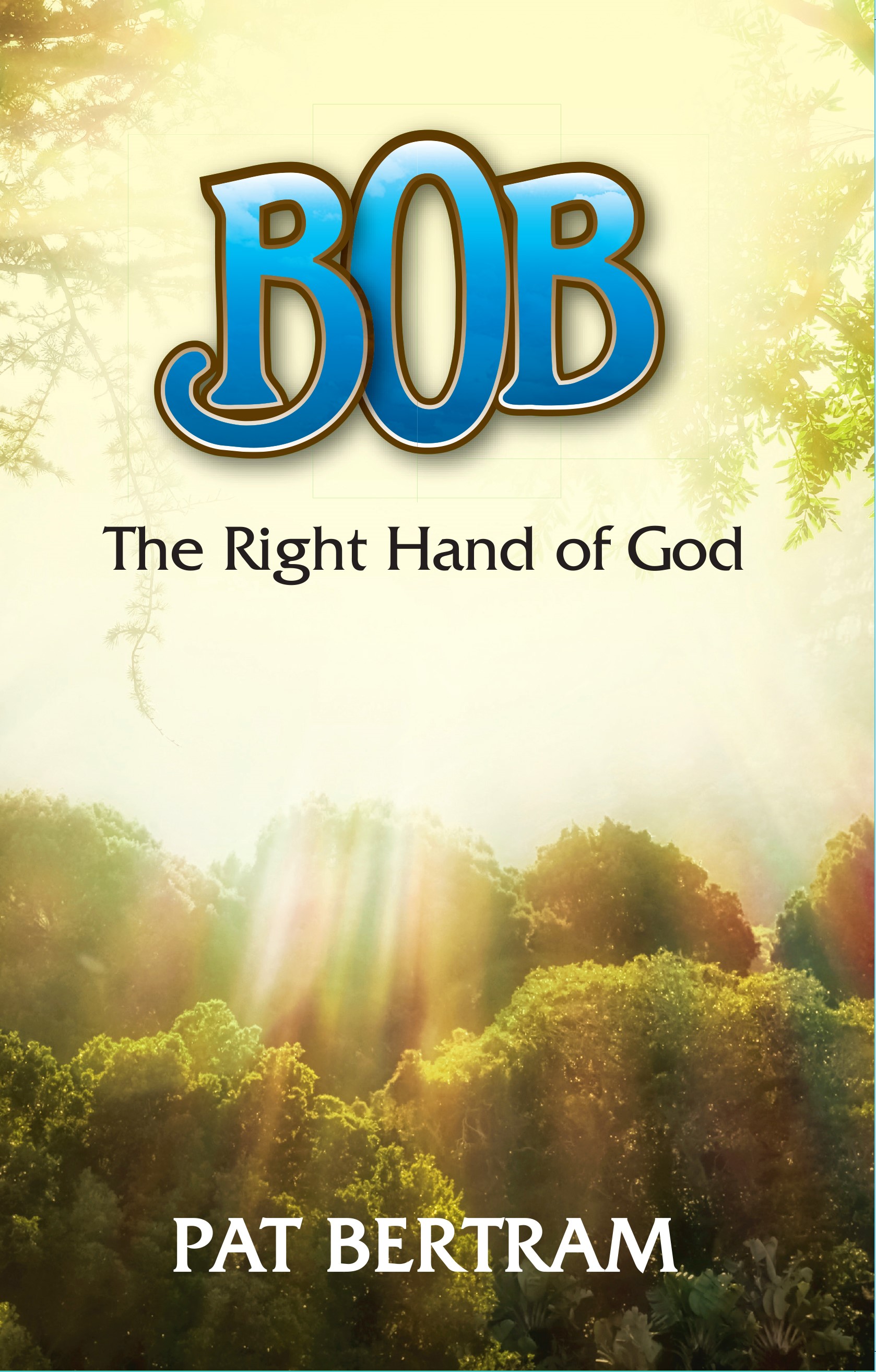
The Wheel of Time book series has apparently inspired as well as created a couple of generations of fantasy writers. Although I have never been able to get into any of those other stories (the books may have been inspired by Robert Jordan, but their worlds and their writing styles fall vastly short of his example), I can understand the urge to create one’s own world. I’ve thought about it myself, perhaps continuing the story I began in Bob: The Right Hand of God. Although Bob: The Right Hand of God is a stand-alone novel, it does seem to lend itself to a sequel since anyone born into that re-made world would have to start developing a new civilization (or not), but I don’t have any interest in writing the sequel. To me, the interesting part of the story was the de-creation of life on Earth as we know it. Anything further seems as if it would be just a ho-hum book. A been there, read that sort of thing.

So, if not Bob: The Right Hand of God, then what? Create a whole new world and culture as so many fantasy writers do? I considered that possibility, thinking a world of my own would be a place to escape to in my own head if not in fact but, though I hate to admit any failing, I don’t have the imagination for such an undertaking. (Although I’ve written two novels that could be considered fantasy, both took place more or less in our own world.) Nor do I need to live any more in my head than I already do. Besides, the truth is, so-called real life is fantasy enough for me.

There are theories that all time exists at once, so we are living our past and our future at the same time we are living in the present. My very first book, the terribly written one that no one will ever see (mostly because a few months ago, in a fit of decluttering, I threw away the only copy of the manuscript), was the story of two people who meet and fall instantly into if not love, then an incredibly deep connection, only to find out that they are reincarnations of each other. My question (and hence the premise of the book) was that if everything exists at once and if there is any validity to reincarnation, could this happen? There is an obscure theory that we are all reincarnations of one another. That not only is there a single electron that moves so fast and through so many dimensions and quantum processes that it creates the entire universe (or even multiple universes), but that there is also a single soul that we are all part of. (Yeah, I read weird stuff, which is inevitable when one reads almost anything almost all the time.)

Other theories say we are creating the world as we live it, that nothing exists yet but possibilities we haven’t yet encountered or envisioned. Other theories suggest that everything exists in our thoughts, that we are thinking into reality the world we live in. The reason we are such a mess is that everyone is thinking of different things and wanting different things. If everyone thought of the same thing at the same time, then that thing would come into fruition. Of course, the chances of that happening are nil since whenever you have even just three people together, one will always be thinking of something else, daydreaming or disagreeing or whatever goes on in people’s heads, and the other two will be saying they are thinking of the same thing, but that thing could be completely different for each of them. (For example, if they are trying to envision an apple, one might see a green apple, another red.)

Am I getting too silly here? Well, not too silly for a fantasy writer, but except for Bob: The Right Hand of God and Light Bringer, I probably will never be a fantasy writer. Probably will never write another book, either, but who knows. I could get bored with the books that currently exist and need to occupy my mind another way.


***

Pat Bertram is the author of Grief: The Inside Story – A Guide to Surviving the Loss of a Loved One.

 

The Lord of Chaos

In the Wheel of Time book I’m reading now, the story starts off with one of the bad guys being summoned before the head bad guy (not a guy, exactly, but a cosmic dark force that’s the opposite of the Light). The head guy gives his minion many directions, which we are not privy to, except for the last: “Let the Lord of Chaos Rule.” At the end of the book, this same bad guy again goes before dark force and asked if he did good. The Dark One lets out a loud laugh.

All through numerous rereads, I never could understand what the bad guy did because except for the beginning and very end, he’s practically invisible throughout the book.

But then, I never paid attention to the reason things happened in the book but the obvious since they seemed to be isolated actions taken by various characters. This time, I’m looking at the things that happen, thinking perhaps they are the result of the dark side’s behind-the-word machinations. And now it’s obvious.

The “lord of chaos” comes from the real Medieval and Renaissance New Year’s tradition of upsetting the class system, where the peasants become the rulers and rulers pretend to be peasants. The person chosen to be the “lord” of this celebration was called the Lord of Misrule or the Lord of Chaos, and was often the least competent person around, adding to the hilarity. (Perhaps that’s why the Dark One laughed at the end of the book? Finding the chaos his edict created hilarious?)

During the book, a shepherd (the hero who is meant to fight the dark force during the last battle) leads nations. (He doesn’t become king for another 500,000 words or so.) A blacksmith and a gambler command vast armies, a juggler becomes a wise mentor, queens become maids, an untried girl is chosen to lead the women wielders of power. (She was chosen as a puppet, and the only reason this particular chaotic bit doesn’t have the desired effect is that the dark minions completely underestimated her lust for power. Once she gets it, she grabs hold, and never lets go until it finally kills her.)

Often the bad guys play both sides. For example, it’s minions of the dark that have the hero kidnapped and tortured, but also, minions of the dark that save him. Chaos, indeed! (Create chaos, but in the end be sure to let the Lord of Chaos live so he can rule!) We don’t find out until later that some of the people that are supposed to be on the side of the light are actually on the other side, which adds to the chaos. These people might have their own orders, or they might be victims of compulsion, or they could simply be incompetent, all of which adds to the chaos.

Besides, no one knows the truth, though all characters, all factions, believe they do know what is true. The hero is the devil. The hero will destroy them. The hero needs to be killed. The hero needs to be controlled. The hero needs to be protected until he is delivered up to the Dark One at the Last Battle. The hero needs to be put in prison. Very few people ever stop to realize that the hero is doing what he must, that if he’s imprisoned, he will never grow into what he needs to become in order to win (which could be what the dark side wants, but the light also wants the imprisonment because they don’t believe he will voluntarily do his duty), and despite the very large disparities of belief, they all act with utter conviction.

Do you see where I am going with this post? (Minus the hero bit, that is.) Although the book was written thirty years ago, it seems (spookily) as if I am reading an allegory of our times. In a world of short-form content and edited video clips, it seem as if very few people take the time to delve deeper into the background (or foreground) of events to try to find out the truth. Everyone sees what they believe is true and they act on it because for them, it is the truth. It’s as if we’re living in two distinct worlds where there is no overlapping, so while both sides can be saying the same thing (“the opposition is ignorant,” for example) and both can be acting according to their honest beliefs, they both mean completely different things and have completely different results.

Let the lord of chaos rule, indeed.

***

Pat Bertram is the author of Grief: The Inside Story – A Guide to Surviving the Loss of a Loved One.
Occupying My Mind

This March seems interminably long, though I don’t really know why. I’ve had spurts of activity, such as the celebrations for my house anniversary (six years!) as well as an occasional visit with friends. I haven’t spent much time outside, and there really hasn’t been any reason to. After the first shy crocuses showed their faces, there hasn’t been much change in my yard. Some of my grass is greening up, some looks dead, though I hope it’s just slow coming out of dormancy. In any case, I threw out some grass seed, but it looks as if the birds are eating it despite the feast the neighbors provide for them. And then there’s the wind. The least said about that the better! Coincidentally, today’s blog prompt from WordPress is “What is your favorite kind of weather?” One thing I can tell you, it’s not wind!

You’d think as slowly as this month is passing, I’d be more aware of the days as they come, but the first day of spring passed me by. It’s possible the upcoming fifteenth anniversary of Jeff’s death might pass me by, too, though I doubt it. Even if it does, the actually date no longer makes a difference. He’s still a factor in my life, as is his absence, but not as much as either used to be. Surprisingly, I still sometimes feel a tightening behind my eyes, but it never gets to the point of tears or even sadness. Just an acknowledgment that once he was a big part of my life and now he’s not. I still talk to him occasionally, mostly about things I can’t really talk to anyone else about. Silly things, like my thoughts about The Wheel of Time books.

Yep, still rereading those dang books. I’m on my second reread this year. It’s gone beyond reading to studying, since for every page I read, I spend twice as much time online finding out about the books, such as the real-life influences of the story. Lots of myths, legends, religions, philosophies come into play. Lots of very obvious King Arthur references. It amazes me how long it takes some people to make those correlations, if they ever do. In fact, the author’s wife/editor supposedly didn’t even realize the connection between the book’s mystical sword in the Stone (the Stone in the story is a fort) with Excalibur until she was writing the blurb for one of the books.

I’m also trying to figure out the real ending. Robert Jordan died before he could finish, and the guy they got to write the last books wrote something — I don’t really know what it is that he wrote. Despite the use of the characters and setting of Jordan’s world, those last books bear little relationship to Jordan’s cosmology. The savior character was supposed to be more of an Arthurian savior rather than a Christian one, but we got a Christian one that completely subverted the premise laid out in the first eleven books. What shocked me is that on none of those last three execrable books is there a rating below three stars on Amazon. There are some one- and two-star ratings on Goodreads, but those ratings are for the entire series. (Which makes me wonder, if those raters hated the books that much, why did they bother to read them? Four million words is a huge commitment, and not something you undertake if you hate the books.)

Another thing I don’t understand — Jordan had a team working on the books: his wife/editor, a continuity editor/research assistant, and a keeper of the timeline. Why didn’t all these people prepare a synopsis for the replacement author reminding him of each character’s arc and a brief compendium of what forces are ready to face the last battle, and where they all were on the timeline? One of the very many problems with those last books is they completely ignore any character growth and start over from scratch. Another problem is they ignore the fact that Jordan had already maneuvered the major forces into place for the last battle. I suppose I wouldn’t be as challenged to find the real ending if at least those books had some sort of internal consistency, but they don’t. Thousands of words are spent on one character deciding — yet again — to be a leader. Along the way, he forged a hammer (borrowing one of the pseudo-author’s gimmicks from his own books.) But then the character never leads in the last battle. He took his followers to the battlefield and then went off and did his own thing. Nor did he use that ridiculous hammer in the last battle. Huh? And readers never even noticed? That in itself should get a rating demotion. Quite frankly, I have never been able to read anything by that author, and he lives down to my expectations.

Somewhere in all those words Jordan wrote, there must be clues to the real ending. I suppose finding that ending is as good a use of my time — and brain power — as any. I’m thinking of using one of my defunct blogs for setting out the clues as I find them rather than bore you with the saga, but who knows. I could always tag the posts with The Wheel of Time moniker so you can ignore them if you wish. And anyway, the winds might die down, spring might come, my grass might grow, my flowers might bloom, and so other things will occupy my mind.

***

Pat Bertram is the author of Grief: The Inside Story – A Guide to Surviving the Loss of a Loved One.
Maybe Rereading “Dune”

I’m rereading Dune. At least, I think I’m rereading it. I’m beginning to wonder if I ever read it at all until now.

I remember thinking I liking the book when I was young, and several times over the intervening years I’d end up with a copy and try to reread it, but I could never get into the story again. Admittedly, when I was young, I had a lot more patience for books that were mostly descriptions of day-to-day living, whether on this planet or another (the first 150 pages of Dune seem more like setting the scene than the beginning of a book) and I lost that patience in later years. It’s also harder to keep whole books in my head now, so that adds to my impatience with dragginess.

It’s possible the book gets better (I’m not even halfway through), and it’s possible it has a great ending that would make me feel good about the book. And it’s possible that something in the latter half will strike a chord of memory, but so far, there isn’t so much as a ding. Even if I can’t remember books I read decades ago, if they impressed me in some way, I have some sort of lingering impression of them. Most books, of course, leave no impression — there is simply no “there” there. I’m not sure where Dune would fit in the book spectrum because it is different enough that I should remember something or hear a faint echo of recognition in the back of my mind. But nope. Nothing. I can’t even figure out why I would have read it. I have never liked authors who have to create incomprehensible names for people, things, and places. The strange spellings seem to take up space in my brain that would normally be used for following the story.

Even more confusing, I see the cover in my mind’s eye — a reddish cover with a fellow trudging across a wide expanse of dunes. I spent some time looking at Dune covers today, and there is not a single one of them that looks familiar. (Except for the one I bought at a library book sale a while back and redonated unread.)

It makes me wonder what book I did read. It’s possible I read some other book and misremembered it as Dune. It’s possible I misremembered the cover. (If there even was a cover image. It could have been a rebound book from the library.) And I could have found the book completely unmemorable.

Too bad there’s no way to rewind a memory to see the truth of it.

What I am seeing is a lot of similarity to The Wheel of Time series, at least in small things — the witches, the truthsayers, the uncanny powers, the manipulation of people and events. Of course, these are all fairly common archetypes and scenarios for the hero/savior story, but people often compare The Wheel of Time world to The Lord of the Rings, and I don’t see it at all. (But then, that’s another iconic series I haven’t been able to slog through, so I could have missed any similarity.)

One thing that amused me — in a book that uses so many strange-sounding names and words, at one point, Frank Herbert describes someone as having olive skin. Couldn’t he have come up with a more interesting word? I have always hated “olive” applied to skin because it takes me out of the story and makes me wonder what color the character is. I still remember the first time I came across that descriptive word. I couldn’t figure out if the character had green skin or black. It took years before I realized the word referred to the color of the inside of a black olive.

So, I can remember being puzzled by olive skin, but I can’t remember anything about a book I thought I read and thought I liked.

The life of a reader does get bizarre at times.

***

Pat Bertram is the author of Grief: The Inside Story – A Guide to Surviving the Loss of a Loved One. “Grief: The Inside Story is perfect and that is not hyperbole! It is exactly what folk who are grieving need to read.” –Leesa Healy, RN, GDAS GDAT, Emotional/Mental Health Therapist & Educator

Feeling Clunky

I finished rererereading The Wheel of Time and resisted the urge to start over again, mostly because I have library books due and need to read them. I considered returning them unread, but the librarian was kind enough to deliver them and I didn’t think it proper to be so dismissive of her kind gesture.

The Wheel of Time has some hugely glaring faults, not the least being that Robert Jordan fell in love with his world and apparently didn’t want to waste even a single idea that crossed his mind, even if it didn’t fit with the story. He also had the annoying habit of creating characters for no apparent reason, pounding away at unimportant plot points and then simply dropping them, while at the same time, barely touching on some important issues. He seemed to like playing games with his readers and he especially seemed to like being mysterious for the sake of being mysterious, neither of which did anything to move the story along. He also seemed to change his mind about things he set up in early books, so that there are some awkward gear changes in later books.

But, that being said, the work really is brilliant. He is one of the few major writers I have heard about in the past few decades who actually spent years researching and building his world before he ever began writing. It’s fun trying to pick out all the symbolism and cultures, philosophies and costumes, influences and archetypes. But more than that, it’s a world of old-fashioned values such as honor and obligation, as well as being a world of less pleasant strictures such as compulsory obedience. But without the bad to push against, the good wouldn’t be as apparent. At times, the writing is almost lyrical, which helps lend an otherworldly air to the work.

I wondered how spending two months reading and rereading such a massive work would affect my interest in books taking place in today’s world, and as I feared, today’s world feels . . . clunky. It’s not just books that feel clunky, to be honest. Other things do too, such as modern methods of doctoring. In Jordan’s world, the “witches” can delve into people and heal them almost immediately instead of having them go through horrendous “therapies,” such as the cancer protocols of today. In some cases and places in The Wheel of Time, thought becomes real, so that one isn’t always battering against the solidity of this world. (Our world truly shouldn’t feel so solid, considering that things are made of atoms and atoms are comprised of a few particles, a bit of energy, and a lot of empty space.)

Still, it’s probably good for me to do something other than spend so much time in a fake world, especially one not of my own making. (Though oddly, my as yet unpublished book is a world of my own creation, which takes our world then breaks it and remakes it in a different way. I can honestly say that Jordan did not influence me in any way since my book was written — and the sequel planned — long before I discovered his works.)

Meantime, I’m still chiseling away at the tarot, picking a card every day and seeing what it means as well as how other tarot artists depict the symbol. (Today’s card is the hierophant, if you’re interested. The word hierophant means “revealer of sacred things,” and the card indicates someone who helps unravel mysteries. It’s also about intuition, i.e.: inner tuition — inner instruction or guidance.)

I almost started a tarot journal today, but who starts a new project on the 28th of the month? It is the beginning of the week, so there is that, but the first of the month is just a few days away, which seems even a better time to start. It also gives me plenty of time to change my mind. If I don’t change my mind, there is the decision of how to do it, whether in a long hand journal, or on line. Long hand is easier in some ways since there is the possibility of hand/brain connections, but online would be easier if I wanted to include images. I considered continuing my tarot studies as part of this blog, adding a bit of my tarot learnings to the bottom of the daily article as I did today, but I have a hunch I am alienating readers who see the tarot as something less than admirable. On the other hand, posting to two blogs every day is a bit much.

On a lighter note, I’ve had a surprise. I thought all the wildflower seeds I planted were defunct, but I think it’s more that our severe drought kept them from germinating, because I found a small patch of bachelor buttons below a gutter drainpipe. I didn’t plant it there, but there it is.

***

Pat Bertram is the author of Grief: The Inside Story – A Guide to Surviving the Loss of a Loved One. “Grief: The Inside Story is perfect and that is not hyperbole! It is exactly what folk who are grieving need to read.” –Leesa Healy, RN, GDAS GDAT, Emotional/Mental Health Therapist & Educator

 

Puzzling out the Tarot

Although I see myself as a bit of a mystic, I’ve never been into tarot, or any sort of divination for that matter. I always figured if we can change the future, then it doesn’t matter what the predicted future is, and if we can’t change it, then the prediction especially doesn’t matter.

If ever a thought of the tarot crossed my mind, it would have been in the same mental classification as astrology, Ouija boards, and fortune cookies. I used a Ouija board once when I was kid, know my astrology sign and will read my horoscope when it’s in front of me (though the horoscope never seemed to have any relation to anything going on in my life), and enjoy fortune cookies, but that was the extent of my interest. Oh, I did read up on the occult since I have always been one to try to get a peek into the secrets of the universe, but charlatans so often dominated the field, that I stuck with more scientific gateways, like particle physics and quantum mechanics. (Yep, I was one of those who read such books for fun.)

I’m still not sure there is anything for me in the tarot, but considering that it is supposed to be a way to get insights into one’s inner being, it’s worth studying for now. And besides, it seems a message from my brother. Admittedly, this collection of tarot cards hadn’t been specifically earmarked for me, but that mass of decks sure struck a chord with me, so it felt as if he meant me to have them.

So here I am, trying to make sense of a massive amount of contradictory information. For example, the card I picked this morning to answer my question of what I needed to know today, was the nine of swords. Swords are supposed to be a bad luck sort of card, without a lot of happiness attached, and the nine of swords especially so. One interpretation talks about fears, vulnerability and inner turmoil and suggests that I learn what the source of those fears are. Another interpretation talks of depression and suffering, scandal and loss.

But swords relate to consciousness at a mental level, and reflect an individual’s thoughts, beliefs, and overall attitude. They also point to fears and worries, but don’t necessarily put a whole lot of weight on those fears, because the sword is two-edged, which connotes a balancing act to stay positive.

And nines are about nearing completion, maybe about reaching a plateau, because what looked like the end hasn’t quite arrived.

All that seems positive to me, so instead of the nine of swords telling me I’m depressed and fearful and need to figure out what my trouble is so I can get into a more benign state, my own take on the matter is I’m already there. Or almost. That I’m doing well balancing my fears and staying positive, even though I can do better.

See what I mean about contradictory information?

And this isn’t even taking into consideration the whole ancient elements matter — water, fire, air, earth. According to the most common tarot tradition, swords mean air, but some decks and some scholars indicate that swords are fire. (As you can see, in my own interpretation, I left off any mention of air or fire because the element question muddles an already muddled situation.)

On a different note completely, as I was reading about the elements, I happened to open the book to another page that was defining the “fool” card, and I had to laugh. Apparently, in Italy and Austria, The Fool goes by the name “Mat,” which is an Arabic word meaning “a dead person.” In The Wheel of Time, one of the major characters is a fellow everyone thinks is a fool. I thought he was simply an archetype, but he is definitely one of the major arcana characters from the tarot. Not only is his name “Mat,” but as he says, “I’m usually pretty good at staying alive. I only failed one time that I remember.”

Now I’m going to have to re-reread The Wheel of Time again to look for additional tarot references. As well as to continue puzzling out the tarot itself.

***

Pat Bertram is the author of Grief: The Inside Story – A Guide to Surviving the Loss of a Loved One. “Grief: The Inside Story is perfect and that is not hyperbole! It is exactly what folk who are grieving need to read.” –Leesa Healy, RN, GDAS GDAT, Emotional/Mental Health Therapist & Educator.


Triumph Over Obstacles

The garage door is finally installed! The electronic opener isn’t installed, just the door itself, but that alone is a major accomplishment. Up until now, the door was mostly just propped into the opening to prevent trespassers, but now it’s on its track.

I found it interesting that today’s tarot card pick was the chariot. As usual, my question was what I needed to know today, and as usual, it didn’t tell me anything I didn’t know, but it did seem apropos, not just because of the car/chariot synchronicity, but also because of the card’s meaning of triumph over obstacles.

The triumph didn’t belong to me since I had nothing to do with the installation except for a few sympathetic or encouraging remarks, but it was definitely a triumph over obstacles for the worker who had to try to make sense of nonsensical directions. (The instructions read as if they had been translated from one archaic language to another and then finally into English.) Even once the directions were puzzled out, the diagrams and photos illustrating the directions caused problems. They turned out to be backward images of what they were supposed to be. Luckily, the worker finally figured it out. I can’t imagine the horrors the workers will encounter when installing the opener, but that’s a situation for another day.

I kept wandering into the garage to see what was going on. I worried that the poor guy would think I was checking up on him, which I wasn’t — I trust him. It was more that I enjoyed seeing the door take shape.

And because — I admit it — I was bored. Since I’ve been staying away from Facebook, I have way more time and mental freedom than I’m used to. There are no conflicting political statements to befuddle me, no mined conversations with explosives ready to be tripped, no veiled (and unveiled) insults to be fielded. I don’t appreciate Facebook’s ignoring me and my request to have the block on my blog removed, but I especially don’t appreciate their doing it at this particular time because it makes it seem as if my boycott is a political statement rather than a personal one. Apparently, some major companies are boycotting Facebook because FB is not reining in those who disagree with the current political philosophy, while other people are boycotting FB because FB is deleting the content of those who disagree with that same philosophy, a good example of damned if you do, and damned if you don’t. Or maybe the right hand doesn’t know what the left hand is doing. Either way, it’s confusing. Either way, they are herding people to a particular way of thinking. And either way, I’m out of it for now, which is one way to triumph over the obstacles FB has placed in my path.

The point is that when I got tired of The Wheel of Time world, instead of wandering onto Facebook to see what’s going on, I wandered out to the garage to see what’s going on. Luckily, the worker didn’t seem concerned, and in fact seemed pleased to have someone to commiserate with and, at the end, to share his success.

Anyway, it’s my garage, or rather, it will be. Eventually. For now, it is still the garage builder’s workspace.

***

Pat Bertram is the author of Grief: The Inside Story – A Guide to Surviving the Loss of a Loved One. “Grief: The Inside Story is perfect and that is not hyperbole! It is exactly what folk who are grieving need to read.” –Leesa Healy, RN, GDAS GDAT, Emotional/Mental Health Therapist & Educator.




