Ceding

I don’t like living in a world of almost total regimentation of thought, a world of double think and thought crimes. I wish this horror would go back to live in the pages of the book these terms came from. Alas, it’s not going to happen, so I will concede or recede, or some sort of cede anyway, and hide myself in the pages of a book. And in the rooms of my house and in my yard, too, of course.

The world out there, whether online or offline is just too volatile for a truthseeker, especially when the seeking itself goes against the narrative we are all supposed to accept.

I don’t know the truth, obviously, or I wouldn’t have to look for it. I’m not sure anyone knows all the truth about the virus, the protests, or the riots. As Bernie LaPlante (Dustin Hoffman) says to his son at the end of the movie Hero: “You remember when I said how I was gonna explain about life, buddy? Well the thing about life is, it gets weird. People are always talking ya about truth. Everybody always knows what the truth is, like it was toilet paper or somethin’, and they got a supply in the closet. But what you learn, as you get older, is there ain’t no truth. All there is is bullshit, pardon my vulgarity here. Layers of it. One layer of bullshit on top of another. And what you do in life like when you get older is, you pick the layer of bullshit that you prefer and that’s your bullshit, so to speak.”

The difference is, today we’re not allowed to choose our own layer — it’s chosen for us. Which might be okay if the layer made sense. I’d rather be thinking about other things, anyway. But believing two contradictory ideas — double think — drives me nuts. For an example, we’re supposed to believe that The Bob came accidentally from a wet market in China, and yet we’re not allowed to call it the Chinese flu or the Wuflu or anything like that because it’s racist. And we’re supposed to believe that only whites can be racist, though why that is, I don’t know. I just know that it is because that’s what we’re told over and over again. And yet, the thing I posted on Facebook that caused such a ruckus was a video I shared about a black woman attempting to tell the truth (or at least her truth) about the not-so-angelic victim of the inciting incident of the protests and riots as well as the truth of police brutality when it comes to different skin colors. Because it didn’t follow what everyone believes or are supposed to believe, this “racist propaganda” garnered anger and hatred from my “friends”.

I’m sorry, folks, you can’t have it both ways. Either only whites are racist or the black woman was racist. The two ideas are mutually exclusive. And, of course, I am racist for sharing the video.

Thomas Sowell, a black economist, pretty much sums up my confusion: “If you have always believed that everyone should play by the same rules and be judged by the same standards, that would have gotten you labeled a radical 60 years ago, a liberal 30 years ago and a racist today.”

It feels so very odd to go from being a radical thinker or a liberal to a . . . well, not radical thinker, and definitely not a liberal by today’s standards. And I definitely am not buying into the current story we are all supposed to believe. I can’t. It’s too contradictory.

Besides, even though it seems to be required to pay obeisance to the black community, to take a knee, to apologize for “white privilege,” I can’t do that, either. To do so means that every bad thing a person of color did to me, I have to accept as being deserved. As being my due. Believe me, I did nothing to invite sexual assault. Nothing to invite intimidation and harassment. (Sure, I cross the street to avoid gangs high on drugs, but there is no way in hell I would ever elbow my way through such a crowd.) There was nothing my brothers ever did to invite all the beatings they got in our interracial neighborhood, nor did we request to have our bikes stolen. And for sure there was nothing I ever did worth having my car wrecked, being pulled out of the vehicle at gunpoint, and having my bag stolen.

Oops. I didn’t mean to let all that out. Still, those things happened, though at none of those times did it really register that the perpetrators were people of a different color. They simply were.

But see? Shades of gray when we are supposed to only see one stark shade of maybe-truth.

Since there is no room for a truthseeker nowadays, I am retreating. I haven’t deleted my social network accounts since I might need them when my new book is published next year, but I have removed all bookmarks so that I am not tempted to go back and accede to their narrative. (Don’t worry — I’ll be keeping up with this blog. I need some way to keep in contact with my inner self and the outer world.)

Once I get past all the insults and unpleasantness (and at my age, it’s a bit foolish of me to let those sorts of things still sting), I’ll be happier.

I must admit, all this makes me miss Jeff so very much. He, too, was a truthseeker, and it would be comforting right now to have the company of someone who didn’t vilify me for trying to see what others want to keep hidden.

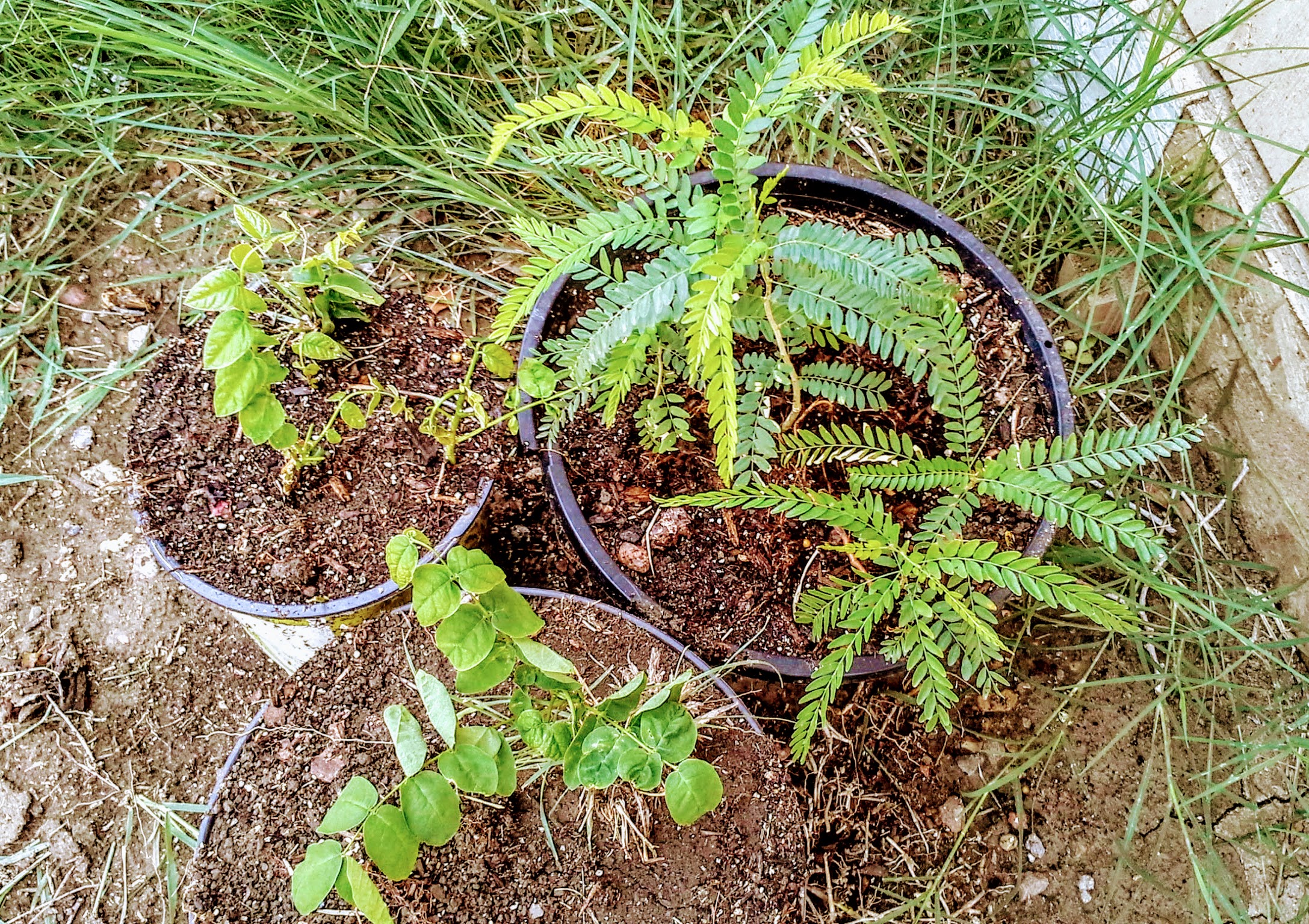
Since he’s not around, I’ll be mostly hermitting. Luckily, this is the time of year for a different sort of seeding, so I’ll have things to do to keep me occupied in my secession.

***

Pat Bertram is the author of Grief: The Inside Story – A Guide to Surviving the Loss of a Loved One. “Grief: The Inside Story is perfect and that is not hyperbole! It is exactly what folk who are grieving need to read.” –Leesa Healy, RN, GDAS GDAT, Emotional/Mental Health Therapist & Educator.

Feeling Incredibly Old

I haven’t admitted to being old, only to growing older. The way I figure, the “elderly” moniker comes next birthday when I reach that age when I can no longer fudge the demographics to convince myself I’m not old, that I’m just in late, late, late middle age.

But now I’m feeling incredibly old. And disheartened. And vulnerable. Admittedly, the vulnerability comes from a slowly-heeling bum knee that has nothing to do with anything that is going on in the world, but all the rhetoric about protecting the elderly (of whom, apparently, I am one, at least according to The Bob statistics) has put me firmly in the old age category, and not being able to easily get around offers additional proof.

Even worse than all that is the truth — I’ve lived through pandemics, large outbreaks of terrifying and highly infectious diseases, horrendous flu seasons, wide-scale disseminations of dubious vaccinations that came close to being mandated. Comparatively speaking, The Bob is just another over-exploited, would-be end of the world scenario that was conveniently forgotten when a more immediate (and more obvious) threat came into being.

I’ve lived through violent times, too. Protests, both political and racial; civil unrest; fathers fighting sons; riots; burning; looting; terrorist tactics perpetrated by US citizens on US citizens. I’ve also seen men with criminal records upheld as heroes because of cop brutality, as if being beaten up or killed suddenly erases their unsavory past. (Oddly, both men at the heart of two of the worst race riots were substance abusers who perpetrated crimes on women — one was a wife beater and abuser, the other a man who once held a knife to a pregnant woman’s belly while his friends ransacked and looted her house.)

Too much, too much, too much.

It’s hard to remember that for many people, all of this — The Bob and the riots (and yes, a riot by any other name is still a riot) — is new.

A young man waited on me the other day when I went to the store, a new employee, who I hadn’t yet met. I didn’t know the etiquette of the situation —I wasn’t sure if I should reach out because of what was going on or simply ignore our skin color differences and pretend all was well in the world — so I did what I always do: err on the side of connection.

I asked if he was okay, and made a gesture indicating the world at large. He gave me a closed-off look and turned away from me. Then, apparently deciding to answer in kind, he looked at me and smiled and said, “Thank you for asking. I’m okay here in this bubble.” (And it does seem as if this area is a protective bubble.) Then, with tears in his eyes, he admitted that he was worried because even though he was safe, he had family in big cities. I offered words of sympathy, and he responded, “But everything will be better after this.”

That’s when I realized I really am old, not just in years, but in experience. Things might be better after this — I suppose it’s possible. But I’ve seen too much, been around too long, been pulled this way and that by too many power struggles of all kinds (including those in the volatile interracial neighborhood I grew up in) — to believe in easy answers and simple words.

One good thing about being old — I don’t have to pretend to have any answers. I can leave the world to the young, and maybe that’s as it should be.

***

Pat Bertram is the author of Grief: The Inside Story – A Guide to Surviving the Loss of a Loved One. “Grief: The Inside Story is perfect and that is not hyperbole! It is exactly what folk who are grieving need to read.” –Leesa Healy, RN, GDAS GDAT, Emotional/Mental Health Therapist & Educator.

The Best of Social Networking

Although I have always been a fan of social networking on a personal basis — getting to know people, making friends, feeling connected even when I am alone — I am also aware that it is a platform for the dissemination of a particular brand of ideas. Anything that doesn’t fit the narrative of that brand is labeled “fake news.” That most people don’t see they are being herded by this one-sidedness shows the efficacy of the brand. That those same people heap shame on those who don’t agree with the stated beliefs shows how deeply entrenched the brand is.

And yet . . .

During this past week, I have been enormously pleased to see so many posts by black people decrying the current narrative, ie: downtrodden blacks, liberal saviors, white racists (and according to this narrative, all whites are by definition racists).

I understand that the black/immigrant/minority experience is different from mine, but that does not negate my life. Does not make me better. Does not make me a racist. It makes me . . . me.

Whatever anyone experiences makes them who they are. The current narrative defines certain people by their race, not who they are individually. The posts I’ve been reading and the videos I’ve been seeing are not from blacks living the “black experience,” whatever that might be. They are individuals living their lives, refusing to claim the victimhood the narrative foists on them, refusing to be seen as anything other than as themselves, as a member of the human race, as an American.

These people don’t want reparations, don’t want to be identified with the rioters and looters, don’t want to be limited by what other people are doing and saying. They want to grab whatever opportunity (legal opportunity) they can to create good lives for themselves. They want to take responsibility for what they do without the mitigating (and oh, so paternalistic) factor of needing special compensations because of their skin color.

Normally, we don’t get to hear what these people have to say because it doesn’t fit with the point of view the media forces down our throats. And we need to hear their voices. We need to see these folks as they see themselves — not victims, not un-“privileged.” But people dealing with life as best as they can.

This — getting to hear different voices, getting to listen to people tell a different story than what we expect — this is the best of social networking.

***

Pat Bertram is the author of Grief: The Inside Story – A Guide to Surviving the Loss of a Loved One. “Grief: The Inside Story is perfect and that is not hyperbole! It is exactly what folk who are grieving need to read.” –Leesa Healy, RN, GDAS GDAT, Emotional/Mental Health Therapist & Educator.

Protesting the Protesting

Really, people? Protesting? Rioting? Looting? What the heck are you doing? How do think this is going to change anything? It’s not as if the instigating event was a case of social or systematic injustice — it was a single case of a one man committing a crime that everyone seems to agree was egregious. He has been arrested and charged. So what’s the point of protest? It’s done.

If the protests were focused on the use of a particular means of subduing a person, then that makes sense. Kneeling on someone’s neck should never have been acceptable police procedure.

But that isn’t what people are protesting.

I can see that people want to express their overwhelming feelings toward the event, so why not a candlelight memorial for the victim to show they care? Why not some sort of benefit to offer support? But a protest? Someone needs to rewrite the narrative. Cops kill as many unarmed whites as black. (According to FBI statistics, of all the unarmed folks cops have killed, only 6% involved a white cop/unarmed black.) So what’s to protest? All deaths by cop? That makes sense since there really shouldn’t be any at all.

But that isn’t what people are protesting. If it were, race wouldn’t be an issue in this current conflagration.

Still, a quiet protest, no matter how illogical is one thing. Rioting is another.

People are still not allowed in church in groups of more than fifty in order to stop the spread of a disease, but apparently, if huge numbers are going on a spree of violence, the disease can’t catch up with them, so mobs are okay. (Does anyone else see the irony of rioters and looters wearing surgical masks to keep from accidentally spreading a disease when they are purposely doing harm to others? It sure boggles my mind.)

It seems that people are taking for granted that peaceful protests can spontaneously combust into violence. Fisticuffs, sure, but more than that is simply not possible. If one is planning on going to a peaceful gathering, one does not fill a backpack with spray paint cans, weapons, bricks, large rocks, incendiary devices. (The chance of a simple match or lighter burning down a building without any sort of flammable materials being involved is just about nil.) So if people are carrying such things, then the protest almost by definition, can’t be peaceful. And if people aren’t carrying such things, they had to come from somewhere. Which means that someone purposely instigated the riots. They didn’t just “happen.”

And looting? Oh, yeah, nothing says “solidarity” like destroying the businesses in one’s neighborhood, and nothing shows one’s sterling character like theft. To say nothing of the irony of stealing liquor and televisions and Huggies to protest crime.

Silly me. I really thought we were better than this.

***

Pat Bertram is the author of Grief: The Inside Story – A Guide to Surviving the Loss of a Loved One. “Grief: The Inside Story is perfect and that is not hyperbole! It is exactly what folk who are grieving need to read.” –Leesa Healy, RN, GDAS GDAT, Emotional/Mental Health Therapist & Educator.

Saving the World

I finished rereading The Wheel of Time, and since the library isn’t open yet, I’ve begun re-rereading the series. It’s not that it’s such great writing — with over four million words spread out over fifteen books, there really should have been a huge amount of culling to make it less of a sprawl. Some of the meanderings off the main track are unimportant and inane and downright aggravating — a reader does not need to see every savage side of the lesser antagonists to get the point that they have sold their souls to The Dark One. Nor does a reader need to see certain characters doing the same thing over and over and over again. Nor does a reader need to see author mistakes, such as his forgetting what his characters are like and have them acting brainless for no reason whatsoever.

The series was originally proposed as a trilogy, though the scope of the story demands more than that. TOR Books, knowing how wordy Robert Jordan was, turned it into a six-book deal, which they should have enforced. The Wheel of Time is a perfect example of an author falling in love with his creation. He spent ten years planning the work, doing research, and taking copious notes before he started writing, and apparently, he couldn’t bear to give up any bit of his creation even if it would have made a much stronger story to do so. As to why his publisher didn’t rein him in — there is a whole lot more money to be made by fifteen bestselling books (fourteen plus a prequel) than six. Since the fantasy market is predominately younger folk, I guess they figured they had a non-critical readership, and every time a new book came out, a new crop of readers came of age, which prompted sales of the earlier books in the series.

Luckily, it’s easy enough to skip over the many sidetracks and dead ends to keep to the essence of the work, though that doesn’t help dealing with the parts of the story that aren’t there. Jordan delighted in writing ad nauseum about trivial matters but mentioned important points almost as an aside and brought in mysterious characters for cameo spots without any elucidation of who they were or why they were important. Despite myriad interviews, he refused to explain some of his seemingly pointless points, saying he wanted people to think about them. A bit of a god complex, there, but then, I guess that’s understandable when one has created such a massive world to play with.

There is also too much war for my taste, but after all, Jordan is a military historian, and ultimately, this series is about the battle between the forces of light and dark, so all the military hoopla has a place.

Despite the many drawbacks of the series, it’s compelling because of the eternal themes of honor and duty, loyalty and integrity, steadfastness and kindness and friendship, doing what’s right no matter the cost, standing by one’s word, rising above the baseness of one’s life to grasp nobility, accepting one’s fate and becoming a hero. Those are the nuggets of purity that drive the (sometimes appalling) story. And it’s those same nuggets that perhaps make the work worth reading and even rereading.

It’s funny — each time I reread the series, I tell myself that this time I will read every word, and each time I get bored by the trivial chapters and inane characters and become aghast (re-aghast?) at the sadism, and end up skipping vast sections to get to better parts. Some of the horror is necessary, of course, to help forge the rather ordinary characters into the heroes (reluctant or not) they will become. I mean, you don’t simply wake up one morning with the power and resolve and ability to fight the overwhelming darkness that might be threatening to consume us all.

Jordon has created an incredibly complex kaleidoscope of a world, taking all the bits and pieces of our cultures, customs, costumes, mythologies, legends, religions, histories, and shaken them up and spread them out in a new and vibrant pattern. One of the fun things about rereading the book is picking up elements that one missed the first time through. (Despite that, there are whole storylines that add nothing to the whole — the Seanchans, Slayer, Perrin and Faile to name just a few.)

Since this is the quintessential hero’s journey, with each character on his or her own path to greatness, there is homage to the legend of King Arthur as well as to lesser known legends.

There are the archetypal characters, such as shapeshifters and tricksters, mentors and allies. And underlying it all is the savior tale, both the Christian story and the pre-Christian ones.

What would you do if you’re going about your ordinary life, doing what you’ve always done, and then discover you’ve been chosen to save mankind, chosen to give up your life to save the world?

I wonder — as I sit in safe isolation while many folks around the world are dying of a novel virus — if I would have the courage, the stamina, the will, to undertake such a task. In my heart of hearts, though I would wish I did have such a heroic character, I know I would not be able to do it. Could not do it — I’m too old, too tired, too powerless. But when I immerse myself in this legendary world, I think . . . maybe.

Just maybe . . .

***

Pat Bertram is the author of Grief: The Inside Story – A Guide to Surviving the Loss of a Loved One. “Grief: The Inside Story is perfect and that is not hyperbole! It is exactly what folk who are grieving need to read.” –Leesa Healy, RN, GDAS GDAT, Emotional/Mental Health Therapist & Educator.

To Seed or Not to Seed

Every Tuesday, for the past several weeks, has held the promise of more work done on my garage, and tomorrow is no different. The garage door is supposed to be delivered and the electricians are supposed to come to wire the garage as well as the contractor and his helpers to do more work on the trim. Perhaps they will all come as planned. Perhaps it will be just another Tuesday like all the rest.

Meantime, I’m left with the seeds of ideas about what to do with the yard once it is mine. For now, the yard is strewn with materials and piles of lumber scraps as well as the defunct carport, so there’s no use in doing anything such as planting seeds until it is all cleared out. Besides, once the garage is finished and the sidewalk from the back door of the house to the pedestrian door of the garage is built, many loads of dirt will need to be hauled in to even the ground from the house to the garage and all around the garage, especially where the old building used to be.

Then, of course, I will have decisions to make. To plant a ground cover or leave it as dirt is one such decision. I considered a clover yard because it’s a favorite of bees or maybe even a California poppy field, but I have noticed recently how much birds seem to like the bare ground. There must be insects or old seeds or something for them to eat that might not be available to them with a ground cover.

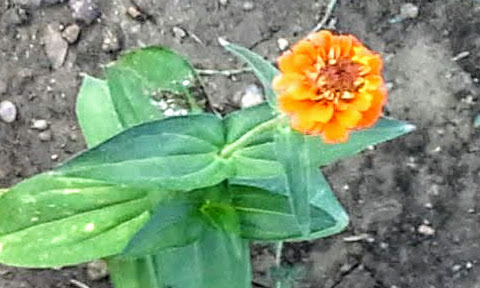
Another decision is what to do with all the old seeds I have — dozens and dozens of packets. I would have thought that seeds wouldn’t go bad — after all, corn has been grown from maize discovered in ancient pueblos — but so far, any of these seeds I have planted have turned out to be moribund. So now I wonder if I should take a risk and sow the seeds in the new earth when it arrives in case they decide to grow, but if they aren’t viable, all I will do is awaken whatever weeds might be in the dirt. I also can’t help thinking that as long as I don’t plant the seeds, there’s always the dream of someday having flowers, but if I plant the seeds, and they are dead, then there won’t be any flowers. And anyway, I’m not sure I want to waste the water on some sort of large-scale planting just yet.

So, to seed or not to seed? Such a conundrum!

But there’s no real need to decide just yet because, so far, Tuesday never seems to come.

***

Pat Bertram is the author of Grief: The Inside Story – A Guide to Surviving the Loss of a Loved One. “Grief: The Inside Story is perfect and that is not hyperbole! It is exactly what folk who are grieving need to read.” –Leesa Healy, RN, GDAS GDAT, Emotional/Mental Health Therapist & Educator.


Circadian Rhythm Change

Despite the isolation and continued stay-at-home orders for seniors, there doesn’t seem to be much change in my life because I often go long periods of time without seeing people and I often struggle with meals — juggling what I should eat with what I want to eat with what’s available to eat. I have, however, noticed one rather puzzling difference: a change in my circadian rhythms.

I’d read of tests where people who have to rely on their own rhythms to set a sleep/wake cycle often deal with a longer day — going to sleep later each night and waking up later every morning. That was always true for me. When I had long stretches where I don’t have to get up at certain time every day, I found that I’d go to bed later and later. The only thing that would reset my internal clock was if I set my external clock and got up at the same time every morning. It wasn’t comfortable, and I was tired all the time — sort of like being on a constant self-imposed daylight savings time change — but it would keep my circadian rhythms on more of an even keel. (I’ve always felt best going to bed around midnight and getting up at nine in the morning, which played havoc with my system all those years when I had to get up to go to work.)

Now, however, my rhythms are going haywire. I tend to fall asleep during the day, and even with the naps, I often fall asleep early — as early as 8:00pm instead of my usual midnight. And I wake up early, sometimes as early as 4:00am. I didn’t even know there was such a time! Yesterday, I managed to fall asleep again and slept in until 7:00am, but this morning I was up at 5:30.

I don’t know what to do with those early hours. I don’t want to read that early in the morning because . . . actually, I don’t know why. It just seems wrong. When I’d get up at my usual time, I often would check in with my online friends via Facebook, but now that FB has boycotted my blog, I am (mostly) boycotting the site. I could play solitaire, but 5:30 is too early to strain my eyes with a computer screen.

Luckily, my knee felt well enough today that I decided to attempt a short walk outside.

It actually felt good being out that early. Until I got back home. Oh, the knee was fine, that wasn’t the problem. I’d forgotten that people around here who don’t like taking their dogs for a walk let them out early in the morning to roam around. (The code enforcer isn’t working then and even when he is, he seems to ignore loose dogs.) There were two huge dogs on the sidewalk outside my house, and they seemed to have no inclination to let me get near my gate, so I turned around and took another walk. (I don’t know who they belonged to since I’d never seen them before, but that doesn’t say much. Considering all the new and frequent sounds of barking in the neighborhood, it seems as if some of my neighbors have acquired new dogs.)

When I returned, the animals were gone. I might have overdone it knee-wise with the extra walking, but I’m grateful I didn’t have to fight with those monsters. I did still have to water my transplanted bushes, though, as well as the few flowers that are struggling to come up. (It’s so dry here that it doesn’t take much to turn the yard into a desert). By the time I got back inside, I could feel my knee complaining.

At least I don’t have to worry about what to do today. Resting my knee seems a good plan. Maybe I’ll even take a nap.

***

Pat Bertram is the author of Grief: The Inside Story – A Guide to Surviving the Loss of a Loved One. “Grief: The Inside Story is perfect and that is not hyperbole! It is exactly what folk who are grieving need to read.” –Leesa Healy, RN, GDAS GDAT, Emotional/Mental Health Therapist & Educator.


Quarantine Chronicles

The restrictions under which we are living, at least for those of us old enough to still be kept at home most of the time, are hard enough without adding dietary restrictions to the equation.

I’ve been doing well eating what I have on hand, using up all the things that have been in the refrigerator or freezer for a while, and buying mostly fruits and vegetables to round out the meals, but today I decided enough was enough. Although I usually don’t take my car out to do my few errands until Friday, today I grabbed my mask, fired up my bug and went to the grocery store. Except for employees, there were only a couple of other people in the store, so I was able to roam the aisles at my leisure looking for enticements.

I threw a small package of flour in the cart — well, I laid it softly in the cart so as not to break the package, but that doesn’t have the drama of throwing. The small package cost the same as the five-pounder, but I figure there was no sense in tormenting myself. I’ll make the biscuits and pierogi, as I planned, and then maybe I can go back to a more wholesome diet, though to be honest, the flour was the least of my splurges. I haven’t had ice cream in ages, but when I saw that a premium ice cream was on sale for less than half price, I figured that was a sign, so that, too ended up in my cart.

On the healthy side, I treated myself to a package of blueberries. I was thinking berries would be a sop to my healthy inclinations, but a small voice in the back of my head is chanting, “blueberry pancakes!”

Of course, considering how lazy I’m getting and how much work it takes to prepare anything, I might not get around to making any of those things. Maybe it will be enough to know that I could.

One thing I bought that I’m not sure I will use right away is yeast. It wasn’t on my list, but there has been a shortage of yeast on the grocery story shelves for so long that it seemed almost a sacrilege not to get it when it was offered. Depending on how disciplined I am and in which direction (ie: disciplined enough to stick to healthy foods or disciplined enough to cook what I bought) I might get ground beef and cabbage next week to make hamburger rolls (aka bierocks, runzas, or berokes).

Meantime, I still have leftovers to use up.

And thus ends this particular episode of my quarantine chronicles.

***

Pat Bertram is the author of Grief: The Inside Story – A Guide to Surviving the Loss of a Loved One. “Grief: The Inside Story is perfect and that is not hyperbole! It is exactly what folk who are grieving need to read.” –Leesa Healy, RN, GDAS GDAT, Emotional/Mental Health Therapist & Educator.

My Epic Adventure

I’ve often been seduced by the hero’s journey, an archetypal storyline where a reluctant hero is called to an epic adventure. This quest is at heart a transcendental and transformative journey, where an ordinary person from the ordinary world goes through a series of test, ordeals, encounters, and finally returns to the ordinary world, no longer an ordinary person but extraordinary — a hero — who has the ability to transform the world into something extraordinary, too. You know this story — you’ve heard it, seen it, read it hundreds of times in the guise of tales such as The Wizard of Oz, Star Wars, Lord of the Rings.

I used this same story for my novel Daughter Am I, my contemporary novel of a young woman — Mary Stuart — who goes on a dangerous journey to learn about her recently murdered grandparents. Her mentors and allies on her quest are six old rogues — gangsters and con men in their eighties — and one used-to-be nightclub dancer. By journey’s end, all their lives have been transformed.

I always wanted a taste of an epic adventure of my own, something that would change me — and perhaps my world — into something extraordinary. In a way, grief was such a journey. Grief is not so much a series of stages, at least not the ones we are familiar with. Instead, there are The Mythic Stages of Grief, a process of transformation, taking us from our ordinary shared life into a new life, one we couldn’t even imagine before that tragic “call.”

I thought my cross-country trip would be such a transformative adventure, and as wonderful as it was, I returned after five months and 12,500 miles, essentially the same as when I left.

For many years, I dreamed of an epic hike along the Pacific Crest Trail, thinking that such a journey — a real journey, not just a journey of the spirit — would be the quest I craved. It didn’t work out, and the death of that dream still haunts me.

Well, now here I am involved in a real-life epic adventure — a world-wide ordeal that is calling all of us to be heroic — and what is my duty? What is my quest? To stay home. That’s it. Stay home. Isolate myself. Where are the mentors and allies to help me along the way? Where are the great tests of courage? Without these essential elements of the story, it seems such a tepid — and sad — adventure, though there are enemies galore, whether it is The Bob itself, the conflicting tales we are being told, the fears that are beckoning us.

In the end, though, facing these enemies is no extraordinary challenge. Just ordinary life — or as ordinary as we can make it in our extraordinary isolation.

***

Pat Bertram is the author of Grief: The Inside Story – A Guide to Surviving the Loss of a Loved One. “Grief: The Inside Story is perfect and that is not hyperbole! It is exactly what folk who are grieving need to read.” –Leesa Healy, RN, GDAS GDAT, Emotional/Mental Health Therapist & Educator.