Wishing you a peaceful day
and all your troubles far away.

 I only have two photos of my deceased life mate/soul mate. It seems odd in this age of electronic imagery to have so few pictures, but there was no reason to take photos. We were almost always together. We remembered the things we did, the events we participated in, the conversations we had. A camera would have only been an intrusion in our lives.
One of the photos I have is fifteen years old, a formal photo of the two of us, taken at my parents’ 50th wedding anniversary celebration. After he died, his mother wanted a picture, so I took a photo of the picture, cropped me out, and sent it to her. That image of him sat in my computer for over a year without my looking at it. I simply could not bear the pictorial reminder that he was forever gone from this earth. (To be honest, I still cannot bear the thought of his being gone.) Even worse, it didn’t look like him, not the way he looked toward the end (though it had been a perfect likeness at one time), so I barely recognized him. I didn’t want to supplant what images I had of him in my mind with a photo.
About a year ago, however, my memories of him started to fade, and I desperately needed to see him, so I printed out the photo. Somehow, the photo makes him look happy and radiant, as if he were smiling at something only he knew. (Which is odd, because he does not look at all like that in the original photo.)
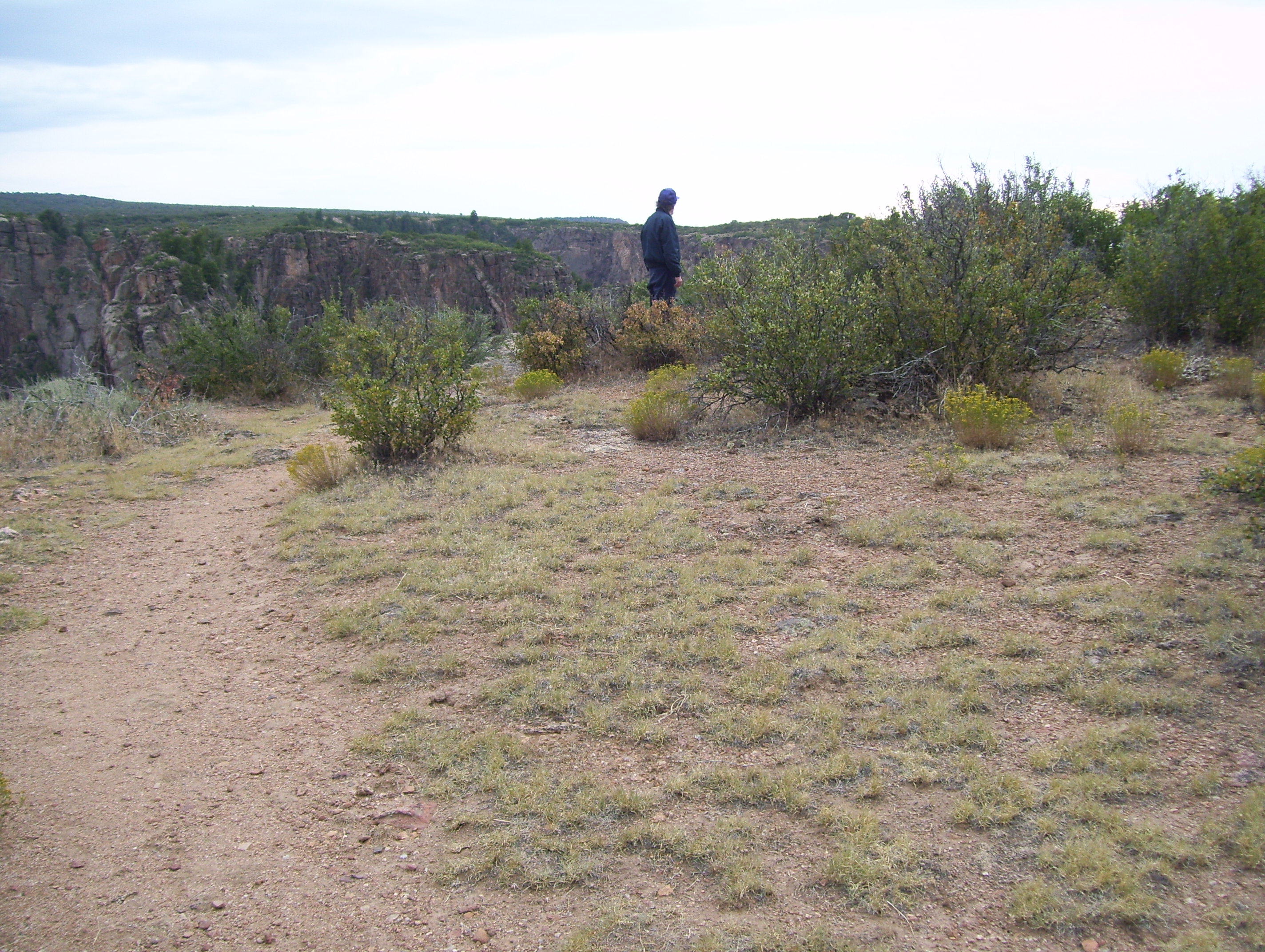
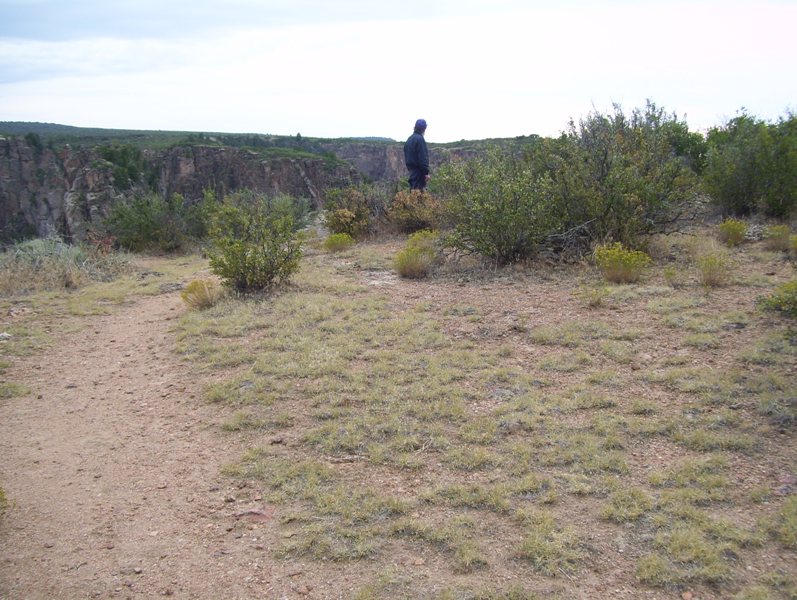
The other photo of him is from a few months before we died. (I can’t believe I made such a typo, but I’m leaving it in because in so many ways, “we” did die.) I’d just come back from a trip in a rental car, and since a rental car is a terrible thing to waste, we took a rutted and sparsely graveled road to the north rim of the Black Canyon of the Gunnison. (Although we lived only twenty miles from there, neither of our old cars could safely make the trip.) I didn’t realize I had a photo of him until months after his death when I went through the pictures I took of the canyon. (By then, I often took photos — seeing life through the lens of a camera was the only way I could deal with his dying and then with his death.) He is standing at the rim of the Black Canyon, his back to me, staring out at . . . eternity? I was able to look at this photo occasionally, for some reason — maybe because I was able to “see” him the way I remembered him.
There is a third photo, one his oncologist took. I’d considered asking for it, but I remember how appalled my mate was when he saw it — he looked old and haggard and gray and very, very ill. I didn’t want to remember him as such, so I never followed through with my inclination.
A few months ago, I put away the photos. I went from not wanting to look at the pictures, to drawing comfort from them, to not wanting the constant reminder he was dead. But yesterday, I set the photos out again. I needed the feeling of connection, no matter how ephemeral. I don’t know how long it will be before I can’t stand to look at them again — perhaps only a day or two. As much as I need to feel connected to him (sometimes that lack of connection is like an itch deep inside), the truth is, a photo is not a living person, and I cannot feel connected to an image on a piece of paper.
La-La Land is defined variously as:
Whatever La-La Land is, I took a trip there. The actual name of the place I visited was Venice Beach, but Venice is part of Greater Los Angeles, so it counts. There was definitely frivolous activity of all kinds, though I’m sure the guys at Muscle Beach and the various street artists and entreprenuers all thought they were involved in serious business. Others were like me, taking a vacation from the harsher realities of life.
These images show a completely unrealistic view of the area since the place was people-packed and smoggy. But still, I managed to get some lovely photos. So, come join me in a pictorial tour of a make-believe land far away.
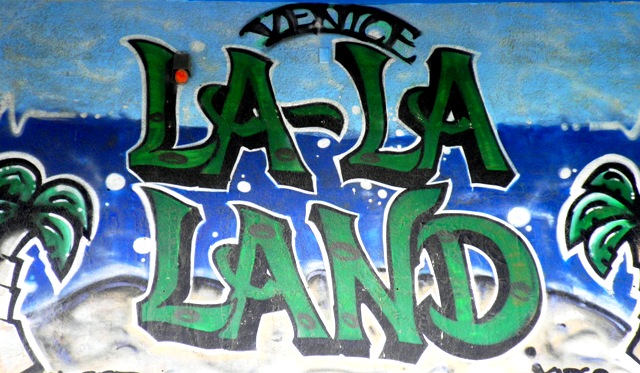
La-La Land

Venice Beach Pier

Venice Beach as seen from the pier
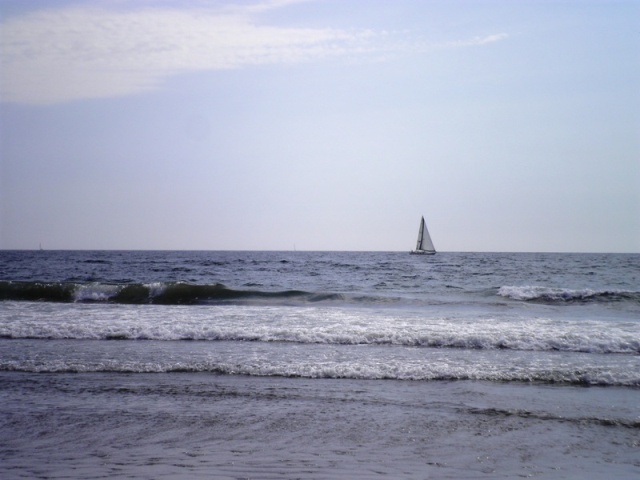
Sail Away
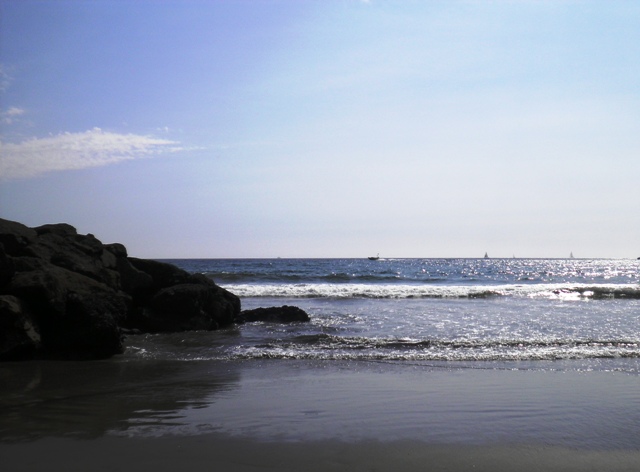
Low tide

Surf shop
I’ve been walking in the desert almost every day and as much as I enjoy my sandy treks, I decided I needed a change, so I took a trip to Santa Monica in California and found . . . yep. Sand.

Santa Monica Beach
It must be sand that brings out the mystic in me, because I sitting on the beach, looking at the ocean, and what should have been a startlingly wonderful experience was lovely, but not startling. It occurred to me that all this practice of being me, of being in my body, of being present, makes every experience unique in it’s own way. Of course, being in the moment at the beach is more fun that being in the moment in a traffic jam, but both add up to the moments of our lives.
Here are a few moments from Santa Monica.

Santa Monica Pier

Santa Monica Pier

One-Man Band — part of the never ending human carnival on Santa Monica Pier
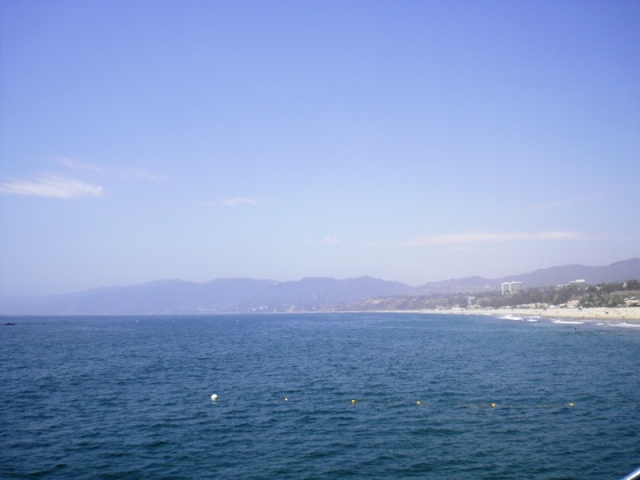
Santa Monica Mountains as seen from the pier
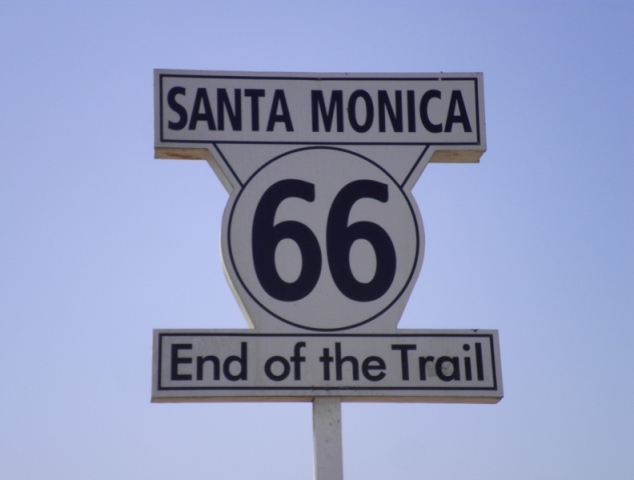
End of the Trail
One of the oddest places I visited on Route 66 was the bottle farm outside of Victorville. All the sculptures were created from bottles and other artifacts found in the Mojave Desert.

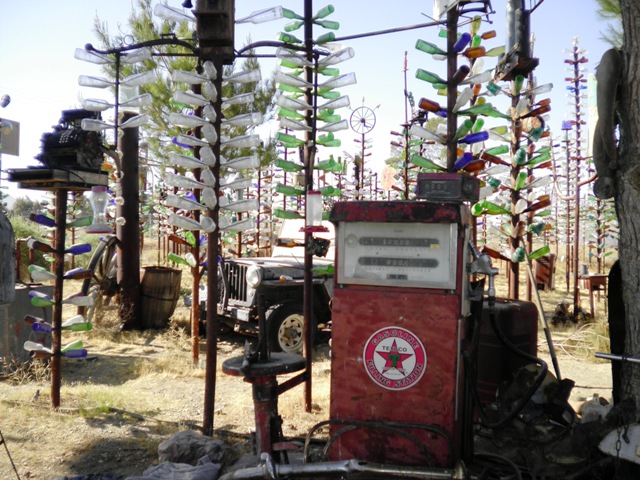
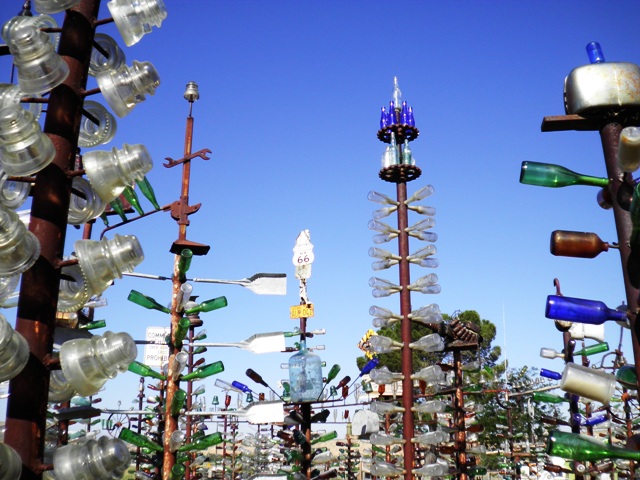

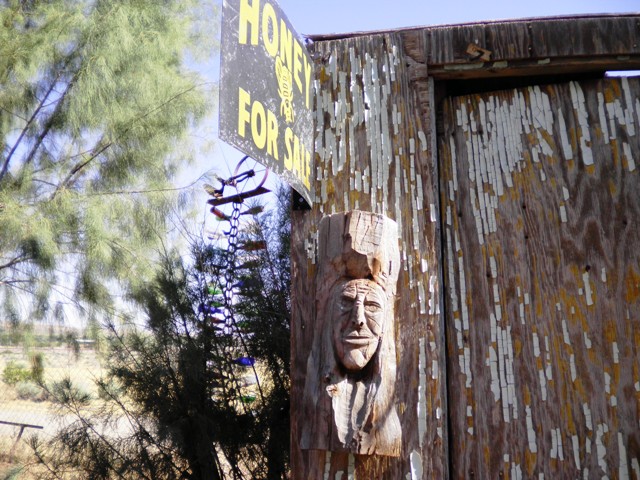
I wish you could have visited this fascinating place with me, but maybe we’ll meet on Route 66 some other time when we are dreaming of the Mother Road and days gone by.
I am in Victorville. California at the San Bernardino County Fairgrounds, signing books at the Route 66 International Festival. Route 66 enthusiasts from all over the world are here to celebrate the Mother Road and a world gone by.

Ruins along Route 66 in California near Bagdad
The road that fueled dreams of a better life is mostly absorbed into the modern world of interstate travel, but there are still some remembrances of those nostalgic times.

Bagdad Cafe from the movie of the same name
The original Bagdad Cafe is long gone. This structure was the Sidewinder Cafe, renamed for use in the movie, and is located 50 miles west of where Bagdad once stood. Odd to see the screen come to life in this dusty, out of the way place.

Roy’s Motel and Cafe in Amboy on Route 66
Roy’s Hotel and Cafe in Amboy, California, is being restored to it’s former glory (if such an elemental structure can be considered glorious.) The route beer I got at the small store at the gas station was glorious, or perhaps I was simply thirsty. I’m sure you’ve seen similar photos before, but I took this one. Well, I took all of them.
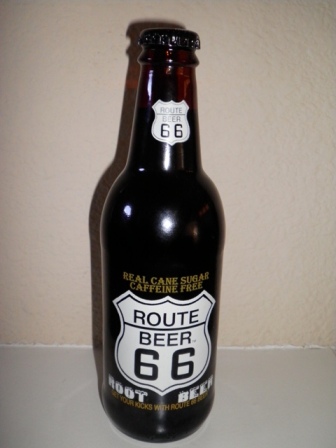
Route Beer. What writer could resist such a pun?
It seems as if my entire life is lived online now, and as enticing as it is to visit friends on facebook, talk about writing in one of my discussion groups, check my various email addresses for the hundredth time, even I need a break. So, yesterday I went for a picnic at a nearby lake.
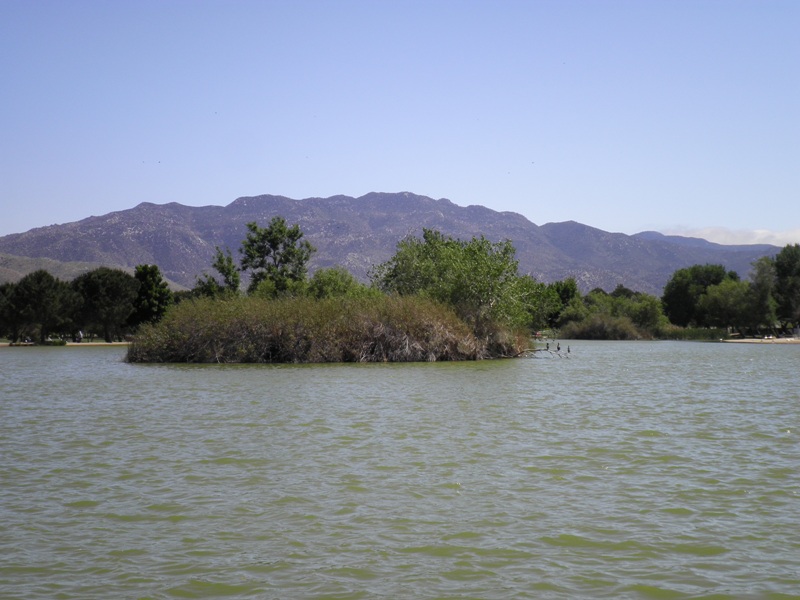
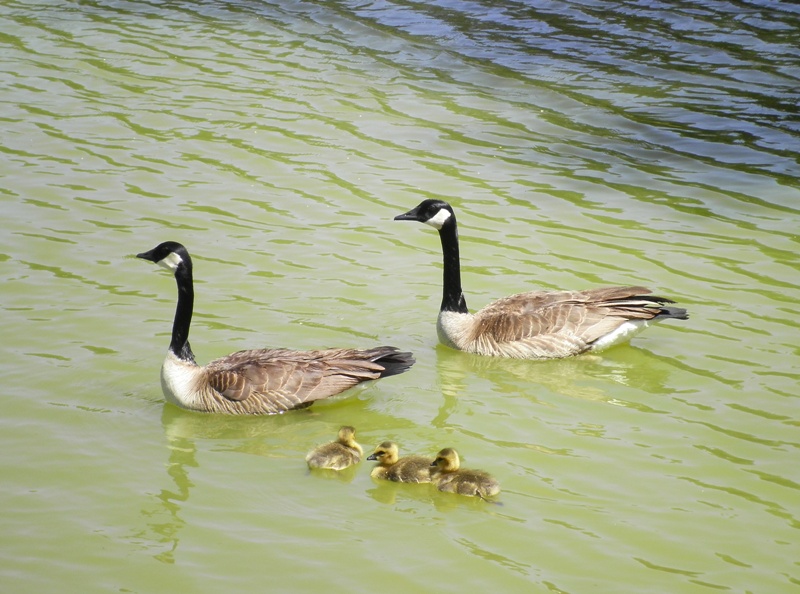
This lake seems to be sort of an unofficial wildlife preserve. It’s one of the few bodies of water in the vicinity and it is a popular spot for waterfowl to stop by and rest during their migrations. For us humans, there is always something new to see (or feed). I’ve seen lots of coots, mallards, a few wood ducks, a blue-billed duck, egrets, swans, herons, and geese.
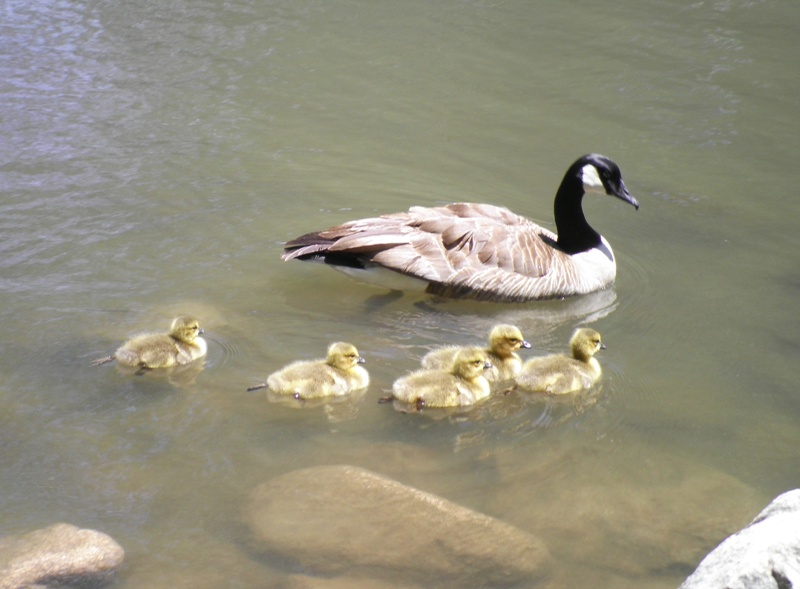
I counted at least six different geese families yesterday, but this particular family (blelow) stood out because of the blonde baby. Maybe geese aren’t as monogamous as they are made out to be!
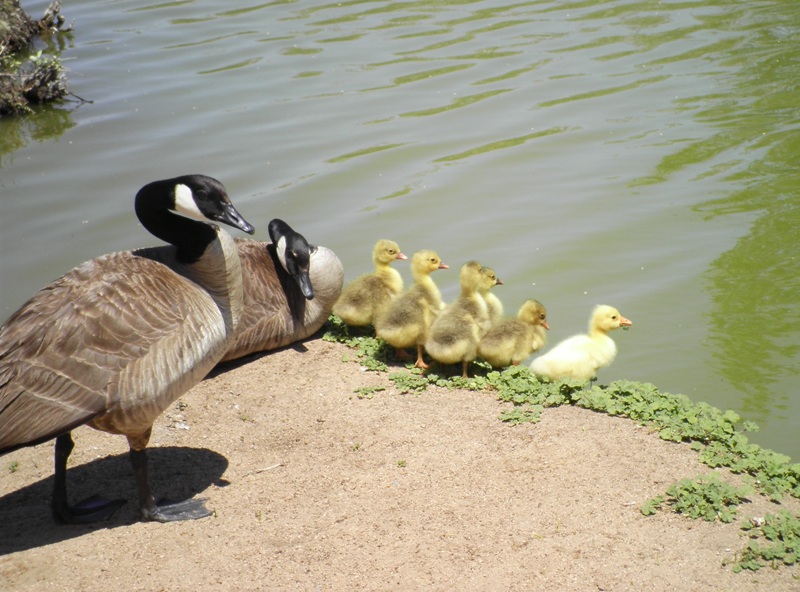
Seems like an ideal life, doesn’t it? A summer home, a winter home, and swimming in between. There is only one drawback to beeing a goose — no internet.
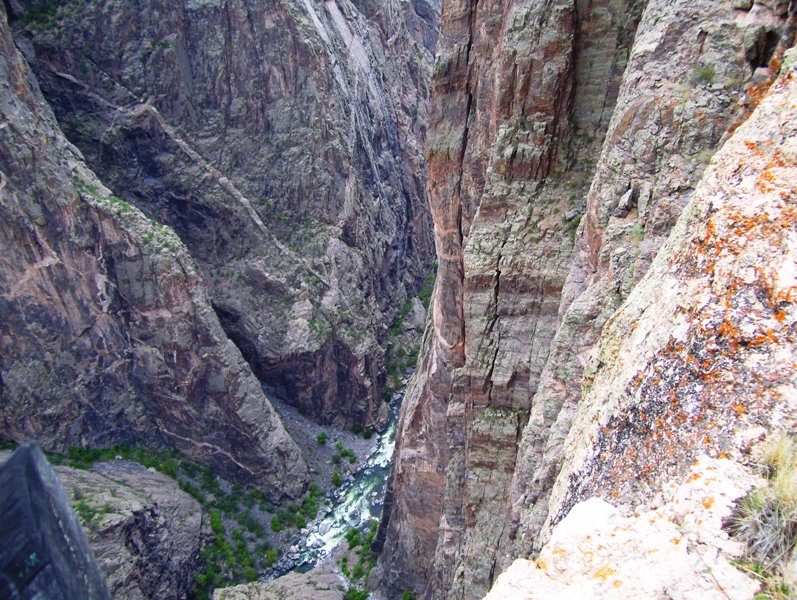
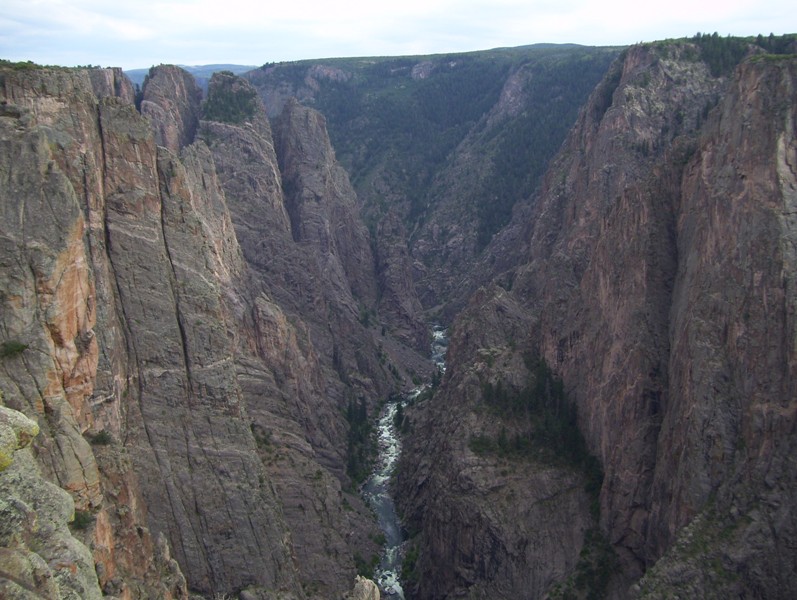
Overview of the Black Canyon of the Gunnison, a natural super bowl.
(Sorry. I couldn’t resist.)
Yesterday in my post, Looking at the World Through the Lens of a Camera, I mentioned a trip I took to the North Rim of the Black Canyon of the Gunnison. The south rim is the better known part of the canyon, but the north rim seems wilder to me. Here are a few photos of the canyon.
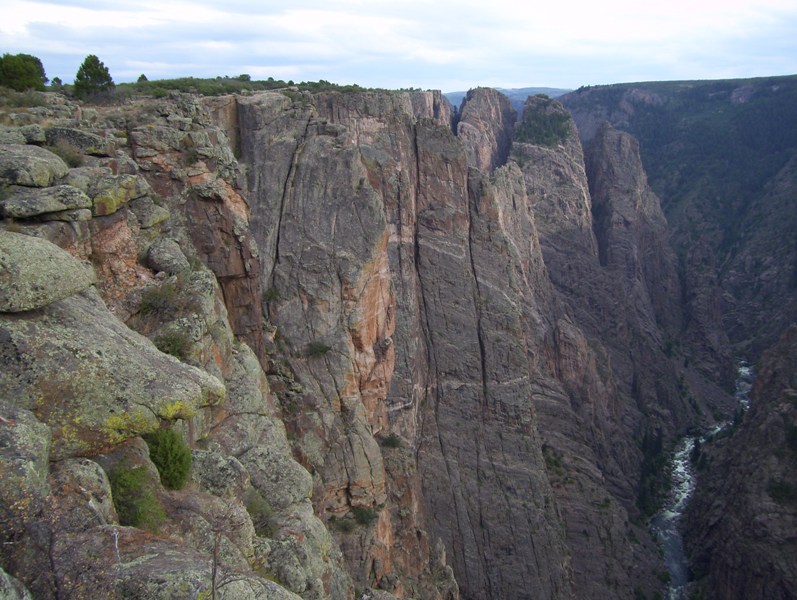
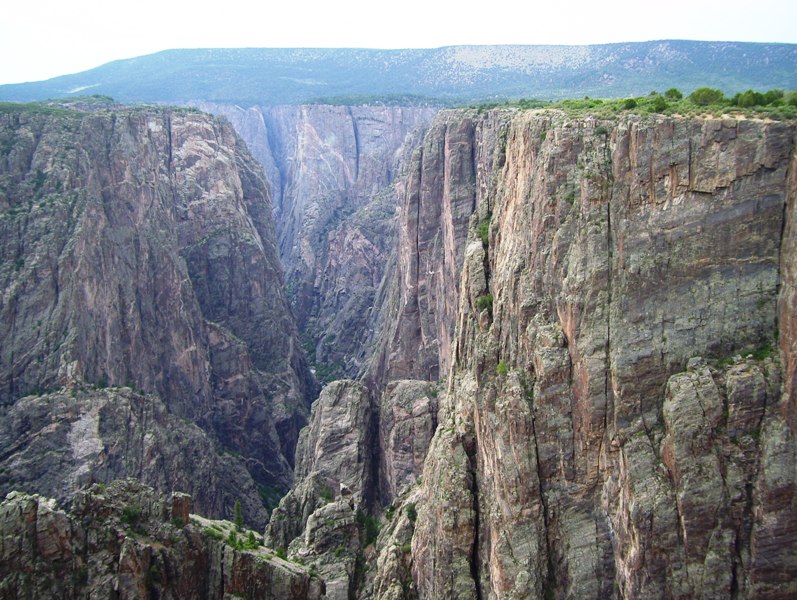
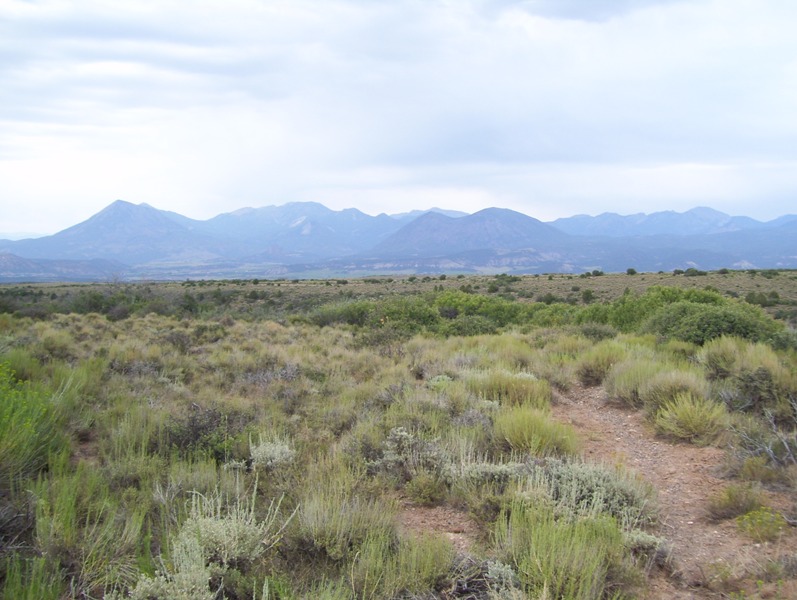
While I stood taking the previous photo, this is what lay behind me:
 My publisher suggested adding photos to my soon-to-be-published book about grief, and I jumped at the chance. I’d recently read David Ebright’s YA novel Reckless Endeavor, and was impressed by how much veracity just a couple of photos gave his story, so I was glad of the opportunity to do the same for my book. The only problem is, I have almost no photos of me and my life mate. We simply did not take photos — not of the places we lived, and not of each other. It’s not that we weren’t visually inclined, it’s that we lived in the moment. If you take a photo of the moment, the shoot becomes the moment and you lose the moment itself.
A couple of years before he died, I was gifted with a digital camera, and I took hundreds of photos of trees, animal tracks, a cattle drive, some yaks in a nearby field, wildflowers (well, weeds) along the lane where I walked. It helped me get through what I thought were the worst years of my life, the years of his dying. Oddly, during all that time, I only took one photo of him, and that was by accident. We always wanted to see the north rim of the Black Canyon of the Gunnison, but since the road leading to the canyon was gravel, it was too hard on our old cars. We promised each other that if we ever had the use of a rental car, we would take the trip. That August, I rented a car so I could visit my brother, and when I returned, I suggested we finally go see the north rim of the canyon. He didn’t want to make the trip since he was so sick, but at the last moment, he agreed to come with me. It’s a good memory. Just him and me and the ground that fell away just beyond our feet. I had my camera, and since I knew I’d never be back, I snapped a few photos, and he ended up being in one of those pictures. It still makes me cry, that photo. He’s standing with his back to me, staring at . . . eternity, perhaps. Did he know he had just a few more months to live? I sure didn’t, or perhaps I was simply refusing to face the truth.
The year after he died (which actually was the worst year of my life), I took thousands of photos. The world had turned black and white, and it was only through the lens of a camera that I could see color and life. I roamed the neighborhood and the nearby desert, looking for visual treasures.
And then suddenly, a few months ago, I stopped carrying my camera around. Apparently, despite my continued sadness, I’m back in the moment, living life at full strength rather than diluted through the lens of the camera. I didn’t even realize how far I’d come until I started hunting photos for my book and realized I’d stopped taking pictures.
(I did manage to scrounge a few photos for the book, though not as many as my publisher wanted. And we’ll be using the only photo of the two of us for the back cover even if it is fifteen years old.)





When twenty-five-year-old Mary Stuart learns she inherited a farm from her recently murdered grandparents -- grandparents her father claimed had died before she was born -- she becomes obsessed with finding out who they were and why someone wanted them dead.

In quarantined Colorado, where hundreds of thousands of people are dying from an unstoppable, bio-engineered disease, investigative reporter Greg Pullman risks everything to discover the truth: Who unleashed the deadly organism? And why?

Bob Stark returns to Denver after 18 years in SE Asia to discover that the mother he buried before he left is dead again. At her new funeral, he sees . . . himself. Is his other self a hoaxer, or is something more sinister going on?


