Pat Bertram is the author of Grief: The Inside Story – A Guide to Surviving the Loss of a Loved One and Grief: The Great Yearning, “an exquisite book, wrenching to read, and at the same time full of profound truths.” Bertram is also the author of the suspense novels Unfinished, Madame ZeeZee’s Nightmare, Light Bringer, Daughter Am I, More Deaths Than One, and A Spark of Heavenly Fire.
To learn the tarot and to get familiar with the various decks I inherited from my brother, I’ve been picking a card every day, and then researching the meaning. To get the best use of such an undertaking, a person needs to ask a question, though it isn’t necessary. My question — when I remember to ask it — is always, “What do I need to know today?” I find when I don’t ask the question, the card reflects my worries more than anything else. When I do ask . . . well, sometimes I get advice and sometimes not, but it’s hard to figure out from a card what I need to know especially if I don’t know what I need to know because the cards can only tell me what I already know since I am the one interpreting them.
Still, the advice I glean is sometimes spot on, sometimes too general to be useful, and is often something I already I know about me or my life. (I haven’t yet figured out how to discover that which I don’t know about my secret inner workings, even though learning such things is supposedly the best use of the tarot.)
The one suggestion that comes up over and over again in my daily one-card reading is to trust my intuition, trust my intellect, and to stay true to myself. I can’t help but equate this advice to certain current events since my intuition — and intellect — are both at odds with what most other people think, so I tend to doubt myself.
Despite the lack of true knowledge from the tarot about what I need to know each day, it’s still an interesting exercise. Maybe it will open my mind up to this intuition I am supposed to trust. If not, at least the question helps me focus on the day and what I might glean from it.
Forgetting the cards and what they might tell me, I’m curious as to what you might tell me — me specifically, or me as a member of the human race — what I need to know today.
So, what do I need to know today?
What do you need to know?
***
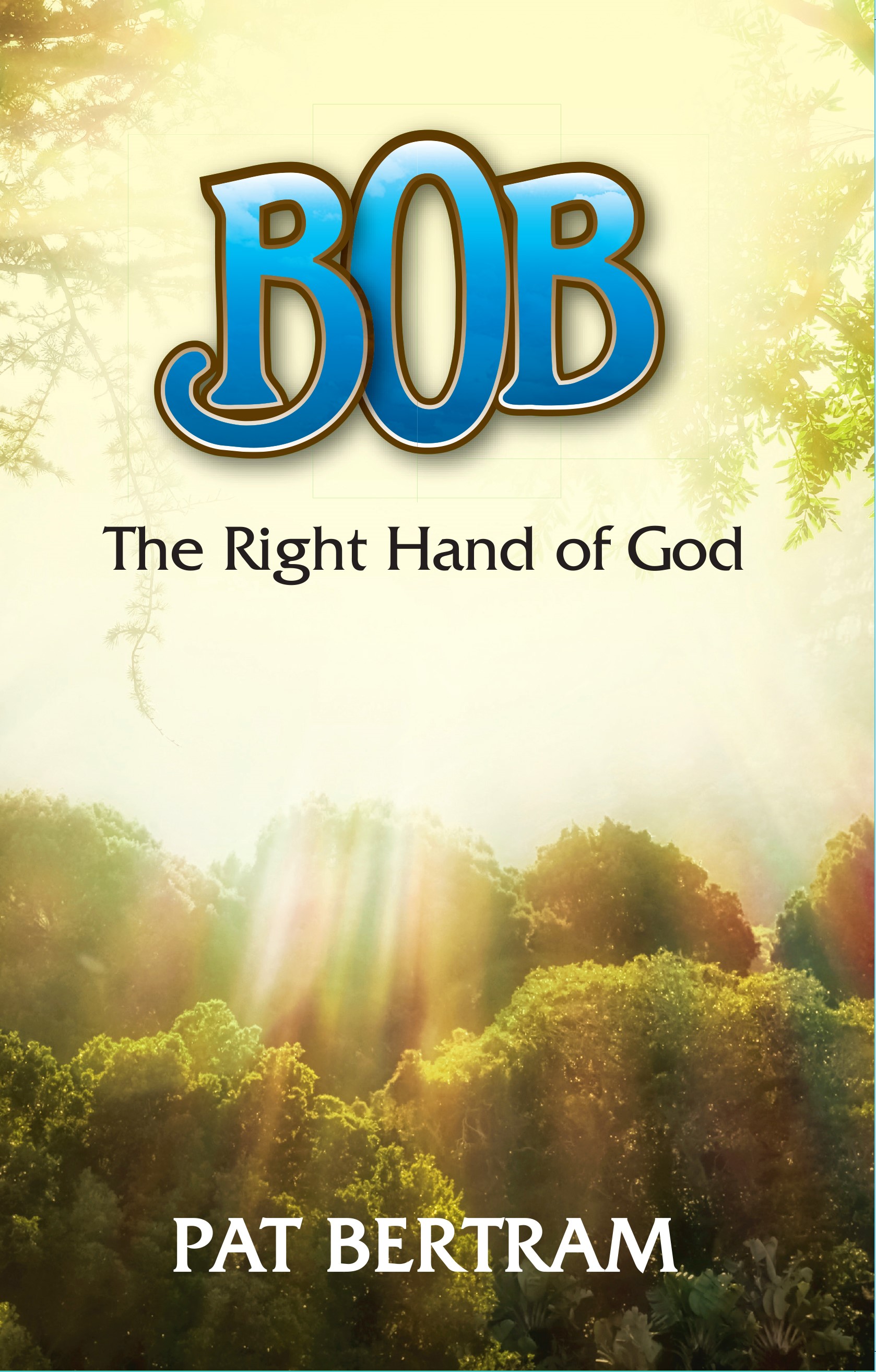
My latest novel Bob, The Right Hand of God is now published!
What if God decided to re-create the world and turn it into a galactic theme park for galactic tourists? What then?
Non-authors often have suggestions of things for me to do to promote my books, which I appreciate, even though I’ve probably already implemented the suggestions. (In fact, I had two such conversations yesterday.)
Oddly, what no one ever asks is what they can do.
Admittedly, I made a mistake by spending too much time promoting other authors, presuming wrongly (in all but a handful of cases) that the authors would in turn do something to promote me.
And I probably made a mistake posting so much of my grief writing here on this blog where anyone can read it without having to do anything in return. Which is okay. My mission, ever since Jeff died, is to untangle the many threads that go to make up the knotty — and so very agonizing — problem we call grief.
Still, there is something you can do, which is probably more important than anything I can do.
If you have read and liked any of my books, if any of my grief books have helped you, you can leave a review for me on Amazon. You don’t even have to have purchased the book from Amazon — after all, none of the professional reviewers buy the books they review.
I realize that some people are intimidated by the expert reviews that have been posted, thinking they could never write as well. Or they simply do not know what to do.
But it’s easy. Truly.
You don’t have to write a synopsis of the book — there are already synopses posted, both by the publisher and a few of the reviewers. Nor do you have to agonize over what to write.
First, say what you liked about the book. You might like a specific character or the interplay between a couple of characters. You might like the setting. You might like the plot, the style of writing, the way the author kept you interested. Just say something, anything, that you liked.
Then, say how the book affected you. Maybe it made you laugh, or think, or offer comfort, or take you away from your problems for a few hours.
Finally, star your review. (A five-star review is nice — hint, hint — but not necessary.)
A simple review is fine. A short review — a couple of sentences — is fine. A misspelled review is fine. (You can always edit it later if you wish.) The important thing is to leave a review.
You can find my author page on Amazon here, with a listing of all my books: Pat Bertram Books
Thank you for your help!
***
“I am Bob, the Right Hand of God. As part of the galactic renewal program, God has accepted an offer from a development company on the planet Xerxes to turn Earth into a theme park. Not even God can stop progress, but to tell the truth, He’s glad of the change. He’s never been satisfied with Earth. For one thing, there are too many humans on it. He’s decided to eliminate anyone who isn’t nice, and because He’s God, He knows who you are; you can’t talk your way out of it as you humans normally do.”
Before the election, I talked with a friend one day about all the lies and cheats and deceptions. Like most people, she knew knew these tactics existed, but since she believed the lies told by the alphabet newscasters, she wasn’t aware there was another side.
I don’t often monopolize the conversation, but every once in a while, someone finds my “on” button, and I hold forth. Much of the truth of this past election was hard to find, but if one read more than an article or two, and if one read articles that went against what one happens to think at any given moment, it was a lot easier to piece things together. Also, I’ve studied such things most of my life — people often downplay the unpalatable truth with a contemptuous sneer of “conspiracy theory,” but the truth is, a conspiracy is merely something people in power do behind your back. And politics is full of back door, back room, back stabbing deals that we are not privy to, and if we do happen to stumble on the truth, well, then, they dismiss it by saying it’s just another conspiracy theory or fake news or whatever damning name they want to call it.
That particular day, however, I’d watched the news with her, watched the newscaster show a clip of an interview, then listened to her turn the person’s words upside down to prove a completely different point, then asked a second interviewee a question that would again make a mockery of the truth. The two of them talked about the horror of the event as if it had actually happened, rather than being a total fabrication.
Since I don’t watch the news, this took me aback. That they didn’t even pretend to hide their reprehensible behavior was too much for me. Did they really think we were such fools as to not hear what we originally heard?
Apparently so. Anyway, that got me started.
The friend listened agog as I explained not what we had just seen but also some of the subtle — and not so subtle — lies we’ve been told, explained how they vilified some players while beatifying others, and even explained some of the historical background leading up to this particular political mess. When I realized what I was doing, I apologized.
She said, “I like listening to you talk.” She asked me how I knew everything I did, including all the pieces that went together to make up my books. Then she said, “You must have gone to school for a long time.”
The truth is, I didn’t go to school for a long time. In fact, I have far less formal education than just about anyone I know, but I’ve spent a lifetime reading and researching, listening and thinking to make up for the lack. Even more, I almost never watch television. I didn’t grow up watching like most people of my generation did because my father wouldn’t get one. He wanted us to be independent thinkers, which kind of backfired on him. He wanted us to independently come to the same conclusions he did, and he was appalled to discover that we all turned out to think independently of him.
But that’s beside the issue. The real issue is that a lot of knowledge is hidden in books. Not school books or text books, but . . . books. All kinds of books, fiction and non-fiction. If one never reads, one never learns anything but what they are fed.
The first time I realized that tales hid truth was in grade school. For an English assignment, we had to create a newspaper. I thought it would be fun to make the news stories about various fairy tales and nursery rhymes, and in trying to find things to say about these bits of folklore, I happened to come across a book that gave the origins and meanings. And wow! What an eyeopener!
And so began my quest for the truth hidden in books.
If I have ever had a life-long passion, it’s with the truth, reading, seeing that which is hidden that we’re not supposed to know. So far, not all the truth is suppressed, and I’m not sure it can be, but it’s a lot harder to find than on a lighted screen.
I can’t say knowing the truth — at least as much of it as I do — has made me happy. It’s made me more of an outcast than anything (except during my years with Jeff — he was the only other seeker I had ever met, and together we learned a lot). But still, I’d rather know the truth — and if I don’t, I prefer searching for it — even if people don’t agree with me. Sometimes, their disagreement leads me to other paths. So far, none of these paths have set me on a totally different course, though a lot of the paths augmented the ones I was already on.
Searching for truth is like this find the hidden objects game I’ve been playing — it’s about learning patterns, seeing the truth as deviation from the pattern as well as seeing the truth in the pattern.
See what I mean about my “on” button? I had no intention of going into all that, but once I got started, I just kept going.
Luckily for you, I also have an off button.
***
My latest novel Bob, The Right Hand of God is now published!
What if God decided to re-create the world and turn it into a galactic theme park for galactic tourists? What then?
I received a couple of excellent reviews for my novel Bob, The Right Hand of God, which was recently published by Stairway Press. Not that I was worried — I know the book is good (though I’m sure all authors think that about their books) but both reviewers are people whose opinion I value, so I was hoping for good words.
Luckily, both of them liked the book.
Malcolm Campbell, author of Fate’s Arrow wrote: “The book is many things: highly readable, realistic and believable in portraying how the characters react and interact, dystopian in that everything we know is gone and the replacement plan isn’t providing anything better, and (yes) playful. Should the reader laugh or cry? Hard to say. While the ending was predictable, this well-written novel is highly recommended.” Click here to read the full review: https://malcolmsroundtable.com/2020/11/04/review-bob-the-right-hand-of-god/
Sam Sattler of the book blog “Book Chase,” wrote: “Bob: The Right Hand of God is funny and it’s clever, but deep down, it has a message about the important things in life. Pat Bertram has written several books on grief and grieving and she brings that kind of emotional sensitivity even to a farcical tale like this one. If you are looking for something fun to read, this is one you should consider.” Click here to read the full review: https://bookchase.blogspot.com/2020/11/bob-right-hand-of-god-pat-bertram.html
If you, too, enjoyed the book, please leave a review on Amazon. It doesn’t have to be a full review such as the above two reviewers wrote. It can be as simple as single sentence saying you enjoyed the book, or that it’s the perfect book for these time, or that you’d like to see it made in a movie, or anything. (If you hated it, then never mind.) I would like to see this book find a wide audience. I think people would like it, even those who don’t read much.
I’m having a hard time thinking of something to write about today. To be honest, I’m having a hard time even caring about thinking of something to write about, or caring about much of anything. Oh, I am still enamored of my house — I feel blessed to be here. I am still intrigued with the possibilities for landscaping. And I’m still hopeful about my newly published novel. But other than that, I’m feeling . . . disconnected. Or maybe just upside down.
Part of it, I’m sure, is shock over the direction people have chosen to steer this country. We’re already as close to socialism as I ever want to be, but apparently, most people want what I don’t, and the thought of what’s going to be happening in the next few months and years makes me nervous.
Part of it, too, is that I’m tired. I still haven’t recovered from the time change, though why that should make a difference, I don’t know. I’m also tired from caring about things I have no control over.
Part of it is that I spend too much time alone. I have my job, and I do see other people now and again, but I am too much in my own head, which isn’t always a good place to be.
And part of it might be that, as my tarot card today intimated, I am at a crossroads, needing to reflect and reevaluate my life so I can have a better understanding of where I am and where I need to grow. (One thing, I know is that I need to opt out of reading or hearing any news — I no longer want to know anything “they” are doing since there’s nothing I can do about it.)
Of course, all of the above could be hogwash. It could simply be that I have nothing to say. 411 days of daily blogging is a long stretch. (I had to look up the word “hogwash.” know what it means in its usage today but not how it started out. It turns out hogwash is not something for cleaning hogs, as I vaguely assumed, but is actually swill — kitchen scraps one feeds to the pigs.)
The weather was nice enough today after the winds died down that I was able to take a walk, which helped. And I had a couple of nice meals — eggs and a vegetable salad. So maybe this malaise will soon pass, at least I hope it will.
***
My latest novel Bob, The Right Hand of God is now published!
What if God decided to re-create the world and turn it into a galactic theme park for galactic tourists? What then?
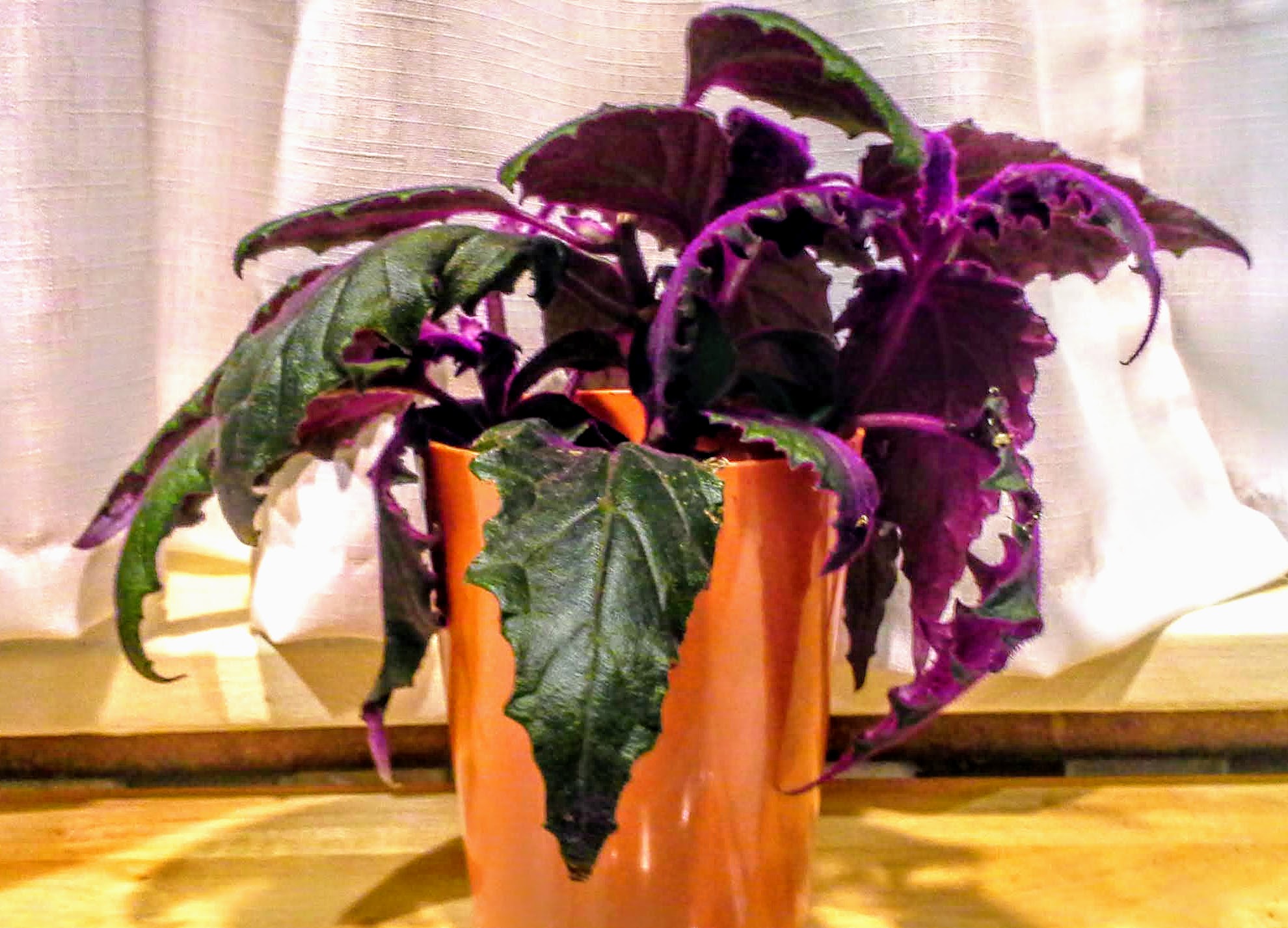
I’ve never had a green thumb. Any indoor plant — and most outdoor plants — I ever had took one look at me and promptly expired, so a few months ago when a friend gifted me with a plant she’d grown from her mother’s purple passion plant, I accepted with an outward smile and an inward groan.
Luckily, she said it wouldn’t hurt her feelings if the plant didn’t make it, which made me feel a whole lot better. And also, luckily, the plant isn’t picky about being watered — once a week or thereabouts is all it needs.
Despite my benign neglect, the plant seems to like it here. It’s in front of southern window with a light curtain that I mostly keep closed, so the purple passion plant gets plenty of diffused sunlight.
Surprisingly, not only has the plant thrived, but whenever it gets too tall and stringy, I lop of the top of the plant and stick it in the pot, and that bit thrives, too. Because of this, it doesn’t have nature’s symmetry but a rather wild appearance.
But it’s alive, and that’s what counts. Or at least, I think it is.
***
My latest novel Bob, The Right Hand of God is now published!
What if God decided to re-create the world and turn it into a galactic theme park for galactic tourists? What then?
I’m seceding from the world at large and planning on disappearing into make-believe worlds. There are simply too many horrible or stupid or insulting conversations about the election in the real world, the seemingly most innocuous being one of the worst, for me. People are saying that this was a contest between two men and should not be affecting our relationships with one another. While I might agree with the second part (to the extent that people keep their insults and aggressiveness to themselves), I definitely do not agree with the first part. To say it’s a contest between two men makes it seem like a high school presidential election where the most popular person wins. Many of our national elections have been like that, with nothing at stake, but this election is historic. It was not a choice between two men, but between two entirely different directions for the country to take — between freedom and subjugation, between choice and control, between more government and less government.
People on both sides are appalled that so many people voted for the other side, which means, again, that it was not about two men but about all of us.
So, I’m seceding. Or maybe it’s more that I receding. Either way, I’m finding comfort in make believe worlds.
I’ve got books, my yard (though I had to give up on digging up the grass in my garden because the tops of my feet hurt from all that unfamiliar work), and I’m immersing myself in one of those silly hidden objects game where you search for . . . you guessed it . . . hidden objects. I play my own game (which should come as no surprise to anyone who knows anything about me). The game itself is free, but you are expected to buy “energy” (the coin of the realm) with real money as well as various other artifacts, but my game is to find ways of playing free. For example, if players agree to watch a commercial, they get gifts of energy and other e-delights, and I always agree — it gives me a chance to rest my eyes. They also occasionally have a side game that can be played free, as well as “happy hours.”
The game amuses me. It keeps my attention and provides exercise for my not-as-sharp-as-it-once-was memory, but it’s also an excellent example of an inflationary world. The more you play, the more energy you can accumulate, but the more energy you accumulate, the more each phase of the game costs. But, unlike in the real world, I can find ways around the inflation, such as playing the most “expensive” games during happy hour, and only playing the “cheap” games with my accumulated energy.
For now, I’d rather live in the make-believe worlds in games, in novels, and even inside my own head. At least, I don’t have to listen to lies and comments that irk me.
To set the record straight, none of the comments left here have ever irked me in any way. I appreciate every one of you and your comments. But then, this blog, in its own way, is also a make-believe world.
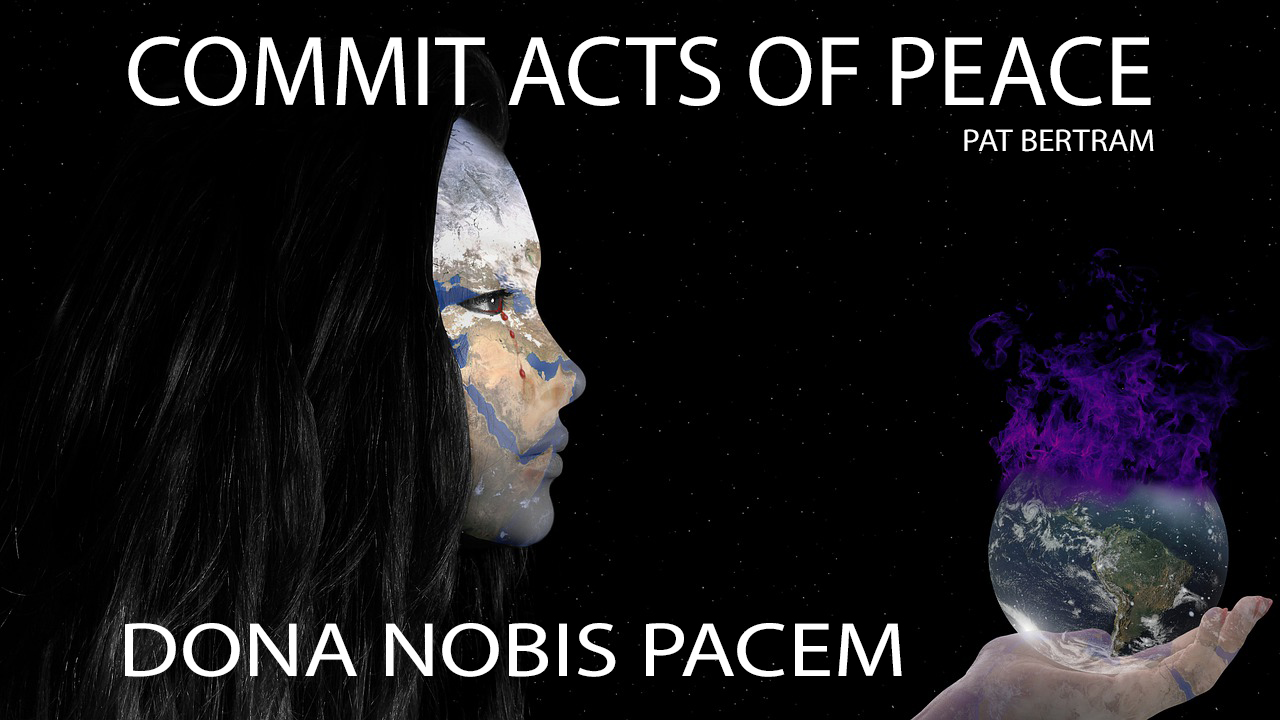
For the past eight years, I’ve participated in the BlogBlast4Peace movement. Whether it helps propagate peace or not, it’s still a good project because at least for that day, a large number of people are committing acts of peace. It was a hard day for me, because unlike previous years, people could not post my blog’s link to Facebook, so I was left out of a lot of the activity. When people did try to link, they got a message that this blog did not meet FB’s community standards.
Standards? What standards? It’s become a place for advertising — every other post on my feed is an ad for some dubious product, many direct from China (though you don’t find that out until after you have ordered said product) and others that turn out to be scams that you end up paying for every month until somehow you can get the subscription cancelled. When there is a legitimate post, their fact checkers are on the ball — the biased ball — and often manage to confuse the issue more by claiming as true what is false and as false what is fact.
And yet, my blog — this very blog you are reading — doesn’t meet their standards. That I have temporarily found a way around the block by reblogging my posts on another blog and posting that link to my author page on FB, doesn’t mitigate the damage their block has done. My personal voice on the site has not been blocked — just this blog — but I am so disturbed by the events of the past few days (and people’s reactions to those events) that I’d just as soon stay away. Staying away, too, ensures that I don’t say anything that can come back at me as more and more of our freedoms are eroded. I have to remember that my main reason for developing a web presence has been to promote myself as an author, and hopefully entice people into buying my books.
Which leads me to a question — does anyone do Instagram? I know it’s popular, though I can’t imagine it being a good place for gaining book recognition, but I was wondering if it was fun. Until recently, I didn’t have a phone big enough to make using the site feasible, but now that I do have such a phone, I’m revisiting the possibility. One of many drawbacks is that it is phone intensive, and I am not a fan of doing much via phone, but the main reason I hesitate is that it is owned by FB, and I’ve had enough of FB’s shenanigans to last a life time.
At least I still have this blog. I can say what I want (unless I censor myself), can write a long or short article, can post photos and probably even videos if I so desired.
And I have my website, or at least, I do for now. I received an email today from my domain provider that since Adobe decided to discontinue their Flash support, my website builder won’t work anymore, so they are moving me to a different website builder. They told me to click a button, and everything would be transferred over. So I did, and it wasn’t. All I saw was an ugly generic photo of a hand writing with an old pen on a piece of paper. I couldn’t figure out how to do anything on the new site (especially since the email said it would automatically be done for me) so I called the company.
According to the heavily-accented fellow I talked to, the site isn’t automatically switched over — their techs will have to do the work and they will let me know when the site is ready to go live. What he said and what the email said are so different, it’s hard to know the truth (but that seems to be standard these days). Adding complication to an already complicated situation, many of the links on my website go to my blog or to another site. (When we set up the original domain, we also set up one for Jeff, and now I use that blog for extra web pages, though I don’t really need to. With all the links navigating elsewhere, I don’t need as many pages as I thought I did.) The old site won’t be deleted for another couple of months, so I have time to wait and see.
As if that weren’t enough, one of my answers on Quora was hidden because they said I plagiarized. Apparently, one can’t quote themselves without attribution.
I’m sure you’re not interested in my web woes, but I bet you’d be even less interested if I screamed to USA voters, “What the hell were you thinking?”
All that’s crashing down on me — the general mess in the real world as well as my personal mess in the web world — is making me rethink my online goals. Do I have any? Well, yes. To sell books, of course, to keep up the discipline of writing in at least a small way, and to have my own slice of online life, of which this blog is paramount. The rest — FB, Instagram, Quora, even my own website, not so much.
Luckily, the peace acts I committed yesterday are keeping me from being swept away by these issues. I’m calm about everything, in part because of what my tarot card told me today — to have courage in the face of that which cannot be changed. To that, I will have to add: to have courage (and patience) in the face of what is changing beyond all possibility of my control.
I joined the peace bloggers in 2012. And every November 4th since then, I have blogged for — and about — peace.
This year’s theme is “Peace in the time of quarantine.” Although I do not believe in the possibility of world peace (because war and other international conflicts are never our personal choice but are fostered by others or foisted on us by circumstances), I do believe in personal peace, in finding peace within ourselves no matter what happens to provoke us into chaos.
We tend to think of peace as a passive thing. An absence of strife. Effortless calm. Yet, when we talk of unrest and chaos (or whatever is the opposite of peace), it’s always about action, doing something, committing something — committing acts of terrorism, declaring war, fighting, rioting, tormenting, bullying.
Maybe peace is also about action, about committing acts of peace. We as individuals can’t arrange truces between warring factions, whether global or familial. We can’t bring peace to chaotic countries — ours or anyone else’s. Often the best we can do is bring peace to our own lives, arrange a truce between our inner and outer selves, find a way to ease our anger, create art (because people who are involved in creating a piece of art are also creating a space for peace), meditate or take a walk. Commit acts of peace.
It’s odd to think that this time of quarantine, which because of enforced isolation and orders to stay at home should have been a time of peace, has been one of the most violent times in recent years. But the country at large, especially the bigger cities have been ablaze with chaos.
Of course, being forced into isolation — any sort of force, actually — can’t bring about peace. It’s no wonder people were so ready to erupt into violence — isn’t that some sort of law of physics? Equal and opposite reaction and all that? On a smaller scale, victims of abuse were forced into situations where they had no escape, so for these people, instead of bringing about peace, the quarantine brought about more horror.
Apparently, I have nothing positive to say about peace in the time of quarantine, even though my own life during this time has been quiet and contemplative. I’ve managed to stay away from strife — except for occasionally getting riled up by all the lies and idiocies going on. I’ve even managed to commit acts of peace — if only by taking solitary walks, blogging, reading, enjoying a rare visit with friends.
If you don’t have a blog or think this a hopeless cause, you can still participate in this event by committing an act of peace. I hope you will.
***
Please check out my new book!
“I am Bob, the Right Hand of God. As part of the galactic renewal program, God has accepted an offer from a development company on the planet Xerxes to turn Earth into a theme park. Not even God can stop progress, but to tell the truth, He’s glad of the change. He’s never been satisfied with Earth. For one thing, there are too many humans on it. He’s decided to eliminate anyone who isn’t nice, and because He’s God, He knows who you are; you can’t talk your way out of it as you humans normally do.”
A friend invited me to go walking with her in the cemetery yesterday, and I jumped at the chance. It’s a pretty place — at least in the daytime — and even historic, containing, as it does, graves of some early settlers. It’s also free of dogs, which are becoming more of a problem all the time.
I found it interesting that yesterday was also All Souls Day, which made the trek apropos. We didn’t encounter a soul — dead or alive — as we meandered along the roads, searching for the grave of someone she knew who had recently died. Many of the graves were decorated with fake flowers. With the advent of silk flowers, I’ve wondered why there is still a market for plastic flowers, and now I know the answer — they are the flower of choice to decorate graves.
As my friend promised, there were no dogs.
With daylight savings time ended, it gets dark early here, and will continue to get darker for the next several weeks. I am so not a fan of the creeping darkness, but it’s even worse now because of working. My shift ends after sunset, and though I don’t worry about walking in the dark — it’s only two blocks on a quiet street. Besides, there’s a streetlight, and I carry a flashlight, so I’m not worried about the darkness as such. What does worry me are the dogs running loose. It’s one thing when it’s light enough for me to see them coming, another to have them approach out of nowhere.
I’ll have a stick, and even some pepper spray that someone gave me, so I should be okay. I’d heard that spraying water is even more effective, but for now, I’ll just stick with what I have and worry about other deterrents later if necessary.
I hope I remember to leave a light on in the house to make it more inviting — somehow it seems so lonely coming home to a dark house, even though I don’t notice any problem in the day.
Despite my reservations, it might be nice walking in the dark. I don’t often do that anymore — mostly because there’s no reason to. It’s too bad that there are just enough lights in town to obscure the stars because I do enjoy walking under the stars. I’ve heard that a vast number of stars are visible just outside of town, but since I don’t like driving at night (or maybe it’s that the night doesn’t like me driving), I haven’t yet explored the possibility.
I hope I don’t sound cranky. Despite unpleasant dogs roaming loose and the creeping darkness, I feel grateful for all I have — a job, a house to come home to, and friends who invite me to go walking in the cemetery.
Grief: The Inside Story – A Guide to Surviving the Loss of a Loved One debunks many established beliefs about what grief is, explains how it affects those left behind, and shows how to adjust to a world that no longer contains the loved one. “It is exactly what folk need to read who are grieving.”(Leesa Heely Emotional/Mental Health Therapist & Educator ).
“I am Bob, the Right Hand of God. As part of the galactic renewal program, God has accepted an offer from a development company on the planet Xerxes to turn Earth into a theme park. Not even God can stop progress, but to tell the truth, He’s glad of the change. He’s never been satisfied with Earth. For one thing, there are too many humans on it. He’s decided to eliminate anyone who isn’t nice, and because He’s God, He knows who you are; you can’t talk your way out of it as you humans normally do.”
While sorting through her deceased husband’s effects, Amanda is shocked to discover a gun and the photo of an unknown girl who resembles their daughter. After dedicating her life to David and his vocation as a pastor, the evidence that her devout husband kept secrets devastates Amanda. But Amanda has secrets of her own. . .
When Pat’s adult dance classmates discover she is a published author, the women suggest she write a mystery featuring the studio and its aging students. One sweet older lady laughingly volunteers to be the victim, and the others offer suggestions to jazz up the story. Pat starts writing, and then . . . the murders begin.
Thirty-seven years after being abandoned on the doorstep of a remote cabin in Colorado, Becka Johnson returns to try to discover her identity, but she only finds more questions. Who has been looking for her all those years? And why are those same people interested in fellow newcomer Philip Hansen?
When twenty-five-year-old Mary Stuart learns she inherited a farm from her recently murdered grandparents -- grandparents her father claimed had died before she was born -- she becomes obsessed with finding out who they were and why someone wanted them dead.
In quarantined Colorado, where hundreds of thousands of people are dying from an unstoppable, bio-engineered disease, investigative reporter Greg Pullman risks everything to discover the truth: Who unleashed the deadly organism? And why?
Bob Stark returns to Denver after 18 years in SE Asia to discover that the mother he buried before he left is dead again. At her new funeral, he sees . . . himself. Is his other self a hoaxer, or is something more sinister going on?
Grief: The Great Yearning is not a how-to but a how-done, a compilation of letters, blog posts, and journal entries Pat Bertram wrote while struggling to survive her first year of grief. This is an exquisite book, wrenching to read, and at the same time full of profound truths.













 Bertram's Blog