
Multi-Asking

Ever since my life mate died, my mind has churned with unaswerable questions.

Is he warm? Fed? Does he have plenty of cold liquids to drink? Is he sleeping well? Does he still exist somewhere as himself or has his energy been reabsorbed into the universe? Is he glad he’s dead? He brought so much to my life, but what did I bring to his? Why can’t I see him again? Why can’t I talk with him? Will we meet again, or is death truly the end? Was it fate that we met? Fate that he died? I’ve been finding comfort in the thought that he is at peace, but what if he isn’t? What if he’s feeling as split apart as I am?

Will he recognize me if we ever meet again? Will he be proud of what I become? He helped make me the woman I am today, but what’s it all for? Where am I going? And why? It does seem as if my life is a quest for truth, for understanding, but what’s the point? I suppose the journey is the point, but still, at the end of a quest story, the hero returns with the magic elixir. She has a purpose for what she’s gone through. Do I have a fate, a purpose? But what about him? What was his purpose? I try to make sense of his death, but how do you make sense of something senseless?

How do I find meaning, or at least a reason to continue living? Do I need a mate in order for my life to have meaning?

Can a person drown in tears? Yesterday someone told me that life on earth was an illusion and so my mate still exists. But if life is an illusion, why couldn’t it be a happy figment? A joyful one? What’s the point of pain? Of loss? Of suffering? Why did he have to suffer? Why do I? Do I have the courage to grow old alone? The courage to be old alone when the time comes?

Why do we cling so much to life? In the eternal scheme of things, does it matter how long or short a life is? Does it matter that he only had sixty-three years? Does it matter that he was alive? What is the truth of life and death? If he’s in a better place, why aren’t I there? If life is a gift, why was it taken from him?

Is there anything universally important? Love, perhaps, but not everyone loves or is loved. Creativity? But not everyone is creative. Truth? But what is truth? Is the human mind, with its finiteness, capable of understanding the truth? If nothing is universally important, does anything matter? Maybe it’s better to let life flow, to try to accept what comes, but isn’t the point of being human to try to make a difference? To try to change what is?

Supposedly, you can have a relationship with someone after they are dead, but it’s all in the mind, in memory. What’s the difference between that and fantasy? And how much of life is lived in the mind? All of it? All except the present? But even the present is lived in the mind since the mind (or rather the brain) takes the waves of nothingness and transform them into somethingness. So what is reality? The intersection of all minds?

I know there are no answers, I am simply . . . multi-asking.
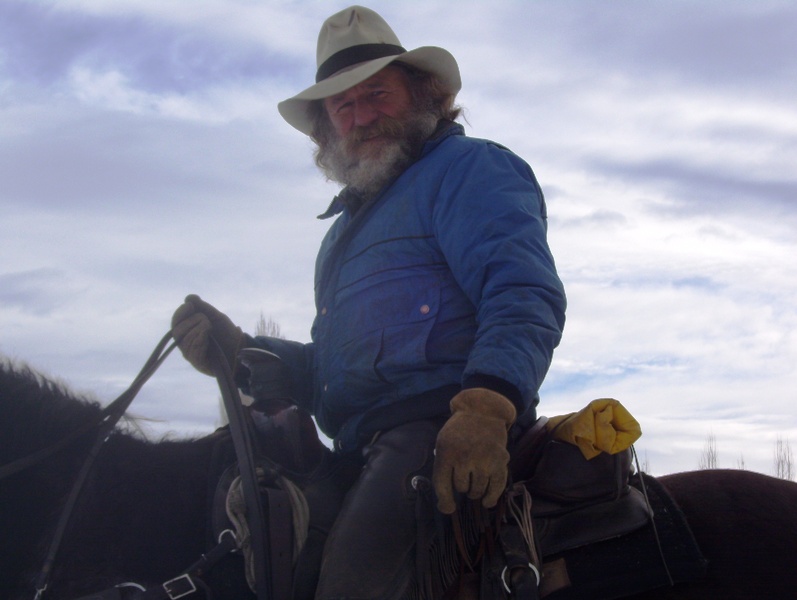
If Cowboys Had Wept . . .

During the first months after the death of my life mate—my soul mate—I sometimes felt I wasn’t handing my grief well. I cried around others at the beginning (couldn’t talk about his death without tears streaming down my face) but later I did my grieving in private. Only I (and my blog readers) knew what I was doing to assuage my grief, so why would I think I wasn’t handling it well? Because I was weeping and wailing. In our present culture, tears are a sign of weakness, but who decided that weeping and wailing are inappropriate ways of relieving the incredible stress, pain, and angst of losing a long time mate? Such releases are necessary. Otherwise, where does the pain go? It either stays inside to cause emotional and physical damage, or it gets relieved by truly inappropriate behavior such as illicit drugs or misplaced anger.

Through thousands of movies and books, we are taught to be stoic, to hold back our tears, to be cool. Yul Brynner in The Magnificent Seven was the epitome of western cool, gliding across the film’s landscape without a single show of emotion. Cinematic heroes such as he could relieve their tensions and emotions through shooting rampages, hard liquor, and harder women. Perhaps, if these men had wept, the west (at least the mythological west) would have been a more genteel place.

Many people, when hit with the maelstrom of emotions we call grief, feel as if they are going crazy. Oddly, I didn’t, even though some of my actions and reactions would have made me a suitable candidate for a fictional madwoman. (Makes me wonder. Were those women hidden away in attics and tower rooms really crazy, or were they simply grief-stricken?) I knew I was sane, knew I was well adjusted, so any emotions I felt or things I did to comfort myself, by definition, were normal. Not having to worry about being crazy enabled me to deal with the pain itself rather than my reaction to it.

Like most people, I am afraid of pain, so I do not know where I got the courage to embrace the agony of losing my mate, to face it head on, arms open wide. But I did, and I still do. I don’t cry where anyone can see me, mostly because my tears are private but also because I don’t want to make people feel bad since there is nothing they can do about my sorrow.

And that, perhaps, is the real reason for tears being frowned on in our culture. We don’t want to be confronted with the outward show of someone’s grief because it forces us to confront our own weakness in the face of life’s (and death’s) enormity.

Post-Traumatic Tress Syndrome

During the two years before my life mate died, my naturally wavy hair became wiry and lost its curl. As a person ages and goes gray, the characteristics of one’s hair changes, so I figured this was an age-related problem. It was a small problem considering everything else going on in my life, so I let my hair grow, wore it tied back, and forgot about it.

A few months after he died, I cut my hair, and was shocked by the further deterioration. It was so wiry and straight, it stood out from my head like a bush. Yikes. This was back when I was writing letters to my dead mate to help me get through the days, and I wrote:

With so much emotion and pain and sorrow and missing you and trying to reconcile your being gone with the memories of you still filling my head, what am I worried about today? My hair. Just like you said would happen as I got older, it’s turning to straw. Straight as can be. I always looked terrible with long hair, but what other choice do I have? It won’t hold a curl—just sticks out in all directions. I wonder what other people do? Oddly enough, I can find people to talk with about the big things but not the small everyday things that worry me.

About a month later, I noticed a bit of a crinkle at my hairline, and I realized my hair was starting to grow again (it hadn’t grown much for a while) and that it was growing in normal. My diet now is atrocious. I have a hard time convincing myself discipline is a good thing, and I feel as if I should be treating myself. But until recently, I always ate healthily. Lots of vegetables, good protein, whole grains. The reason I mention this is that a bad diet can damage hair, but that wasn’t the cause in my case. Nor did a diet change affect the change for the better.

For a while I had question mark hair—wavy toward the scalp, straight as can be on the ends—but a few weeks ago it was long enough that I could cut off the rest of the damaged bits. That’s when I realized my hair change came not from aging but from . . . Post-Traumatic Tress Syndrome.

Grief is exceedingly stressful, and stress affects our tresses. Most often, people undergoing stress begin to lose their hair or go through a period when it stops growing, but apparently stress can also damage the cuticle (the outer layer of the hair shaft). Just another fun thing to have to deal with when so much else is going wrong in one’s life. I’m far enough along in the grief process that I’m done with hair problems for now, at least until my bad diet catches up with me!

I Thought I Was Through With Grief, But Grief Wasn’t Through With Me

I’d planned to stop writing about grief. Someone I respect said, “There comes a time when it’s healthy for one to move on and drop the grief banner. It comes at different times for different people and it is an important part of the healing process.” I thought I was at that point. I’ve been getting on with my life, living each day as it comes, dealing with the loneliness, seeing the whole of our shared life rather than the terrible end.

For the most part, we had a good relationship. We were friends, life mates, and business partners. We helped each other grow. We never expected the other to fix our individual problems, though we often took each other’s advice. We didn’t cling, demand, or base our relationship on unrealistic expectations. Together we provided a safe environment where each of us could be ourselves. We supported each other in any way we could. And we enjoyed being together.

Long-term illness, however, skews a relationship. Over the years, our world kept getting smaller and smaller, trapping us in a life where neither his needs nor mine were being met. In that constricted world, small betrayals loomed large. Small disagreements seemed insurmountable. And there was guilt galore. After he died, I worked through all of those leftover problems, came to a greater understanding of our relationship and what his ill health had done to us, and finally realized we both acted the only way we could in such an untenable situation. I also dealt with the soul searing pain of loss, with the confusing physical symptoms. (Like falling in love, falling in grief causes changes in hormones and brain chemistry, and creates incredible stress, but unlike love, you can’t regulate those changes with sex. Unless you’re into necrophilia.)

I thought I was through with grief, but grief wasn’t through with me. There was no great realization, no lightning bolt of discovery, just the truth settling into my soul: I’ll never see him again in this lifetime.

Seems an obvious conclusion, doesn’t it? I’ve been saying for fifteen months that he’s gone, though I always accompanied the statement with a bewildered remark about not being able to fathom the sheer goneness of him. And yet somehow, someway, in the dark recesses of my mind, I felt as if we were on a break, as if I’d come to take care of my father for a while, just as I did for my mother, and soon I’d be going back to our life. It didn’t help that, when I drove away from our home for the last time, his car was sitting out in front as it always did when I left. (I’d donated it to hospice, and they hadn’t yet come to pick it up.) Nor did it help that I’d made this same trip, stayed in this same room several times before.

I’ve often listened for the phone, hoping he’d call to ask me to come home as he’d once done, but now I know the truth, I feel it.

Eleven months ago I wrote: I dread the time it hits me deep down in my soul that he is dead, that I will never be going home to him, that I will never see him again. Well, this is that time. There are no more issues to work through, guilt to suffer, or blame to lay. No more feelings of being rejected or abandoned (as if it were his choice to leave me). There is no more stress or gut-wrenching pain. Just pure and simple heartbreak. And silent tears.

Grief Group Update

In my last post, I told you that I got kicked out of my grief support group. The facilitator cancelled the meeting this week to give us time to “self-evaluate.” If we are functioning in the normal world, we are not to return. Since we didn’t want to leave the newest member of the group without support at this critical time, we went on a picnic during the regular meeting time. Chances are, if the facilitator hadn’t said anything, several of us would have left the group in the next couple of months anyway, but this whole situation has brought us closer together. Like disaster survivors.

We’re all going to the scheduled meeting next week. (What’s he going to do? Give us grief? That doesn’t scare us. We’ve been there.) We want to find out the truth, whether the directive was instigated by hospice, by the facilitator himself, or in response to a complaint. And then we’ll see what happens.

Perhaps I have stayed with the group longer than absolutely necessary, but even if I’m just there to be around those who understand, what’s wrong with that? My grief is dissipating, (though I am troubled by an upsurge in tears the past three weeks).  Mostly I feel like I’m disappearing from life. Don’t feel quite real.

The truth is, I’m functioning well in the normal world (except for the small matter of being unable to write). It’s the abnormal world of grief I have problems with.

I Got Kicked Out Of My Grief Support Group

I got kicked out of my grief support group. During the last meeting, the facilitator told us there was going to be a big influx of new people to the group, though why there would be an influx and how he knew this, he didn’t say. What he did say was that if we were able to function, if we were able to go about our daily activities, we were supposed to leave the group. He also said the group was too social, but isn’t that the purpose of a group? To support each other? We did talk before and after the meeting, but during the meeting, we stuck to the subject — grief — which was why we were all there. It was the only place we could continue sharing our sad tales and talk about what we were feeling. The rest of the world has passed on, leaving us alone with our emptiness and our tears.

In order to break up the group, the facilitator said he was going to cancel meetings for a month so we could evaluate ourselves, and then if we really, really, really needed the group, we could return. This stunned the heck out of me. Because he thought some people had overstayed their welcome, he was going to leave the newly bereft without any support for a month!! With Father’s Day almost here? He finally agreed to cancel only a single meeting, but still, the whole concept is appalling.

Apparently, a group in another town turned into a social gathering, and to change the focus, that group was cancelled for a month. Only two people returned after the meetings resumed, and the facilitators congratulated themselves on a job well done. But no one checked to see why the others didn’t come back. Perhaps, like me, they felt betrayed. A place that was supposed to be safe suddenly became dangerous. Sure, I could go back, but I’d never be able to open up again. I’d always be wondering if I was being judged, if I wasn’t going through grief fast enough to suit the facilitator, if I were depriving some other poor soul of a say, if I were being too social or too articulate. (Apparently, my ability to talk articulately about grief is a drawback. Though why, I don’t know. Just because I can put into words what others feel does not mean I’m not feeling grief myself.)

The facilitator kept saying, “This is hard for me.” He never even looked at the shocked faces of the group participants, just kept saying how hard it was for him. Who cares how hard it was for him? He shouldn’t have said anything in the first place. (I’m not supposed to talk about what goes on in the group, but since I am no longer a participant, I can say what I want. Besides, it was more my group than his. I understood what people were going through. He didn’t. How could he? He still has his spouse. Until you’ve lost a long-time mate, you cannot know, cannot comprehend the vast physical, emotional, intellectual, spiritual changes such a death brings to one’s life.)

We were originally told we could keep attending meetings as long as we needed. In fact, Medicare demands that hospice provide bereavement counseling for a minimum of thirteen months. Nowhere in that regulation does it say grievers are prohibited from attending if they could function in the world. Besides, if we couldn’t function, we never would have been able to attend in the first place.

I’d stopped going to the bereavement group for a while, then returned to help support a friend through the worst of her grief, but it’s come full circle and I need the group for me again. I was okay for the first two months after the anniversary of my life mate’s death, but the truth — that he is irrevocably gone — has seeped into the depths of my being, and I am feeling heartbroken. I need to be with those who understand this upsurge in grief. Who don’t mind my tears. Who know that the calendar means nothing when it comes to grief. Who realize that yes, the newly bereft need support, but so do those who are further along.

A Great Love Story

I’m working on my grief book, typing up my grief journal entries. I thought this would be a book about grief, but it seems more like a love story, which is so very ironic. Soon after I met my life mate — my soul mate — I quit my job to write. I wanted to tell the story of a great love that transcended time and physical bonds, told with wisdom and beauty. I sat down to write, and  . . . nothing. Back then, I thought all one had to do to write was to sit down, pen in hand, and let the words flow. Well the words didn’t flow. So I put off my dream of being a writer and went about the business of living. Years later, while going about the business of dying (his dying) I started writing again just to get out of my head, to get a respite from my life. I eventually learned how to write, but I always wrote slowly . . . until I started a grief journal and posthumous letters to my mate. Those flowed. And now it turns out that this grief book could be that love story I always wanted to tell. Life sure plays games with us!

Several people have told me they envied me my great love, but I’ve hesitated to tell the truth: it didn’t feel like love. We never had much of a romance. After a few brief years of hope and happiness, our love was sublimated by the constraints of his growing ill-health. It seemed that our cosmic love devolved into the prosaic things of life: cooking meals, doing errands, struggling to keep our retail business alive. And then it devolved further into simply surviving. Getting through the days as best as we could. We thought we’d stopped loving each other. We thought we were ready for the coming separation — he to death, me to life alone.

His hospice nurse, who got to know us both very well, told me she didn’t think he and I knew how much we loved each other. And apparently that was true. That mystifies me — how could we not  have known? We always knew we had a deep connection, though we never understood it and at times we both railed against it in our struggle to maintain our own identities, but we took that connection for granted. And what is that connection if not love?

In my foolish youth, I thought I’d still be able to feel his presence when he was dead, but I only feel his absence, and maybe that’s enough to remind me that love is not all hearts and flowers and passion. It is not what you feel. It is what you do. It is being there for each other. And, until the very end, we always were.

Driving My Grief

It might seem as if I am making zero progress or even backsliding with this upsurge in grief blogs, but writing my book on grief is bringing it back.

Do you want to know the sum total of all I have learned in the fourteen months and fourteen days since my life mate died? Here it is: you can get through grief. You can learn to live without him. You can find happiness again by living one day at a time. But the dead are still dead, and nothing you do can ever change that.

That is what drives my grief. Not the self-pity that sometimes breaks through my wall of courage, not the sustained note of sadness that keens beneath my consciousness, but the awareness that he is gone. He no longer cares that he suffered for years with an ailment the doctors couldn’t diagnose until it was too late. He no longer cares that he will never again watch any of his favorite movies or read a book. He no longer cares that he will never go on another road trip. He no longer cares that he will never again walk or talk or eat or smile. But I care.

Perhaps it is foolish of me still to care for and about someone who is beyond caring, but I cared immensely for him while he was alive, so why would I stop now that he is dead? He may no longer have feelings, but I do. Once he was alive and now he is not. Why shouldn’t I care about that?

There are many books on the market about how to get through grief quickly, how to get your life back on track, how to put the dead out of your head and take what you can from life. I know there is an element of self-pity when it comes to grief, and those books address that issue. But self-pity is not all there is to grief. Grief is a vast network of emotional, spiritual, and physical reactions, and part of that is sorrow on behalf of the one who died.

If grief is just about me (and perhaps someday I’ll get to the point where it is only about me), then it’s not my place to care about my life mate being gone from this earth. But if life is worth living, how can I not care that it is being denied him?

The corollary is, if he is the one who got the better end of the deal, if he truly is in a better place, then why am I still here? But I’d just as soon not dwell on that.

Surviving a New Stage of Grief

I’ve been working on my grief book, typing what I wrote immediately after the death of my soul mate. Suddenly it seems as if the past sixty-two weeks have melted into oblivion and I’m back there again, newly bereft, wandering in a fog of pain, wondering how to cope with the massive changes in my life. I know I have come a long way because the revisited pain seems bewildering to me. Did I really feel all that? Did I really survive such a terrible time? Apparently I did, because here I am, mostly back to normal. I’m still lonely, though, and the loneliness surges unbearably at times.

Loneliness is the newest stage of my grief, as it is for so many who are coming out of the first numbing months of grief. I don’t know how to cope with this vast loneliness, but I didn’t know how to cope with any of the other stages of grief, either. I just embraced the pain, the anger, the sorrow, and waited for a gentler time. So that’s what I will do with the loneliness. Embrace it and wait for it to subside. Waiting is not all I’ve been doing, though. I’ve been making an effort to be with people, which helps, and so does writing. I’d forgotten how quickly the hours go when one is immersed in words.

I still wonder if anyone will want to read this grief book when it is published. It is so intensely personal. And painful. Yet people who have read my blog posts about grief have found some comfort in them, so perhaps this book will serve the same function. Even if no one is interested in reading my daily struggles to come to terms with the death of my mate of thirty-four years, the book is important to me. It’s a way of binding my grief into a neat bundle so I can get on with my life, though I have been told one never truly gets over such a loss. But we do survive, and that is ultimately what my book is about — surviving grief.

I Am a Fourteen-Month Grief Survivor

Fourteen months sounds like a long time, doesn’t it? Plenty of time to get over the death of one’s lifemate/soulmate/best friend. And yet, those who have been where I am today know you don’t ever truly get over it. You deal with it, you get on with your life, but there is always that niggling feeling of something being not quite right.

I still feel bad for him that he’s gone, that he suffered so much, that he died too young, that he is no longer here to enjoy something as simple as eating a bowl of his chili. (Though the batch I made today in his honor wasn’t worth coming back from the dead for. The kidney beans were overcooked, the onions undercooked.)

I still feel sad for me, that I’ll never get to see him again in this lifetime, that we’ll never get to do all the things we planned, that his smile exists only in my memory, that I’m alone. I’m glad we had all those years together, but that doesn’t ease the loneliness he left behind. It is odd, but for some reason I never expected to be lonely. I’m used to spending time alone, I know how to entertain myself, and I’m quite capable of taking care of myself (though the thought of growing old alone makes me panic at times). I also have more friends now than I’ve had in many years. But still, I’m lonely — lonely for him specifically, and lonely in general. Perhaps my loneliness is another stage of grief rather than a character flaw. Perhaps someday it, too, will pass, as have other manifestations of my grief.

One stage of grief I am clinging to is anger. Not rage, just a quiet pilot light of anger. I accept that he is dead in the sense that I know he will never be coming back (though I still long desperately to go home to him, still yearn to see him one more time). But I cannot accept the rightness of his death. It seems so terribly wrong that death was the only resolution of his illness, the only solution to his pain. And that does anger me. Anger is generally considered to be a negative emotion, but during the past few months I’ve found that in small doses, anger is a positive thing. Anger can give us the strength to survive. Anger can give us the energy to do things we couldn’t do under normal circumstances. Anger can give us a feeling of control in uncertain times. Anger can keep us going when we want to give up. Anger can give us the courage to live with the injustice of death. Anger can motivate us to find solutions to problems, can motivate us to undertake dreaded tasks, can motivate us to change our lives. So, yes, I’m clinging to whatever vestige of anger I can. It’s the only way I can get through these lonely days.

I am now more aware of the years looming in front of me than the years behind me, those years we shared. I’ve been saying that I don’t know who I am now that he’s gone, but I do — I’m still me. Still the person I’ve always been, just older and sadder. I’ve mostly untwinned our lives, no longer see me as half of a couple. And yet, something is missing. I don’t cry much any more, but sometimes I find myself crying for . . . I don’t know what.

It’s a relief to be telling the truth. I’ve been keeping upbeat the past few weeks — preparing for my presentation at the writers’ conference, traveling, being around people who only know me as an author, posting photos of my adventures. It was wonderful, but it’s only half my story. The adventure ended, and now here I here I am. Fourteen months of missing him, and still counting.