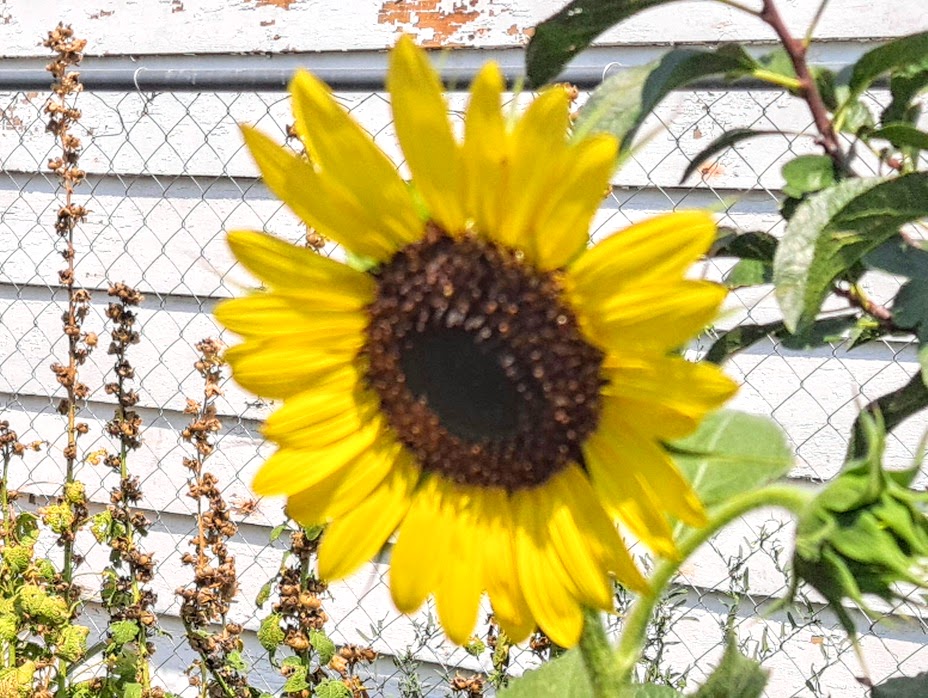
My Ideal Life

Daily writing prompt
If you had to describe your ideal life, what would it look like?

If I had to describe my ideal life today, it would actually look like my life today, but that description has changed over the years.

If I had to describe my ideal life when I was a child, it would have been no chores and time to read all I wanted. And dessert after every meal.

If I had to describe my ideal life when I was a young adult, it would probably have been a job I loved that paid me a ton of money so that I could save enough to quit my job and read all I want. And yes, dessert after dinner.

In my middle years, my ideal life would have been how things were when Jeff was doing well — playing games together, working together, and making enough to get by. Ideally, we would have made enough not to have had to worry about neither of us working when he wasn’t doing well. Still, during those intervals, I had plenty of time to read, though not always money for dessert every evening.

Now, that I have grown up (actually more than grown up — I’ve almost grown to the stage of spoilage), and now that I have realigned my life after losing Jeff, my parents and my older brother, I can’t imagine any life other than the one I have. And rightly so. For me, it’s . . . ideal. Truly.

For example, this morning, after my stretching exercises, I went outside and mowed the lawn. I talked to one neighbor who crossed the street to chat, saw another neighbor out walking, and she stopped to chat. I watered the petunias I’d purchased yesterday morning and planted yesterday afternoon, then wandered around my yard, marveling at being able to live in such a fairytale environment.

Admittedly, the yard does take work, but right now, it’s easy enough to make the effort. Besides, the work I did today wasn’t work so much as an excuse to be outside in the clement weather, especially after the past two days of inclement weather.

Although I have time to read, I’ve run out of books I want to read, have no interest in scouring the shelves of the local library for more books I have no interest in reading, so I’ve been rereading the few books in my own library. And that dessert after every meal? I could have it of course, but then there’s the issue of my being smart enough not to indulge. But those “ideals” were left over from my childhood, so doing without isn’t an issue. Other things take their place. Blogging. Solving pencil puzzles. Painting by number. Gardening. Sometimes even visits with friends, whether impromptu or planned.

Best of all, I know that this is an ideal life. Since I’m in the aforementioned state of spoilage, I have no idea how long this particular phase of my life will last, though I tend to think that whatever happens, since I’m in the habit of being grateful for whatever life I have, I’ll find that an ideal life, too. Eventually, anyway. And if not, well, that life is in the future, and the future is up for grabs.

But I do know what today is like since I’m living it, and for me, it is the ideal life.

***

Pat Bertram is the author of Grief: The Inside Story – A Guide to Surviving the Loss of a Loved One
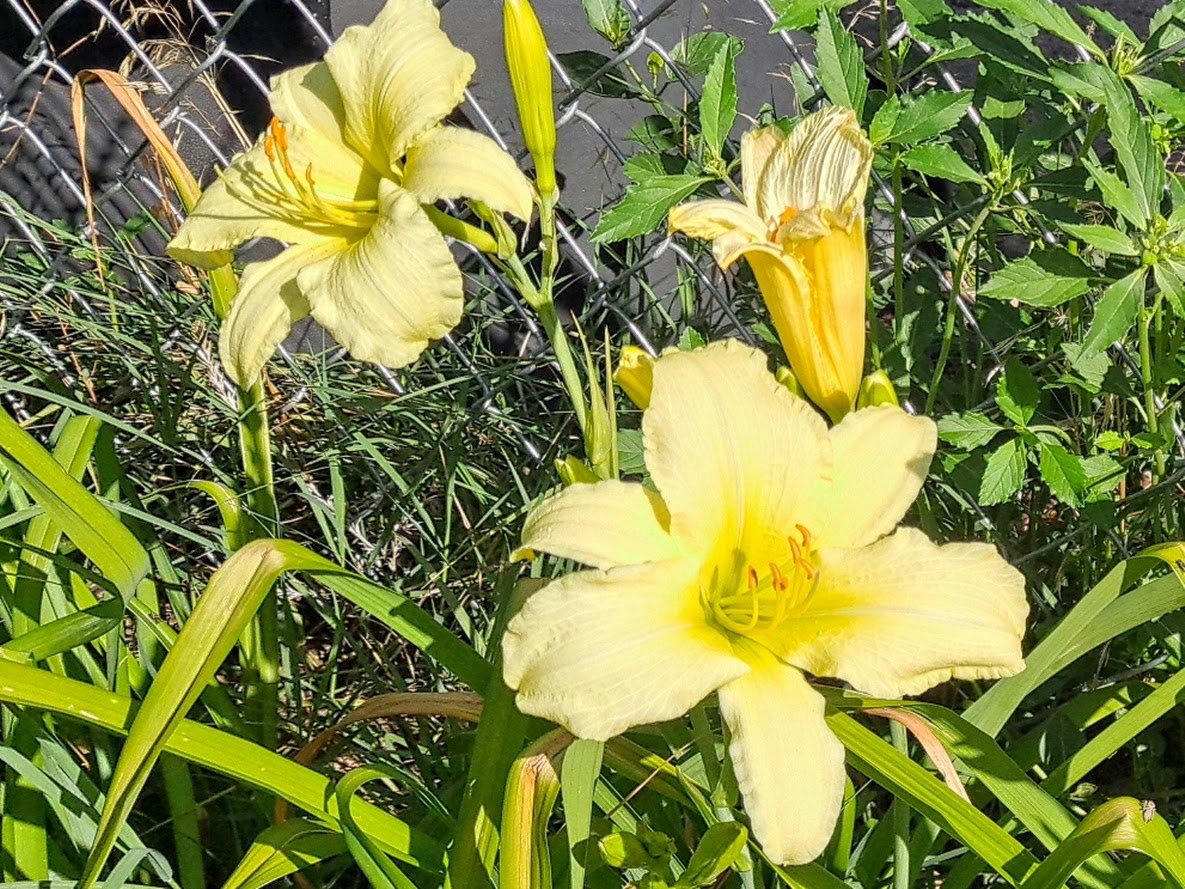
Ordinariness as a Super Power

Daily writing prompt
What super power do you wish you had and why?

When I was young, I thought mental super powers, such as telepathy and telekinesis, as well as the ability to see ghosts, were a sign of an advanced spirituality, that people who had such abilities vibrated at a higher frequency than normal. I found it disappointing that I was merely normal, not supranormal, just one of the masses. Nothing extraordinary.

Now I find comfort in that ordinariness. I’m glad I can’t read people’s thoughts, even more glad that they can’t read mine. To tell the truth, for the most part, I don’t even want to be privy to my own thoughts, which is why I try to focus on the moment and not let my thoughts overwhelm me. Besides, who needs telepathy when there is writing — seeing a few words or writing a few words exchanges thoughts from one person to another in a quite orderly and controlled manner. And conversation, of course. That’s an even more ordinary way of learning someone’s thoughts.

The telekinesis I exhibit is the ability to get up and get what I want, which is pretty remarkable, when you think of it. As for ghosts . . . no. Just no. My sister says she saw a ghost in my house, and if that old lady ghost lives here, at least she isn’t bothersome. I like being alone in my own space.

Although I sometimes think it would be great having the ability to manipulate the earth’s energy as do the power-wielders in The Wheel of Time books, I don’t see how that would add to my life. When I am reading those books, I can almost see the veneer of the world parting to allow me to step from one place to another, but there’s really no place I want to be other than where I am.

Unless a person is living in a comic strip or a magical novel, most super powers seem superfluous. Being able to fly, become invisible, shapeshift, time travel, control people’s minds, manipulate the weather, use elements such as fire and metal and water, foretell the future, live forever — it all seems too much of a good thing. I wouldn’t want to be burdened with any of it.

I tend to think my super power, if there is such a thing, is my ordinariness. Now that I am not young enough to want to be special, I would choose to be ordinary even it wasn’t already within my grasp. Because truly, ordinariness is a super power. At least, it is for me.

I can be . . . me. I don’t need to be someone other than what I am. Don’t need to grasp for specialness. Don’t need to compare myself to others. Don’t need to reach beyond what I have. Being ordinary and accepting my ordinariness allows me to embrace the special joys that come from simple pleasures, allows me to look beyond myself and engage in meaningful moments with others. Admittedly, ordinariness isn’t the sort of super power that creates comic book characters, but it’s the sort of power that allows a person to live a life of peace.

***

Pat Bertram is the author of Grief: The Inside Story – A Guide to Surviving the Loss of a Loved One
Family Mysteries

Daily writing prompt
What’s a mystery from your own life that you’ve never solved?

I’ve always loved stories about family mysteries and secrets. It’s such a delicious feeling reading about people discovering that what they thought they knew, they didn’t. That their reality was in truth something completely different.

If there are any secrets in my family, they are just that — secret — since I have never heard of any. There are a couple of interesting family stories, though, with maybe a bit of mystery attached.

According to family lore, our family comes by its insanity naturally — we inherited it. My great-grandfather was a scientist and inventor. He worked with Edison and other renowned scientists of the day, perhaps even Tesla. He invented the postmarking machine and foolishly sold the patent to get funds to invent a subway sweeper that never caught on. The people who supposedly did him a favor by buying the patent, became very rich because that postmarking machine was used continuously until the digital age made it obsolete. This otherwise intelligent man had been married twice. One wife he threw down the stairs. The other he consigned to the Lunatic Asylum on Blackwell’s Island.

No one knows which of my great-grandfather’s wives is my great-grandmother (and therein lies whatever mystery this story contains), but even if she weren’t the one committed (especially since there’s a chance he had her committed for his own reasons rather than her mental state), the insanity could come from dear old great-grandfather himself because there does seem to be a portion of insanity in incarcerating one woman and tossing another down the stairs.

Whatever genius he had wasn’t passed on to me, which is just as well. Too many geniuses seem to be unbalanced, and I much prefer the balance I’ve managed to find in my life.

There is another story that I think about — my mother’s brother ran away in his teens. He couldn’t handle school, was considered slow, but who knows the truth of that. Back then they didn’t have names like dyslexic, and ADHD, and whatever else they call kids who have a hard time in school. This uncle completely disappeared. No one in the family ever heard from him again. A couple of decades ago, the church in the small town where my mother and her siblings were raised got a request from a family in Florida for his birth certificate so they could arrange his funeral. Wait — does that make sense? Why would they need a birth certificate? Anyway, for whatever reason, the family contacted the church, and that’s when his siblings found out he’d been living with this family as a caretaker, jack-of-all trades, and adopted grandfather. I have no idea when or how he met up with this family. I don’t know what he’d been doing after he ran away. I never even knew he existed, frankly. But it does make me happy that this boy who ran away because he didn’t fit found a place where he did fit.

No much as secrets go, but there it is. My family life laid bare.

Eccentric scientist with wild hair and glasses holding a flask with green and purple liquid in a cluttered lab with sparks and chemical equipment

***

Pat Bertram is the author of Grief: The Inside Story – A Guide to Surviving the Loss of a Loved One
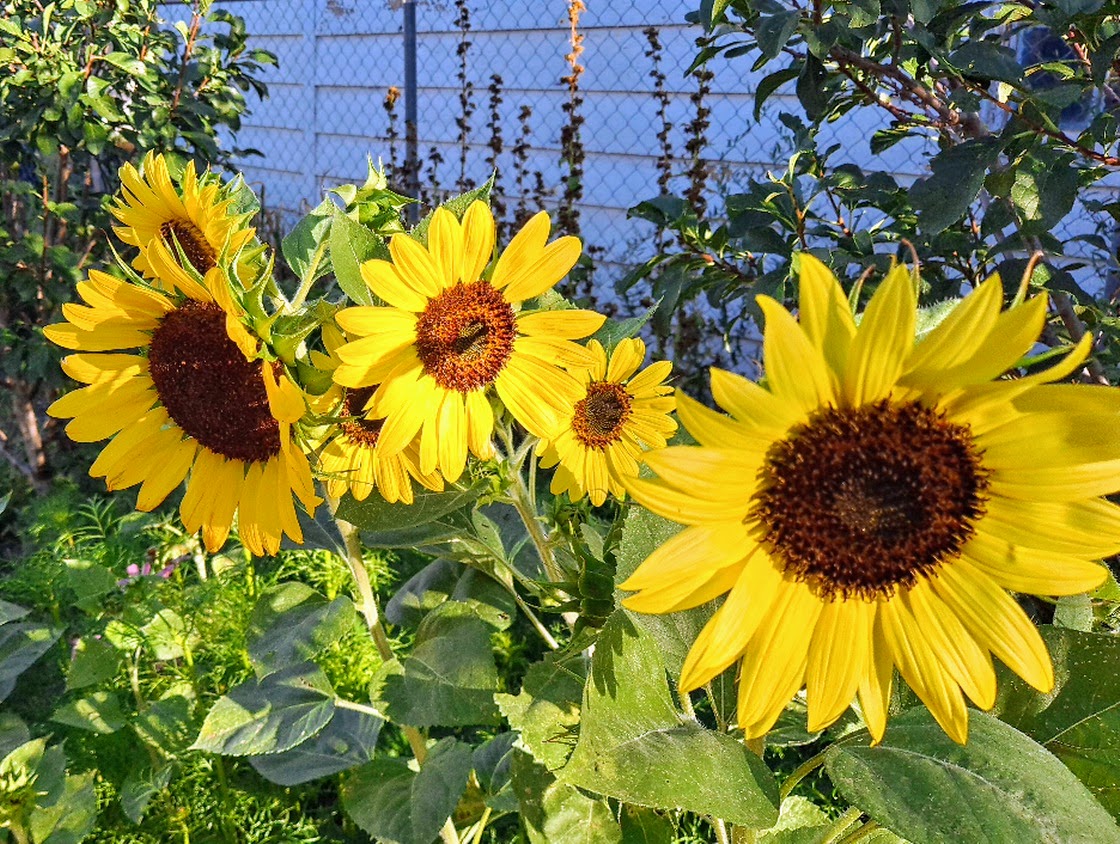
Frozen Moment

Daily writing prompt
What’s a moment you wish you could freeze and live in forever?

What’s a moment you wish you could freeze and live in forever? What a question! There’s nothing I like enough to see or feel or taste or experience forever. Sounds like a hell to me.

It makes me wonder, though — if we were locked into a single moment, would we even notice? I mean, when you think about it, we live in our minds, in our memories. The only thing that distinguishes one moment from another is the memory of what has gone before and the forward memory of what will come after (because except in rare cases of accidents and instantaneous body breakdowns, we can almost be assured that the moment after this one will be almost identical to this one). Without a memory of the past and without a forward “memory” of what is to come, the isolated moment we’d live in might as well be frozen forever because we wouldn’t know the difference.

It is interesting to think how the moment preceding this one and the moment following are almost identical except perhaps for an indiscernible change, and yet those indiscernible changes add up to be significant changes over time.

If I were to expand the question from a moment to longer period of time that I absolutely had to freeze and live in forever, I imagine a couple of mornings ago before winter returned would be as good as any. It was perfect weather: not too warm, not too cool, no wind. The flowers were blooming cheerily, the greenery jewel bright. I was feeling good — no aches or pains — and able to bend to pick weeds without any trouble. The neighborhood was quiet, no loud noises — just the crunch of gravel beneath my feet and the sound of an indrawn breath or two when I did too much weed-pulling. I was living totally in the moment — or rather, in that series of moments — with no thoughts of anything but me in my garden. Me as part of the garden.

Sounds lovely, doesn’t it? Always to be pain-free, always in perfect weather, never hungry or thirsty.

But even perfection palls. I could have been outside longer than I was, but I got thirsty, tired, even (dare I say it?) bored.

Of course, in that frozen forever time, none of those hampering sensations would have happened, but still, stasis is never a desirable objective. We are dynamic beings, always on the move, even if we are frozen in place. The earth hurtles around the sun at 67,000 mph. The sun hurtles around the galaxy at 140 miles per second. The entire universe is also moving and expanding, so from one second to the next we are in a completely different place with a possibility of different factors.

And so things change, will I, nill I.

Still, I do have to admit, that was a lovely morning, frozen in memory if not in time.

***

Pat Bertram is the author of Grief: The Inside Story – A Guide to Surviving the Loss of a Loved One
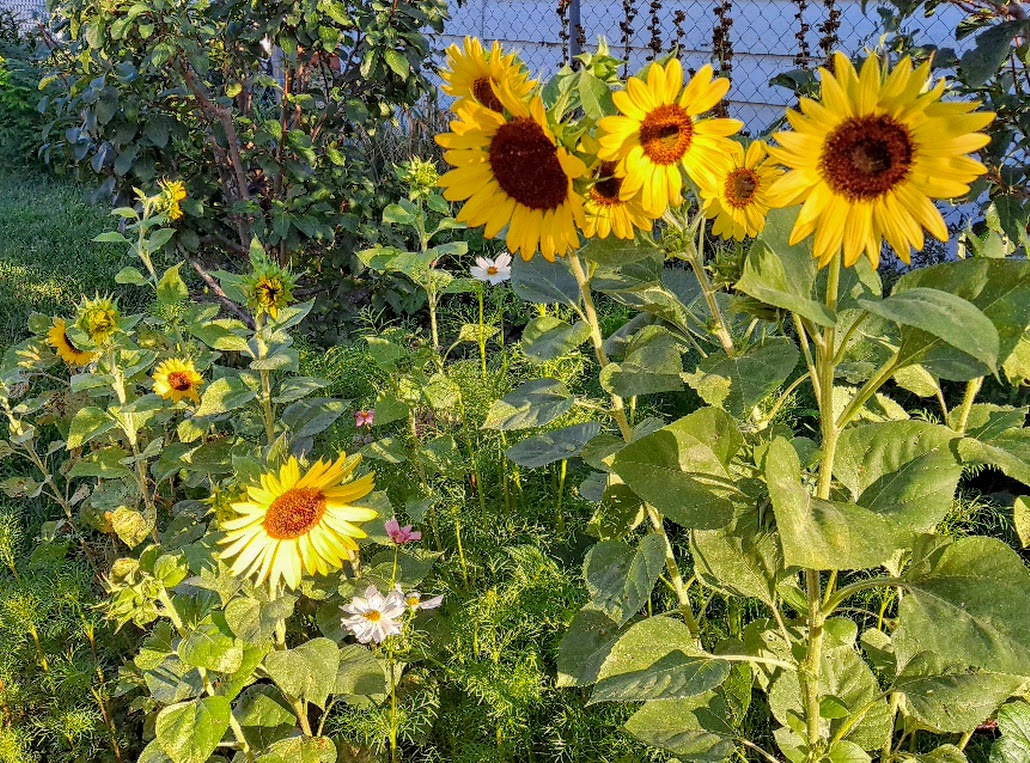
Garden Stroll Part Two

I’ve been posting more this year about what’s growing in my yard because . . . well, because this year there’s more growing in my yard. So, come stroll with me, and I’ll show you some of what is giving me so much pleasure.

In the very middle of the above photo, is a pretty blend of colors — pink ice plant, blue flax, orange wallflower. And lots of green!

Come summer, these plants will bloom with purple magus echinacea, yellow coreopsis, daisies, and cottage pinks, but for now, I’m enjoying those healthy-looking plants.

In the middle far left of that same top photo, is a splash of pink ice plant. The picture doesn’t do it justice — as you can see, the ice plant forms a solid mat of gorgeous blooms. (All of that from two plants I bought a few years ago!)

Behind me, as I’m standing taking these photos, is my hens and chicks garden.

It’s hard to see the detail because some of the plants seem to blend with the ground, but as you can (maybe) see, there are three colors of succulent: purple, bright green, and dull green. The entire garden of hen and chicks came from five dull green plants, two bright green and one purple.

One of the many miracles of gardening is how you can get many plants from one.

Yesterday, I’d planned to get the petunias and other plants I need for my containers and to fill out empty spots in the garden areas, but there’s a chance for a freeze in the next few days, so I’m playing it safe. But still, there’s plenty to show off on this garden stroll. Thank you for walking with me!

***

Pat Bertram is the author of Grief: The Inside Story – A Guide to Surviving the Loss of a Loved One
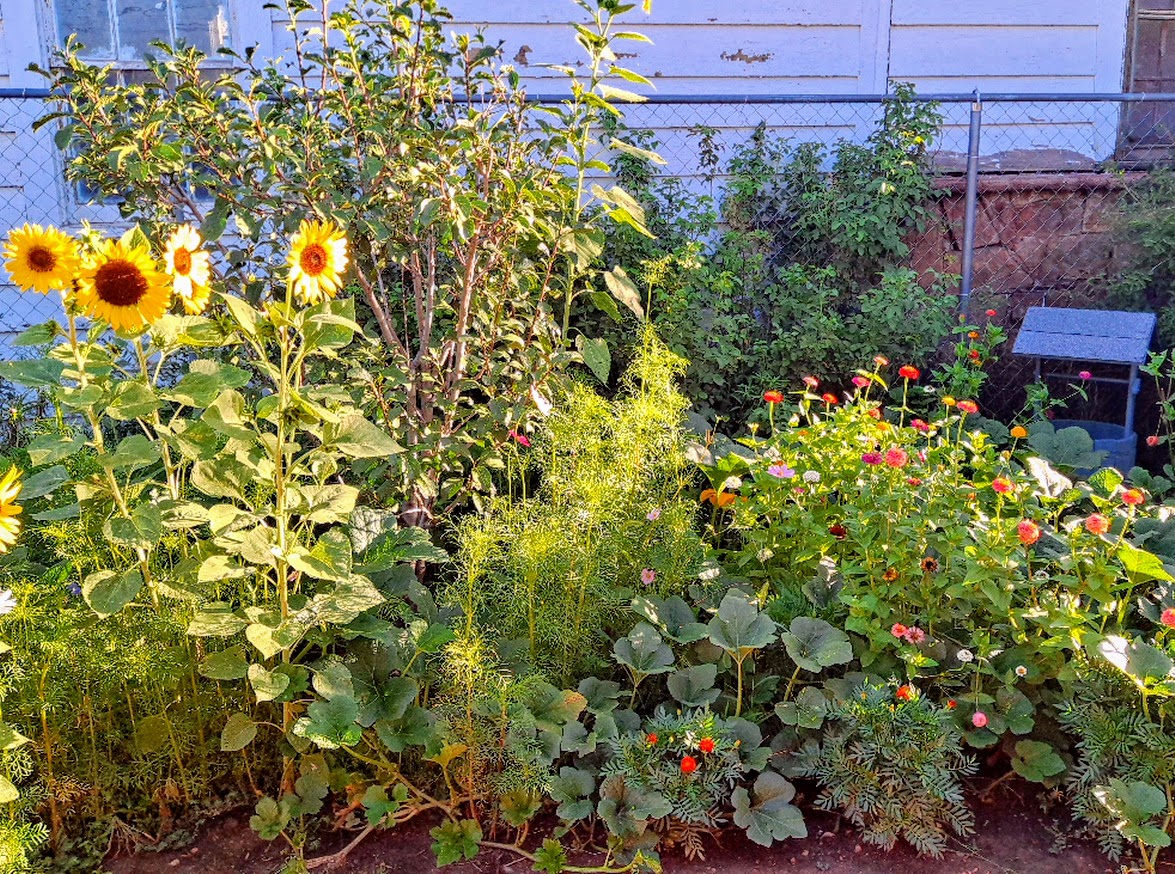
 

Garden Stroll

With so much the contention in the world right now, we all need a little peace in our lives, so come stroll with me and I’ll show you my garden. That garden, in itself, brings peace — at least to me — so I’m especially lucky that things are growing well this year.

Walk down the path, almost to the garage, you will find this lovely pastoral scene hiding behind the greenery.

I have no idea why the garden is so lovely this year. Winter was warmer but also drier, so those two conditions should have cancelled each other out, but instead, what I have is a lush springtime yard.

The larkspur, seen along the fence in the two top photos, are growing well, though that’s not a surprise. Larkspur does exceptionally well in this climate, and always I am glad to see the frilly foliage. More than even a robin, larkspur herald spring. It’s interesting that although I started out with only purple larkspur, each year, more colors bloom.

In the forefront of the pastoral photo (second from the top) is a yellow columbine. Oddly, there are also white columbines on that same plant. But that’s no problem. Any columbine is welcome!

Truly, the columbines are prolific and gorgeous this year. The orange wallflowers in the background of the following photo are hanging around longer than they normally do, which is a thrill for me because that sunrise color sure brightens the day!

I could post more photos, but I don’t want to overwhelm anyone (or tire you out with such a strenuous walk), so I’ll continue this garden stroll tomorrow.

***

Pat Bertram is the author of Grief: The Inside Story – A Guide to Surviving the Loss of a Loved One
 

No Doubts

Truth is hard to come by these days because no one has any doubts. No matter the side people are on, if there are sides, they all believe absolutely that they’re right.

What happened to doubts, to thinking that “Yes, ‘A’ seems right but maybe ‘B’ has points, too”? The trouble with people not having any doubts, who believe unquestionably in the rightness of their stance, is that they never seem to take into consideration things like trade-offs. A measles vaccine saves lives, but it also destroys some lives. There is a whole lot of doubt in the discussion, but you never see it, just utter “knowing” on both sides.

It’s not just online — that absence of doubt — but also conversations in person. It’s hard to converse with people who have no doubts, who know what they know and have no interest in knowing anything else.

I don’t think there’s anything that’s so true — so doubtless — that it’s set in stone. Not even the pyramids, talking of stone. The research I did years ago makes me think the pyramids are not tombs. The later ones, perhaps, were created as tombs, after people lost the reason for the pyramids, but originally they seem to have been a means of pulling energy directly from the earth, a lost art that Nicola Tesla tried to recreate with his various experiments, including the Colorado Springs wireless electricity tests and his Wardenclyffe Tower. There’s a lot of talk in certain segments of the internet about such lost technologies, as well as the theory of Tartaria, an advanced civilization that supposedly was erased from human memory when the world was “reset”. Although it’s fun reading about such theories and seeing the “proof,” I don’t really believe in a reset theory, and yet other research I did years ago, on the origins of the Black Death, makes it seem as if that could have been a reset, a way of stopping an explosion of human progress.

People who believe in such things have no doubt that they are true. Those who don’t believe have no doubts that they are false.

What happened to doubting? Maybe doubt is another lost art.

A few weeks ago, some fellow left a few comments here on my blog telling me that if I’m writing for myself, I have no business publishing my articles, that writing is a service writers do for others. He is convinced of his rightness, but I have doubts. For one thing, I am not narcissistic enough to believe that everyone wants to read what I write; in which case, any writing I do has to be for me. It also seems to me that so much that is written is garbage, which is certainly no service to anyone. And it’s garbage because people are writing for others. They write the books they think people want to read, they post the memes they think people want to see, write articles they think people want to believe, and in all of that, the truth gets lost.

Oddly as it sounds, I’m beginning to think that truth can be found in the doubts. And maybe that’s where wisdom lies, too — in the doubts.

As Robert Jordan wrote: “You can never know everything, and part of what you know is always wrong. Perhaps even the most important part. A portion of wisdom lies in knowing that. A portion of courage lies in going on anyways.”

This could be why wisdom is so hard to come by nowadays — no one has any doubts. No one even seems to know there is anything to doubt about their position.

It’s possible I believe so much in the importance of doubting because I have doubts about everything. But who knows? Not me, that’s for sure!


***

Pat Bertram is the author of Grief: The Inside Story – A Guide to Surviving the Loss of a Loved One.

Puzzled About Puzzles

Now that I’m not going to the library and am only reading or rereading the books in my house, I’ve mostly exchanged my reading time for pencil puzzle-solving time. I have a foot high stack of puzzles that I bought years ago when I moved here, but then I got caught up in visiting the library because it felt like such a treat.

Well, library visits aren’t a treat anymore, and the puzzles are.

When you are working a puzzle, such as a crossword puzzle, and you come to the end of what you can do on your own, do you consider it cheating to look at the solution for hints so you can finish the puzzle? Or do you see checking the answer as part of the fun of doing puzzles? Or do you abandon the puzzle unfinished to keep from cheating? If you do consider it cheating to check the solution for an answer you have no way of figuring out, do you also consider it cheating to ask someone, to use a crossword puzzle dictionary, or to look online for the answer to the clue? Do you find yourself shying away from difficult puzzles because you can’t do them without periodically checking the answer?

Years ago, I might have considered it cheating to look at the answers, but I don’t now and haven’t for a long time. It’s all part of the game for me, a way to keep the puzzle going if I hit a wall, a way to up the challenge. If I only do puzzles that are easy enough to “win” all the time, what’s the point? And anyway, if I complete the puzzle, I don’t consider it a win as much as a chance to start a different puzzle.

I’m just curious what people think. Doing the puzzles again reminded me of a discussion I had with someone years ago. I didn’t know her, she was just responding to a blog post where I pretty much asked the same questions as I am doing here, but it shocked me when she berated me on my behavior. She was appalled that I would cheat, because even if you “cheat” when it’s just a game you’re playing against yourself, then it’s still cheating

So, I know one person’s answer!

And I know mine. To me, cheating connotes an intention to deceive, and since I’m not deceiving anyone, not even myself, doing the puzzles, however they are solved, is all just a way of passing the time. Maybe it’s even a way of exercising my mind. And perhaps I’m even learning something along the way. Besides, tossing out a puzzle just because I couldn’t finish it without a quick look to see where to go next, is a waste of money. Admittedly, I bought past-date puzzle books in bulk, so each puzzle probably cost less than a penny, but even at a penny, an unfinished puzzle is a waste.

Speaking of puzzles, I created the following puzzles in 2009 for a promotion when A Spark of Heavenly Fire was published. Instead of numbers, these Sudoku puzzles use the letters from the title of the book: A, S, P, R, K, O, F, I, E.

Have fun solving! And if you get stuck, click here to find the solution: Spark of Heavenly Fire Sudoku solution.

***

Pat Bertram is the author of Grief: The Inside Story – A Guide to Surviving the Loss of a Loved One
Queen of the May

The month of May was named after Maia, the Roman goddess of spring, nature, and growth, and was the “maiden” associated with the three stages of a woman’s life: maid, mother, matriarch/mystic. In Latin, Maia meant “greater.” Greeks also had a goddess Maia, the mother of Hermes, and is associated with motherhood. In Greek, Maia meant “mother.”

May celebrations (the Roman Maia kind) have been held for two thousand years. Well, they used to be. We don’t celebrate such things nowadays. Although dancing around a tree as part of fertility rites existed way back then, it wasn’t until the fourteenth century that Maypole dancing was first mentioned. For centuries, a pole was erected on May first, decorated with flowers and ribbon streamers, and then dancers would hold the ribbons, weave around one another, and create intricate patterns with the ribbons.

Another big part of such festivities was crowning the “Queen of the May.” The “queen,” usually a young girl dressed in white, would be crowned with flowers and then she would reign over the festivities.

A long-forgotten tradition was the passing out of May baskets — forgotten by the world, that is, and barely remembered by me. When I was young, every May first, my mother would make cupcakes for my class, add pipe cleaner handles that matched the cupcake papers and icing, and then decorate the handles with tiny flowers. Oh, they were so cute! I loved passing them out. (My brother remembers her making them for his class, and he was utterly embarrassed to bring them to school.)

Occasionally I think of making those cupcake baskets for my friends and neighbors, but it’s hard to find the right pipe cleaners, and tiny fabric flowers disappeared from the stores decades ago. I thought of decorating the cupcake itself with icing flowers, but that’s just too much work. Maybe someday, though.

Or I could go back to the traditional May basket routine of filling baskets and leaving them at people’s houses, which I used to do, but I stopped when the husband of one of my friends threw the basket out in the street because he thought it was a bomb. This was decades ago, long before people in safe neighborhoods had to worry about such things, but his actions broke my momentum, and I never did such things again.

Today, I ‘m celebrating May Day with my own pretty basket. The basket was a tennis trophy my father received in his youth when he played at Forest Hills. The ribbons were scrounged from gift wrappings, and the flowers borrowed from one of my hats.

Hey! I just remembered — I have flower wreaths! I use them as hatbands, but they were supposed to be worn separately. Maybe I’ll crown myself Queen of the May. Why not? Someone needs to celebrate this special, mostly forgotten festival. For my first duty as queen, I bestow upon you myriad wishes for a lovely day!

[Incidentally, the Mayday, Mayday distress call has nothing to do with May or Maia or Maidens or Mothers. The word was created in 1923 and comes from the French m’aider meaning “help me.”]

***

Pat Bertram is the author of Grief: The Inside Story – A Guide to Surviving the Loss of a Loved One
 

Warm Flowers for Cool Days

It’s a dark and chilly day here. Grey clouds laden with moisture hang overhead but not a single raindrop falls. This seems like the perfect time to post a few flower photos from the warm end of the spectrum. I doubt they will do anything to brighten the day outside, but they will certainly brighten my day inside where it counts.

I planted firecracker penstemon seeds three years ago, but it took two years for a few of the seeds to germinate. By the time those few seeds germinated, I’d forgotten all about them and thought they were weeds. Luckily, I realized they weren’t weeds in time to save the last plant. I didn’t know what it was until it flowered. I’m certainly glad I managed to save this last plant.

Now I’m hoping that it reseeds itself. Anything that takes hold in this climate is worth allowing to spread since so many plants that like our winters don’t like our summers and vice versa.

The snapdragons weren’t grown from seed, but they, too are a surprise because normally, although they do reseed themselves, they don’t survive the winter. And yet here they are, still a week before planting season in these parts, blooming cheerily.

Columbine, like firecracker penstemon, seem to take a couple of years to germinate, at least, this one did. It was grown from seed at the same time as the penstemon and took as long to flower.

This is an interesting columbine — not just the color, but the size. It’s about half the size of the others in my yard. Still, though small, the vibrant color gives them as much panache as their larger relatives.

I hope these flowers have brightened your day. They sure did brighten mine!

***

Pat Bertram is the author of Grief: The Inside Story – A Guide to Surviving the Loss of a Loved One