Being Silly

Daily writing prompt
Describe something you learned in high school.

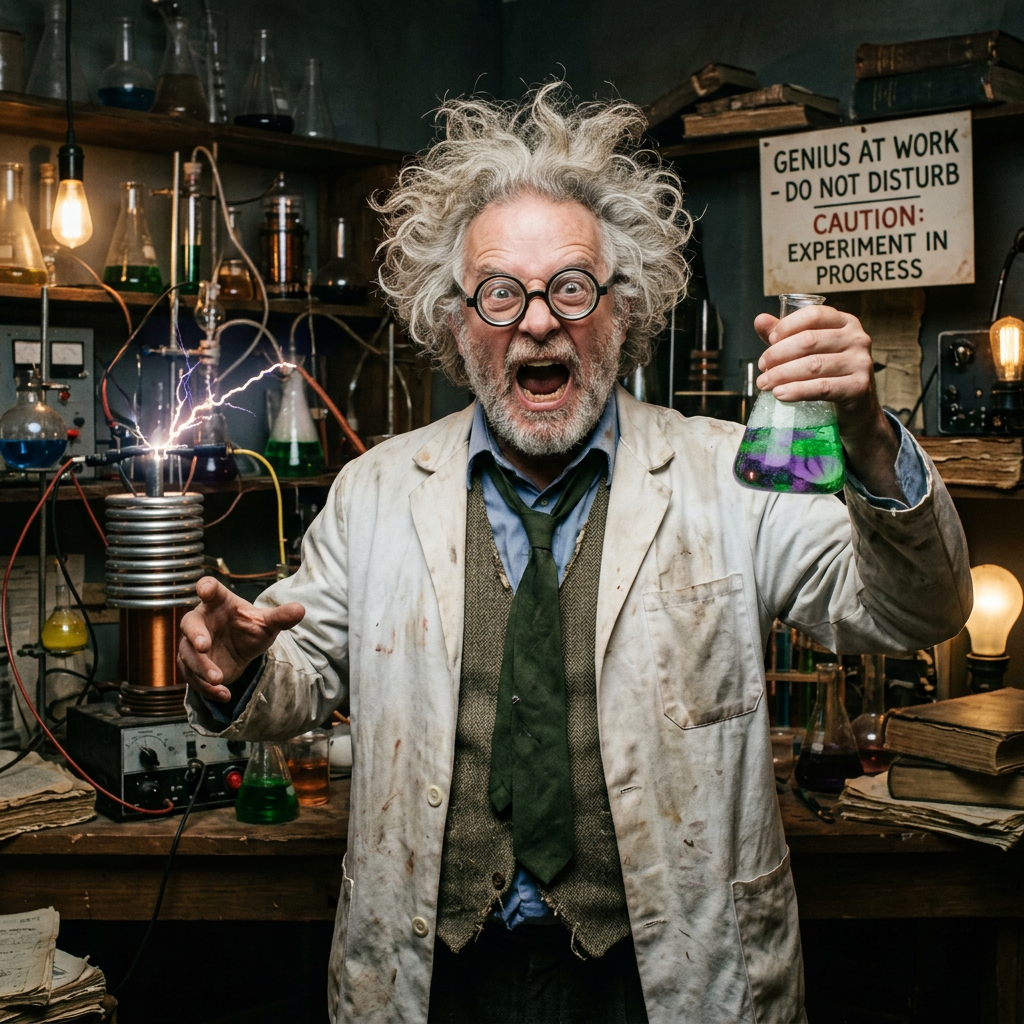
In high school, specifically the first couple of years, I learned to be silly. I’d always been serious, spending whatever time I could manage with a book, but then things changed. I changed.

I went to a high school where I knew only a couple of people, and we were in different classes, so I no longer carried the burden of eight years of being a social outcast. It was freeing, to say the least.

One friend I made seemed to bring out the silly in me. Our high school had a long, straight hand rail on the steps leading to the building, and one day we decided to slide down the banister. Unfortunately, it wasn’t slick enough. So the next day we brought some wax paper, which brings me to another thing I learned in high school — wax paper is a good polisher. After we polished that railing, we went sailing! I don’t remember if we got in trouble or not, but I vaguely remember a disapproving frown or two.

When Christmas came around, we got our photos taken with a department store Santa. I remember giggling about that, and even today, it brings a smile to my face.

She and I often talked about what we would do when we were grown up, and we thought that it would be fun to open a restaurant in Georgetown and sell things like Alferd Packer pancakes and Democratic sausages. That, too, makes me smile.

I managed to be silly on my own for a while after high school. One of my first jobs was at a fabric store. We got in a collection of appliques, and one of a smiling frog tickled me, so I bought it and pinned it on my dress. I wore that frog every day until I stuck myself with the pin. When people asked why I stopped wearing it, I told them that it bit me. I thought it was funny, but my boss didn’t. She thought I was crazy as in certifiably insane, but luckily, I managed to keep my job when I finally convinced her I was just playing and that I didn’t think the silly frog was real.

Like most lessons I learned in high school, I eventually forgot what I learned. Or maybe too many people like that boss helped quash the impulse, and I again became the serious person I was as a child. Occasionally I consider doing something silly, but it just seems too . . . silly. And anyway, being silly by oneself is no fun, to say nothing of the energy it takes.

***

Pat Bertram is the author of Grief: The Inside Story – A Guide to Surviving the Loss of a Loved One.

Rereading and Re-rereading

Daily writing prompt
What book could you read over and over again?

I’ve spent the past couple of years rereading various mystery series from start to finish so I could get the full story of the character. Normally, I just picked books at random so sometimes a character is married, sometimes is just meeting the love of his/her life, sometimes is in full parental mode. All while being a cop or agent or private detective, of course.

After reading more than twenty thousand novels (plus thousands of non-fiction books), I’ve found a sameness to the stories, characters, situations, so that novels tended to overlap, which is why I didn’t think it would matter if I read these series again. Unfortunately, I didn’t enjoy the books as much as I thought I would since (for me, anyway) most novels don’t have a lot of depth. What you see is what you get. I even went back and read books I’d read over and over when I was young, but the stories didn’t have the same pull for me now that they did back then. Of course, I’m not the same person now as I was back then, either.

Lately I’d been rereading the first eleven books of The Wheel of Time. (I have no interest in ever rereading the last three books by the makeshift author. Although readers seem to prefer them to the first eleven books, I find them to be overhyped drek.) There are so many layers to the books that Robert Jordan himself wrote, there are so many inspirations from and references to real life, so many interlocking characters to keep track of, that it’s taken me a long time to piece it all together. I’d think the difficulty of remembering in book ten what happened in book two would be a failing of my aged memory, but I do know one thing — I would not have had the patience for these books when I was younger, so any comparison is irrelevant. Nor would have read them then — I never liked that whole good vs. evil theme. It always seemed contrived. Besides, I know more of the world and its culture now than I did then, so the underpinnings of the story are more obvious to me, and those that aren’t are fun to discover.

I’m to the point, though, where I might have gleaned as much of the meaning and found as much of the puzzle as possible, so I might have to pack the books away, but for now, they still sit prominently on my book shelf while I read The Kingkiller Chronicle. Only the first two books of that Patrick Rothfuss trilogy have been published, but I’ll probably reread these books, too. Although there doesn’t seem to be much referencing to our myths and legends, there is a lot of inworld referencing that I’ll need to piece together someday.

I’ve been trying to find more rereadable books and series that I can sink my life into, but so far, no luck. The problem is, I’ve developed an aversion to going to our library (I’ve searched those shelves a thousand times and just can’t force myself to look even once more), so I will have to find rereadable books if I want to continue my lifelong habit of reading. There are a few other books on my shelf to go through, and there are the books I’ve written, of course, which are enjoyable to reread. (Though I have to confess, I’m a bit embarrassed by the reviews I posted here of those books. Talk about self-aggrandizement! So not my thing. Besides, every author feels the same way about their books, which makes those reviews even more cringeworthy.)

And after I’ve finished reading and rereading the books on my shelf? I don’t know. With any luck, I’ll find books to serve my reading needs.

On a completely different slant about these two series: I found a chapter-by-chapter outline by a reader showing where the final book of the The Kingkiller Chronicle might be going, which would be a good way to conclude the series if the author doesn’t ever manage to do it. I’d hoped to find something similar for The Wheel of Time, where the fans outlined what they hoped would happen, but I suppose having the finale written, no matter how badly, put the kibosh on any such online project. And anyway, I pretty much created my own ending, if only in my mind.

***

Pat Bertram is the author of Grief: The Inside Story – A Guide to Surviving the Loss of a Loved One.

We Are Who We Are

Daily writing prompt
If you could be a character from a book or film, who would you be? Why?

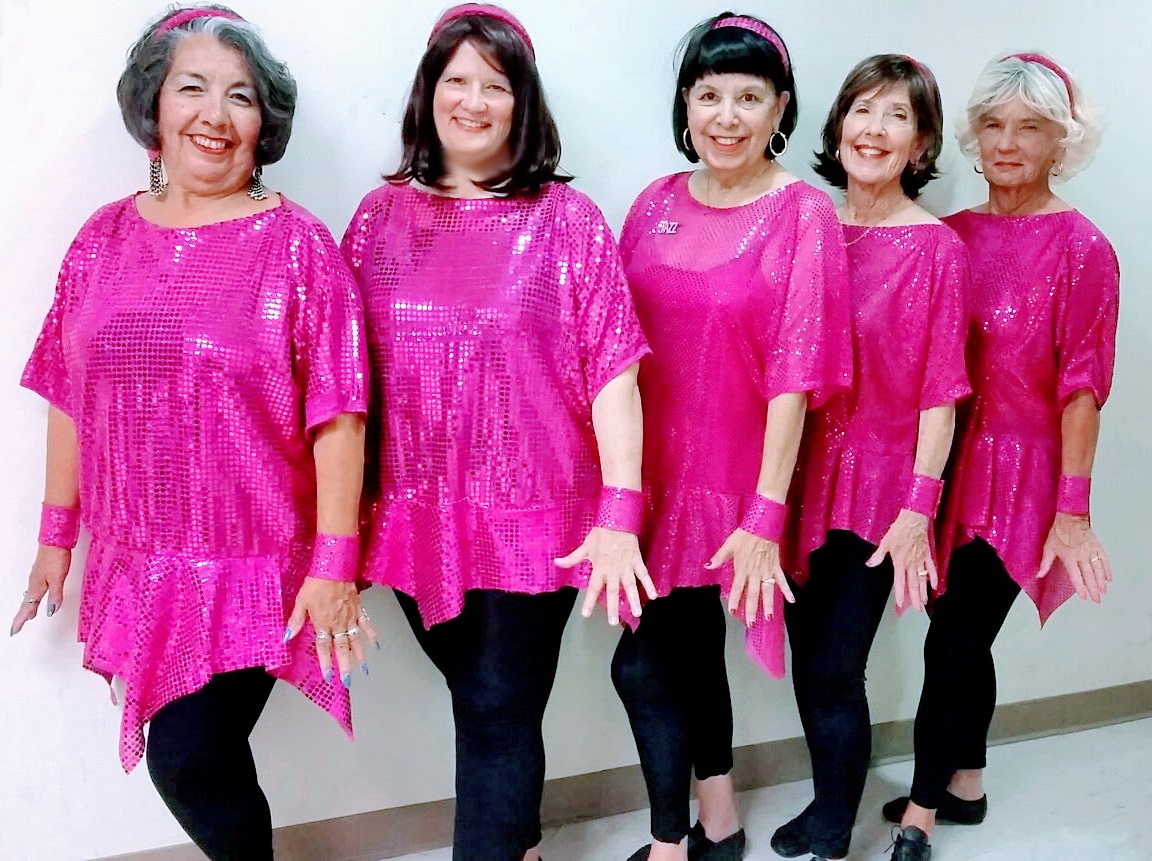
If I could be a character from a book? That’s not a hard question for me because I am already a character in a book: Madame ZeeZee’s Nightmare, a novel about a murder that took place in a dance class. Sure, I wrote the book, but I am still a character in the story — the narrator, the one who set the murder in motion, the one who found out who the murderer was, the one who persevered while dealing with her own issues. And one of the dancers!

I discovered something interesting while writing that book — it’s much easier to write a novel when you’re the protagonist rather than making up a person to fill the role. I never had to figure out what the character thought — I knew exactly what she was thinking. I never had to create special internal conflicts for her because I have them galore. I never had to figure out her flaws because — well, I don’t have any flaws.

That started out as a joke, but it’s the truth. I don’t have flaws: I have personality traits and character traits that might not be the most admirable, but they are not “flaws.” They are part of what constitutes . . . me.

It’s why I hate the whole “flawed character” story structure. Authors don’t need to create explicit flaws for their characters. If the characters are real, they have traits that make up their personas. So what if they’re prideful or refuse to see anyone else’s point of view even to their own detriment? Those are still not flaws — they are intrinsic parts of who the characters are. They are what makes the characters come alive. If a peculiarity or failing is a part of the character, it can’t be a flaw because a flaw is a defect or a mistake or an imperfection, and since the traits an author gives a character are purposeful, they aren’t mistakes. And if the trait makes the character perfect for their role, then it can’t be an imperfection. Besides, who has the right to say that a certain trait is a defect? One person’s defect could be another person’s hard won survival mechanism.

As you can see, I take issue with that whole “flawed character” thing.

Luckily, I am not a flawed character! (Neither are you, if the truth be told. We are who we are.)

If I weren’t already a character in a book, who would I be? I wouldn’t. I have a hard enough time imagining me as me; imagining me as someone else would take more brainpower than I have at my disposal.

***

Pat Bertram is the author of Grief: The Inside Story – A Guide to Surviving the Loss of a Loved One.

Pets: The Good and the Bad

Daily writing prompt
What animals make the best/worst pets?

I can think of a lot of animals that would make the worst pets. Even without really thinking, the wooly mammoth, the saber tooth tiger, and the pterosaur come to mind. Truly, not good pets. For one, their size would make them hard to house. Sure, you could keep them as outside pets, but you’d still have the problem of feeding them. A mammoth eats about 400 pounds of vegetation a day, which would be complicated even in the country, but in the city? Couldn’t be done. And then there’s the pterosaur. With a wingspan of 35 feet and an exceedingly high metabolism, they need to eat continually. And they eat meat. So what happens when they run out of meat, when your neighbors have all mysteriously disappeared, and there’s only you left? I tend to think there wouldn’t be a whole lot of affection going on. Same with saber tooth tigers — high metabolism, voracious meat eater, and oh, yeah — those teeth.

Good thing all those creatures are extinct. But there are some extant creatures that would be every bit as bad. A blue whale, for example. It weighs more than thirty elephants. Yikes. Where would you keep such a thing? I imagine a goldfish bowl would be a tad small. A hippopotamus is much smaller than the blue whale, but due to their bite force and jaw structure, they’re considered one of the most dangerous creatures in the world, so not good pet material. The mosquito, not surprisingly, is the most dangerous creature of all, killing as many as a million people a year. (Humans only manage to kill about a half a million.) Besides the lethality, there doesn’t seem to be any way to domesticate a mosquito, so when considering the worst animals for pets, the mosquito would have to top the list. They might be easy to feed — I’m sure you have a bit of blood to spare — but keeping them caged would present a problem.

The best pets, at least in my opinion, are the legendary kind. Dragons. Unicorns. Griffins. Pegasi. Even though some of those creatures are said to be dangerous (red-hot breath anyone?) their non-corporeal aspects make them easy to take care of. And ignore. I’m not one to enjoy sharing my space with other creatures — large or small — so for someone like me, any of these fantastic entities would make a good pet.

For you and everyone else, the best pet, of course, is the one you love the most.

***

Pat Bertram is the author of Grief: The Inside Story – A Guide to Surviving the Loss of a Loved One.

The Bob

Daily writing prompt
How have you adapted to the changes brought on by the Covid-19 pandemic?

I was going to make this a lighthearted post because I’ve adapted well to the changes brought on by the “Bob.”

In case you don’t know, I call it the “Bob” after an excerpt in my novel, A Spark of Heavenly Fire, where protagonist Greg, and his boss, Olaf, are discussing research papers. Olaf says:

“Convoluted writing and obscure terms are a way of intimidating the uninitiated, keeping the profession closed to non-scientists, and adding to the scientific mystique. Just think, if diseases had names like Bob and Carol and Ted and Alice, doctors wouldn’t make anywhere near the amount of money they do now.”

Greg laughed. “That’s an idea. They do it for hurricanes, why not everything else?” He mimed seizing the phone and dialing. “Mr. Olaf? I can’t come in today. I’ve got the Bob.” He hung up his imaginary receiver and looked inquiringly at his boss.

Olaf nodded. “Works for me.”

All during the worst of the shutdown, I hated giving the malady — both the physical ailment and the widespread cultural and financial ill — the hated name. I didn’t want to grant the horror more power than it already had and, too, I didn’t want to surrender to the fearmongering. At least, not for myself. I don’t get the flu, and besides, I’d made a vow never allow myself to get caught up in another scarifying scheme such as happened with the Swine Flu fiasco of 1976. Outwardly, I made a point of following their dictates. I stayed home. (Yay!! Such a good excuse to take a break from socializing.) I made sure to stay 6 feet away from anyone I did happen to see. (Again, yay!! I’ve never liked people standing on my heels while waiting in line.) I wore the mask. (Another yay! I liked the anonymity.) And I always made sure I had an easy answer when asked if I’d gotten the vaccine. (It wasn’t a lie, but not the strict truth, either.) And even though we’ve been paying for the stimulus checks with inflation for the past few years (each of us has probably spent more in inflationary dollars than we ever received for “free”), they were a nice bonus for me at the time.

So, for me, it wasn’t a hardship. The worst thing, I think, was keeping from getting caught up in the fear. And the best thing was having an excuse to be alone, and that still holds true to this day.

So why did I change my mind about a lighthearted post? Because other people weren’t so lucky. I know several women who lost their husbands and subsequently their way of life. (Too often widows end up in financial straits, as if losing that one special person isn’t trauma enough.) I know others who have lost beloved family members. And I know still others who have become lost in a cycle of never-cured illnesses.

If this had been a naturally occurring illness, there might be some sense of fatalism to help with acceptance, but I doubt there’s anyone out there who still believes it “just happened.” We (the people) might never know the truth. Might never know who to blame. Might always be shadowed by the spector of “if they did it once, they can do it again.”

One thing I do know: we — individually and as a people — will always be changed forever by the “Bob.”

***

Pat Bertram is the author of Grief: The Inside Story – A Guide to Surviving the Loss of a Loved One.

What My Life Is Like Today

Daily writing prompt
What’s something most people don’t understand?

Today is the sixteenth anniversary of Jeff’s death. I’m sitting here mindlessly playing a game and scrolling through a few articles, trying to decide if I want to write about this anniversary. I will remember him, of course, and think of him and all he brought to my life, but I’m not sure it’s something I should still be talking about it. After all, his death belonged to him, not me. Still, I suppose I should at least mention the anniversary — for years I wrote about my grief, laid it all on the line (laid it online?), so it’s only fair that I talk about what my life is like today.

Life, that’s what it’s like.

Too many people bury their grief, letting others tell them how long they should grieve, how long it’s acceptable to talk about their feelings, how long they’re allowed to feel whatever it is they feel. But that is a disservice to grievers. I truly believe it’s important to feel all the myriad emotions, physical sensations, and mental fogs so that the body and mind can work its way through the changes to end up . . . renewed. Or if not renewed, then at least able to go through life without holding in the stress of grief like a too-tight girdle.

Despite the importance of that message, I still wavered about doing another grief post until I happened to notice today’s blog prompt: What’s something most people don’t understand? Such a blatant sign shouldn’t be ignored, especially since there is something I know about that most people don’t understand — Grief, especially grief at the death of child, a spouse, a soul mate.

Everyone thinks they understand grief because most people have felt sadness and despair and even shed tears at the loss of an acquaintance or a job or something else important to them. But not all grief is the same. Not all losses are the same.

The reality is, the most stressful event in a person’s life by far is the death of a life mate or a child. The reality is, such a death is so devastating that the survivor’s death rate increases by a minimum of 25% percent. The reality is, such grief brings about brain chemistry changes and lowers the capacity to function. Someone who hasn’t gone through the trauma of dealing with all the losses those deaths bring about — not just the body and mind changes, but the loss of identity, one’s way of life, sometimes income, and a thousand other changes — cannot understand and so has no business telling anyone how long to grieve or how to grieve. Grief belongs to the griever, not to the onlookers to people’s grief. Admittedly, no one likes to see others in pain, but that pain is often made worse by having to hide it to keep from bothering others.

People who are allowed and who allow themselves to go through the process of grief — because, at its most basic, grief is a process, a way of moving a person back into a semblance of life — end up able to simply live.

For years, I felt as if I were living as a reaction to Jeff’s death or in spite of it, felt as if grief bound me to him and to a way of life that had died with him, but now — I feel as if I am simply living. Maybe I’m just used to that deep undercurrent of sadness, but even so, it doesn’t change the fact that after sixteen years, what my life is like today is . . . life.

***

Pat Bertram is the author of Grief: The Inside Story – A Guide to Surviving the Loss of a Loved One.

Creating a Peaceful Place

Daily writing prompt
Describe the most ambitious DIY project you’ve ever taken on.

The most ambitious DIY project I’ve ever taken on? That’s easy. Landscaping my yard.

When I moved here, the yard was dirt and weeds. It looked okay because the weeds had been cut down to make the house look good when it was put on the market, but still, just weeds. I hadn’t planned on doing anything to improve the property because I didn’t want to have to take care of a yard, but there were things that needed to be done, such as rocks laid around the house to protect the foundation. Then, when I found out I was tripping on all the holes and rocks among the weeds, I decided I needed walking paths of crushed rock to keep from falling and breaking my neck. Or a hip, anyway.

Admittedly, I didn’t do any of the rock labor, but the finished work gave me a sort of yard pride that seemed to demand further work. So gradually, I planted a few bushes, a few flowers, filled in some of the gardens that were created by the walkways, and things escalated from there.

I had a lawn mower, so I put in a bit of a lawn since I didn’t want the mower to go to waste (a silly reason for a lawn, I know, but it’s the truth). I had sod put in, but when that all died (the people I hired put in the wrong grass), I dug it up and planted a more heat-resistant strain of grass.

And so it goes . . .

What makes this DIY project so ambitious is that there doesn’t seem to be an end to it. There’s a lot of work just involved in maintenance, so that keeps me outside for a couple of hours each day, which makes me see how much more I can improve. I can see spots that need to be filled in or bits of color that will improve the looks of one of the gardens. And then there are container gardens and hanging pots to be replanted every year.

Yep, an unending project when in fact, what I had wanted was a yard that took no work.

Oh, well, there are worse things than a garden demands attention. And truly, I can’t think of a better use of my time than creating this peaceful place.

Besides, there all are the surprises I find, like this morning. Look! Crocuses!

***

Pat Bertram is the author of Grief: The Inside Story – A Guide to Surviving the Loss of a Loved One.

Finding a Purpose

Daily writing prompt
What is the biggest challenge you will face in the next six months?

Ever since I watched monks Walk for Peace with such purpose and dedication, I’ve been thinking I need to find a purpose rather than just living simply from day to day. (This can be construed as simply living from day to day or living simply, and both would be correct.) And that’s what I came here to say, that the biggest challenge I will face in the next six months is finding a purpose.

But do I need a purpose? Does anyone? A sense of purpose might make someone feel good, feel as if their life was worth living, maybe even make them feel important, but the purpose itself might not be a good thing. For example, a pattern killer (the current appellation for a serial killer) generally has a strong sense of purpose, which is good for the killer, but not the victims.

(I was going to use more specific examples, such as the protestors who felt their purpose was to interfere in the arrest of a child rapist and murderer, and so the perpetrator got away. I am sure the protestors felt so proud of themselves for fulfilling their purpose that they would never see how their actions led directly to more heinous crimes committed by that perpetrator. But I decided not to use such examples because I can never be sure if people would read my words and their intent as I meant them, or if they would read their own emotions into the example. Hence, my example of the pattern killer because I’m sure most of us can understand that in such as case, a sense of purpose and where it leads is not a good thing.)

Oddly, while thinking about finding a purpose, I came across something called “purpose angst,” which is “the stress, frustration, and worry stemming from the intense pressure to find, define, and live a meaningful life.” That, too, made me wonder how important it is to find a purpose. If the search for a meaningful life is such a dire burden, maybe it’s the search that’s the problem. Maybe we’re not supposed to search for meaning in our lives. Maybe our lives themselves are the meaning.

In reading people’s reactions to the Walk for Peace, I saw an interesting comment. The commenter said that people who talked about the walk and how it affected them mentioned things like the monks’ dedication, their perseverance, their kindness. But he said the real reason the walk touched people was the simplicity. Everything about modern life is noise and chaos, but then came the monks. They simply walked in single file in silence. No noise, no chaos, no bunching up. Just that single orderly line. Simple. Touching.

Although their message was peace, that the way to peace is to find it is within ourselves, maybe the true message was simplicity.

In which case, there is no need for me to find a purpose. I am living that purpose: a simple life lived simply.

So, since finding a purpose is a challenge I won’t be facing in the next six months, what challenge will I face? I can’t think of any offhand, but life has a way of surprising us. I’ll let you know six months from now what, if any, challenge I faced.

***

Pat Bertram is the author of Grief: The Inside Story – A Guide to Surviving the Loss of a Loved One.

That “R” Thing Again

Daily writing prompt
If you could permanently ban a word from general usage, which one would it be? Why?

There are many terms that really get on my nerves, words and phrases I don’t use and would like expunged from the English/American language: “110%” (a physical impossibility); “intestinal fortitude” (just have the guts to say “guts”); “veggies” (the very sound of that mawkish word gags me), and “climate change” (the term is redundant. Climate is change. Climate is always changing).

Recently I have expunged another word from my vocabulary, and though I would like it banned from general use, simply the idea of suggesting banning it would seem to prove the very thing I would like banned.

It’s that “R” thing I wrote about yesterday. The word is so dangerous, so powerful and pejorative that just being called that “R” thing will bring down collective wrath on your head. It’s the one thing that is outside the normal rule of “innocent until proven guilty.” If you’re called that “R” thing, whether or not you did anything to earn that slur, that’s what you are. End of story. Except it’s not the end. Just being called that “R” thing can get you banned from social sites online and community groups offline, can get you ostracized from family or friends, and can sometimes get you fired from your job. It also subverts the law — too many district attorneys refuse to charge criminals for minor crimes and even great crimes, and they ignore fraudsters for stealing billions because they don’t want to be tarnished with the brush of that “R” thing.

I’m not saying the “R” thing doesn’t exist, but that the word itself has become something separate from the behavior it describes. It’s become such a triggering word that the true definition has all but been lost — there seems to be a disconnect between how easily the word is thrown out there and what it actually means.

People have become hyper-vigilant toward cultural nuance or slight and what can be perceived as aggression (even if it’s not directed at them), and they are quick to point it out. At the same time, we have become hypersensitive to and fearful of being called that “R” thing. In a world where words are considered an instance of violence, this could be the most violent. It’s also a weapon, a sure-fire way to silence opposition, to shut down any discussion, and with it any hope of true understanding because it’s an attack on the speaker, not on what is spoken.

Nowadays, it seems as if everything is viewed through that “R” lens, even when unnecessary, even if what you say is true or is not in any way divisive or derogatory.

Yesterday, I posted a blog about the conservative black commentators I have been following. As far as I can see, there was nothing discriminatory about what I wrote, and yet I hesitated to post it because of that “R” thing. I’d already been slandered on Facebook for simply sharing a post from a black commentator, and I didn’t want to continue being slandered. On the other hand, why should I not be able to write what I think just because others might see that “R” thing in my words?

Anyway, whatever anyone else does, in my little world (basically just me and this blog), I am getting rid of that word. There are plenty of other words to use to describe that particular attitude, words that aren’t as incendiary, words such as prejudiced, biased, intolerant, discriminatory, xenophobic, ethnocentric. Too bad I can’t also get rid of the emotional connotations attached to being called the “R” thing, but I’m afraid it’s now embedded the world today, and even in my own psyche. Still, there’s hope . . . well, probably not. I’ve always been sensitive to any sort of slight, and I don’t see that changing any time soon.

***

Pat Bertram is the author of Grief: The Inside Story – A Guide to Surviving the Loss of a Loved One.

Favorite Drink

Daily writing prompt
What is your favorite drink?

My favorite drink? As in favorite everyday beverage? Or as in adult beverage?

For an everyday drink, I generally stick with a cup of tea in the morning, or perhaps a weak milky coffee, and then drink water the rest of the day. Boooring!

So I won’t talk about that — I’ll talk about my favorite “drink” drink. As in alcohol. To be honest, I barely drink, even though my sister once gifted me with a lovely miniature liquor cabinet, something I always wanted. (Yeah, I know — weird for a self-proclaimed hardly-ever drinker to want something like that, right?)

A couple times a year, if I’m feeling under the weather, I’ll make myself a hot toddy with a fiery ginger tea, lemon, and spiced rum, but that’s for medicinal purposes. And every once in a great while, I’ll take a nip of something in my liquor cabinet just to experience my wild side.

Though I seldom drink even them, there are two drinks I do like, but mostly because they come with memories.

Exactly ten years ago today, I camped at Organ Pipe Cactus National Monument on my travels across the county. Stunning scenery, beautiful weather, congenial fellow campers. One evening, a camper (drawn by my car, more than me), who was exploring the south and west on his motorcycle, brought a bottle of Grand Marnier to my campsite. He and I sat under the bright stars with the glow of Mexico to the south, sipped our drinks, and chatted. It was such a magical experience that even today, a sip of Grand Marnier will take me back to that warm star-lit night.

I also occasionally have a sip of Bailey’s Irish Cream, but mostly, I save what I have so I can drink a toast to my mother on her birthday or deathday as a memorial, since it was her favorite drink. The glass I use is a regulation Bailey’s glass that once belonged to her. (She used to have a cupboard full of unmatched stemware. I kept those goblets when I cleaned out the house after my father died, and so now I, too, have a cupboard of unmatched glassware.)

Even considering those special two drinks, that little glass display case sits in my kitchen cabinet mostly unused but delighting me with the thought of finally having my very own miniature liquor cabinet.

***

Pat Bertram is the author of Grief: The Inside Story – A Guide to Surviving the Loss of a Loved One.