Miniscule

I’ve always prided myself on my vocabulary, a vocabulary gleaned from my vast reading over the years. This vocabulary doesn’t translate to speaking because many words I know and know how to use I don’t know how to pronounce, and I’m leery of using such words ever since I was made fun of at a young age for mispronouncing “macabre.” At the time, I was being driven home by the father of the children I’d been babysitting, and for some reason I used the word, pronouncing it as “mackaber.” I still remember his laughter. So, since I’ve never been able to handle being made fun of, I only use words that everyone else does, though I don’t hesitate to use any word I wish in my writing, confident that my spelling is correct.

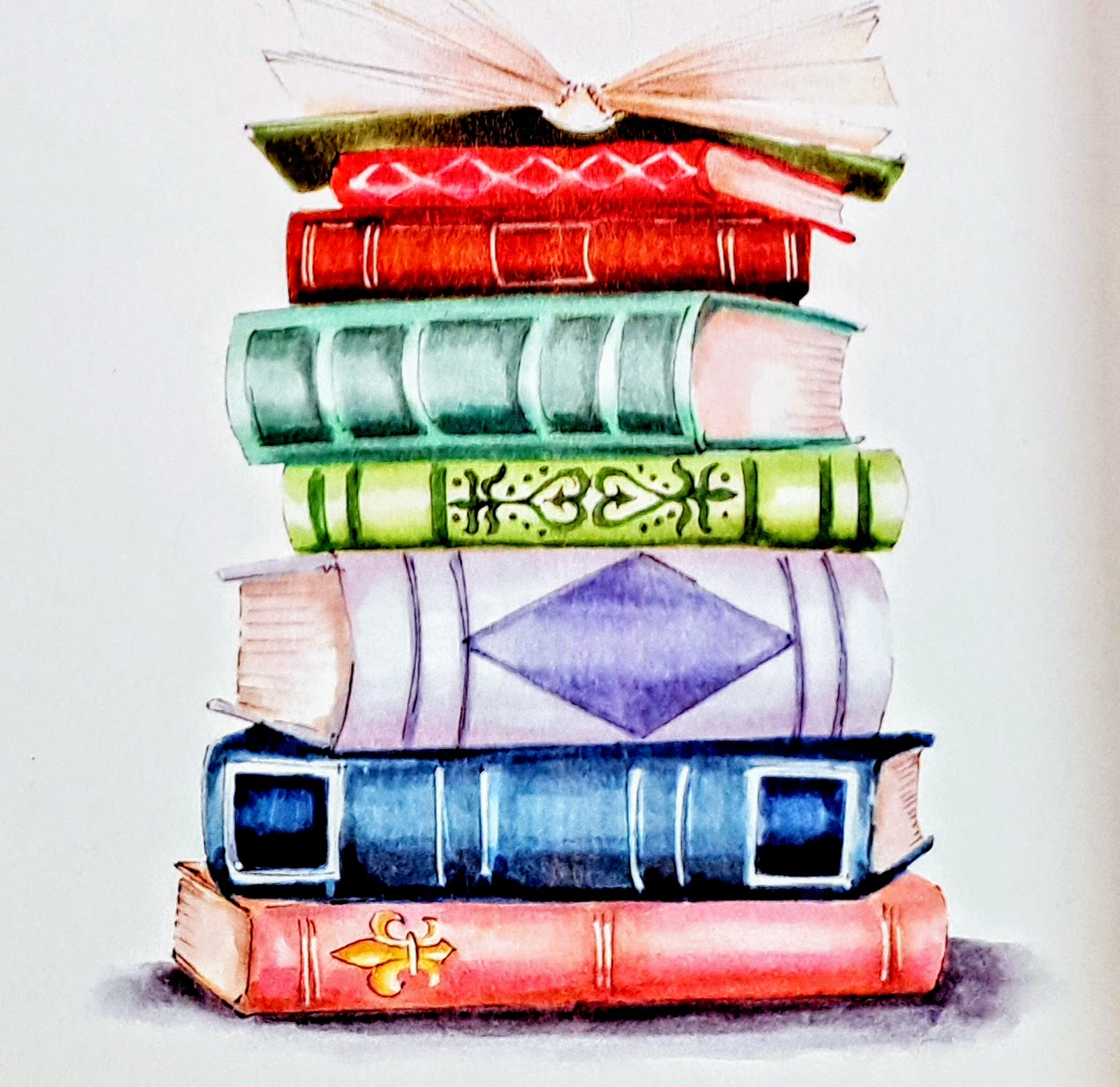
Well, I was confident until yesterday. I was writing something, I don’t even remember where or what, and I used the word “miniscule,” which is how I’ve always seen the word written. Whatever spell check that particular site was using flagged it as wrong, and said the word was “minuscule.”

Not believing the program since I’d never seen that spelling and since neither MSWord nor my blog has ever flagged the word, I looked it up online, and sure enough, the word is “minuscule.” How is it that I have lived all these decades and not known that? It’s also pronounced with the emphasis on the second syllable. I did not know that either.

Further reading tells the story. “Minuscule” used to refer to lower case letters (the minus coming from Latin meaning less) as opposed to “majuscule,” referring to uppercase letters. It seems to me that since “minuscule” refers to something being simply lesser, rather than something very tiny, “miniscule” (pronounced with its emphasis on the first syllable) should be a word in its own right.

And it’s getting there. Although “miniscule” is still considered a typo by purists (which I thought I was but apparently am not), the correct spelling is “minuscule.”

Except when it’s not. “Miniscule” has been used since 1871, though it wasn’t until the 1940s that it became an accepted variation that wasn’t always flagged as a typo. My print dictionary includes “miniscule,” and mentioned that it’s a variation of “minuscule.” So whew! Maybe I’m not as far off as I thought I was.

So even though it may or may not be a full-fledged word, I will continue using “miniscule.” It sounds like what it should mean: something vanishingly small.

It is funny, though, that a word such as minuscule/miniscule is only slowly evolving, but other words are almost instantaneously accepted, like my most unfavorite word, “veggie.”

Oh, well. I learned something, which is always a good thing, even if it did deflate my already under-inflated ego.

***

Pat Bertram is the author of Grief: The Inside Story – A Guide to Surviving the Loss of a Loved One

Creating Wealth

I read something interesting the other day. The writer claimed that the default setting of humans is poverty. Which is true when you think of it. For as far back in history as you can research or imagine, humans lived in poverty so vast that even the poorest person today is wealthy by comparison. People today seem to think that the hunter-gatherer culture was a myth, just a morality tale to make a point about being grateful for what we have. But that’s the way humans lived for tens of thousands of years. Even in the Middle Ages and the Renaissance years, where learning and the building arts were at a highpoint, most people lived in poverty. Not only was wealth in short supply, what there was of it remained in the hands of a very few, and even those folks — kings and other nobles — weren’t wealthy by today’s standards.

What is truly remarkable about our current life is that there is any wealth at all. Even more remarkable is that the overall wealth of the world is growing. So are opportunities to find your own source of wealth. Of course, most people don’t count wealth as I do — a warm place to live, a vehicle, appliances and all sorts of other labor saving-devices, food to buy in a grocery store rather than having the backbreaking job of growing it. There are also parks — local, state, national — to play in, and such open spaces had once been reserved for royal use only.

In today’s world, there are also all sorts of programs for people who either can’t or don’t want to work (and there are plenty of able-bodied people who simply prefer to sit around watching television six hours a day; this isn’t a guess — they make videos bragging about it). There are way too many homeless, though the money that was geared for those people seldom reached them and in fact was sometimes stolen and used by the administrators of such funds to buy multiple homes for themselves. And, too, a lot of homeless do cling to a life of addiction.

But for all that, we are generally living in a time of vast wealth — wealth that was created by human labor. (Except of course, for those who preferred to do such things as crash the currencies of other countries rather than come by their wealth honestly.) Human labor today is still creating wealth. Pulling assets from the earth, making things, selling those things, using that money to make other things and selling those other things and around and around it goes, with more wealth created every day. Working wealth — the wealth that is contained in on-going business concerns — is what keeps the world going. If there were no people creating more wealth, we’d all be scrambling for the bits that were left, until finally, the world would run down and we’d be back where we started — in abject poverty but with the memory of when we had it so good.

There is a growing hatred for the working wealth creators because people say that no one deserves the kind of wealth that some entrepreneurs have managed to accumulate (though they say nothing about the non-working billionaires who are funding the insurrections in this country), but the truth is, the wealth of the working rich is in their businesses. They do not have cash sitting in a bank. Very few of the working wealth creators have cash on hand. Their money goes into their businesses, which creates more wealth by creating more jobs, more products, even a higher standard to strive for.

Although the working wealthy are using their wealth to create more wealth for everyone, too many people think it needs to be stolen from them and given to those who don’t have the ability to create wealth. The problem is, if these working wealthy were to pay the vast sums in taxes that people think they need to pay, the wealthy would have to sell off large chunks of their businesses, which means they would lose control of their own companies, which means there would be a dearth of working capital, which means less aggregate wealth in the world.

With their money always in use, many (maybe even most) people who own high-performing businesses, borrow money to pay their employees because they are cash poor. Cash in constant circulation creates more wealth, more jobs, more . . . possibilities.

Humans are the ones who have created the wealth in the world today. As far as I know, dollars didn’t spew out with the big bang or on creation day or however the world came into being. Wealth came from human labor.

There used to be a time when people would hear of someone getting super rich and would think, “I can do that. Become rich. Maybe. Someday.” Now people see the wealth that’s created and they think, “They need to take his wealth away from him so I can get me some of that.”

Wealth isn’t a matter of everyone having the same amount of money because if it were, then there would be no money. If you take from the “haves” and give to “have less,” then why would anyone do anything to create wealth just to have it taken from them? They wouldn’t.  Which would leave everyone sinking back into the default mode of poverty. Besides, if all the billionaires in the USA — supposedly there’s fewer than 1,000 of them — were taxed 100%, their taxes would fund the government for less than two years, so it’s much better to let them keep creating wealth.

People complain about loopholes that the wealthy businesses use to bring their taxes down, so the answer is not to take even more of their money but to lobby to close the loopholes, assuming those are loopholes and not just a way for the money to keep working. But for the most part, the taxes the wealthy pay are dependent on many things, so one year a fellow can pay 11 billion and the next year nothing. And even if the companies end up not paying taxes, the owners who take a salary and all the people they have working for them pay taxes, and generally a lot of taxes, because many of them become very high earners, so the aggregate taxes paid ends up being significant.

Whether or not the working wealthy “deserve” the money they make, is almost beside the point. Nowadays, I’d prefer to leave wealth in the hands of those who created it and who are continuing to create it. If you took it from them in the form of punitive taxes, then it would disappear into the same grifters’ hands where so much of the working people’s taxes are ending up. Why people are so accepting of that money being stolen, I have no idea, but throwing more money into a grifters pool does no one any good.

Either way, it doesn’t matter since the money is not going to end up in our pockets, neither mine nor yours.

***

Pat Bertram is the author of Grief: The Inside Story – A Guide to Surviving the Loss of a Loved One
As Old Fashioned as a Hollyhock

There are a lot of topics I stay away from mostly because . . . well, because I don’t welcome backlash. I’m just too sensitive. But sometimes a topic keeps staring at me, which makes it impossible not to face it. For example, every time I opened my internet browser the past couple of days, I had Google reminding me about pride month (small letters are my subtle rebellion), which reminds me that the only group in the whole country that’s not allowed to be proud are whites. If you’re proud to be white, then you’re automatically a white supremacist. According to some people, simply being white means you’re a white supremacist, which is utterly ridiculous. (And so is the term “white privilege,” now that I’m on my soapbox. It used to be that certain minority groups were considered under privileged, but that terminology, which was deemed racist, was replaced by “white privilege,” which is racist in a whole other way.) And why are whites so despised? We might not yet be the minority in western countries, but we are perhaps only 10% of the entire world population and destined to decline even further.

I’m not proud of being white, but not in any sort of apologetic way for crimes my ancestors never committed or crimes I am supposed to have committed simply for being born the way I am. I’m not proud because why would anyone be proud of the way they were born? It’s not something we could choose. It’s not something we did. It’s not something that took courage. It’s not something we earned. It’s simply who we are. Pride used to be a sin. Now it’s — apparently — something to celebrate.

I looked up the definition of “pride” in my actual book dictionary, printed before “diversity” was a thing, and pride is (or at least it used to be before the word was redefined) “Conceit. Disdainful behavior. Ostentatious display. A justifiable self-respect.” In other words, pride is not good unless you did something to earn your self-respect. (Or perhaps it’s just an excuse for that “ostentatious display” as the dictionary defined it?) But then, as I’m finding out, I’m terribly old-fashioned with old-fashioned values. I suppose I could be proud of that, but it’s not something to be proud about because it’s not something I earned. It’s just who I am.

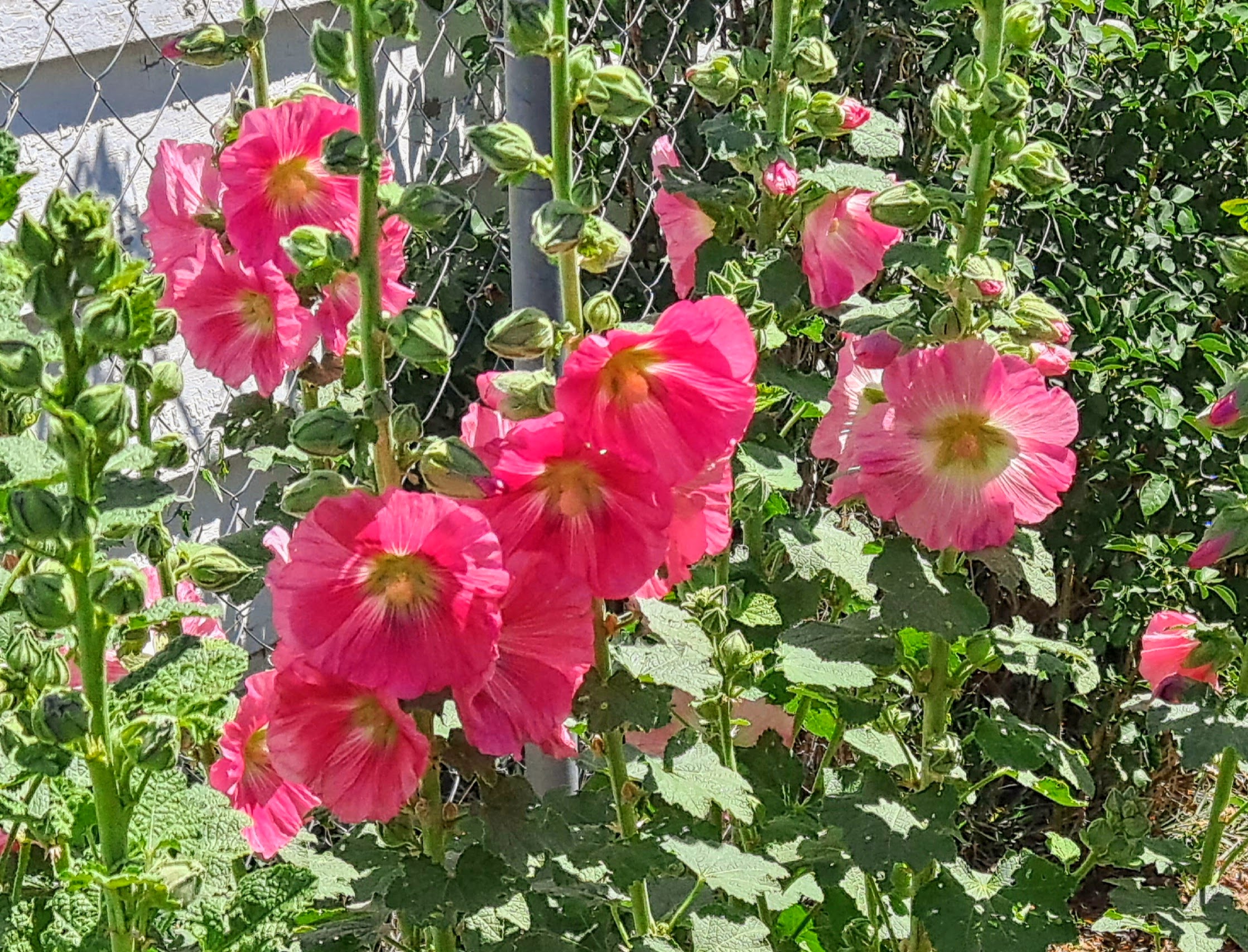
I am proud of my writing skills — that is something I earned, something I worked hard for. I am proud of my blog, because it takes a certain discipline to keep a project going for almost twenty years. I am proud of being kind (mostly kind, anyway). I am proud of opening up and telling the truth about grief and dealing with the absence of a deceased spouse or life mate. I am proud of the work I’ve done on my yard, though I’m not necessarily proud of being a gardener, because the truth is, a garden does what a garden wants to do. (As I discovered again today. Years ago, I tried to plant a hollyhock garden, but it died and no other seeds ever grew. Until now. Apparently, the garden decided it wants hollyhocks.) I’m sort of proud of being a good photographer, but the photos are more from an excellent camera as well as the instinctual sense of artistry I was born with.

But being proud (or not proud) simply for of sake of pride? I don’t understand that. But then, I did say I was old-fashioned. As old fashioned as a hollyhock, actually.

***

Pat Bertram is the author of Grief: The Inside Story – A Guide to Surviving the Loss of a Loved One

 

Self-Censorship

You’d think that someone who says she writes for herself would write whatever she wants, and that would be true if I saved the writing for myself alone as I did with the journal I kept after Jeff died. Once a piece is written, however, and I go to post it, things change. Suddenly, it’s not just for me but for anyone who wants to take a peek into my life and thoughts and emotions.

For example, I tend to stay away from anything controversial, and if by chance I happen to mention something that could be construed as political, I edit it out because it’s just not worth the backlash. So perhaps it’s not self-censorship so much as it is simply editing to make a more universally accepted piece. Or do I mean peace?

Either way, I do sometimes second guess what I write, not just when it involves world affairs, but also when it involves people in my life, especially if I know they read this blog. In fact, I’m sitting here right now debating about whether or not I should mention something that recently happened. (Apparently, I decided to go ahead with the article, because here I am.)

A few days ago, I accompanied a friend to an appointment. I’ve driven with her hundreds of miles over the years, so I’m familiar with her driving, and I’ve never been concerned about safety, but that day, she was driving erratically, swerving from lane to lane, cutting in front of cars she apparently couldn’t see, seemed to have no depth perception, had a hard time hearing, could barely handle the steering wheel. Bizarrely, she had no idea what she was doing. To her, all was fine, she was just tired after a sleepless night. In fact, when I later mentioned that it would have been better to have cancelled the appointment, she said she had no idea there was any need.

I wondered if she’d been having a mini stroke, so when she next went to the doctor, I urged her to tell him the story. She did. What she discovered is that all out-of-whackness was caused her insomnia the previous night.

That is why this story is important and why, even though I worry my friend might think my writing this might be a betrayal, I ignored my inclination for self-censorship and posted it anyway. If you have a sleepless night, especially if you are getting up in years, please stay home even if you feel fine. Truly, the symptoms she showed were traumatic and life-threatening (for me too) and are common side effects of a sleepless night. It makes me wonder how many people are going about their lives as if everything is fine, when in fact, it isn’t.

I’m lucky in that I don’t worry about not sleeping. If I have a rare sleepless night, I just stay home the next day. And if I ever can’t because of an appointment, I hope I am as smart as I am urging you to be and cancel the appointment.

It’s funny how small things can have such devastating effects. We never think of a sleepless night as being life threatening in the short run, but it is or it can be.

So be careful. Please. And don’t drive if you’ve had a sleepless night.

***

Pat Bertram is the author of Grief: The Inside Story – A Guide to Surviving the Loss of a Loved One
Questioning Reality

Daily writing prompt
What’s a moment that made you question reality?

A moment that made me question reality? There never was such a moment in my life, nothing like seeing someone out of time or out of place, seeing an alien or ghosts, finding gaps in my personal timeline. Nothing fun or lighthearted like that. But there are a couple of current events with historical overlays that are seriously making me question reality.

I’ve been reading a novel based in occupied France during World War II, and of course, there’s the whole story of antisemitism and concentration camps. That’s normal for such a book since those things happened back then. They are part of the story.

Then I take a break, go online and read about the growing antisemitism in this country. Even more horrific is that two candidates in Texas are using as their platform the promise of concentration camps for Jews. What the heck?? I thought we’d finished with that, though sadly, with the increasing population of Muslims and Islamism galloping across the country, it sort of makes sense that they would be selling the idea. But no one has to buy it. Jews are more a part of this country than Islamists. Hello? Judeo-Christian tradition anyone?

As if that’s not bad enough, I’ve been reading about the origin of the marines, and especially their hymn. I’d always thought “From the halls of Montezuma to the shores of Tripoli” was just a poetic way of saying “From sea to shining sea.” But no. Those were two battles fought by the marines. During the Mexican-American war in 1895, the Marines seized the Chapultepec Castle, aka the Halls of Montezuma.

And the shores of Tripoli? In the 18th century, Muslim pirates from the Barbary Coast (The North African Islamic nations of Tripoli, Tunis, Morocco, and Algiers) attacked ships in the Mediterranean, ransoming them for huge amounts of money as well as demanding bribes for letting ships use international waters. It had been the practice for countries simply to pay the extortionists to appease them. In fact, the newly formed USA had been paying over 20% of its revenue to the Muslims, but when pirates upped their demands, Thomas Jefferson refused to pay. So in 1801, the Pasha, who believed that all nations who would not acknowledge Islamic authority were sinners and that it was his right and duty to make war upon them wherever they could be found, declared war on the USA. That was the first Barbary war. The second came fifteen years later.

And now? Really? Another Barbary war? It’s not called that, of course, but what we have is another Islamic nation of pirates extorting “tolls” from ships in international waters. Or they’re trying to, anyway.

This isn’t about the truth or even what you or I believe. It’s about the unreality of what’s going on today.

Antisemitism and concentration camps?

Islamic pirates?

Really? Really?

It’s as if age-old evils are bubbling to the surface of reality like marsh gas. Or maybe we’re stuck in a time loop of forever wars. Or . . . who knows. All I know is sometimes it feels as if none of this is real. And for sure, it does make me question reality.

***

Pat Bertram is the author of Grief: The Inside Story – A Guide to Surviving the Loss of a Loved One

Learning Something New

Daily writing prompt
How do you stay motivated when learning something new?

This must be a question for people who are forced to learn things they don’t want to, such as for school or work or new technology, because otherwise it makes no sense. At least not for me. Learning something new has always been its own motivation. Now that I think about it, learning something new seems as if it is sort of the point of life. If we never learn anything new, where would we be? Lolling around in oversized cribs, I imagine, crying from sheer boredom.

The joy of learning is written in our genes. That’s obvious if you’ve ever watched babies, newly sprung from their playpens, crawling all over, learning new things, trying to pull themselves up. And oh, that grin of sheer pride and joy when they manage that first step. They didn’t need to stay motivated, the learning itself was the goal, though encouragement from their parents never hurt. Obviously, there are some things babies need to learn that perhaps they don’t want to, such as using the potty or not touching the pretty fire, but for the most part, babies learn because they want to. Because to them, learning is playing, and playing is learning.

There is an old quote: we don’t stop playing because we grow old, we grow old because we stop playing. I never liked that quote because it’s too specious, too simplistic, too out of touch with reality. Look at professional athletes. They have to stop playing because they get too old to be able to compete with younger players, not the other way around.

Now, if I were to substitute “learning” for playing, then that quote makes sense, though again, it doesn’t always hold true. Often the elderly can no longer learn because of growing cognitive issues, but still, I tend to think curiosity (and boredom) does motivate people of any age to learn new things. Besides, whether we want to or not, we have to continue learning as we age if only to learn how to do things we once did with ease but that now seem complicated, like opening jars or bending to pick something up. For sure we have to learn how to be mindful or else a reckless step can lead to disaster.

Since writing this has convinced me of the importance of learning — with or without a need for motivation — I’m sitting here trying to think what I’ve recently learned, but I can’t really think of anything. At least nothing fun. I learned a lot of fun things in the past decade — dancing, camping, buying a house, taking care of a house, the tarot, landscaping, gardening — but not so much today except for small things I learn while reading or gardening or doing puzzles. The only specific thing I can think of is that I am learning more of the history of the middle east than I ever cared to know. I never did understand anything of their history or who they were or why they did what they did — it was simply too confusing, uninteresting, and of no particular value to my life, but now I’m seeing a much broader picture, one that dates back almost to the first days of civilization, but specifically back to the 7th century. Is it important to know the history? Only if I want to know the historical reasons for a lot of today’s events, which I don’t, not really. But it is learning, so that’s good.

What I need is to find something new to learn. Something I want to learn just for the fun of learning, something I don’t have to worry about motivating myself to learn. Though what that might be, I don’t know, because if I did know, I’d already be learning it.

***

Pat Bertram is the author of Grief: The Inside Story – A Guide to Surviving the Loss of a Loved One

Books and Surprises

Daily writing prompt
What’s a book that completely surprised you?

I can’t say that any book completely surprised me, though some books have surprised me, in both good and bad ways.

I am currently rereading Noel Barber’s novels. I finished Tanamera and am now on Sakkhara. Neither should have surprised me since I’d read them before, but they did surprise me, though I’m not sure if that’s good or bad.

I’ve always thought of Tanamera as a Malaysian Gone with the Wind, and Sakkhara as an Egyptian one, though to be honest, I never paid much attention to the romances that thread through the stories. To me, both of those books are about the exotic locations — Singapore and Cairo in the 1930s and 40s — and about the war experiences in those places as well as their problems with being British colonies. In both books, a British family is friends with a native family, and it’s through the relationship between those two families that the conflicts are filtered, and where the real story lies. What I especially like about the books is seeing World War II from a different perspective. Barber was a British war correspondent, so he tells the stories both from the British point of view as well as the location’s point of view. For example, the main war in Singapore and Malaya (as it was known then) was with the Japanese. And originally, the main war in Egypt was with the Italians before the Germans came.

All that is good, and what I remembered. What I didn’t remember — and why it came as a surprise — is that the romance is basically the same in both books and is rather boring: a love triangle (or maybe quadrangle) between the two families as well as an outsider that one of the brothers got pregnant and had to marry rather the woman he loved.

Not a problem, really. It’s no worse than most secondary romantic plots, though I found myself surprisingly on the side of the other brother. Though the first brother (the sort of hero) married not for love but because of his indiscretion, most things worked out for him. And in the end, so did the romance. While the other brother in both stories lost everything. (Makes me wonder if Barber had problems with his brother.)

Next on my list is Farewell to France, basically the same story as the other two, though — obviously — in France (in the Champagne district), and the hero is of American descent, not British. I don’t remember the romance part, though I would be willing to bet it too is the same.

Even though I found it surprising that I was so underwhelmed by the romance aspect and was surprised that the books told the same story, I still like them. It really is interesting seeing basically the same story told in three different countries showing three different perspectives of what truly was a world war.

***

Pat Bertram is the author of Grief: The Inside Story – A Guide to Surviving the Loss of a Loved One

Ordinariness as a Super Power

Daily writing prompt
What super power do you wish you had and why?

When I was young, I thought mental super powers, such as telepathy and telekinesis, as well as the ability to see ghosts, were a sign of an advanced spirituality, that people who had such abilities vibrated at a higher frequency than normal. I found it disappointing that I was merely normal, not supranormal, just one of the masses. Nothing extraordinary.

Now I find comfort in that ordinariness. I’m glad I can’t read people’s thoughts, even more glad that they can’t read mine. To tell the truth, for the most part, I don’t even want to be privy to my own thoughts, which is why I try to focus on the moment and not let my thoughts overwhelm me. Besides, who needs telepathy when there is writing — seeing a few words or writing a few words exchanges thoughts from one person to another in a quite orderly and controlled manner. And conversation, of course. That’s an even more ordinary way of learning someone’s thoughts.

The telekinesis I exhibit is the ability to get up and get what I want, which is pretty remarkable, when you think of it. As for ghosts . . . no. Just no. My sister says she saw a ghost in my house, and if that old lady ghost lives here, at least she isn’t bothersome. I like being alone in my own space.

Although I sometimes think it would be great having the ability to manipulate the earth’s energy as do the power-wielders in The Wheel of Time books, I don’t see how that would add to my life. When I am reading those books, I can almost see the veneer of the world parting to allow me to step from one place to another, but there’s really no place I want to be other than where I am.

Unless a person is living in a comic strip or a magical novel, most super powers seem superfluous. Being able to fly, become invisible, shapeshift, time travel, control people’s minds, manipulate the weather, use elements such as fire and metal and water, foretell the future, live forever — it all seems too much of a good thing. I wouldn’t want to be burdened with any of it.

I tend to think my super power, if there is such a thing, is my ordinariness. Now that I am not young enough to want to be special, I would choose to be ordinary even it wasn’t already within my grasp. Because truly, ordinariness is a super power. At least, it is for me.

I can be . . . me. I don’t need to be someone other than what I am. Don’t need to grasp for specialness. Don’t need to compare myself to others. Don’t need to reach beyond what I have. Being ordinary and accepting my ordinariness allows me to embrace the special joys that come from simple pleasures, allows me to look beyond myself and engage in meaningful moments with others. Admittedly, ordinariness isn’t the sort of super power that creates comic book characters, but it’s the sort of power that allows a person to live a life of peace.

***

Pat Bertram is the author of Grief: The Inside Story – A Guide to Surviving the Loss of a Loved One

Family Mysteries

Daily writing prompt
What’s a mystery from your own life that you’ve never solved?

I’ve always loved stories about family mysteries and secrets. It’s such a delicious feeling reading about people discovering that what they thought they knew, they didn’t. That their reality was in truth something completely different.

If there are any secrets in my family, they are just that — secret — since I have never heard of any. There are a couple of interesting family stories, though, with maybe a bit of mystery attached.

According to family lore, our family comes by its insanity naturally — we inherited it. My great-grandfather was a scientist and inventor. He worked with Edison and other renowned scientists of the day, perhaps even Tesla. He invented the postmarking machine and foolishly sold the patent to get funds to invent a subway sweeper that never caught on. The people who supposedly did him a favor by buying the patent, became very rich because that postmarking machine was used continuously until the digital age made it obsolete. This otherwise intelligent man had been married twice. One wife he threw down the stairs. The other he consigned to the Lunatic Asylum on Blackwell’s Island.

No one knows which of my great-grandfather’s wives is my great-grandmother (and therein lies whatever mystery this story contains), but even if she weren’t the one committed (especially since there’s a chance he had her committed for his own reasons rather than her mental state), the insanity could come from dear old great-grandfather himself because there does seem to be a portion of insanity in incarcerating one woman and tossing another down the stairs.

Whatever genius he had wasn’t passed on to me, which is just as well. Too many geniuses seem to be unbalanced, and I much prefer the balance I’ve managed to find in my life.

There is another story that I think about — my mother’s brother ran away in his teens. He couldn’t handle school, was considered slow, but who knows the truth of that. Back then they didn’t have names like dyslexic, and ADHD, and whatever else they call kids who have a hard time in school. This uncle completely disappeared. No one in the family ever heard from him again. A couple of decades ago, the church in the small town where my mother and her siblings were raised got a request from a family in Florida for his birth certificate so they could arrange his funeral. Wait — does that make sense? Why would they need a birth certificate? Anyway, for whatever reason, the family contacted the church, and that’s when his siblings found out he’d been living with this family as a caretaker, jack-of-all trades, and adopted grandfather. I have no idea when or how he met up with this family. I don’t know what he’d been doing after he ran away. I never even knew he existed, frankly. But it does make me happy that this boy who ran away because he didn’t fit found a place where he did fit.

No much as secrets go, but there it is. My family life laid bare.

Eccentric scientist with wild hair and glasses holding a flask with green and purple liquid in a cluttered lab with sparks and chemical equipment

***

Pat Bertram is the author of Grief: The Inside Story – A Guide to Surviving the Loss of a Loved One

No Doubts

Truth is hard to come by these days because no one has any doubts. No matter the side people are on, if there are sides, they all believe absolutely that they’re right.

What happened to doubts, to thinking that “Yes, ‘A’ seems right but maybe ‘B’ has points, too”? The trouble with people not having any doubts, who believe unquestionably in the rightness of their stance, is that they never seem to take into consideration things like trade-offs. A measles vaccine saves lives, but it also destroys some lives. There is a whole lot of doubt in the discussion, but you never see it, just utter “knowing” on both sides.

It’s not just online — that absence of doubt — but also conversations in person. It’s hard to converse with people who have no doubts, who know what they know and have no interest in knowing anything else.

I don’t think there’s anything that’s so true — so doubtless — that it’s set in stone. Not even the pyramids, talking of stone. The research I did years ago makes me think the pyramids are not tombs. The later ones, perhaps, were created as tombs, after people lost the reason for the pyramids, but originally they seem to have been a means of pulling energy directly from the earth, a lost art that Nicola Tesla tried to recreate with his various experiments, including the Colorado Springs wireless electricity tests and his Wardenclyffe Tower. There’s a lot of talk in certain segments of the internet about such lost technologies, as well as the theory of Tartaria, an advanced civilization that supposedly was erased from human memory when the world was “reset”. Although it’s fun reading about such theories and seeing the “proof,” I don’t really believe in a reset theory, and yet other research I did years ago, on the origins of the Black Death, makes it seem as if that could have been a reset, a way of stopping an explosion of human progress.

People who believe in such things have no doubt that they are true. Those who don’t believe have no doubts that they are false.

What happened to doubting? Maybe doubt is another lost art.

A few weeks ago, some fellow left a few comments here on my blog telling me that if I’m writing for myself, I have no business publishing my articles, that writing is a service writers do for others. He is convinced of his rightness, but I have doubts. For one thing, I am not narcissistic enough to believe that everyone wants to read what I write; in which case, any writing I do has to be for me. It also seems to me that so much that is written is garbage, which is certainly no service to anyone. And it’s garbage because people are writing for others. They write the books they think people want to read, they post the memes they think people want to see, write articles they think people want to believe, and in all of that, the truth gets lost.

Oddly as it sounds, I’m beginning to think that truth can be found in the doubts. And maybe that’s where wisdom lies, too — in the doubts.

As Robert Jordan wrote: “You can never know everything, and part of what you know is always wrong. Perhaps even the most important part. A portion of wisdom lies in knowing that. A portion of courage lies in going on anyways.”

This could be why wisdom is so hard to come by nowadays — no one has any doubts. No one even seems to know there is anything to doubt about their position.

It’s possible I believe so much in the importance of doubting because I have doubts about everything. But who knows? Not me, that’s for sure!


***

Pat Bertram is the author of Grief: The Inside Story – A Guide to Surviving the Loss of a Loved One.