Lily Tree Forest

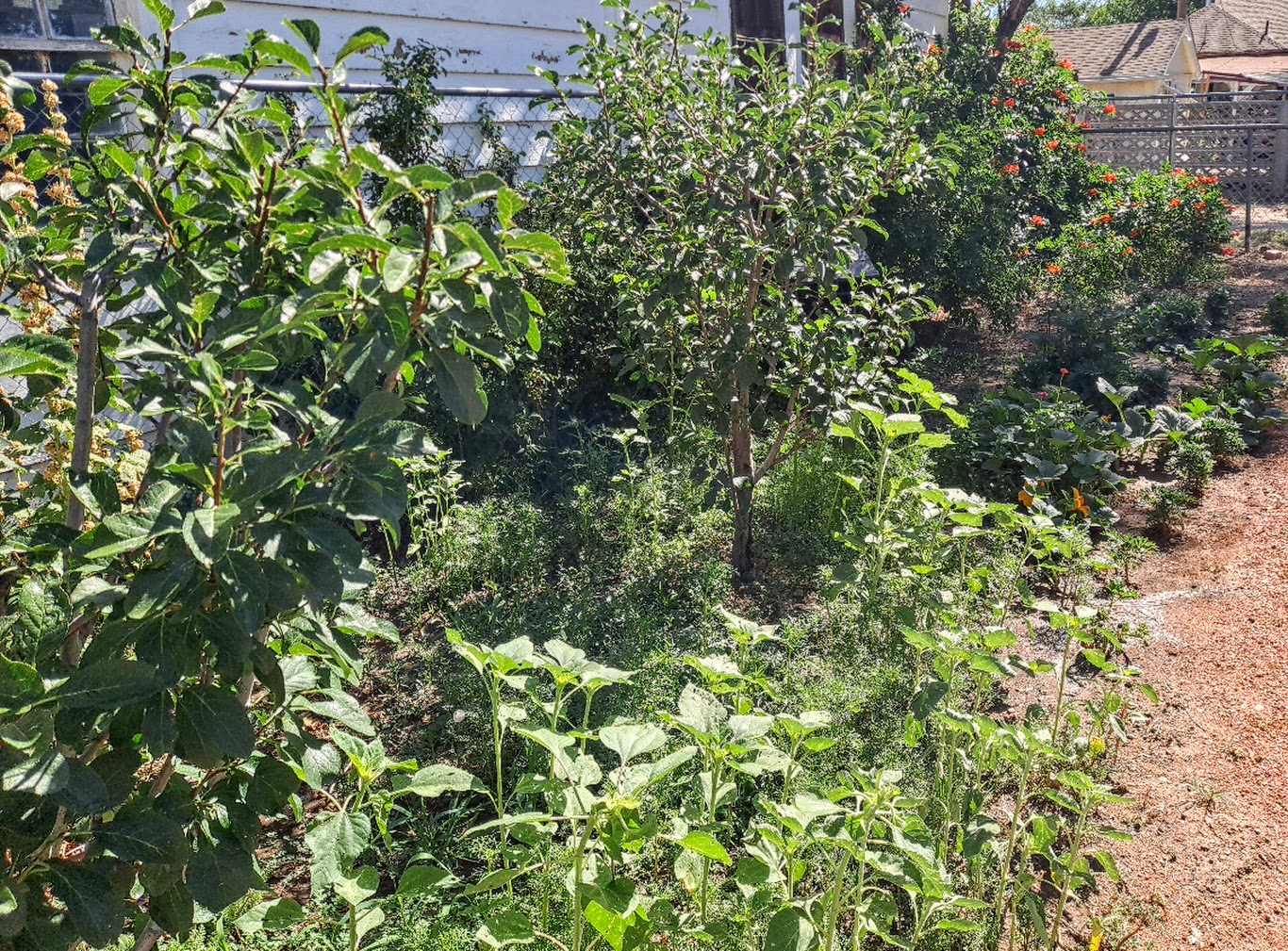
When I first started thinking about a garden, I came across photos of a luscious flower called a tree lily, a hybrid between an Oriental lily and a trumpet lily. (For obvious reasons, they’re also known as Orienpet lilies.) I’d always thought lilies were a rarified flower that only professional gardeners could grow, but apparently not. I loved the idea of a lily tree forest, so I decided to take a chance, even though the bulbs aren’t cheap.

Some of the original bulbs never came up, so the next year I planted a few more. And a few more after that. A couple of years ago, the lilies started to grow tall and to bloom. And oh, how lovely those lilies are! Large than my hand, on stalks taller than I am, they manage to deal with the weather extremes of this area very well. Even the late frost didn’t do much damage.

My one nitpick with the plants is that they need to be staked to keep them from growing in crookedly, but how does one stake a six- or seven-foot plant? I do fine when they’re young with my 2-foot metal stakes and the three-foot bamboo stakes, but after that, they’re on their own. I could tie them to the fence, but it would take a lot of plant ties or twine, and I’m afraid I’d forget it was there and trip on it or decapitate myself. Well, not decapite, of course, but something unpleasant anyway.

Although the forest looks as if it’s a narrow swath, the tallest lily and the one most needing to be staked is six feet from the fence. Still, leaning or not, my lily forest is awesome. The plants are just starting to bloom, and since each has multiple flowers that bloom at different times, I will have lilies to enjoy for over a month. (The flowers on the lower left-hand side of the photo are purple magnus echinacea.)

It’s amazing what an amateur gardener can do with no expertise but a head full of hopes. I’m still an amateur, of course, but after five years of gardening, I do know a few things, such as water them, remove weeds and weedy grasses, and let them do what they want to do.

Luckily for me, what they want to do is . . . bloom.

***

Pat Bertram is the author of Grief: The Inside Story – A Guide to Surviving the Loss of a Loved One

Betrayer of Hope

Daily writing prompt
What villain actually had a good point?

In The Wheel of Time books, there are several villains, all with their own reasons for turning to the Shadow aka the Dark One. A music lover wanted to be able to make and listen to music forever, so he figured it was a good bargain. Some turned because they wanted immortality and power beyond imagining. A few turned because they were simply evil. And then there is Ishamael, also called the Betrayal of Hope.

In the prologue of the very first book, after a horrendous ten-year war, Ishamael tells “The Dragon,” (the defender of the light and the hero of the story):

“This war has not lasted ten years, but since the beginning of time. You and I have fought a thousand battles with the turning of the Wheel, a thousand times a thousand, and we will fight until time dies and the Shadow is triumphant!”

The Dragon is a man who was created to fight this eternal battle, though he doesn’t remember his previous lives. (Ishamael apparently does remember.) And since The Dragon never had a choice in the matter, he was just reborn at the proper time to fight the Shadow, I can only presume (on this reading, anyway), that Ishamael himself has no real choice in the matter, either, and was always born to fight the Light.

That’s assuming, of course, that Ishmael is telling the truth. One of the interesting aspects of the books is that each point of view character isn’t privy to the whole of the story, and sometimes they mistake what is going on. Another interesting aspect is how that world runs — the wheel of time keeps turning, and ages come and go and then come around again. Although there might be small variations each time, I get the impression that each age is pretty much the same as it was before.

Which means that these two men are fated to fight forever.

That is why Ishamael turned to the dark — the only way for him to get off the wheel, to end this terrible and terribly meaningless cycle, is to destroy the wheel, which, in his mind, means that the Dark One must be the winner of this eternal battle. Whether he saw this destruction as the ultimate act of mercy for the world or only for himself, isn’t clear. But still, to be stuck forever in a life he sees as futile, remembering fighting the same battle over and over again seems so very tragic.

Although some of the other minions try to kill the current Dragon Reborn at various times, Ishmael sometimes helps him stay alive because if the Dragon Reborn dies before the final battle, then Ishmael continues to be stuck forever in the endless cycle.

It makes me so very glad we live in a linear world, or at least we presume we do, where the past stays in the past and doesn’t come again. There is a fatalism to the books stemming from the wheel, where each age will be repeated when the wheel comes around again to that age again. Which also gives them their belief that you can change your life in small ways, but not large ones. Not an easy philosophy to live under.

Ishamael sees that fatalism, too, so unlike the other minions of the Dark One, he doesn’t seem evil, just driven to end the interminable cycle. And, in the world of The Wheel of Time, he has a good point.

***

Pat Bertram is the author of Grief: The Inside Story – A Guide to Surviving the Loss of a Loved One

Where I Want to Live

Daily writing prompt
If you could live anywhere in the world, where would it be?

Ha! I bet you can guess my answer to this blog prompt!

Yep, it’s true. If I could live anywhere in the world, I would choose to live exactly where I am living now — in this tiny forgotten town, in my own house with my own yard and my own flowers, and friends that I seldom make the effort to see but know they are always there for me.

It’s taken me decades to get to this point, decades of uncertainty, sorrow, and fear of not being able to afford to live anywhere. This last is not an uncommon fear among women — even those with financial security worry about becoming a bag lady. In my case, the fear was exacerbated by the growing requirement of being able to pass a credit check when renting, and with my lack of any sort of credit rating, I simply did not know how I was going to navigate that morass. Assuming, of course, I wasn’t priced out of the market.

Exactly ten years ago today, I was feeling rootless, feeling suspended over an abyss with nothing to hang onto, worried as always about my uncertain future. At the time, I’d just returned from my cross-country trip and was staying in a fleabag motel. (Actually, it was a mosquito-bag motel. Eek.) I had no real reason to go back to that town, other than friends and dance class, but I had no place else to go. As I wrote back then: “I have looked at tiny windowless rooms scarcely larger than closets with a higher rent than the three-bedroom house Jeff and I lived in, gated communities that are merely fenced rooming houses, apartments with incredibly stringent requirements. . . . Maybe I don’t belong here in the desert. Maybe I don’t belong anywhere. But then what?”

A few years later, through a series of unexpected events, including an unasked-for email from Zillow showing me a place they said I might like though it was far from that desert town, I found my “then what.” Now here I am, living in the very house Zillow picked out for me, a house I once dreamed up.

I’m sure there are many wonderful places to live, places I might even like to live, but my days of looking beyond the perimeter of my own yard for something more are long gone. With any luck, this is where I will live out my years, with even greater luck, I might even be able to continue taking care of the place. (I still find it humorous that my goal when I got here was to have a care-free yard, and what I ended up with was a mini park that requires several hours of work each week.)

If I could tweak one tiny thing, it would be to have a wilderness walking trail nearby, but considering that I’m not as fanatical about walking as I once was (in fact, I seldom walk at all anymore), that missing trail isn’t as much of a lack as it used to be. The truth is, any outdoor time is spent in my yard. Just this morning, I went out for a quick tour to see how everything was holding up in this heat, and ended up trimming a bush, cutting back leggy yarrow, lopping the tops off New England asters to keep them from browning out, staking the tomato plant, and various other small chores.

Since I wasn’t planning on doing the work, I hadn’t doused myself with mosquito repellant, so I ended up with several new bites, but it’s all good. It’s all part of being at home in my own place, insects and all.

***

Pat Bertram is the author of Grief: The Inside Story – A Guide to Surviving the Loss of a Loved One

Favorite Blogger

Daily writing prompt
Who is your favorite blogger to follow?

I always tend to bring everything back to myself. I hope that doesn’t make me seem as totally self-absorbed as I think it does, because the truth is, just about the only time do think about myself is when I am writing a blog post and need to figure out what to write about. And since what I know is me, that’s what I write about.

This blog prompt is no exception to my bringing everything back to myself. I check out a lot of blogs, and though I appreciate the bloggers, I hesitate to name any lest I hurt the feelings of those I leave out. The only one who does come to forefront as a special favorite is someone who disappeared from the internet, and who no longer answers his email. I worry about him, but have no way to find out what happened.

So, there’s no single person to list as a favorite blogger, except perhaps for me.

It’s not that I follow my own blog (unless one considers writing as following), but every once in a while, I come across one of my own blogs and think, “Wow. I didn’t know that,” when the truth is that I must have known it at one time to write about it.

My latest “didn’t know that” moment came when I was searching for . . . I don’t even remember what . . . and I came across a post entitled I Am an Escribitionist.

Huh? Escribitionist? I sure don’t remember ever hearing that word, and yet, there it is on this very blog.

To keep you from clicking on the above link (unless of course you want to), I’ll go ahead and tell you that escribitionists are those who blog about themselves, their experiences, and their reflections. It sounds like such a bad thing, connoting, as it does, exhibitionism, but it’s simply a way of distinguishing the diary-like bloggers from those who write from a more journalistic point of view.

Sometimes I do sink into a more journalistic point of view, especially lately when so much of the political scene seems to bring out the pedant in me, but for the most part, I just write . . . whatever.

I’d intended to write about that escribitionist post, and when I saw this blog prompt, I figured out it would be a good place to plug in my musings about my own blog, which pretty much proves that for better or for worse, I truly am an escribitionist, since it always does seem that I bring everything back to me.

And no, that’s not my cat. It’s my sister’s. She took this photo the last time I visited her.

***

Pat Bertram is the author of Grief: The Inside Story – A Guide to Surviving the Loss of a Loved One

Orange You Glad

When my little brother was small, three or four maybe, he was annoyingly smart. He’d ask if I wanted to play a particular game, and if I said no, he’d say, “I’ll let you win.” That’s how smart he was — he knew how to beat me (even though I was more than a decade older than he was) as well as figure out how to let me win. He also had an infectious laugh. He used to tell one of those knock knocks that kept repeating the refrain, and when he got to the punchline, he’d just laugh and laugh. I’d have to laugh with him, even though by the time he finished, I was sick of “bananas.”

You know the joke:

Knock, knock. Who’s there? Banana. Banana who? Knock, knock. Who’s there? Banana. Banana who? Knock, knock. Who’s there? Orange. Orange who? Orange you glad I didn’t say banana again?

As I was sorting through the photos I took for today’s blog, I noticed that they were mostly yellow and orange, and it reminded me of that joke.

The flowers are no joke of course — they are a delight to the eye. My eye, anyway.

Although the spring flowers are gone, and the few summer flowers I planted — wildflower and dwarf zinnias — haven’t yet come in, there are a few flowers showing their colors.

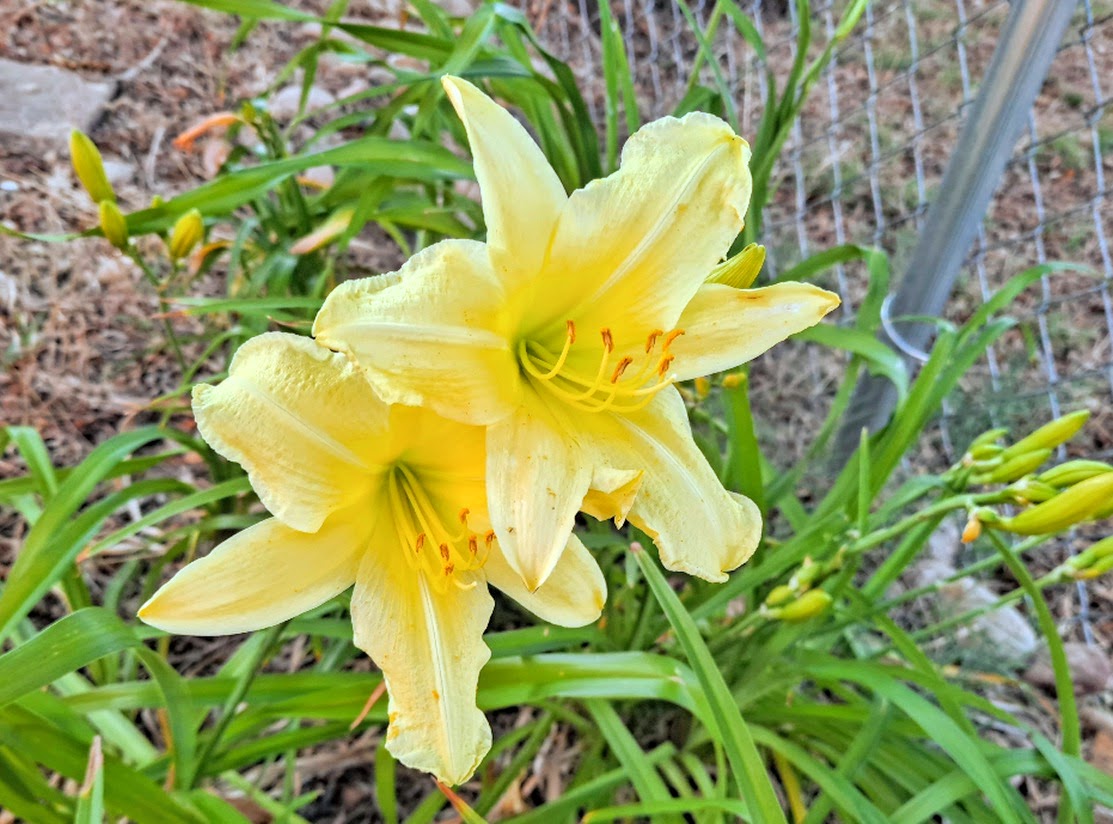
Daylilies.

This shy pumpkin blossom.

A dainty cantaloupe blossom.

The first moss rose. My raised garden is filled with the greenery of flowers that planted themselves, but so far, there’s only this one yellow rose.

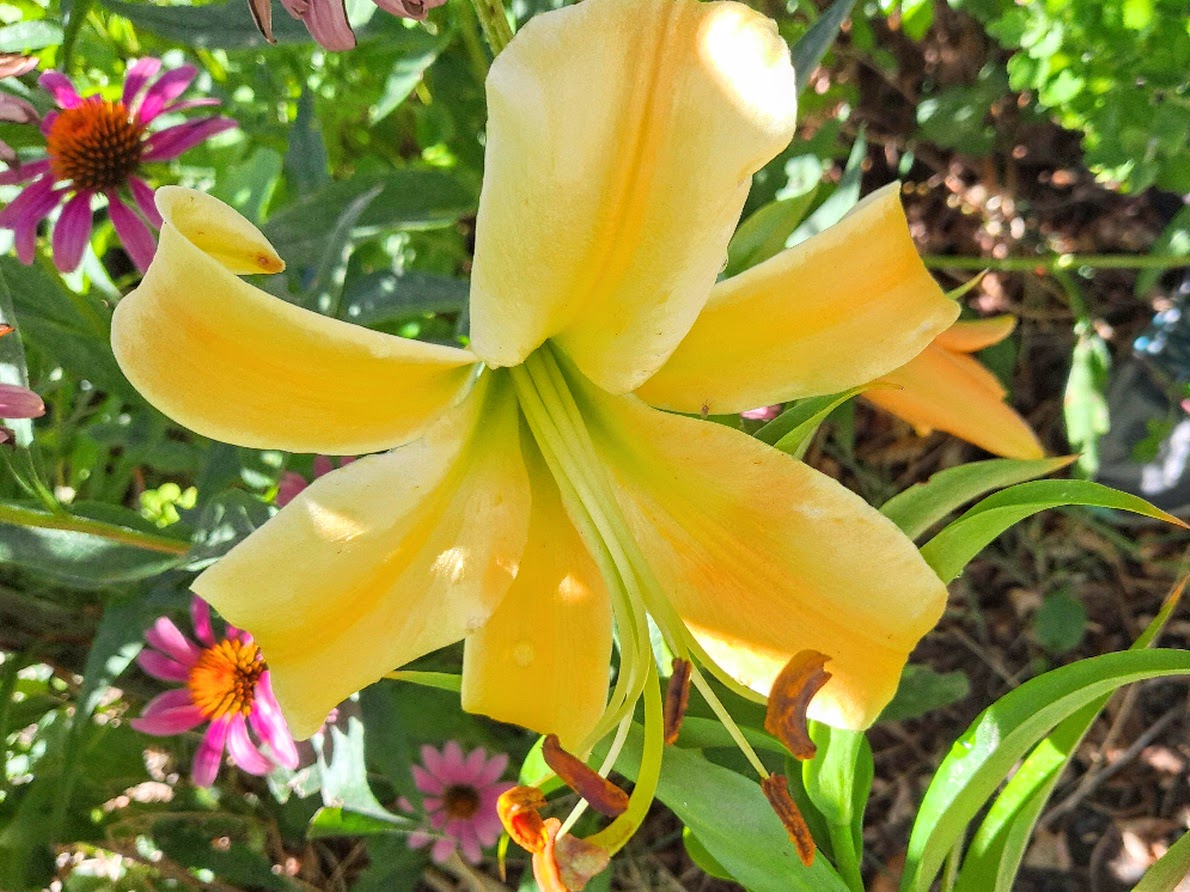
And then there’s this tree lily flower. I always thought lilies were an exotic flower, only able to be grown in special circumstances, so I was delighted when I found out I would be able to grow a forest of lily trees. (Lily trees are a hybrid of oriental and trumpet lilies, enormous flowers sitting stalks that grow to six feet or even more, and I have dozens of them yet to blossom!)

I realize this pink lily doesn’t fit with the color scheme of the rest of the blog, but orange you glad I posted it anyway?

***

Pat Bertram is the author of Grief: The Inside Story – A Guide to Surviving the Loss of a Loved One.

Happy Birthday, USA!

Happy birthday, USA. Thank you for letting me live a part of your history.

You’ve made me who I am today, and for that — and for so many things — I am truly grateful.

***

Pat Bertram is the author of Grief: The Inside Story – A Guide to Surviving the Loss of a Loved One
 

78 Degrees

There’s not much to laugh about when it comes to socialistic energy restrictions, or even simply grids so old that such restrictions are necessary, but I do find the current 78˚ restriction in some places amusing. For most of my life, despite living in the intense heat of Colorado summers, I didn’t have air conditioning at all, so 90+ temperatures in the house weren’t that uncommon. I’ve also lived a couple of places with air conditioning, but the person in control of the thermostat blasted air into the room so icy that I had to close the vents.

Now that I have air-conditioning and control of the thermostat, I have it set at 80. Sometimes, if I’m hot, I’ll lower it to 79, especially since my “office” is the least cool room in the house, but usually the room fan works as well as lowering the temperature.

Even if this weren’t a temperature I could get used to, I’d probably do it anyway. During my years (decades!) of no air-conditioning, I learned that the warmer the inside temperature, the less impact walking out into the heat has on one’s system. Going from hot to a blasting air-conditioner or from refrigerated air to extreme heat can be dangerous. For most people, the physiological stress is brief, but for others, it can strain the heart and worsen cardiovascular and respiratory conditions. And even if it weren’t dangerous, it’s easier to adapt to the outside temperature when the difference isn’t so great.

Too be honest, though, if a communist mayor were to tell me to raise my thermostat to 78˚, I’d lower my usual temperature to that setting just as a rebellion.

Or maybe not. Paying out money I don’t have to make a point seems silly. And anyway, I prefer to be able to set the temperature to my preference even if it does fit into someone else’s agenda. Having the choice is something to celebrate, especially during this holiday weekend when we’re celebrating 250 years of freedom.

***

Pat Bertram is the author of Grief: The Inside Story – A Guide to Surviving the Loss of a Loved One

Halfway Through the Year

Noon today marks the halfway point of the year. Although I noted the date and time on my calendar, it doesn’t really mean anything to me — it’s the days themselves that count since all I can control is what I do today. A year (or even half of a year) is rather an abstract, too long of a time to be able to live it as a whole. So why did I write it on my calendar? As a blog topic, of course. I’m always looking for things to write about since I’m still on my daily blogging kick. 183 days in a row as of today. That’s more than I’ve done the past few years, though it’s not out of the ordinary for me. Once I blogged daily for more than three years straight. Funny that — to do such a thing every day for so long, and then just . . . stop. Eventually, I’ll stop this streak, too, but not today.

As for the year passing — I’m more concerned with the summer. Hot. Dry. Windy at times. So not my most fun time of year! To be honest, neither is winter, but then, that’s still a ways away. And besides, as I noted above, all I can control is what I do today.

Today, I’m trying not to worry about the way this country seems to be heading. Trying not to worry about what the heat is doing to my yard. Trying not to worry about . . . well, about anything. That seems as good a half-year resolution as any, I suppose — trying not to worry. Of course, if I made it an official half-year resolution, then I’d have to worry about whether or not I’m worrying, so perhaps it’s better just to be. Take what comes.

What came today was a discovery that my “Archives: All Posts” page on this blog now only shows a few months. I’m trying to get with the WordPress people to see what happened, but so far, I’ve had only a brief, uninformative contact with something called my “AI Assistant.” It finally had enough of me and referred me to a human. So, I’m waiting for an email that might or might not come from a real person.

I doubt I need the entire blog archive — I mean, who wants to sort through 3,866 posts (3,867 after today) to find a title that catches their interest (I certainly wouldn’t!) — so I might just get rid of the “All Posts” designation and let the code do what it wants. I considered replacing the archives with a “best of” designation, but then, I’d have to go through all of those posts to see if any are worth highlighting. So, no.

What else came today was a lovely pair of daylilies! They brightened my day. I hope they brighten yours, too.

Happy halfway day!

[Update: I did get an email, and apparently, the server has to generate all the codes at once and with so many, it runs out of memory part way through. The email gave me an alternative way of posting the archives, which, if nothing else, shows me how many times I posted each of the past 225 months.]

***

Pat Bertram is the author of Grief: The Inside Story – A Guide to Surviving the Loss of a Loved One
Lesson Learned. Maybe.

Daily writing prompt
What’s a lesson you’ve learned recently that shifted your perspective?

The most recent thing I learned is that you can’t transplant flowers when it’s 103 degrees and expect them to live.

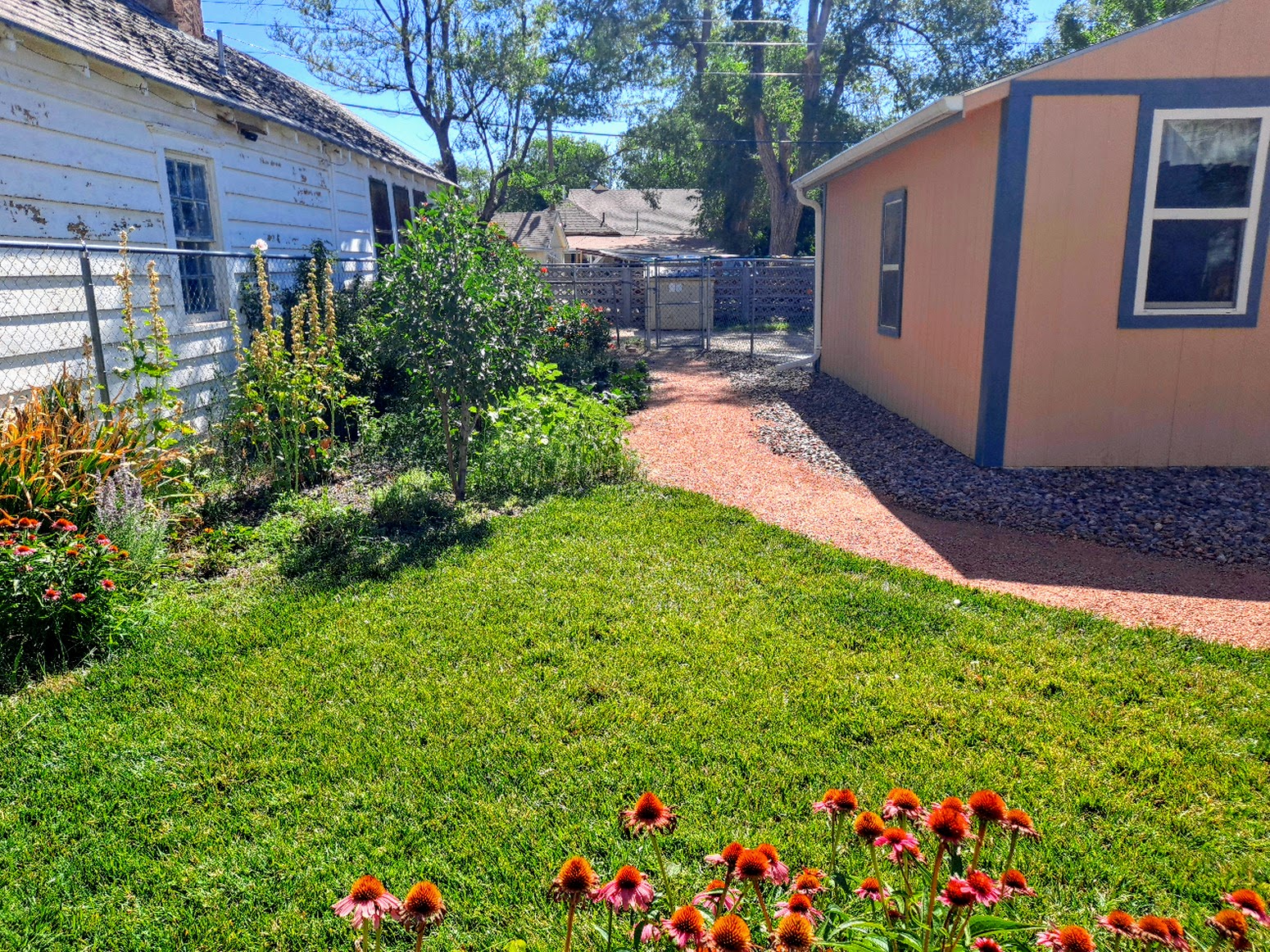
A month ago, I planted petunias in my raised garden (center of the photo), but the area is being taken over by the marigolds that planted themselves.

I’d been transplanting a few marigolds at a time, mostly to plant in my what I laughingly call my farmer’s garden, which consists of a single pumpkin plant, a single tomato plant, a single cantaloupe plant, and single watermelon plant. Fortunately (or unfortunately — I don’t know which), the marigolds remaining in the raised garden are doing so well I had a choice to let them do what they want, thin them, or transplant them.

Obviously, I went the transplanting route, otherwise I wouldn’t be writing about learning that you can’t transplant flowers in the heat.

I suppose, in a roundabout way, I merely thinned them since I don’t know if I can keep the transplants alive, though I just took a quick break to water them again in a half-hearted attempt to give them a bit better chance at surviving.

If it were only the temperature I had to concerned about, I might not worry so much, but it’s windy, the sun out here on the plains is incredibly intense, and the humidity is only 11%. Eek. Doesn’t sound like a temperature anything or anyone would like. I sure didn’t! I gave those poor plants a quick squirt and scurried back inside.

So that’s the lesson I learned. Maybe.

Did this lesson shift my perspective any? I doubt it. When/if the marigolds I transplanted don’t make it, I’ll probably try again or else run the risk of having them overshadow the petunias and moss rose that need to share space with those marigolds. (In the photo below, the marigold plants are those with the slightly bluish-green palm-like foliage.)

Although this lesson might not have shifted my perspective, for sure it reminded me to stay in out of the sun. And that’s a lesson I intend to take to heart.

***

Pat Bertram is the author of Grief: The Inside Story – A Guide to Surviving the Loss of a Loved One
Hope

I don’t really pay attention to generation labels. I mean, I know what a couple of the names are, but I haven’t a clue as to where they fall in the age spectrum (my age spectrum, specifically), or what, if anything, any of those groups want. I also don’t know what the ethos of each group is, assuming there is such a thing. I can see certain characteristics, such as people having grown up using phones as a child, or their feeling a sense of doom or lack of hope for the future, but not everyone in any particular generation is the same. For example, while there could be a lot of clownishly-dressed protestors in a particular generation, there could also be what used to be called “clean cut” people trying to create a different life for themselves.

To be honest, I don’t have a lot of contact with the youngest generations, and when I do, they are generally respectful. I’m also aware that a whole lot of younger people follow the socialist party line of “billionaires bad, trillionaires worse.” But then again, so do a lot of people of all ages. Too many people are totally ignorant about how money is made and how wealth is created. Wealth is not a single pie of limited size, as they seem to presume. Every wealth creator (people who own businesses and who work at them) adds to the size of the pie, which benefits everyone. And even if those wealth creators were taxed out of existence, not much, if any, of that money will end up in the hands of those ignorant folk. There are too many grifters out there already standing in line with their hands out.

I also know that a lot of younger generations are unpatriotic; apparently many see the country as a hellhole with no redeeming characteristics. But then, so do a lot of the older generations. Outrage seems to be the name of their game, and algorithms only feed their insularity. Others are simply apathetic.

Lately, though, I’ve been seeing a different side of those young folks. Two young men started “Relay for America,” a run to carry the flag from the Pacific Coast to Washington DC — keeping that flag moving day and night, without stopping. Over 250 official relay runners have signed up, and others join them along the route. Each mile is dedicated to a veteran. Their hope is to unite America with this show of patriotism and community.

Another couple of young men (one who has entirely too much energy and soles of leather since he runs barefoot) started a running club called Unify America. They travel to various places, run with a flag, hoping to spread their message of love and joy and patriotism.

Recently, the second group joined the first for part of the relay. Symbolic, that.

This show of patriotism, fitness, and solidarity gives me hope. Perhaps the communist ideals creeping through the country are not a foregone conclusion. Perhaps there is a spiritual, maybe even a political, balance at play.

Another thing that gives me hope is the rise of independent journalism. Young people with phones and cameras and a steadfast desire to tell the truth are a perfect foil for the propaganda of the alphabet press. Instead of sitting in air-conditioned studios parroting the approved stories, those young journalists are out there, standing on their own two shod feet, showing what the established press doesn’t want us to see.

Even if they’re not out gathering their own stories, there is a growing group of conservative podcasters who try to dispel the lies that are so often peddled by far-left extremists, especially those of a similar age, and to tell the truth as they live it.

It’s good to know that these young men and women are out there. They bring hope to world. And to me.

***

Pat Bertram is the author of Grief: The Inside Story – A Guide to Surviving the Loss of a Loved One