Questioning Reality

Daily writing prompt
What’s a moment that made you question reality?

A moment that made me question reality? There never was such a moment in my life, nothing like seeing someone out of time or out of place, seeing an alien or ghosts, finding gaps in my personal timeline. Nothing fun or lighthearted like that. But there are a couple of current events with historical overlays that are seriously making me question reality.

I’ve been reading a novel based in occupied France during World War II, and of course, there’s the whole story of antisemitism and concentration camps. That’s normal for such a book since those things happened back then. They are part of the story.

Then I take a break, go online and read about the growing antisemitism in this country. Even more horrific is that two candidates in Texas are using as their platform the promise of concentration camps for Jews. What the heck?? I thought we’d finished with that, though sadly, with the increasing population of Muslims and Islamism galloping across the country, it sort of makes sense that they would be selling the idea. But no one has to buy it. Jews are more a part of this country than Islamists. Hello? Judeo-Christian tradition anyone?

As if that’s not bad enough, I’ve been reading about the origin of the marines, and especially their hymn. I’d always thought “From the halls of Montezuma to the shores of Tripoli” was just a poetic way of saying “From sea to shining sea.” But no. Those were two battles fought by the marines. During the Mexican-American war in 1895, the Marines seized the Chapultepec Castle, aka the Halls of Montezuma.

And the shores of Tripoli? In the 18th century, Muslim pirates from the Barbary Coast (The North African Islamic nations of Tripoli, Tunis, Morocco, and Algiers) attacked ships in the Mediterranean, ransoming them for huge amounts of money as well as demanding bribes for letting ships use international waters. It had been the practice for countries simply to pay the extortionists to appease them. In fact, the newly formed USA had been paying over 20% of its revenue to the Muslims, but when pirates upped their demands, Thomas Jefferson refused to pay. So in 1801, the Pasha, who believed that all nations who would not acknowledge Islamic authority were sinners and that it was his right and duty to make war upon them wherever they could be found, declared war on the USA. That was the first Barbary war. The second came fifteen years later.

And now? Really? Another Barbary war? It’s not called that, of course, but what we have is another Islamic nation of pirates extorting “tolls” from ships in international waters. Or they’re trying to, anyway.

This isn’t about the truth or even what you or I believe. It’s about the unreality of what’s going on today.

Antisemitism and concentration camps?

Islamic pirates?

Really? Really?

It’s as if age-old evils are bubbling to the surface of reality like marsh gas. Or maybe we’re stuck in a time loop of forever wars. Or . . . who knows. All I know is sometimes it feels as if none of this is real. And for sure, it does make me question reality.

***

Pat Bertram is the author of Grief: The Inside Story – A Guide to Surviving the Loss of a Loved One

The Venerable Vegetable

Daily writing prompt
What’s a word or phrase that annoys you?

There used to be many words and phrases that annoyed me, constructions such as “110%” and “intestinal fortitude,” but those instances seem so innocuous now that other words have begun to be used half to death (to the death of the word, that is), words like fascist and nazi and racist and whatever happens to be the phobe of the day.

I don’t know if I’m getting used to words that are so overused that they’ve become meaningless or if I’m less critical or . . . who knows. All I know is that there are now fewer words that irk me. And yet there is one word that I will never, ever use. Will never, ever hear without my teeth gritting or feeling the word scrape down my back like some unseen claw.

I can avoid other words, even the most hateful and prevalent, because people I’m around in real life don’t use them, and if I’m reading the words online, I can quickly skim past them before they sneak in under my skin.

But there is that one word, a word I can barely manage to even type, so I’ll close my eyes and hope I get it right. “Veggies.” There. I did it. Whew! The very sight, the very sound of that mawkish word gags me, but it is now universal. It’s as if no one knows how to say or write or spell the word “vegetables” anymore. I mean that literally. I am the only person I know who says “vegetables.” I can understand urging small children to eat their “veggies,” but when said by an adult to an adult, it seems . . . disrespectful.

Are vegetables really that onerous that they need an infantile nickname? Are we in such a hurry that we can’t manage to say the whole of the venerable “vegetable?” And it is a venerable word. It comes from the Medieval Latin word vegetabilis, meaning “growing, flourishing, or full of life.” It was used from the Middle Ages on to denote all plants, not just edible ones, because plants are capable of life and growth as opposed to inert minerals.

And so what do we have today instead of life and growth and vigor? The cringeworthy “veggies,” which means absolutely nothing.

I realize I am one of the few purists left when it comes to words. Oh, I know the argument, that language is ever evolving, and I understand that. I would just prefer that it evolved around other words I don’t have to hear every day even from people I like.

***

Pat Bertram is the author of Grief: The Inside Story – A Guide to Surviving the Loss of a Loved One

Erasing Movies

Daily writing prompt
If you could erase one movie from your memory and watch it again for the first time, which one would it be?

I found this blog prompt amusing because except for a few movies that I’ve seen multiple times, such as “Let it Ride” and “The Princess Bride,” I’ve pretty much erased every movie I’ve ever seen from memory, so seeing any of them again would be seeing them for the first time. I didn’t purposely erase them, you understand. Life did. Time did. In fact, the only titles I remember are the two listed above.

When Jeff and I first moved to an area where the only television programming we could get was through cable, we decided to splurge and sign up for a premium movie package. Back then, when such channels were new, we had forty to fifty new movies to watch every month. As time went on, and more channels were created and more deals made, the new offerings became less and less until there were only a handful of new movies to watch each month. So we watched a lot of movies over and over again.

Before then, I’d seldom gone to the movies because I preferred to read since I could set my own pace, and I never even owned a television until Jeff and I got together, so movie watching was new to me. I think we watched just about every movie ever made until . . . hmm. I don’t remember until when.

I could watch movies if I wanted — I have hundreds of movies that Jeff had collected and although I never use it, I do have a television. Unfortunately, movie-watching doesn’t have the same effect when you watch them alone as they do when you watch them with someone who has the same level of appreciation. Besides, I seem to have erased the idea of movie watching from memory as well as the movies themselves. Despite the television’s blank eye staring at me, I never even consider watching a movie.

Perhaps someday I will watch some of those collected movies again, but until then, the movie erasure continues, so that when I do watch them, they will be new.

Not that it matters if I do remember. I like knowing ahead of time what is happening — I’m past the stage in my life where nail-biting tension has any allure. I like seeing the action, like knowing as it is happening what the characters will be facing before they do since it adds an extra level of participation. Oddly, I don’t like either in my life — not tension, and certainly not knowing the future, which if known, would probably bring with it a whole lot of tension.

So I guess, to answer the question: there isn’t any specific movie I would like to see again for the first time. As of right now, there isn’t any movie I want to see at all.

***

Pat Bertram is the author of Grief: The Inside Story – A Guide to Surviving the Loss of a Loved One

A Quiet Feeling of Contentment

Daily writing prompt
What’s a simple pleasure in life that brings you joy?

I looked up the meaning of joy because I was curious if my personal meaning matched the prevalent meaning, and it appears to be the same. To me, joy is an intense feeling, a kinetic emotion of delight and elation and even jubilation. I call it a kinetic emotion because it seems to be one of movement, an uplifting rather than a more static feeling of perhaps contentment or satisfaction.

Nothing anymore gives me that kinetic feeling of joy, nor does much of anything make me feel the lowering kinetic emotions such as anger and angst and outrage. I’m usually balanced somewhere in the middle rather than clinging to a vastly swinging emotional pendulum, which is how I like it.

There are many simple activities that bring me satisfaction, that take me out of myself and absorb my attention. I used to go to the library all the time, but I’ve taken against that simple pleasure, and so I find other things to do rather than spend all my time reading. Daily blogging, obviously, is one thing that takes up time once dedicated to reading. (I say obviously because . . . here I am!)

I’ve also bought a bunch of pencil puzzles books, a deal since they are outdated magazines, but that’s certainly not a problem since they’re all new to me. There are plenty of different kind of puzzles to keep my mind active, and I tend to think doing puzzles is better for mental stimulation than reading is.

Another activity I’m getting back into is paint-by-number. I used to get a kit occasionally when I was a child, and always enjoyed them, but then they disappeared for decades. My sister sent me a couple of kits for Christmas a few years ago, and that got me started again. They make me feel as if I am actually painting when all I am doing is coloring with paints, but filling in all those shapes satisfies something in me — my sense of order, perhaps.

Doing puzzles seems to be replacing reading, though I do read the books I have in the house especially when I eat. (I can’t seem to develop the habit of sitting down at a table by myself to eat. I know it’s supposed to be better for me, but it seems too bizarre and maybe too earthy to do nothing but concentrate on eating, which leads me to believe I don’t really like to eat.) And doing paint-by-number seems to be replacing computer games, though I still check in with a hidden object game most days.

And, of course, there is gardening. How could I have forgotten that, especially since I just came in from watering my plants and picking a few weeds.

Doing simple things gives my life a sense of balance, peace, and sometimes satisfaction, though the satisfaction doesn’t come from the doing so much as the having done. Seeing a picture come to life, finishing a puzzle book and starting a new one, seeing flowers growing in my yard and basking in the greenness all give me something better than joy. They give me a quiet feeling of contentment.

***

Pat Bertram is the author of Grief: The Inside Story – A Guide to Surviving the Loss of a Loved One

Learning Something New

Daily writing prompt
How do you stay motivated when learning something new?

This must be a question for people who are forced to learn things they don’t want to, such as for school or work or new technology, because otherwise it makes no sense. At least not for me. Learning something new has always been its own motivation. Now that I think about it, learning something new seems as if it is sort of the point of life. If we never learn anything new, where would we be? Lolling around in oversized cribs, I imagine, crying from sheer boredom.

The joy of learning is written in our genes. That’s obvious if you’ve ever watched babies, newly sprung from their playpens, crawling all over, learning new things, trying to pull themselves up. And oh, that grin of sheer pride and joy when they manage that first step. They didn’t need to stay motivated, the learning itself was the goal, though encouragement from their parents never hurt. Obviously, there are some things babies need to learn that perhaps they don’t want to, such as using the potty or not touching the pretty fire, but for the most part, babies learn because they want to. Because to them, learning is playing, and playing is learning.

There is an old quote: we don’t stop playing because we grow old, we grow old because we stop playing. I never liked that quote because it’s too specious, too simplistic, too out of touch with reality. Look at professional athletes. They have to stop playing because they get too old to be able to compete with younger players, not the other way around.

Now, if I were to substitute “learning” for playing, then that quote makes sense, though again, it doesn’t always hold true. Often the elderly can no longer learn because of growing cognitive issues, but still, I tend to think curiosity (and boredom) does motivate people of any age to learn new things. Besides, whether we want to or not, we have to continue learning as we age if only to learn how to do things we once did with ease but that now seem complicated, like opening jars or bending to pick something up. For sure we have to learn how to be mindful or else a reckless step can lead to disaster.

Since writing this has convinced me of the importance of learning — with or without a need for motivation — I’m sitting here trying to think what I’ve recently learned, but I can’t really think of anything. At least nothing fun. I learned a lot of fun things in the past decade — dancing, camping, buying a house, taking care of a house, the tarot, landscaping, gardening — but not so much today except for small things I learn while reading or gardening or doing puzzles. The only specific thing I can think of is that I am learning more of the history of the middle east than I ever cared to know. I never did understand anything of their history or who they were or why they did what they did — it was simply too confusing, uninteresting, and of no particular value to my life, but now I’m seeing a much broader picture, one that dates back almost to the first days of civilization, but specifically back to the 7th century. Is it important to know the history? Only if I want to know the historical reasons for a lot of today’s events, which I don’t, not really. But it is learning, so that’s good.

What I need is to find something new to learn. Something I want to learn just for the fun of learning, something I don’t have to worry about motivating myself to learn. Though what that might be, I don’t know, because if I did know, I’d already be learning it.

***

Pat Bertram is the author of Grief: The Inside Story – A Guide to Surviving the Loss of a Loved One

Books and Surprises

Daily writing prompt
What’s a book that completely surprised you?

I can’t say that any book completely surprised me, though some books have surprised me, in both good and bad ways.

I am currently rereading Noel Barber’s novels. I finished Tanamera and am now on Sakkhara. Neither should have surprised me since I’d read them before, but they did surprise me, though I’m not sure if that’s good or bad.

I’ve always thought of Tanamera as a Malaysian Gone with the Wind, and Sakkhara as an Egyptian one, though to be honest, I never paid much attention to the romances that thread through the stories. To me, both of those books are about the exotic locations — Singapore and Cairo in the 1930s and 40s — and about the war experiences in those places as well as their problems with being British colonies. In both books, a British family is friends with a native family, and it’s through the relationship between those two families that the conflicts are filtered, and where the real story lies. What I especially like about the books is seeing World War II from a different perspective. Barber was a British war correspondent, so he tells the stories both from the British point of view as well as the location’s point of view. For example, the main war in Singapore and Malaya (as it was known then) was with the Japanese. And originally, the main war in Egypt was with the Italians before the Germans came.

All that is good, and what I remembered. What I didn’t remember — and why it came as a surprise — is that the romance is basically the same in both books and is rather boring: a love triangle (or maybe quadrangle) between the two families as well as an outsider that one of the brothers got pregnant and had to marry rather the woman he loved.

Not a problem, really. It’s no worse than most secondary romantic plots, though I found myself surprisingly on the side of the other brother. Though the first brother (the sort of hero) married not for love but because of his indiscretion, most things worked out for him. And in the end, so did the romance. While the other brother in both stories lost everything. (Makes me wonder if Barber had problems with his brother.)

Next on my list is Farewell to France, basically the same story as the other two, though — obviously — in France (in the Champagne district), and the hero is of American descent, not British. I don’t remember the romance part, though I would be willing to bet it too is the same.

Even though I found it surprising that I was so underwhelmed by the romance aspect and was surprised that the books told the same story, I still like them. It really is interesting seeing basically the same story told in three different countries showing three different perspectives of what truly was a world war.

***

Pat Bertram is the author of Grief: The Inside Story – A Guide to Surviving the Loss of a Loved One

Exercise Routine

Daily writing prompt
How can you build a regular fitness routine?

When I was in my twenties and wanted to start running, I asked my brother, a track star, for advice. He told me to run a block every day. No more than that. No less than that. Then gradually increase distance. I followed his advice, and within a couple of months, I was regularly running a mile a day. I did that for years, and then one day, for some reason, I forgot to run. And gradually, the “forgetting” became more prevalent. Also, my work hours changed and my early morning running time disappeared.

Over the years, I tried to get back into running, always starting with that one block a day regimen, and it always worked. What didn’t, was me. Things always happened to change my routine, and if I wasn’t in the groove, the habit disappeared. Amazing — when you try to break a bad habit, it takes forever. When you inadvertently break a good habit, it takes a single day.

Long after I stopped being able to run, I used to dream of running. I loved that effortless feel of almost flying along those dreamscapes, though waking to the realization that I could barely plod along was painful. Luckily, those dreams eventually stopped.

I did various other exercise routines over the years. Jeff helped me with weightlifting, and as with running, the advice was to start light and then gradually increase. After he died and my weights were packed away in a storage unit, I took up other forms of exercise. Mostly hiking. Stretching. Yoga. Dance classes.

I set up my weights when I moved to my house, but I worried too much about damaging my fake elbow, and I didn’t want to one-sided weight lifting, so that exercise, too, disappeared. Pretty much all I do every day anymore is a stretching routine that keeps me relatively limber and at least gives me the illusion that I am exercising. Now that spring and gardening weather is here, I don’t worry about other forms of exercise — I get plenty of movement outside taking care of my yard. Or so I tell myself.

Oops. This post was supposed to be about building a regular fitness routine, and I’ve mostly been mentioning how to destroy a regular fitness routine.

For what it’s worth, the best way to do anything physical is to do what both my brother and Jeff suggested — start small and build up.

Writing this almost makes me want to go out and do some sort of exercise. The relevant word being “almost.” Though if I could go back to dance class, I’d do that in a heartbeat!

***

Pat Bertram is the author of Grief: The Inside Story – A Guide to Surviving the Loss of a Loved One

Minimalist Living

Daily writing prompt
What are the biggest benefits of minimalist living?

I had no idea “minimalist living” was a thing. A simple Google search showed me hundreds of articles about how to become a minimalist, including a lifestyle guide to minimalist living, a complete beginner’s guide to minimalism, ways to start living a minimalist lifestyle, how to ease into a minimalist lifestyle, how to convert your family to a minimalist lifestyle. And on. And on. And on.

Weird. Who knew you had to learn to live a minimalist lifestyle? It’s probably the simplest thing imaginable. You just live . . . minimally.

The truth is, I’ve been living a minimalist lifestyle my whole life, but I don’t call it that. I call it not buying things I didn’t need. I call it living debt-free, not buying anything I can’t afford right now. (My thought has always been that if I can’t afford it today, why would I suddenly be able to afford it when the bill came due? More than that, though, I’ve always had a fear of being in debt. Perhaps I read too many books about owing money to gangsters in my youth.)

I call my minimalist lifestyle “using, reusing, using up.” I call it not wasting anything, especially not food. (How do people live with themselves when they throw away perfectly good food because they don’t like leftovers? I don’t eat leftovers either. At least not by that word. I call any uneaten food a pre-cooked meal or tomorrow’s fuss-free lunch.)

I know one thing minimalism isn’t — following someone else’s guide to minimalism.

I have way more stuff than the minimalism gurus suggest, but a lot of that was hand-me-downs, such as my furniture. Instead of doing nothing in a relative’s storage unit, I get the use of those lovely items. (According to him, it’s my furniture now. I guess he was minimalizing his life by maximizing mine!) A lot of other stuff I own is left from the retail business Jeff and I used to run, though gradually, I’m finding people to dump the stuff on. (Oops. I mean finding people to donate it to.) All my extraneous stuff is neatly packed away on shelves in my garage, so it’s not in the way. Since I don’t like things on the walls in my house, my finished paint-by-number pictures and other “artwork” decorate my garage. And if I get something new, such as a gift, I get rid of something old. It doesn’t reduce what I own, but it keeps me from becoming a hoarder.

To me, minimalism isn’t so much about what I own but what I do. I try to do only one thing at a time. Not only that, I am truly a minimalist when it comes to letting — or rather not letting — the world intrude on my life.  I don’t listen to music while I do chores or whatever. Actually, though I am loath to admit it, I don’t listen to music at all because, to my tin ear, it’s all just noise. Besides, I hate having snatches of songs stuck in my head. I prefer silence. I don’t watch television, either, and when I’m on the computer, I have the volume turned off.

So what are the benefits of my minimalist style of living? Well, no debt, for one. (The typical U.S. household is carrying about $105,000 in debt. Yikes. How do people do that? Doesn’t it make them crazy to owe that much?) My income is also minimalist, but it’s not a problem because my minimalist lifestyle is one I can afford. At least for now. Since I’ve kept the same vehicle for the past fifty-four years, I don’t have to deal with a car payment, and since my driving is minimal, I don’t spend much on gas. (In fact, for me, gas is always the same price — I put in twenty-dollars’ worth each time I get gas, and that’s that.)

Other benefits — less stress since I don’t have to worry about paying off a debt. Peace of mind because I try to keep my mind as uncluttered as the rest of my life. A feeling of lightness since having too many possessions weighs me down. An ability to enjoy the small pleasures of life, such as flowers in my garden, since I haven’t straightjacketed myself into a hectic routine.

I can’t imagine living an opulent life (or whatever the opposite of a minimalist life would be). This minimalism is so ingrained in me that, to me, it’s just life.

***

Pat Bertram is the author of Grief: The Inside Story – A Guide to Surviving the Loss of a Loved One
My Ideal Life

Daily writing prompt
If you had to describe your ideal life, what would it look like?

If I had to describe my ideal life today, it would actually look like my life today, but that description has changed over the years.

If I had to describe my ideal life when I was a child, it would have been no chores and time to read all I wanted. And dessert after every meal.

If I had to describe my ideal life when I was a young adult, it would probably have been a job I loved that paid me a ton of money so that I could save enough to quit my job and read all I want. And yes, dessert after dinner.

In my middle years, my ideal life would have been how things were when Jeff was doing well — playing games together, working together, and making enough to get by. Ideally, we would have made enough not to have had to worry about neither of us working when he wasn’t doing well. Still, during those intervals, I had plenty of time to read, though not always money for dessert every evening.

Now, that I have grown up (actually more than grown up — I’ve almost grown to the stage of spoilage), and now that I have realigned my life after losing Jeff, my parents and my older brother, I can’t imagine any life other than the one I have. And rightly so. For me, it’s . . . ideal. Truly.

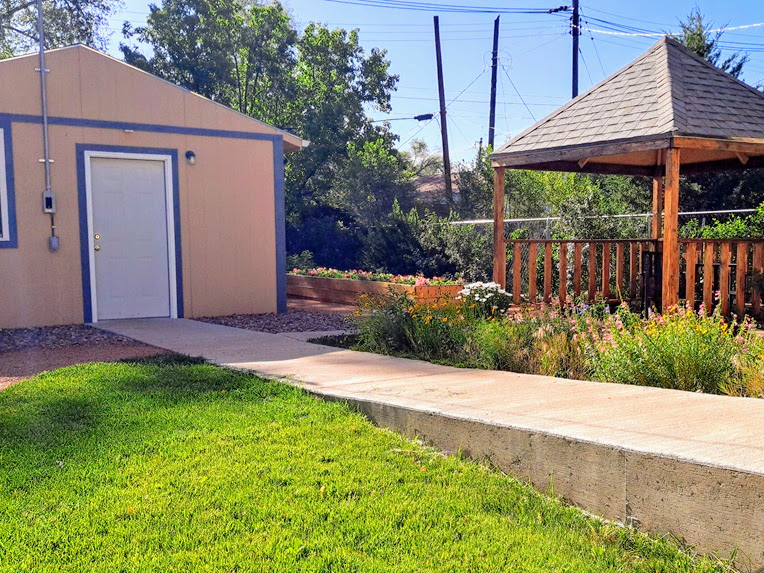
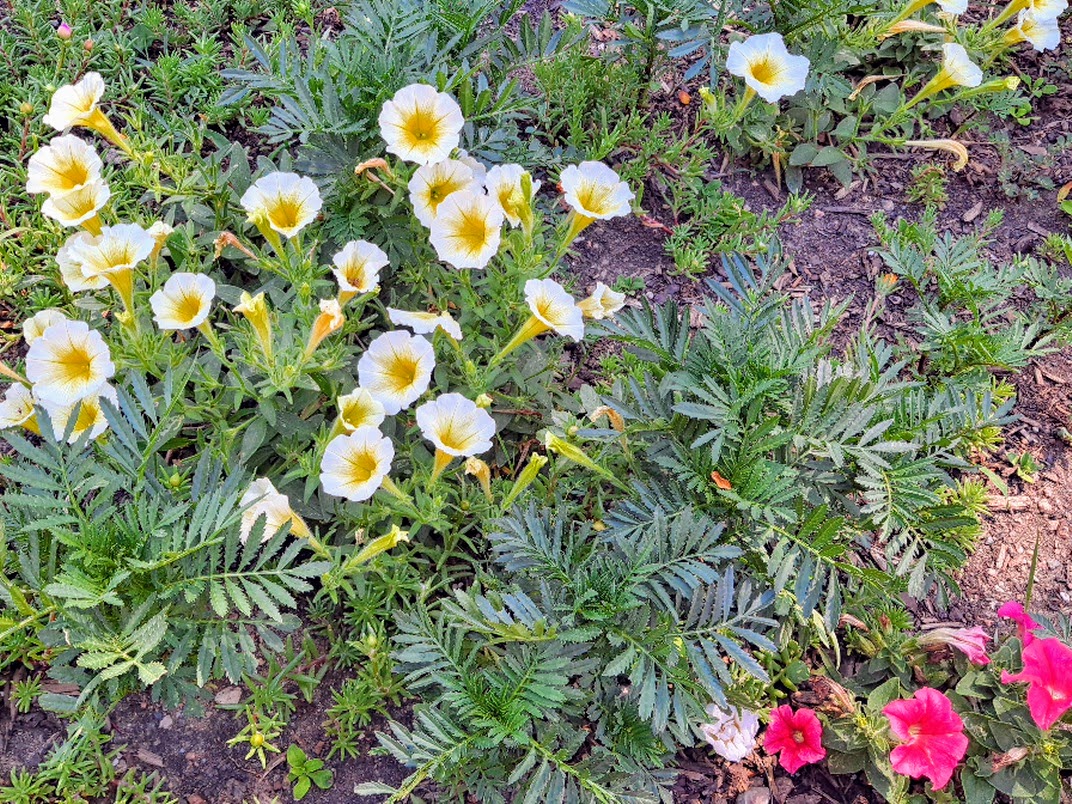
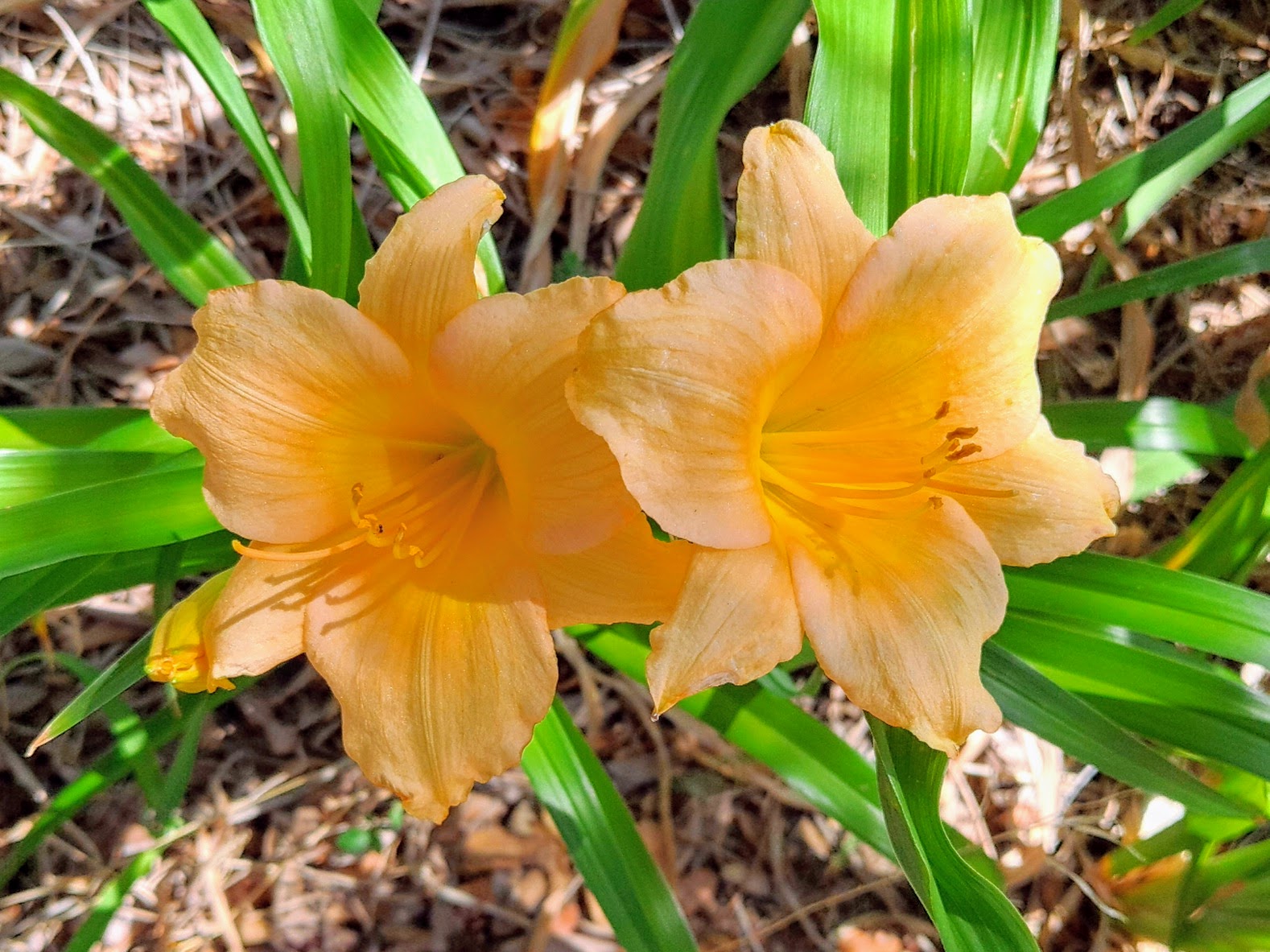
For example, this morning, after my stretching exercises, I went outside and mowed the lawn. I talked to one neighbor who crossed the street to chat, saw another neighbor out walking, and she stopped to chat. I watered the petunias I’d purchased yesterday morning and planted yesterday afternoon, then wandered around my yard, marveling at being able to live in such a fairytale environment.

Admittedly, the yard does take work, but right now, it’s easy enough to make the effort. Besides, the work I did today wasn’t work so much as an excuse to be outside in the clement weather, especially after the past two days of inclement weather.

Although I have time to read, I’ve run out of books I want to read, have no interest in scouring the shelves of the local library for more books I have no interest in reading, so I’ve been rereading the few books in my own library. And that dessert after every meal? I could have it of course, but then there’s the issue of my being smart enough not to indulge. But those “ideals” were left over from my childhood, so doing without isn’t an issue. Other things take their place. Blogging. Solving pencil puzzles. Painting by number. Gardening. Sometimes even visits with friends, whether impromptu or planned.

Best of all, I know that this is an ideal life. Since I’m in the aforementioned state of spoilage, I have no idea how long this particular phase of my life will last, though I tend to think that whatever happens, since I’m in the habit of being grateful for whatever life I have, I’ll find that an ideal life, too. Eventually, anyway. And if not, well, that life is in the future, and the future is up for grabs.

But I do know what today is like since I’m living it, and for me, it is the ideal life.

***

Pat Bertram is the author of Grief: The Inside Story – A Guide to Surviving the Loss of a Loved One

Ordinariness as a Super Power

Daily writing prompt
What super power do you wish you had and why?

When I was young, I thought mental super powers, such as telepathy and telekinesis, as well as the ability to see ghosts, were a sign of an advanced spirituality, that people who had such abilities vibrated at a higher frequency than normal. I found it disappointing that I was merely normal, not supranormal, just one of the masses. Nothing extraordinary.

Now I find comfort in that ordinariness. I’m glad I can’t read people’s thoughts, even more glad that they can’t read mine. To tell the truth, for the most part, I don’t even want to be privy to my own thoughts, which is why I try to focus on the moment and not let my thoughts overwhelm me. Besides, who needs telepathy when there is writing — seeing a few words or writing a few words exchanges thoughts from one person to another in a quite orderly and controlled manner. And conversation, of course. That’s an even more ordinary way of learning someone’s thoughts.

The telekinesis I exhibit is the ability to get up and get what I want, which is pretty remarkable, when you think of it. As for ghosts . . . no. Just no. My sister says she saw a ghost in my house, and if that old lady ghost lives here, at least she isn’t bothersome. I like being alone in my own space.

Although I sometimes think it would be great having the ability to manipulate the earth’s energy as do the power-wielders in The Wheel of Time books, I don’t see how that would add to my life. When I am reading those books, I can almost see the veneer of the world parting to allow me to step from one place to another, but there’s really no place I want to be other than where I am.

Unless a person is living in a comic strip or a magical novel, most super powers seem superfluous. Being able to fly, become invisible, shapeshift, time travel, control people’s minds, manipulate the weather, use elements such as fire and metal and water, foretell the future, live forever — it all seems too much of a good thing. I wouldn’t want to be burdened with any of it.

I tend to think my super power, if there is such a thing, is my ordinariness. Now that I am not young enough to want to be special, I would choose to be ordinary even it wasn’t already within my grasp. Because truly, ordinariness is a super power. At least, it is for me.

I can be . . . me. I don’t need to be someone other than what I am. Don’t need to grasp for specialness. Don’t need to compare myself to others. Don’t need to reach beyond what I have. Being ordinary and accepting my ordinariness allows me to embrace the special joys that come from simple pleasures, allows me to look beyond myself and engage in meaningful moments with others. Admittedly, ordinariness isn’t the sort of super power that creates comic book characters, but it’s the sort of power that allows a person to live a life of peace.

***

Pat Bertram is the author of Grief: The Inside Story – A Guide to Surviving the Loss of a Loved One