Rushing the Seasons

I don’t like rushing the seasons. Instead, I try my best to get through the most trying days, even if only to remind myself that in just a few months, I’ll be complaining about the cold. But we’re in a sizzling hot spell, several days over 100 in a row, with the apex tomorrow at 109. Eek. It’s not that much of a problem, actually, since I do have a roof over my head and a way to keep the house — and me — cool, but still, those temperatures make even early morning chores a challenge. And, too, I can’t use open windows as a way to cool down the house in the evening because around here, at this time of year, it doesn’t cool down much until close to midnight.

I have to admit, that while I was hoping to bypass such temperatures this year since we had an early onslaught of summer (sometimes that’s an indication of an early cool down), stretches of more than 100 degrees are not at all uncommon. And anyway, although we’ve been in the 90s for weeks, we’ve only blipped into the 100s a couple of times. I do think this spate of sizzling weather is coming later this year than normal, but it’s hard to remember. Hot is hot.

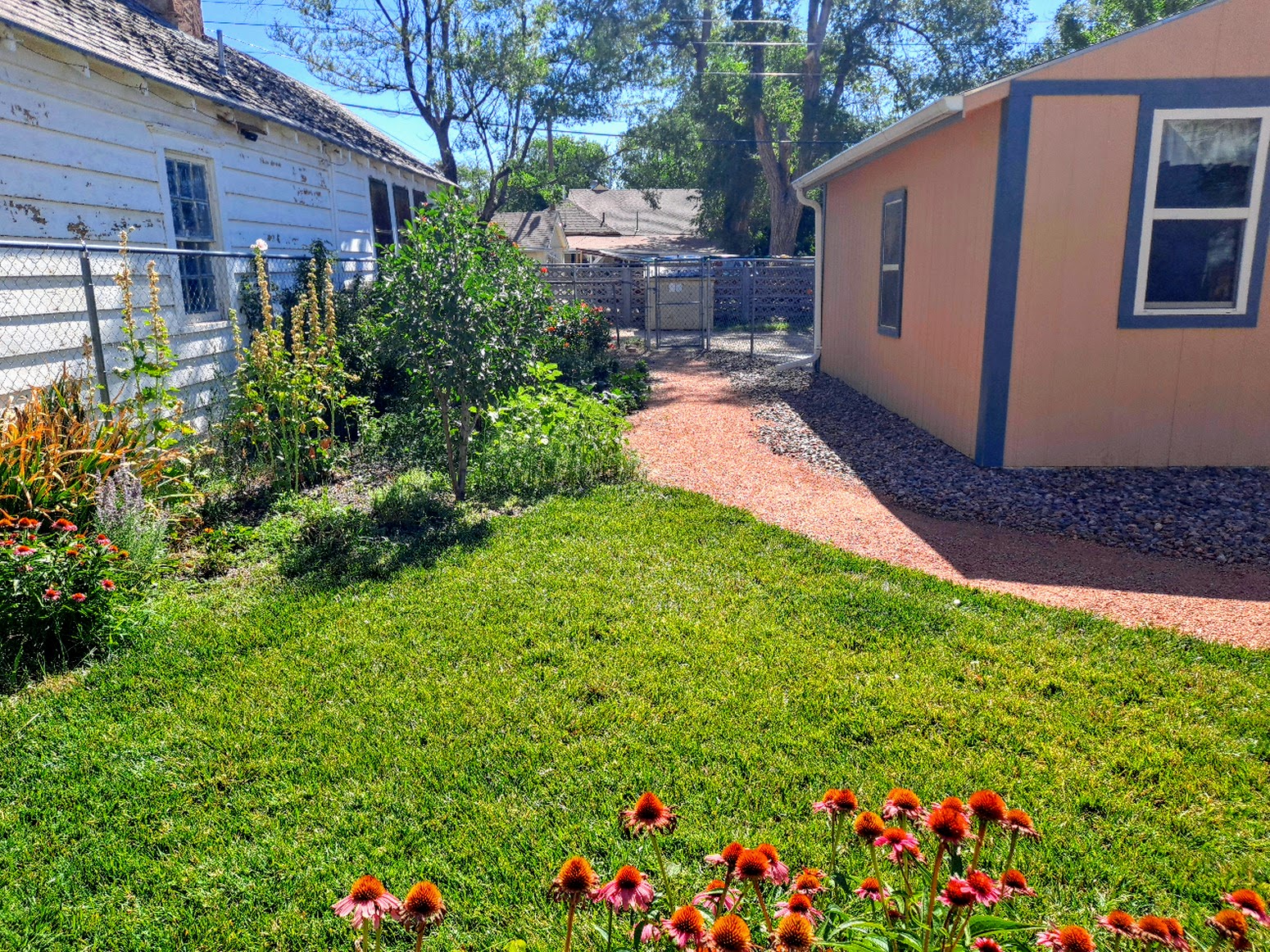
For the next few days especially, I’ll do what I can to make my outside chores easier. It helps that so many of the summer flowers are through (or almost through) blooming. There are still a few lilies, a few echinacea, a few marigolds starting (which I don’t like particularly, but they love it here), and the petunias, of course, but for the most part, there’s not a lot to see out there except one heck of a lot of work I’m not doing.

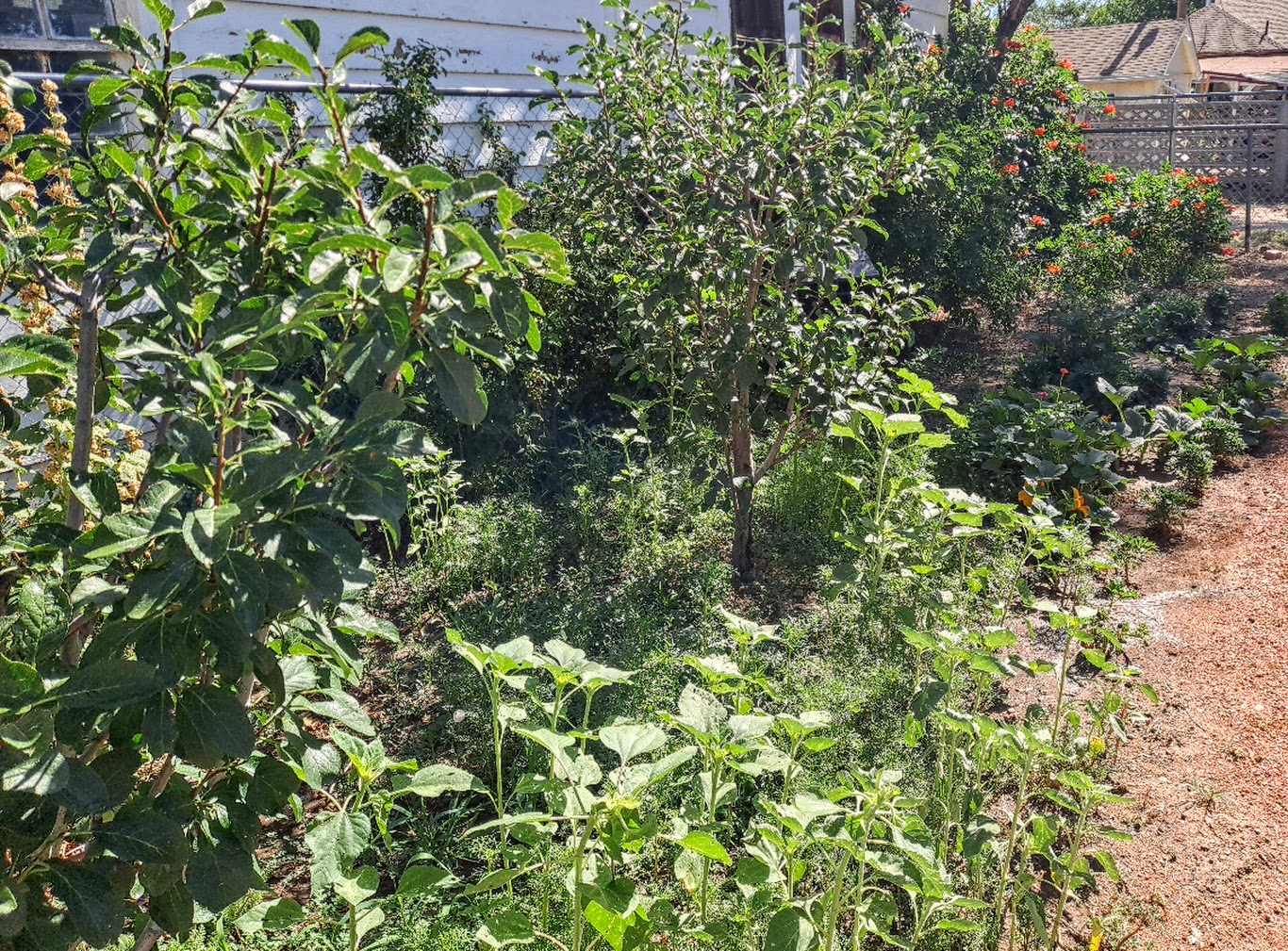
One thing that is going strong enough to celebrate is my pumpkin vine. I just wanted the vine (ten feet long right now!) since I had a huge area to cover quickly, but still, a couple of the blossoms are turning into fruits. (Pumpkin is considered a fruit because it develops from the flowering part of the plant; it’s treated like a vegetable, but technically it’s a type of berry. Odd, that.)

Despite my claim of not liking to rush the seasons, I’d just as soon skip over the next week. Still, since there’s no choice, I’ll sweat it out (literally and figuratively), and hope that my grass, my flowers and I all survive the blast of heat.

***

Pat Bertram is the author of Grief: The Inside Story – A Guide to Surviving the Loss of a Loved One
Every Day Holds a Gift

I’ve never been much of a Pollyanna, able to find something to be glad about in every situation, no matter how bleak. Sometime a silver lining is so tarnished as to be all but invisible. Sometimes pain is preferable to ignoring it. When someone dies, there is no reason for celebration; nor, when one feels physical pain, should one ignore the cause. Still, I am aware that each day does hold a small gift. Even in my bleakest times, I was aware of moments of peace, kind words, a hug, being able to finally sleep. All things we take for granted, but they loomed large as bits of light in the darkness.

Now, with a garden, I no longer have to simply be aware of the gifts that come my way, nor do I have to search them out. Some gifts bloom in such glory that doing anything other than celebrate the moment seems churlish.

There have been times, of course, where the outside work seemed to overshadow those gifts and, admittedly, the work can be exhausting and even painful if I do too much. But still, it’s worth it just for the gifts of the garden.

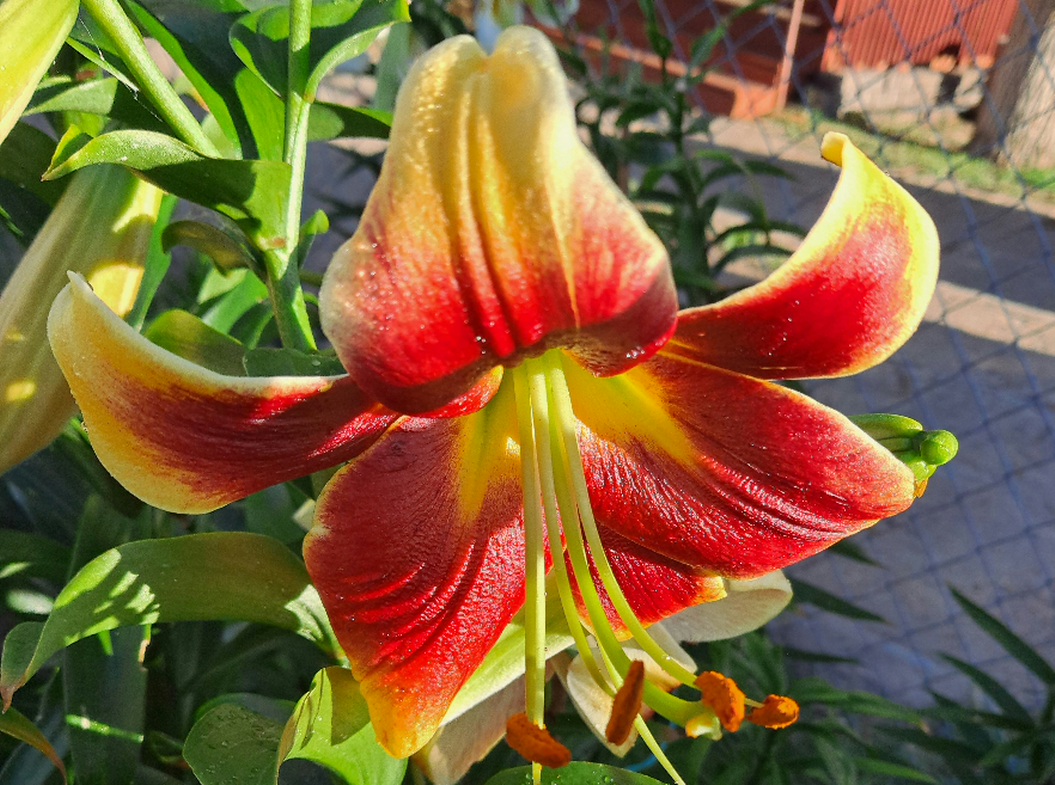
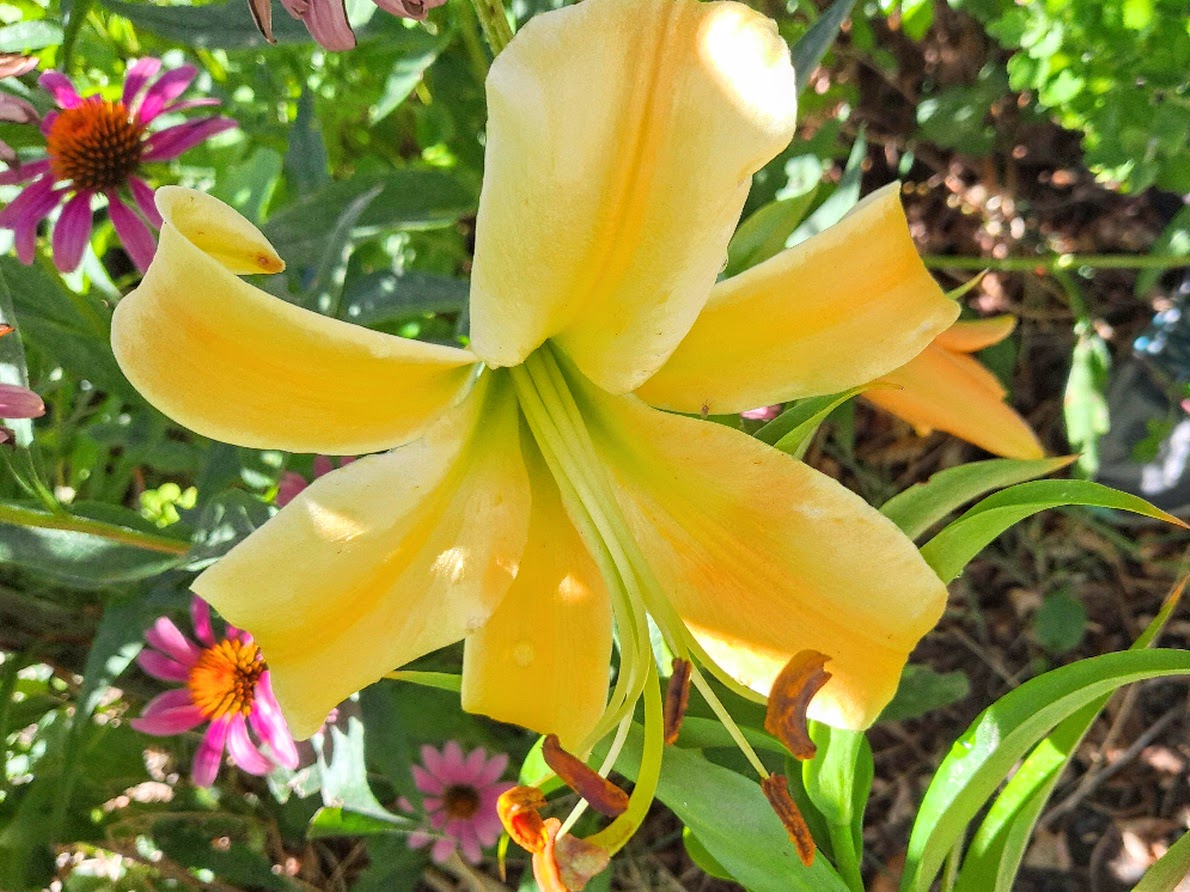
And today’s gift, pictured below, is truly a thing of beauty. My lily tree forest is winding down for the season. There are still a few blooms, and apparently, they saved the best for the last.

A true gift! One, moreover, that makes all the work worthwhile.

***

Pat Bertram is the author of Grief: The Inside Story – A Guide to Surviving the Loss of a Loved One
Dealing With Bermuda Grass

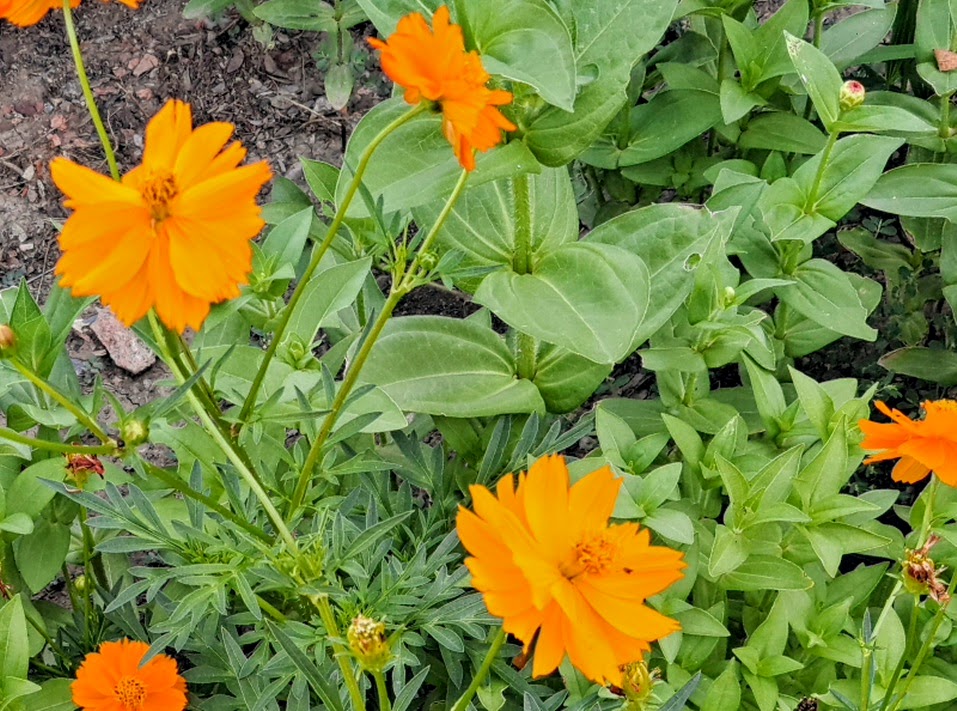
And today’s lesson, boys and girls, is all about Bermuda grass. The scientific name for Bermuda grass is Cynodon dactylon, though it goes by many names besides Bermuda grass, such as quickgrass, devil grass, twitch grass, and couch grass. It is a weed found all over the world, probably originating in sub-Saharan Africa or perhaps on islands in the western parts of the Indian Ocean. It’s called Bermuda grass because it was introduced to the USA via Bermuda. Although around here, Bermuda grass is used for lawns because of its tolerance for sun and heat, it is considered one of the world’s most invasive weeds, one moreover, that is almost impossible to get rid of. Not only is it hard to kill, it spreads by so many ways that containing it is an exercise in frustration. Its roots go down deep, sometimes as much as six feet. It spreads by rhizomes, which are long runners below the ground that pop up in unexpected places. It spreads by stolons, which are runners above ground that root themselves as they travel. (I’ve found them as long as eight feet, creeping beneath my front ramp from one garden area to the other.) They spread by seeds, and since every part of the plant is biologically viable, it also spreads by grass clippings.

So why this lesson? Because why should I be the only one to suffer with my Bermuda grass struggles!

That weed grass is taking over one section of my yard, and to be honest, if I’d known it wanted to be there so badly, I wouldn’t have gone through the trouble of digging up that area and planting a “real” lawn. I’d pretty much given up trying to control the Bermuda grass the past year or so and just let it do its thing, thinking that it at least was green. But this year, the grass went to seed, and I didn’t want my whole yard overtaken by that invader, so I’d been pulling up what I can. It turns out, the grass seed heads sprout at the end of the stolons, so I’ve been able to get rid of a lot of stolons that have been interweaving itself through the grass I planted. I realize I’m not getting the roots, but by pulling up the long stolons, I’m keeping them from rooting in other places. At least that’s my story, and I’m sticking to it.

The area that I’m trying to clear isn’t that big, but when I’m searching the lawn inch by inch, it seems huge! Unfortunately, by the time I’ve worked a bit pulling up stolons, I’ve used up my energy for the day, and so the weeds are taking over my garden areas. And yikes — the spurge is everywhere! It’s funny — this is such a hostile environment so in many ways: shimmeringly hot summers, frigid winters, winds all year, low moisture, and alkaline clay soil — you’d think nothing would grow, but the plants that like it here, really like it. Unfortunately, many of those plants are weeds that are extremely hard to get rid of.

Still, for all that, my yard looks pretty darn good!

***

Pat Bertram is the author of Grief: The Inside Story – A Guide to Surviving the Loss of a Loved One

My Back Forty

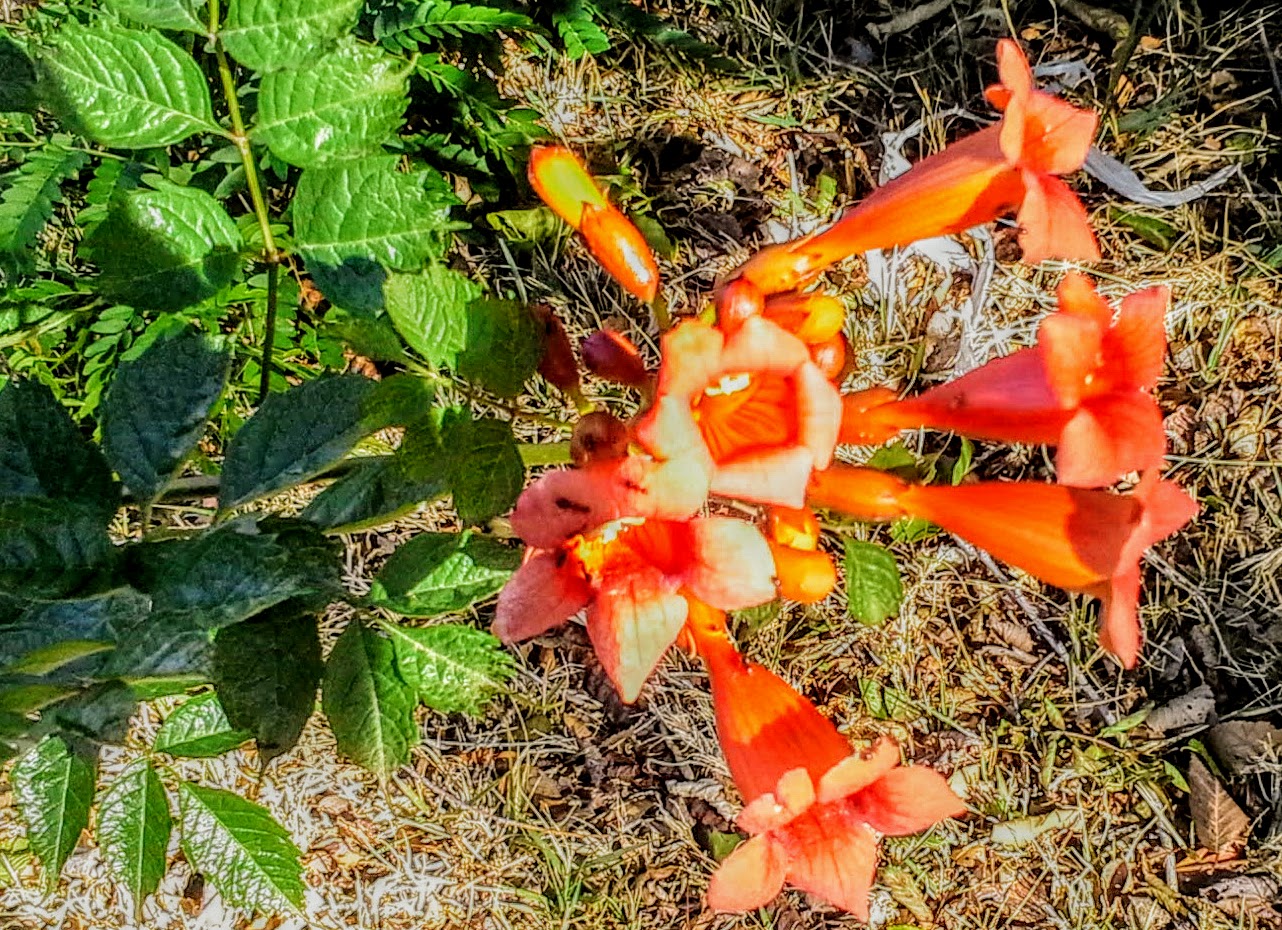
Usually at this time of year, my “back forty” is lying fallow. It’s really a “back twenty” — an area about twenty feet by ten feet, but who’s counting. Almost everything I ever planted back there has died off except for a couple of plum trees I planted a few years ago, which in six years have produced a grand total of four plums. The plants that were here when I bought the place are still going strong — a wild rose, a honeysuckle, and a trumpet vine, but those plants are obviously well adapted to their environment. I think it gets too hot in that section for most plants, with the sun reflecting off the white garage next door and then kept sandwiched in between the two garages. In the spring, the area is lush with larkspur, but once I harvest the seeds and clean out the dead stalks, I just let it be. It just never seemed worth trying to grow anything.

Last year, I’d planted a tomato plant, a pumpkin vine, a watermelon vine, and a cantaloupe vine in my raised garden, and those four plants so overwhelmed the relatively small garden that this year I decided to try planting them in my back section, thinking they’d have plenty of room to grow. And they are doing supremely well! Perhaps the trees have grown enough to provide a bit of shade, but whatever the reason, I’m delighted.

I transplanted self-planted marigolds from the raised garden to provide a bit of protection for my “farm garden.” (If four plants can be considered a garden, let alone a farm garden.) I also threw out some wildflower seeds I’d been gifted, and though in previous years, nothing ever came of the wildflowers, this year they are adding to the lushness of the area.

Going by old blog posts I’d written around this same time, this is usually a discouraging time for me. Not only are the heat and humidity hard to bear, but they deplete my energy and my desire to do anything. (I know you people who live in truly high humidity will laugh at my thinking that 40% is high, but when you are used to single digit humidity, that is a huge change. And anyway, that’s just the afternoon humidity — the early morning humidity gets close to 80%.) This year, although the heat and humidity are playing with me, I am managing to keep up a semblance of enthusiasm for the yard, and I tend to think it has to do with that back twenty. With those vines growing so long (the pumpkin vine is at least ten feet long right now, though the others are catching up), they are easily filling the area with a lot of green and some luscious blossoms.

There seem to be many pumpkins starting to grow, but oddly, that wasn’t my main reason for planting them. And anyway, I have no idea what to do with the pumpkings once they’re big enough to eat.

***

Pat Bertram is the author of Grief: The Inside Story – A Guide to Surviving the Loss of a Loved One

Lily Forest Update

My lily forest is still going strong. Lush and vibrant, it’s at its peak, so I am making sure to enjoy the blooms every day.

And now, you can enjoy them, too!

It’s interesting that this tiger lily showed up among the more traditional lilies.

You can see it hiding among its taller brethren in the following photo.

As I’m sure you’ve figured, I have nothing much to say today.

Still, considering that a picture is worth a thousand words, or so I’ve heard it said, then this post is a good 5,000 words long. Well, 5,000 plus the 120 words of text.

***

Pat Bertram is the author of Grief: The Inside Story – A Guide to Surviving the Loss of a Loved One

Alien Invasion

If you think you’re going to be reading a blog about invaders from another planet or even from another country, I’m sorry to disappoint you. Though, truly, for all I know, this discussion of alienism could be about something from outer space. Spores, perhaps.

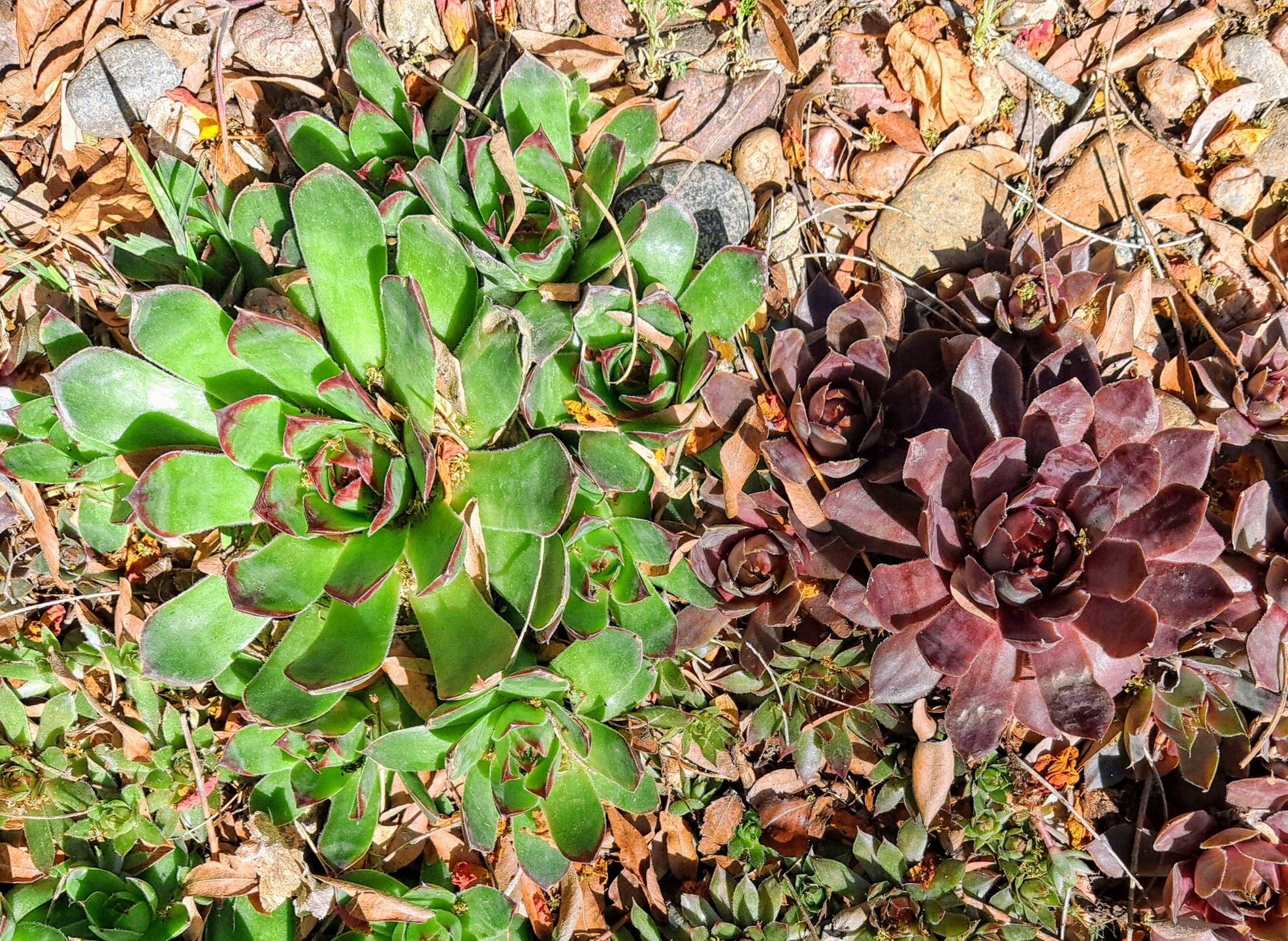
These plants are called hen and chicks because, I presume, of the way they proliferate. The mother hen grows multiple babies, then, when she gets tired of them clinging to her skirts, she gets ready for her end by flowering. Unlike other plants, when these particular genera of hen and chicks finish flowering, the worn-out hen gives up the ghost so that her chicks can have room to grow.

Although I like the plants, especially the way they create a lovely carpet of succulents that look like fallen blossoms, I find the flowers creepy.

The central portion of the hen grows and grows and grows, sort of like the alien in Kim Bassenger’s purse in the My Stepmother is an Alien.

Very creepy.

The flowers themselves aren’t really that bad, in fact, they’re sort of pretty in an otherworldly sort of way, like something you’d see under a microscope, but the whole thing — the base, the long stalk, the bundle of flowers at the very top — is . . . well, it’s just creepy.

Most years, my hen and chicks don’t flower, and if they do, it’s only one or two. Usually, when they start to become alienish, I pull up the mother hen. I figure, since it has to be pulled up after she flowers, I might as well do it before so I don’t get creeped out.

But this year, more than a dozen mothers all got to flowering. A veritable invasion! I let them do what they wanted, even knowing my reaction, for the same reason I do so much of what I do — it gives me a blog topic. (I used to do a whole lot of things simply to have something to write about, but I don’t do that so much anymore, so what goes on in my yard has to suffice.)

This morning, I took the photos, wrote this blog, and then I went out and got rid of my alien invasion.

Whew! Disaster averted.

***

Pat Bertram is the author of Grief: The Inside Story – A Guide to Surviving the Loss of a Loved One

Lily Tree Forest

When I first started thinking about a garden, I came across photos of a luscious flower called a tree lily, a hybrid between an Oriental lily and a trumpet lily. (For obvious reasons, they’re also known as Orienpet lilies.) I’d always thought lilies were a rarified flower that only professional gardeners could grow, but apparently not. I loved the idea of a lily tree forest, so I decided to take a chance, even though the bulbs aren’t cheap.

Some of the original bulbs never came up, so the next year I planted a few more. And a few more after that. A couple of years ago, the lilies started to grow tall and to bloom. And oh, how lovely those lilies are! Large than my hand, on stalks taller than I am, they manage to deal with the weather extremes of this area very well. Even the late frost didn’t do much damage.

My one nitpick with the plants is that they need to be staked to keep them from growing in crookedly, but how does one stake a six- or seven-foot plant? I do fine when they’re young with my 2-foot metal stakes and the three-foot bamboo stakes, but after that, they’re on their own. I could tie them to the fence, but it would take a lot of plant ties or twine, and I’m afraid I’d forget it was there and trip on it or decapitate myself. Well, not decapite, of course, but something unpleasant anyway.

Although the forest looks as if it’s a narrow swath, the tallest lily and the one most needing to be staked is six feet from the fence. Still, leaning or not, my lily forest is awesome. The plants are just starting to bloom, and since each has multiple flowers that bloom at different times, I will have lilies to enjoy for over a month. (The flowers on the lower left-hand side of the photo are purple magnus echinacea.)

It’s amazing what an amateur gardener can do with no expertise but a head full of hopes. I’m still an amateur, of course, but after five years of gardening, I do know a few things, such as water them, remove weeds and weedy grasses, and let them do what they want to do.

Luckily for me, what they want to do is . . . bloom.

***

Pat Bertram is the author of Grief: The Inside Story – A Guide to Surviving the Loss of a Loved One

Where I Want to Live

Daily writing prompt
If you could live anywhere in the world, where would it be?

Ha! I bet you can guess my answer to this blog prompt!

Yep, it’s true. If I could live anywhere in the world, I would choose to live exactly where I am living now — in this tiny forgotten town, in my own house with my own yard and my own flowers, and friends that I seldom make the effort to see but know they are always there for me.

It’s taken me decades to get to this point, decades of uncertainty, sorrow, and fear of not being able to afford to live anywhere. This last is not an uncommon fear among women — even those with financial security worry about becoming a bag lady. In my case, the fear was exacerbated by the growing requirement of being able to pass a credit check when renting, and with my lack of any sort of credit rating, I simply did not know how I was going to navigate that morass. Assuming, of course, I wasn’t priced out of the market.

Exactly ten years ago today, I was feeling rootless, feeling suspended over an abyss with nothing to hang onto, worried as always about my uncertain future. At the time, I’d just returned from my cross-country trip and was staying in a fleabag motel. (Actually, it was a mosquito-bag motel. Eek.) I had no real reason to go back to that town, other than friends and dance class, but I had no place else to go. As I wrote back then: “I have looked at tiny windowless rooms scarcely larger than closets with a higher rent than the three-bedroom house Jeff and I lived in, gated communities that are merely fenced rooming houses, apartments with incredibly stringent requirements. . . . Maybe I don’t belong here in the desert. Maybe I don’t belong anywhere. But then what?”

A few years later, through a series of unexpected events, including an unasked-for email from Zillow showing me a place they said I might like though it was far from that desert town, I found my “then what.” Now here I am, living in the very house Zillow picked out for me, a house I once dreamed up.

I’m sure there are many wonderful places to live, places I might even like to live, but my days of looking beyond the perimeter of my own yard for something more are long gone. With any luck, this is where I will live out my years, with even greater luck, I might even be able to continue taking care of the place. (I still find it humorous that my goal when I got here was to have a care-free yard, and what I ended up with was a mini park that requires several hours of work each week.)

If I could tweak one tiny thing, it would be to have a wilderness walking trail nearby, but considering that I’m not as fanatical about walking as I once was (in fact, I seldom walk at all anymore), that missing trail isn’t as much of a lack as it used to be. The truth is, any outdoor time is spent in my yard. Just this morning, I went out for a quick tour to see how everything was holding up in this heat, and ended up trimming a bush, cutting back leggy yarrow, lopping the tops off New England asters to keep them from browning out, staking the tomato plant, and various other small chores.

Since I wasn’t planning on doing the work, I hadn’t doused myself with mosquito repellant, so I ended up with several new bites, but it’s all good. It’s all part of being at home in my own place, insects and all.

***

Pat Bertram is the author of Grief: The Inside Story – A Guide to Surviving the Loss of a Loved One
Orange You Glad

When my little brother was small, three or four maybe, he was annoyingly smart. He’d ask if I wanted to play a particular game, and if I said no, he’d say, “I’ll let you win.” That’s how smart he was — he knew how to beat me (even though I was more than a decade older than he was) as well as figure out how to let me win. He also had an infectious laugh. He used to tell one of those knock knocks that kept repeating the refrain, and when he got to the punchline, he’d just laugh and laugh. I’d have to laugh with him, even though by the time he finished, I was sick of “bananas.”

You know the joke:

Knock, knock. Who’s there? Banana. Banana who? Knock, knock. Who’s there? Banana. Banana who? Knock, knock. Who’s there? Orange. Orange who? Orange you glad I didn’t say banana again?

As I was sorting through the photos I took for today’s blog, I noticed that they were mostly yellow and orange, and it reminded me of that joke.

The flowers are no joke of course — they are a delight to the eye. My eye, anyway.

Although the spring flowers are gone, and the few summer flowers I planted — wildflower and dwarf zinnias — haven’t yet come in, there are a few flowers showing their colors.

Daylilies.

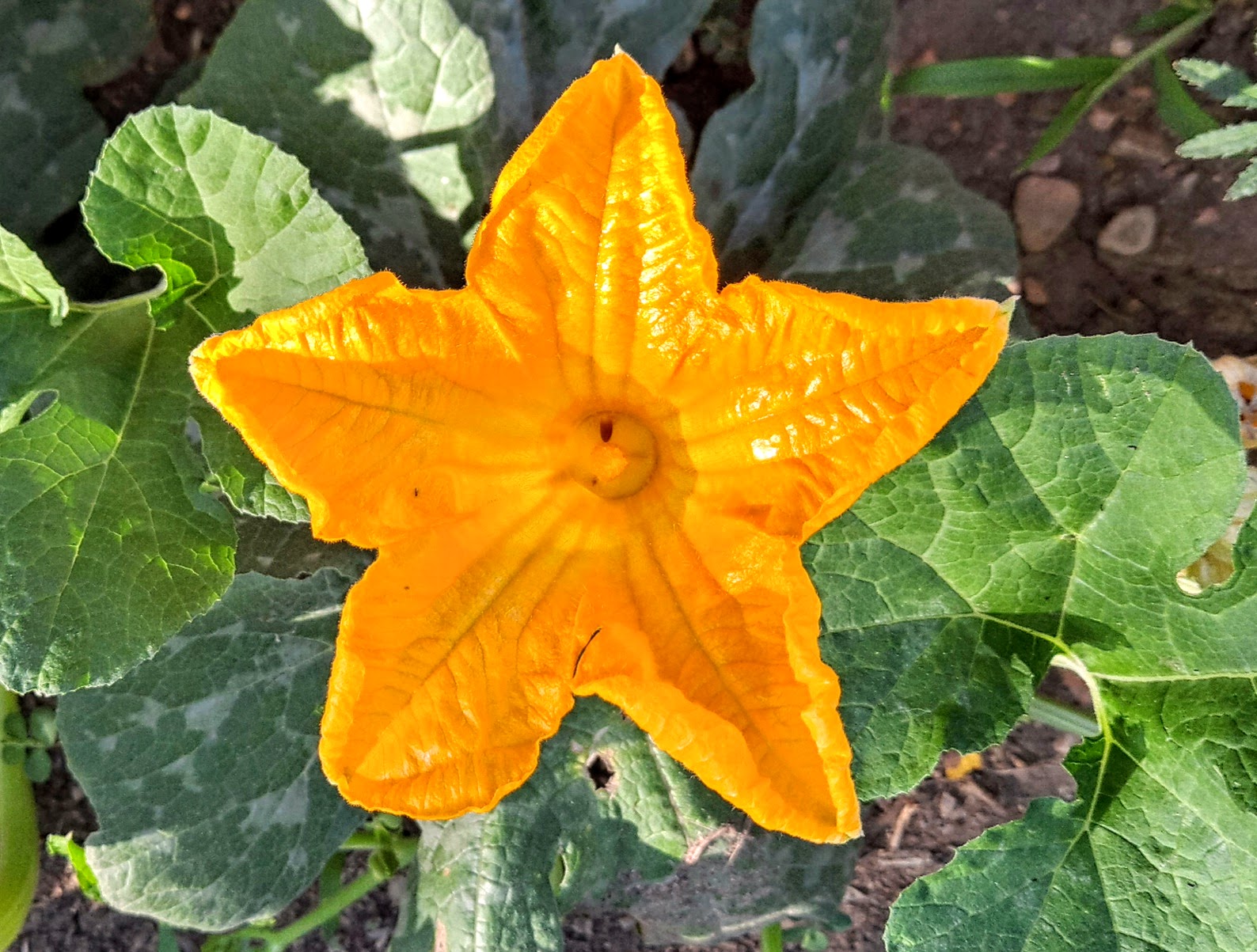
This shy pumpkin blossom.

A dainty cantaloupe blossom.

The first moss rose. My raised garden is filled with the greenery of flowers that planted themselves, but so far, there’s only this one yellow rose.

And then there’s this tree lily flower. I always thought lilies were an exotic flower, only able to be grown in special circumstances, so I was delighted when I found out I would be able to grow a forest of lily trees. (Lily trees are a hybrid of oriental and trumpet lilies, enormous flowers sitting stalks that grow to six feet or even more, and I have dozens of them yet to blossom!)

I realize this pink lily doesn’t fit with the color scheme of the rest of the blog, but orange you glad I posted it anyway?

***

Pat Bertram is the author of Grief: The Inside Story – A Guide to Surviving the Loss of a Loved One.

Lesson Learned. Maybe.

Daily writing prompt
What’s a lesson you’ve learned recently that shifted your perspective?

The most recent thing I learned is that you can’t transplant flowers when it’s 103 degrees and expect them to live.

A month ago, I planted petunias in my raised garden (center of the photo), but the area is being taken over by the marigolds that planted themselves.

I’d been transplanting a few marigolds at a time, mostly to plant in my what I laughingly call my farmer’s garden, which consists of a single pumpkin plant, a single tomato plant, a single cantaloupe plant, and single watermelon plant. Fortunately (or unfortunately — I don’t know which), the marigolds remaining in the raised garden are doing so well I had a choice to let them do what they want, thin them, or transplant them.

Obviously, I went the transplanting route, otherwise I wouldn’t be writing about learning that you can’t transplant flowers in the heat.

I suppose, in a roundabout way, I merely thinned them since I don’t know if I can keep the transplants alive, though I just took a quick break to water them again in a half-hearted attempt to give them a bit better chance at surviving.

If it were only the temperature I had to concerned about, I might not worry so much, but it’s windy, the sun out here on the plains is incredibly intense, and the humidity is only 11%. Eek. Doesn’t sound like a temperature anything or anyone would like. I sure didn’t! I gave those poor plants a quick squirt and scurried back inside.

So that’s the lesson I learned. Maybe.

Did this lesson shift my perspective any? I doubt it. When/if the marigolds I transplanted don’t make it, I’ll probably try again or else run the risk of having them overshadow the petunias and moss rose that need to share space with those marigolds. (In the photo below, the marigold plants are those with the slightly bluish-green palm-like foliage.)

Although this lesson might not have shifted my perspective, for sure it reminded me to stay in out of the sun. And that’s a lesson I intend to take to heart.

***

Pat Bertram is the author of Grief: The Inside Story – A Guide to Surviving the Loss of a Loved One