Recommended Tags

In yesterday’s blog post, I wrote about gardening being A Strange Avocation, and I explained the difference in the behavior of flowers between this year and previous years. The tags I used for the post are gardening, home, life, bees and flowers, bees in a garden, larkspur, lily trees, purple echinacea, purple echinacea turned pink, yarrow. All garden related and directly related to the article I posted.

WordPress, the platform that hosts this blog, has an AI tool that suggests various tags for posts. In case you don’t know, tags are words or phrases that bloggers use to help people find their articles. For example, broad tags such as “gardening,” don’t do much to drive people to a blog post since they are too general. If someone were to Google “gardening,” they’d get millions upon millions of hits, and the chance of their finding any particular article are close to nil. Specific tags are best, or so they say, because the chances of someone stumbling upon your immortal words are a lot better. (I was being facetious about the “immortal words,” making fun of the fact that so few of our blog posts say anything of importance, and yet, in the electronic age, everyone’s words, no matter how puerile, truly are immortal.)

You will never in a million years guess the words that the all-seeing, all-knowing AI suggested for that gardening post, so I’ll just list them for you: “Auto immune disease, breastfeeding, ulcerative colitis, Crohn’s, IBD.” How is that even possible? I’ve gone over and over what I wrote yesterday, and I cannot see anything that could possibly have generated such a wildly inappropriate group of words.

I know artificial intelligence is supposed to be a great thing, and it might be for other people, but I’m not that impressed. From what I have seen, generative AI in particular is not any more intelligent than most humans seem to be. (I slipped and called it degenerative AI before I corrected myself, but I like that term!) It also has huge biases, especially political ones, which makes sense, I suppose, since the vast majority of news sources and sites like Wikipedia are liberal, and generative AI is only as smart as its input. It would be nice to be able to use Google’s AI generated summaries for a quick perusal of any given topic, but I can’t rely on its answers because it makes mistakes that I know are mistakes. It doesn’t always understand the question, either. I wanted to check out “immortal words” to make sure I wasn’t making up the phrase, and all the AI would tell me is what immortal meant. I also wanted a quick definition for “tags,” and what I got was a whole lot of information about where to buy paper tags with strings. (I’ve noticed more often that search engines seem to be geared to products first, so if I want to know the definition of something, and it happens to be the name of a musical group or a brand name or whatever, that is what shows up, not the more generic term that I was looking for.)

I suppose, in Pollyanna-style, I should be glad that I didn’t need the suggested tags. Glad I don’t know enough about those medical issues from a personal angle to write about them. But still . . . utterly bizarre.

Actually, I’m not one to talk about intelligence, artificial or otherwise. Earlier, I was doing a puzzle, and I needed an eight-letter word beginning with L for a flower. And all I could think of was lavender. Lavender? Really? When I’d spent hours in the morning clearing away larkspur? When I’ve written post after post mentioning larkspur?

Oh, well, such is life. My life, anyway.
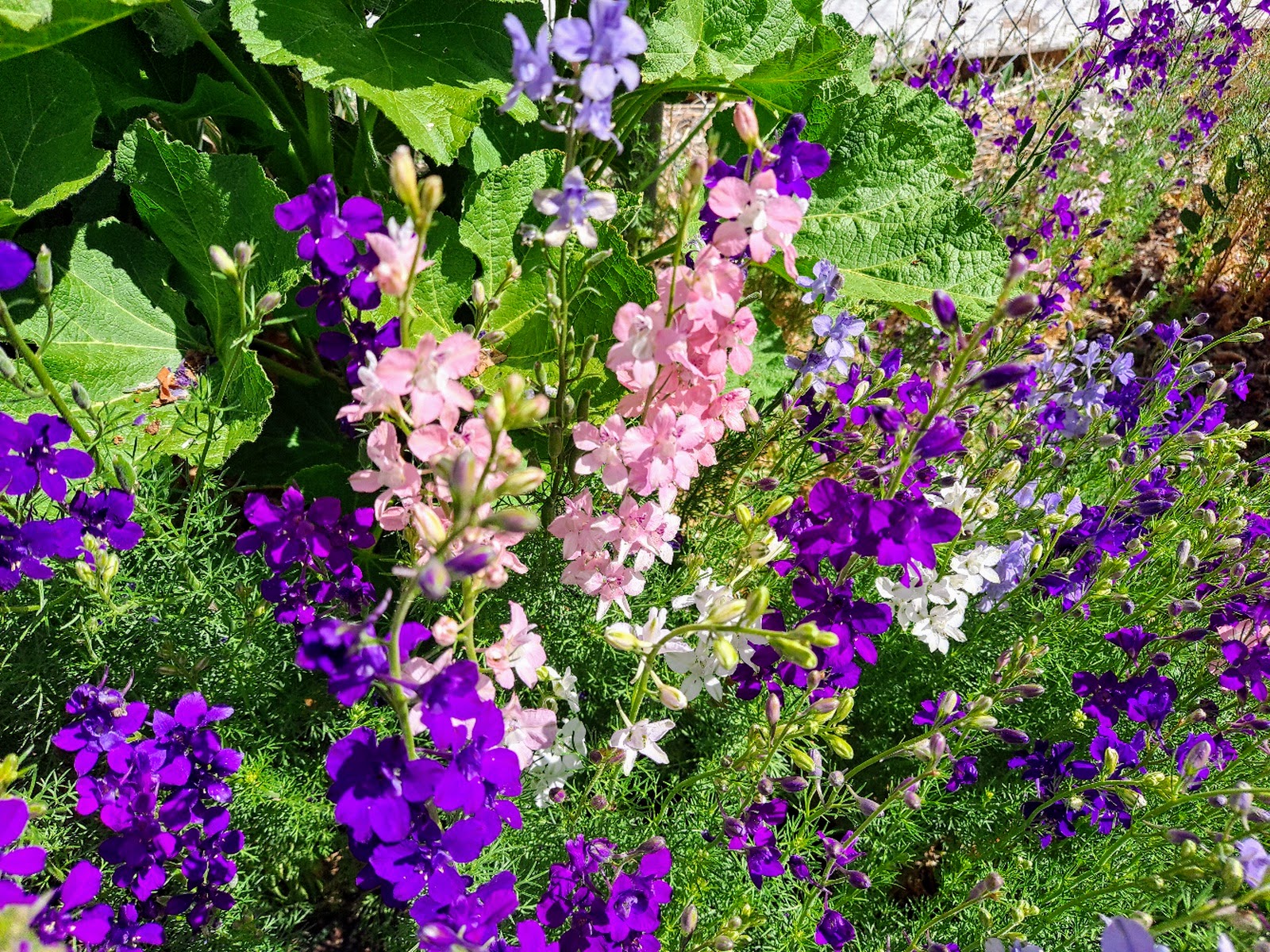
PS: The recommended tags for this post are Project Life, Heidi Swapp, San Diego Comic Con, Becky Higgins, Studio Calico. I don’t even know what most of that is!

***

Pat Bertram is the author of Grief: The Inside Story – A Guide to Surviving the Loss of a Loved One
A Strange Avocation

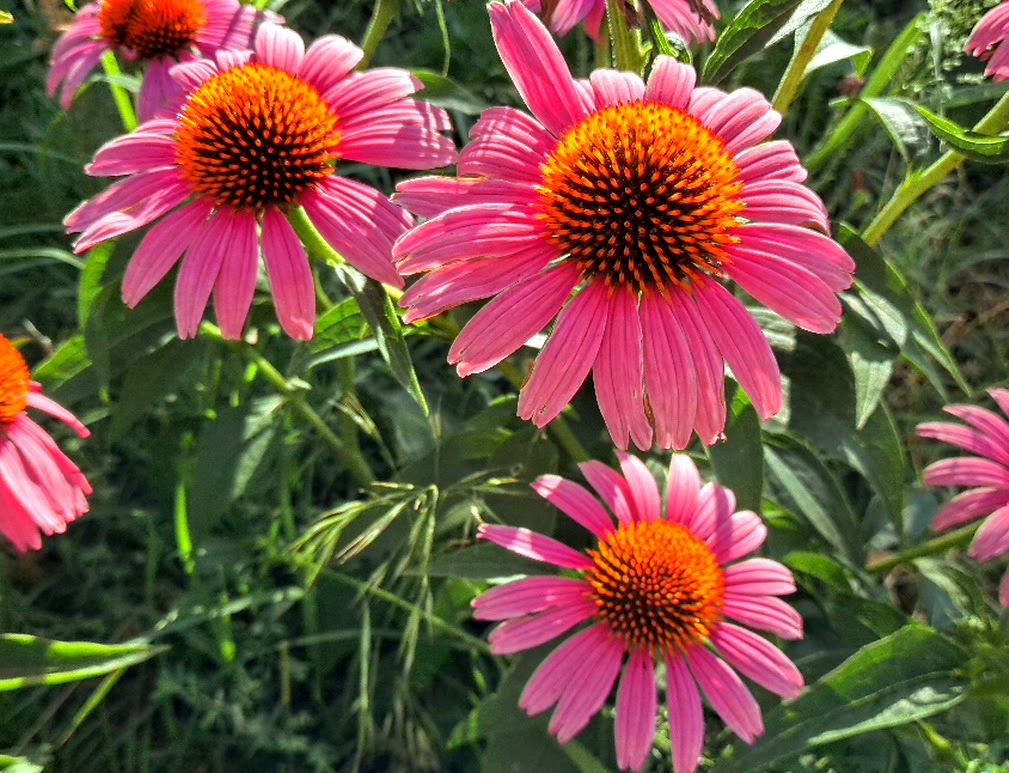
Gardening is certainly a strange avocation. What has happened year after year isn’t guaranteed to happen again this year, and what has never happened isn’t guaranteed to continue never happening.

This year, a few years after the seeds had been planted, hollyhocks suddenly decided to grow. Why? I don’t know. Snapdragons survived the winter intact, and at a time when they should just be getting started for the season, they are already finished blooming. The moss rose and marigolds seeded themselves as they sometimes do, but this year, even though I thinned them dramatically, they are still coming in so strong that I’ll have a jungle, especially considering that I’d already put in petunias. The poppies are a no show — none of the red corn poppies came back and only a single California poppy put in an appearance. Blanket flower is one of those plants that are supposedly impossible to get rid of, but one of my blanket flowers decided to get rid of itself. As in previous years, I’ve been blessed with an abundance of larkspur, but most are not going to seed the way they should. Also, a swath of them are lying flat, as if some animal used them for a wallow. Some other plants were flattened by the wind, but the larkspur are in a protected area, so who knows what’s going on.

Some things are going along as they should be — the lily tree garden is taller than ever and is filling in with offspring plants, though the flowers are budding a month early. The daylilies also seem to be spreading nicely, but oddly, one of the plants already had a flower, also a month early. The purple magnus echinacea are growing extremely well, but the flowers are now pink — some bright pink, some pale pink. (As soon as I’ve cleaned up my garden areas to ready them for summer, I might have to see where I can move some of them. It’s truly great having a ready source of transplantable plants, especially ones that do so well around here, and pink is always a cheery color.)

The yarrow was another plant that seemed to have been used as a wallow. It’s possible it’s been getting too much water, though it’s hard to believe that anything around here gets too much moisture. And anyway, I’ve been treating it the way I’ve always done. Still, this might be another plant that needs to be moved.

As you can see, in a garden, there’s always something different. The larkspur surprised me — I don’t know why they aren’t going to seed, but luckily I’ve saved seeds from previous years to make up for the lack. And, since I don’t have to wait for the seeds to mature to pull up the dead stalks, I can go ahead and plant other flowers now instead of in July as I normally have to, which is great. It’s hard to get anything to grow from seed in July around here — the ground dries out too fast.

I almost forgot to mention the bees! There are way more this year than normal. Some days my yard is buzzing from the sound of dozens of big black and yellow fuzzy bumblebees feasting on the larkspur. I’m hoping they’ll like other plants as well so they will stick around for a while. There’s something so pleasant and right-with-the-world to have bees in a garden.

All this and summer isn’t even here. More changes from previous years are on the way, I’m sure. But it’s all good. It’s a garden, after all.

***

Pat Bertram is the author of Grief: The Inside Story – A Guide to Surviving the Loss of a Loved One
 

As Old Fashioned as a Hollyhock

There are a lot of topics I stay away from mostly because . . . well, because I don’t welcome backlash. I’m just too sensitive. But sometimes a topic keeps staring at me, which makes it impossible not to face it. For example, every time I opened my internet browser the past couple of days, I had Google reminding me about pride month (small letters are my subtle rebellion), which reminds me that the only group in the whole country that’s not allowed to be proud are whites. If you’re proud to be white, then you’re automatically a white supremacist. According to some people, simply being white means you’re a white supremacist, which is utterly ridiculous. (And so is the term “white privilege,” now that I’m on my soapbox. It used to be that certain minority groups were considered under privileged, but that terminology, which was deemed racist, was replaced by “white privilege,” which is racist in a whole other way.) And why are whites so despised? We might not yet be the minority in western countries, but we are perhaps only 10% of the entire world population and destined to decline even further.

I’m not proud of being white, but not in any sort of apologetic way for crimes my ancestors never committed or crimes I am supposed to have committed simply for being born the way I am. I’m not proud because why would anyone be proud of the way they were born? It’s not something we could choose. It’s not something we did. It’s not something that took courage. It’s not something we earned. It’s simply who we are. Pride used to be a sin. Now it’s — apparently — something to celebrate.

I looked up the definition of “pride” in my actual book dictionary, printed before “diversity” was a thing, and pride is (or at least it used to be before the word was redefined) “Conceit. Disdainful behavior. Ostentatious display. A justifiable self-respect.” In other words, pride is not good unless you did something to earn your self-respect. (Or perhaps it’s just an excuse for that “ostentatious display” as the dictionary defined it?) But then, as I’m finding out, I’m terribly old-fashioned with old-fashioned values. I suppose I could be proud of that, but it’s not something to be proud about because it’s not something I earned. It’s just who I am.

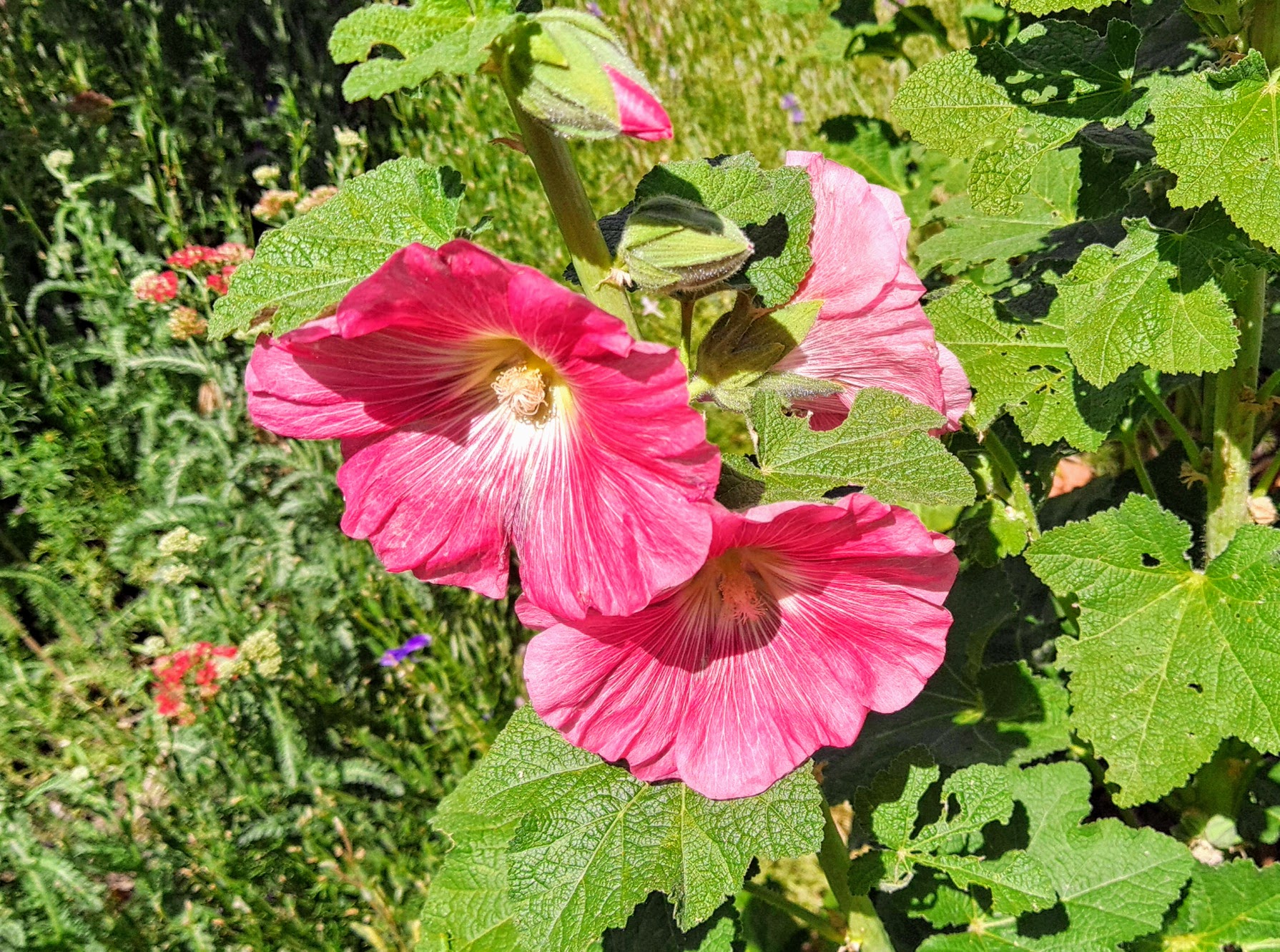
I am proud of my writing skills — that is something I earned, something I worked hard for. I am proud of my blog, because it takes a certain discipline to keep a project going for almost twenty years. I am proud of being kind (mostly kind, anyway). I am proud of opening up and telling the truth about grief and dealing with the absence of a deceased spouse or life mate. I am proud of the work I’ve done on my yard, though I’m not necessarily proud of being a gardener, because the truth is, a garden does what a garden wants to do. (As I discovered again today. Years ago, I tried to plant a hollyhock garden, but it died and no other seeds ever grew. Until now. Apparently, the garden decided it wants hollyhocks.) I’m sort of proud of being a good photographer, but the photos are more from an excellent camera as well as the instinctual sense of artistry I was born with.

But being proud (or not proud) simply for of sake of pride? I don’t understand that. But then, I did say I was old-fashioned. As old fashioned as a hollyhock, actually.

***

Pat Bertram is the author of Grief: The Inside Story – A Guide to Surviving the Loss of a Loved One


Eye-Catching

Daily writing prompt
Go on a walk today and share a photo of something that catches your eye.

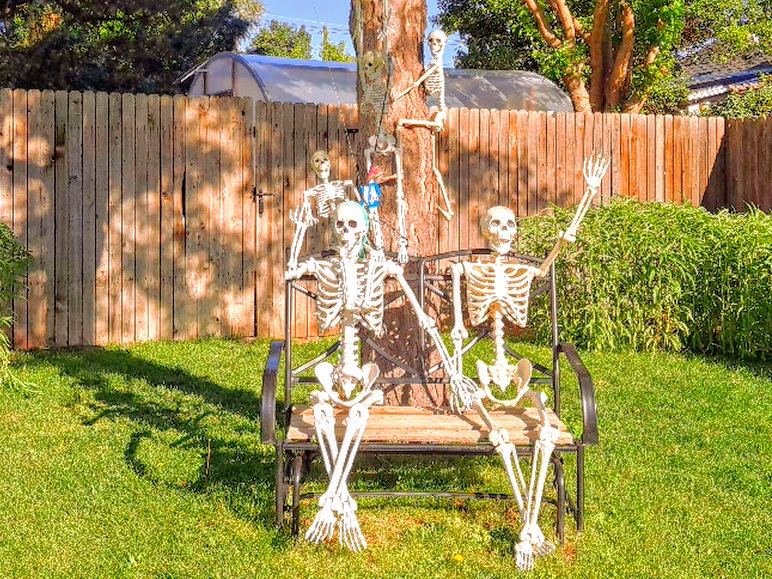
I thought I’d respond to this blog prompt by actually doing what it asked. I went on a walk! First time in I don’t know how long, though it must have been a very long time because the neighbors have been waiting outside for me to stop by, and well, as you can see, that didn’t have a good outcome for them.

I was only going to walk a couple of blocks just to say that I walked, but I ended up walking a couple of miles. It reminded me of what I liked about walking — the lovely morning, the clean smell, the soft air, the blue skies, the gentle breeze. But it also reminded me of why I have a hard time forcing myself to get back to daily walking — utter boredom. Nothing to see other than what I’ve already seen a thousand times. (Well, the family on the bench was a bit different configuration; they are often rearranged and dressed to memorialize the season with hearts, Easter baskets, or Santa hats.) In previous living situations, when I walked for miles each day, I was able to find isolated paths, hiking trails, and vistas within walking distance of where I lived, but now all I see are the same houses, the same parked cars, the same cracked pavements, the same brown fields.

I’d walked all over town during my first years here, and because of a definite dog problem in this area, I soon learned to stick to one guaranteed safe route. But oh, so utterly boring seeing the same thing over and over and over again. (It’s why I stopped going to the library — the thousandth time I saw those same books did me in.) When I do manage to get out to walk (hard in the summer because I use up my energy on yard work), I try to think of it as a walking meditation, paying attention to the simple act of walking, but then I become aware of my slightly unsteady knees, and that’s no fun.

But that wasn’t today. Today was a real treat. It was also nice to find out I can still walk at least that far without any trouble. Added to the benefit, I exchanged a few words with one neighbor and made a point of stopping to visit with a friend.

Tomorrow, I get back to yard word, so there won’t be time or energy or inclination for a spur of the moment walk. Today was a rare day off, taken because in a few days, I won’t have any days off. The larkspur are finished flowering (which is odd because usually at the end of May they are at the height of their beauty). Soon the seed pods will form, which means collecting the seeds and pulling up the dead larkspur — not an easy task since there are so many of them. And after that, it’s a matter of planting new flower seeds for the summer, buying new plants, or transplanting overcrowded plants to fill in empty spots.

Later in the summer, there will be more color, and perhaps a real explosion of color come fall when the chrysanthemum bloom. Actually, it’s the lack of things to see outside of my own yard that helped me overcame my reluctance for work-heavy landscaping in order to have something fun to see. Even in a time where so many flowers are finished for the season, there are new areas that are flowering.

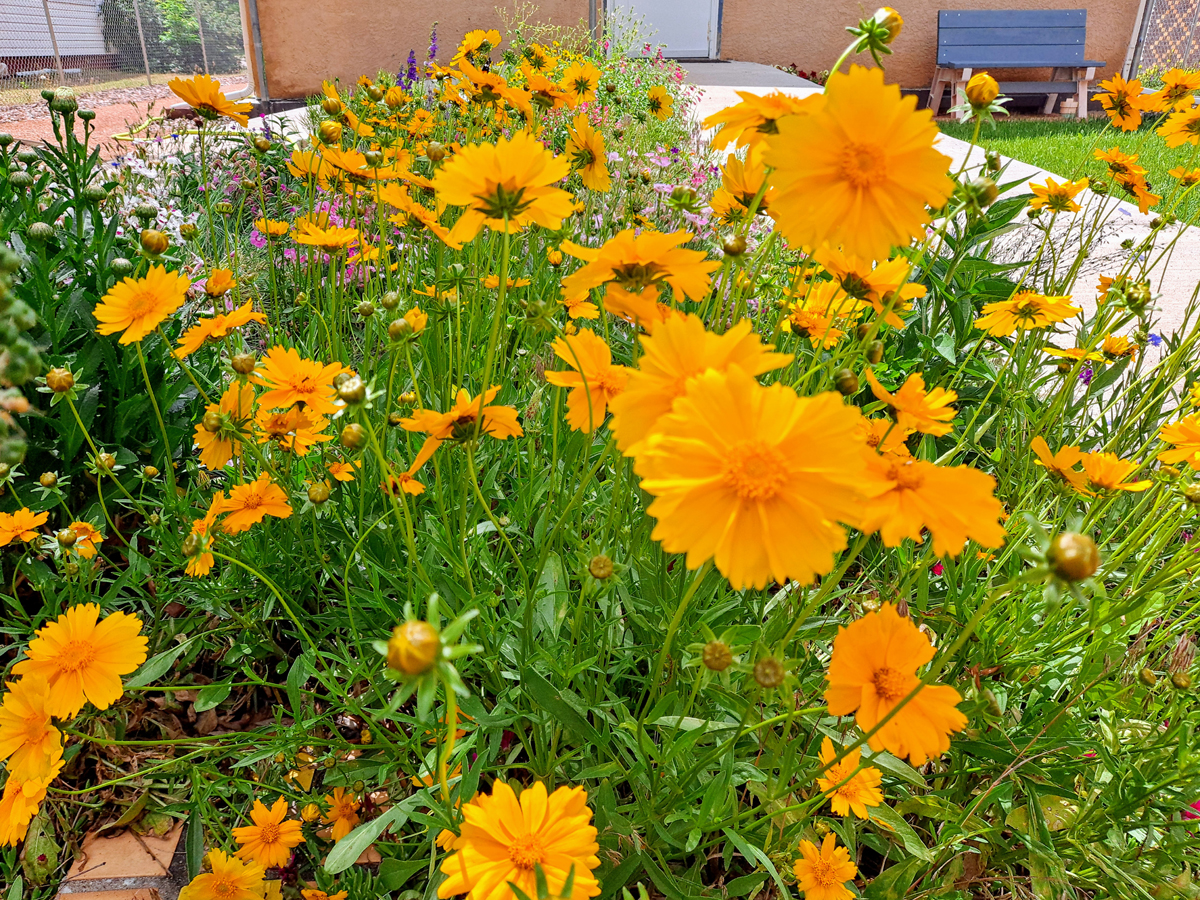
In fact, the thing that most caught my eye during today’s excursion (besides my skeletal neighbors, that is) was my own wildflower garden leading up to my back door.

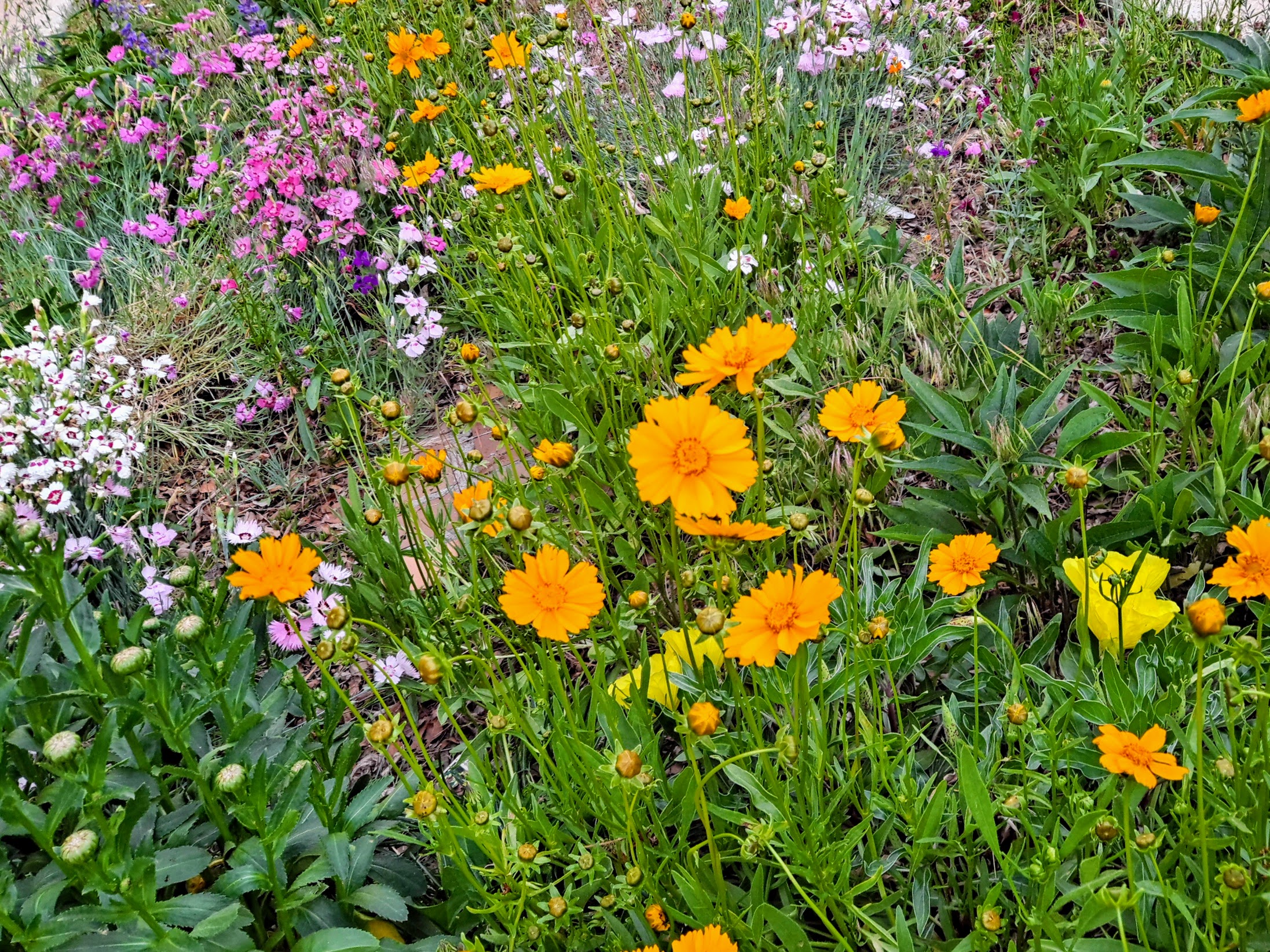
These yellow coreopsis (or coreopsises or even coreopses for you Latin afficionados) started with only a couple of seedlings, and now look! So prolific and so sunny.

Truly eye-catching.

***

Pat Bertram is the author of Grief: The Inside Story – A Guide to Surviving the Loss of a Loved One

Nothing Doing

I live in a town with a unique atmospheric configuration: a donut. Sometimes storms that punish surrounding areas gently move around the town as if to spare us good folk. Other times, it says “Oops, made a mistake,” and dumps the months of missed rain all at once while sparing others.

It rained almost all day yesterday, from about 11:00am to 8:00pm. Part of that was a beginning and an ending drizzle, but for the rest, it was a respectable rain. I imagine with as widespread as the storm was and as long as it lasted, that this entire area got much needed rain, not just as, and that’s great — it’s been months since we’ve had any moisture that made a significant difference.

The best part for me is that, aside from the great all-around soaking rather than simply the area watering that I do, is that I get two days off from . . . well, from everything. I won’t need to water for at least a couple of days. The ground is so wet that although pulling up weeds is easier, the heavy clay mud takes the “fun” out of the chore. And the alley I’d have to navigate if I wanted to use my car, is a quagmire.

It’s funny that even though every day is a day off for me, rain days and après rain days still seem a special treat of nothing doing (doing a whole lot of nothing, in other words). Oh, for sure, I will do things — a load of laundry is drying at the moment — but I get to cocoon myself in a dry home while the outside world deals with mud, bugs, and humidity. Tomorrow I’ll probably go out and pull a few weeds or do something to make me feel productive, because by then, the squishy mud will have dried to a more even footing. (You’d think with my grassy areas and crushed rock pathways, that mud wouldn’t be an issue, but most of my garden areas are too big for a simple reach. I actually have to climb in among the plants to get to the objectionable ones.) But tomorrow is not something I have to worry about today.

Today is . . .  freedom!


***

Pat Bertram is the author of Grief: The Inside Story – A Guide to Surviving the Loss of a Loved One


Decision, Decisions

During the past fifteen years or so, I’ve had to make a lot of decisions. Life and death type decisions. (Other people’s deaths, my continued life.) Decisions such as how to get through the next minute, hour, year. Decisions such as where to go, what to do.

My decisions today are trivial compared to those decisions that had such far-reaching consequences. In fact, these current decisions don’t really have any close-reaching consequences, either. I suppose in the long run, today’s decisions could have consequences since almost everything does, but anything that might come from these decisions is more a matter of taste and perspective than anything else.

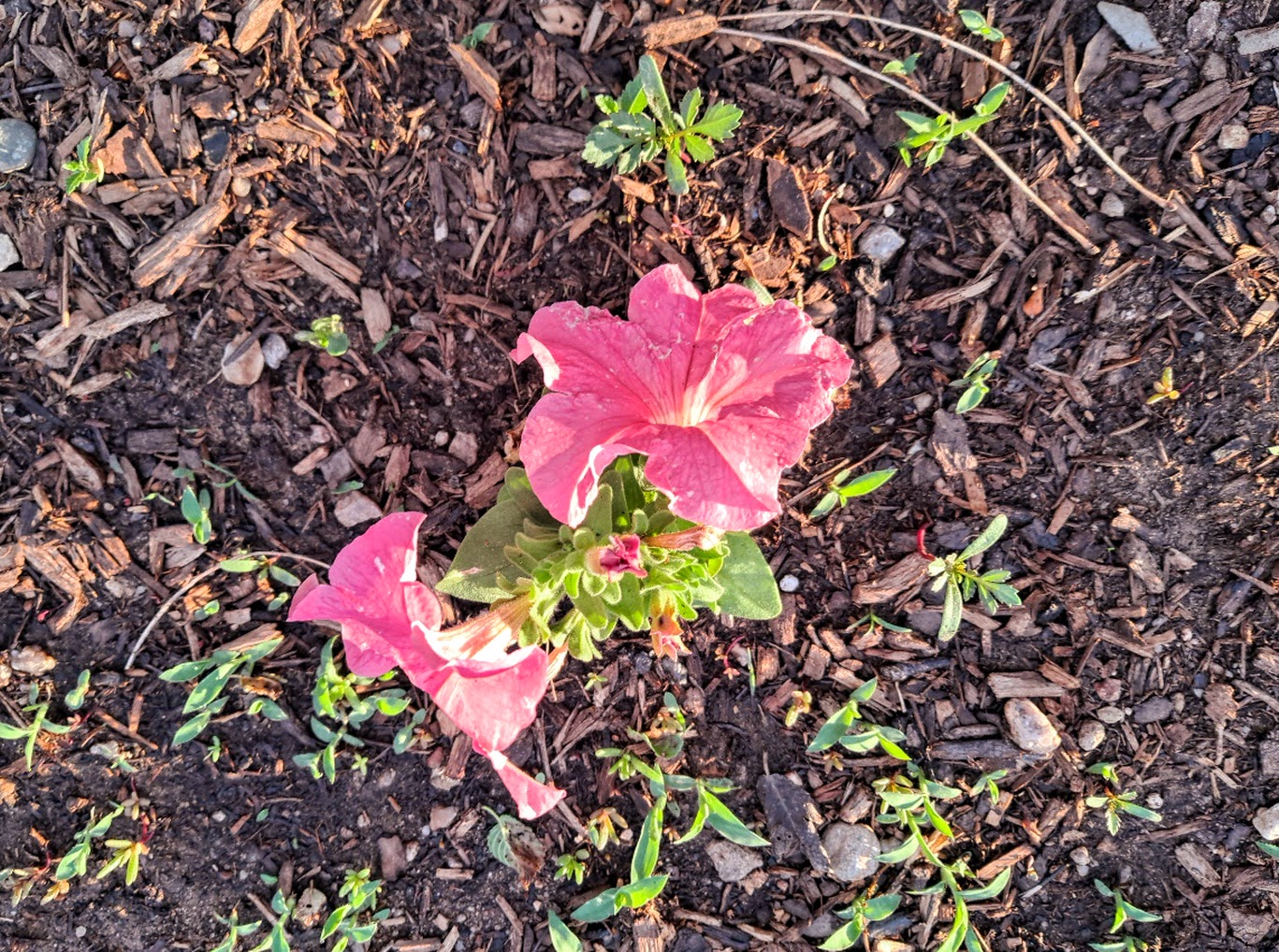
For example, some of the flowers I planted in my raised garden a couple of years ago went to seed, and those flowers did well and they too eventually went to seed and filled in around the vegetables I planted last year. Since I can never count on any seed sprouting, instead of simply watering the raised garden and seeing what would happen, I planted petunias. Shortly afterward, a huge number of seedlings from previous plantings appeared. I hoed them under, not wanting them to compete with the petunias, but then another crop of seedling appeared.

Some of these seedlings are grass, I think, and those I can get rid of as soon as I know for sure. Others are marigolds and still others are moss roses. One decision to make is if I want the orange from the marigolds to break up my color scheme of pale yellow, bright pink, and dark red petunias. Another is if I should just let the seedlings do what they want, and if they end up interfering with my artistic sense, I can transplant the mature marigolds into empty garden spots. Or I could eventually move the petunias. Or I could . . .

See? Decisions. Decisions.

I’m not one for making decisions anymore, not that I ever was. By the time I look at every side of an issue or a problem, I usually come to the conclusion that either way has its good and bad points and makes no difference which I choose, which ends in a decision-making stalemate. (If there’s a major benefit to one point of view, then obviously there’s no decision to make. It’s the evenly balanced choices that get to me every time.)

Luckily, I don’t have to decide anything. I can wait to see what happens, but I also know that once the plants take hold, I won’t want to get rid of them. Transplant them, yes. Treat them as weeds, no.

Meantime, there are plenty of other things to do in the yard, things that need no decisions made about them. Well, that’s not true. The cottage pinks in the wildflower garden need a “haircut,” but do I do it now or wait until they’ve gone to seed? Or do I do it now and leave a few stalks to go to seed. More decisions!

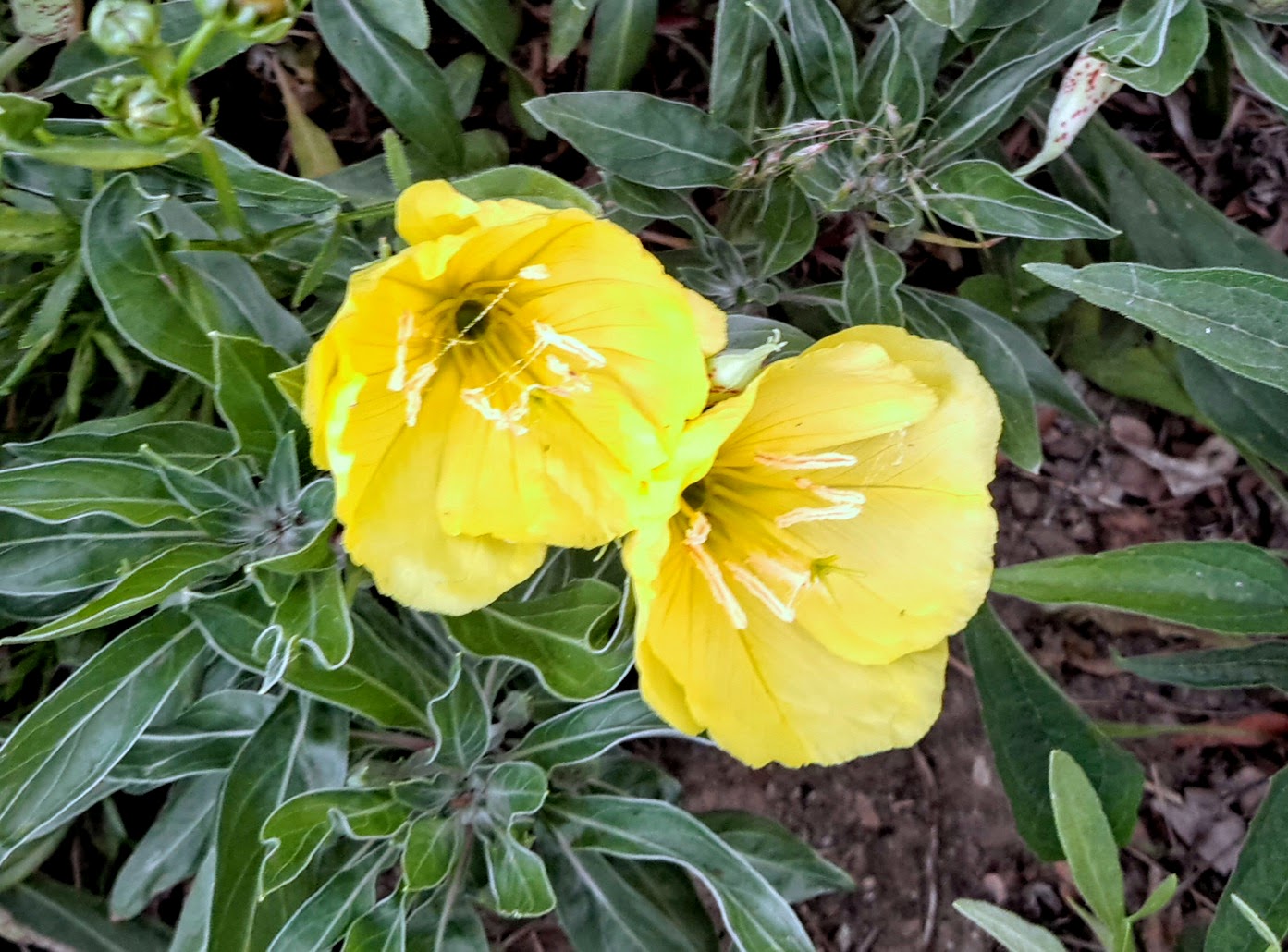
I know one thing that doesn’t need any decisions made about it. In fact, I completely forgot about this dwarf evening primrose until I saw it in my predawn watering cycle.

Luckily, I don’t have to do anything about any of this today. Tomorrow can take care of itself.

***

Pat Bertram is the author of Grief: The Inside Story – A Guide to Surviving the Loss of a Loved One
 

Garden Update

After the thrill of seeing what plants return from their winter hiatus comes the payback. A seedy garden. Not seedy as in disreputable or sleazy. Literally seedy. As in going to seed.

There are still a few columbines blooming, particularly the bright late-blooming ones, but the blue/purple columbines are already past their first bloom and are going to seed.

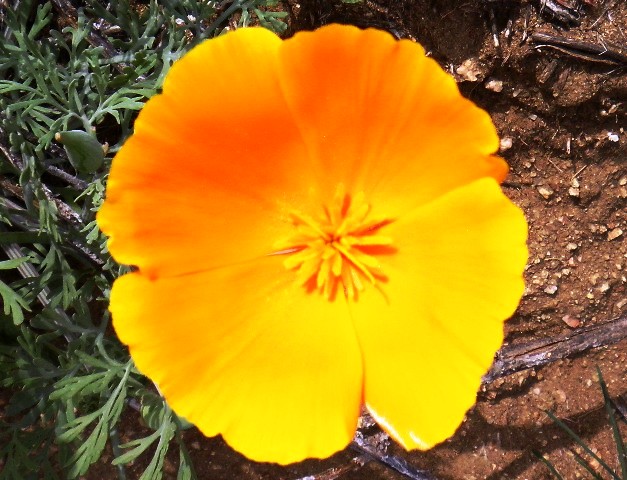
The orange wallflower stopped blooming, and the larkspur, always a joy in their purple majesty, are also going to seed. The snapdragons are still blooming, and might continue to bloom throughout the summer, but the first blossoms are going to seed. One of the few flowers brightening the snapdragon garden is this single California poppy that came from who knows where.

If I were a real gardener with a show-piece garden, I’d be pulling up the seedy annuals and deadheading the perennials, but being an amateur who’s just winging it, I let all the plants go to seed, though perhaps I will deadhead the snapdragons if I get the inclination because at the moment, a lot of the plants look terrible. Mostly, I let the seeds scatter where they will; others I harvest in case there comes a year when the larkspur and other colorful spring growers decide not to come back. Also, it’s great to have seeds to share.

The seedy part of the garden is only half the story. Other plants are coming into their own, such as the cottage pinks, which come in various shades from white to fuchsia.

The various penstemon are also starting to bloom, though this bright pink one is already in full bloom. The penstemon and the cottage pinks sure do complement each other.

The cheerful coreopsis are just beginning their summer odyssey. It’s no mystery why they look like yellow daisies — though of different genera, both belong to the Asteraceae (Aster) family.

The following is one of my favorite photos so far this year. I love the juxtaposition of those primary colors: the yellow snapdragons, the bright red firecracker penstemon and the last of the larkspur. Even better, each of those three plants is a miracle. Around here, snapdragons are a tender perennial, mostly coming back by reseeding themselves, but this year, the plants themselves survived the winter. The larkspur self-seeded, and while the penstemon didn’t self-seed, it came from a seed that had been planted years before and somehow decided this was the time to grow.

As always, the lawn is an issue — although the highest temperatures so far have only been in the nineties, low humidity and sun intensity have been drying out the grass, but so far, except in patches, it’s doing well.

In a couple of weeks, after I harvest the larkspur seeds and pull up the dead stalks, a whole other layer of plants will be revealed. Luckily, there’s always something new to keep my interest that makes the vast amount of work worthwhile.

***

Pat Bertram is the author of Grief: The Inside Story – A Guide to Surviving the Loss of a Loved One
A Quiet Feeling of Contentment

Daily writing prompt
What’s a simple pleasure in life that brings you joy?

I looked up the meaning of joy because I was curious if my personal meaning matched the prevalent meaning, and it appears to be the same. To me, joy is an intense feeling, a kinetic emotion of delight and elation and even jubilation. I call it a kinetic emotion because it seems to be one of movement, an uplifting rather than a more static feeling of perhaps contentment or satisfaction.

Nothing anymore gives me that kinetic feeling of joy, nor does much of anything make me feel the lowering kinetic emotions such as anger and angst and outrage. I’m usually balanced somewhere in the middle rather than clinging to a vastly swinging emotional pendulum, which is how I like it.

There are many simple activities that bring me satisfaction, that take me out of myself and absorb my attention. I used to go to the library all the time, but I’ve taken against that simple pleasure, and so I find other things to do rather than spend all my time reading. Daily blogging, obviously, is one thing that takes up time once dedicated to reading. (I say obviously because . . . here I am!)

I’ve also bought a bunch of pencil puzzles books, a deal since they are outdated magazines, but that’s certainly not a problem since they’re all new to me. There are plenty of different kind of puzzles to keep my mind active, and I tend to think doing puzzles is better for mental stimulation than reading is.

Another activity I’m getting back into is paint-by-number. I used to get a kit occasionally when I was a child, and always enjoyed them, but then they disappeared for decades. My sister sent me a couple of kits for Christmas a few years ago, and that got me started again. They make me feel as if I am actually painting when all I am doing is coloring with paints, but filling in all those shapes satisfies something in me — my sense of order, perhaps.

Doing puzzles seems to be replacing reading, though I do read the books I have in the house especially when I eat. (I can’t seem to develop the habit of sitting down at a table by myself to eat. I know it’s supposed to be better for me, but it seems too bizarre and maybe too earthy to do nothing but concentrate on eating, which leads me to believe I don’t really like to eat.) And doing paint-by-number seems to be replacing computer games, though I still check in with a hidden object game most days.

And, of course, there is gardening. How could I have forgotten that, especially since I just came in from watering my plants and picking a few weeds.

Doing simple things gives my life a sense of balance, peace, and sometimes satisfaction, though the satisfaction doesn’t come from the doing so much as the having done. Seeing a picture come to life, finishing a puzzle book and starting a new one, seeing flowers growing in my yard and basking in the greenness all give me something better than joy. They give me a quiet feeling of contentment.

***

Pat Bertram is the author of Grief: The Inside Story – A Guide to Surviving the Loss of a Loved One

Perfect Summer Day

It feels like summer, not the summer of adulthood when the sun glares and the heat burns and only air-conditioning makes it livable, but the fabled summer of childhood, when each day felt perfect. At least that’s the way we often remember our youthful summers, regardless of the truth.

Summer is still five weeks away, and so is the stultifying heat, but right now, the days feel lazy and warm, with bumblebees buzzing among the flowers, birds digging in the grass for their breakfast. Usually at this time of year, spring winds are almost constant and can be fierce, but they are currently absent. The air is still and soft and falls lightly on my skin. Even the lush blooms speak of an ideal summer, though around here, only a few flowers can keep from being seared by the intense July and August sun.

I tend to think that the mild winter coupled with a warm late winter/early spring helps to make this feel like summer because plants are further along this year than normal, and they are flowering longer. The columbines have been flowering for six weeks! And the larkspur have been flowering almost that long. This long-blooming period gives such a timeless feel to the days, which to me is a summer feeling. (Spring, with the winds and the hurried flowers and the rapid changes, often seems frenetic.)

Also, the temperatures are in the nineties, which in a lot of places, are summer temperatures, but around here, that’s almost cool for summer.

I’m making sure to remember these halcyon days (and if not in my mind, then here, on this blog), because once summer is here for real, all bets are off. And yet, in the past when we’ve had early summer weather, the actual summer months could be cool if the monsoons came. And there is a chance of a wet monsoon season because of predictions for a strong El Nino later this year.

But that’s all mights and maybes. All I know is that right now it feels like a perfect summer day. So what if it’s only May? It’s the feeling (and the feeling of gratitude that comes with it) that counts.

***

Pat Bertram is the author of Grief: The Inside Story – A Guide to Surviving the Loss of a Loved One
 

Magic Yard

When people see my garden, either in photos or in person, they almost always say, “You must have a green thumb.” But I don’t. Until I moved here, I was seldom able to grow anything, and when I did manage to keep a plant alive, it wasn’t for long.

The same thing happens here, to be honest. Plants die. I’d say about half of all plants I bought ended up committing harikari. (Hmm. No, not harikari. I just checked the definition of the word; apparently harikari is a specific way of committing suicide — stabbing a dagger in one’s belly and cutting horizontally. Eek. Not a way I would like to go and a physical impossibility for plants since they have neither daggers nor bellies to stick them in.)

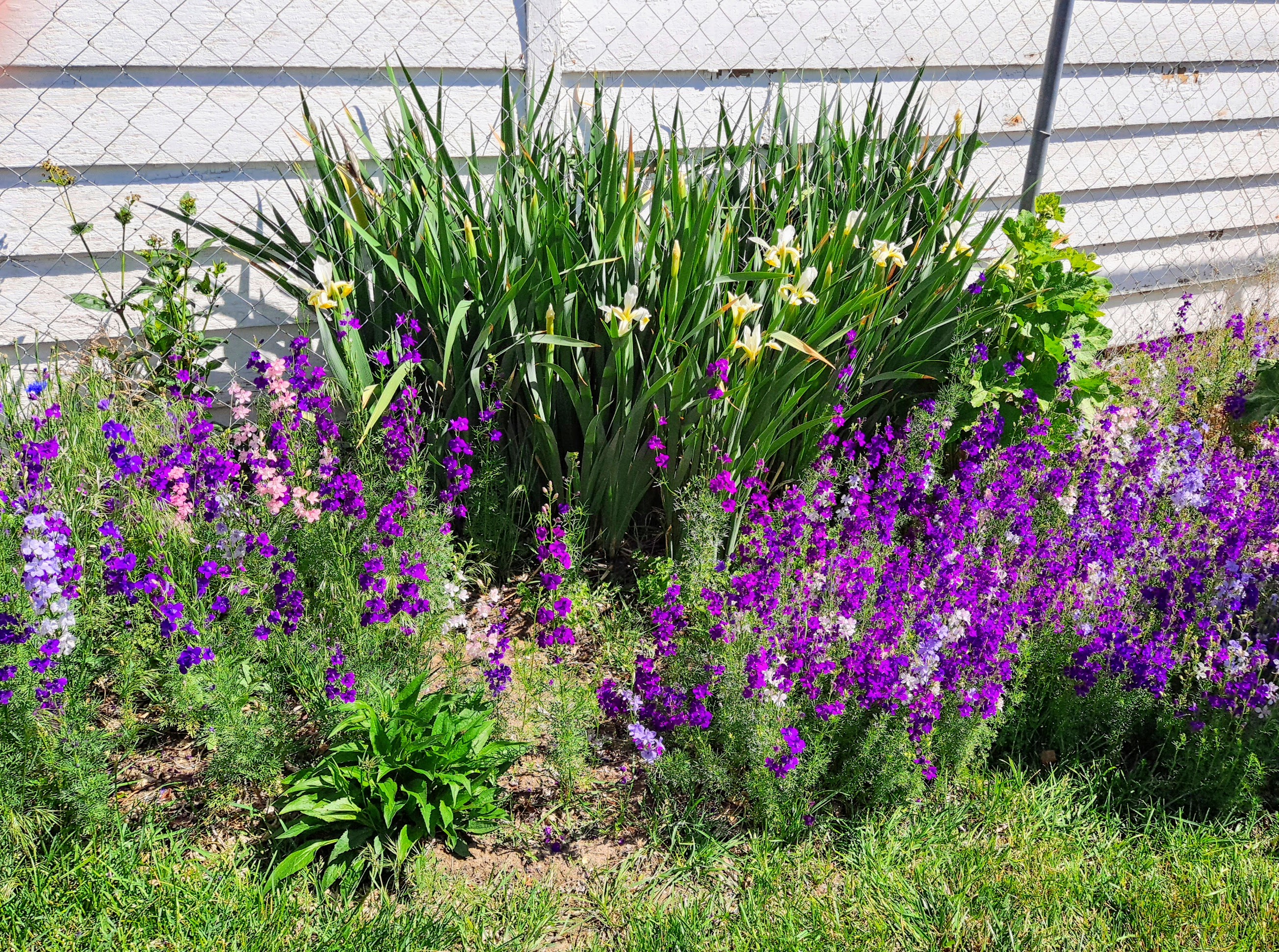
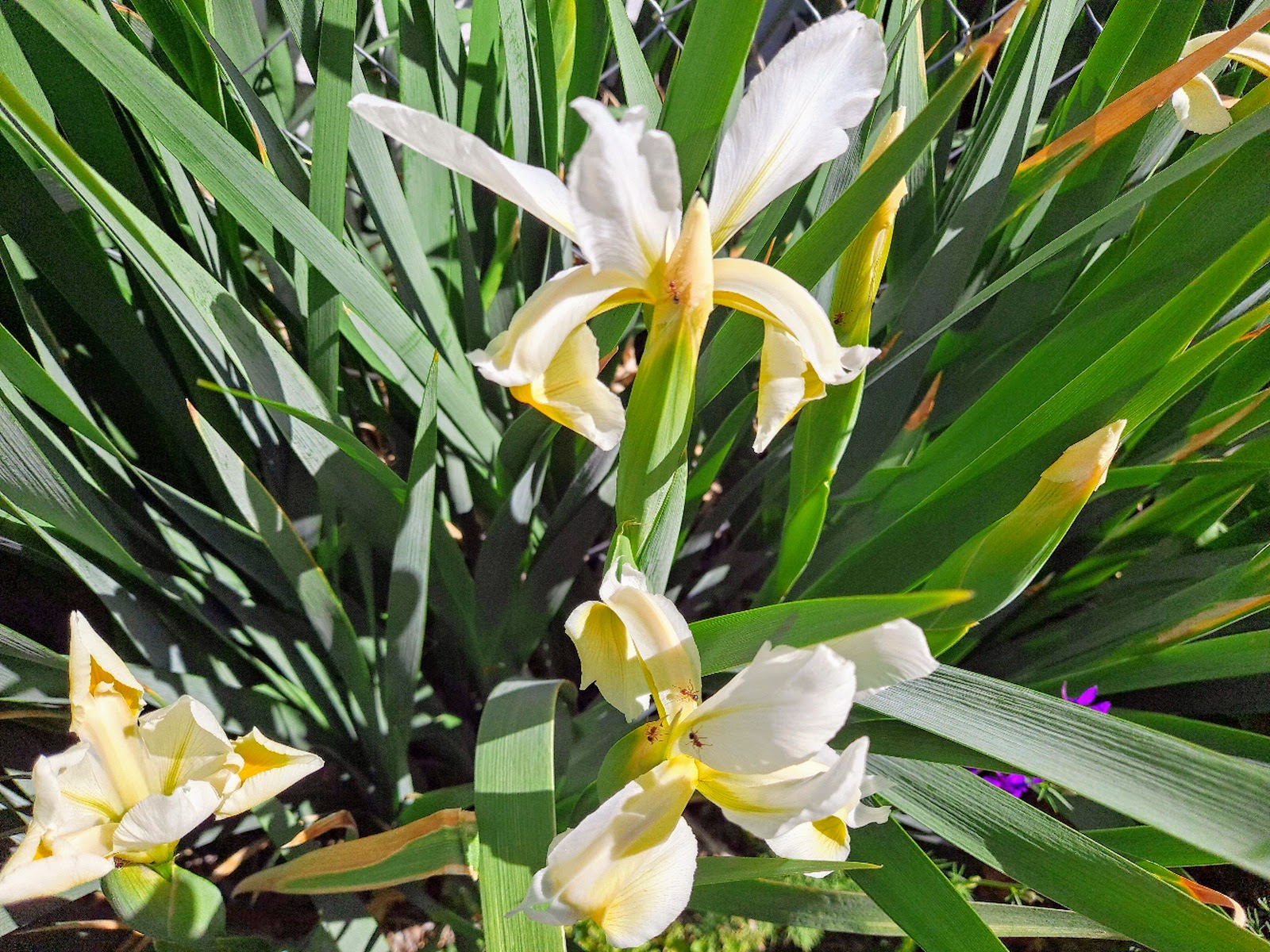
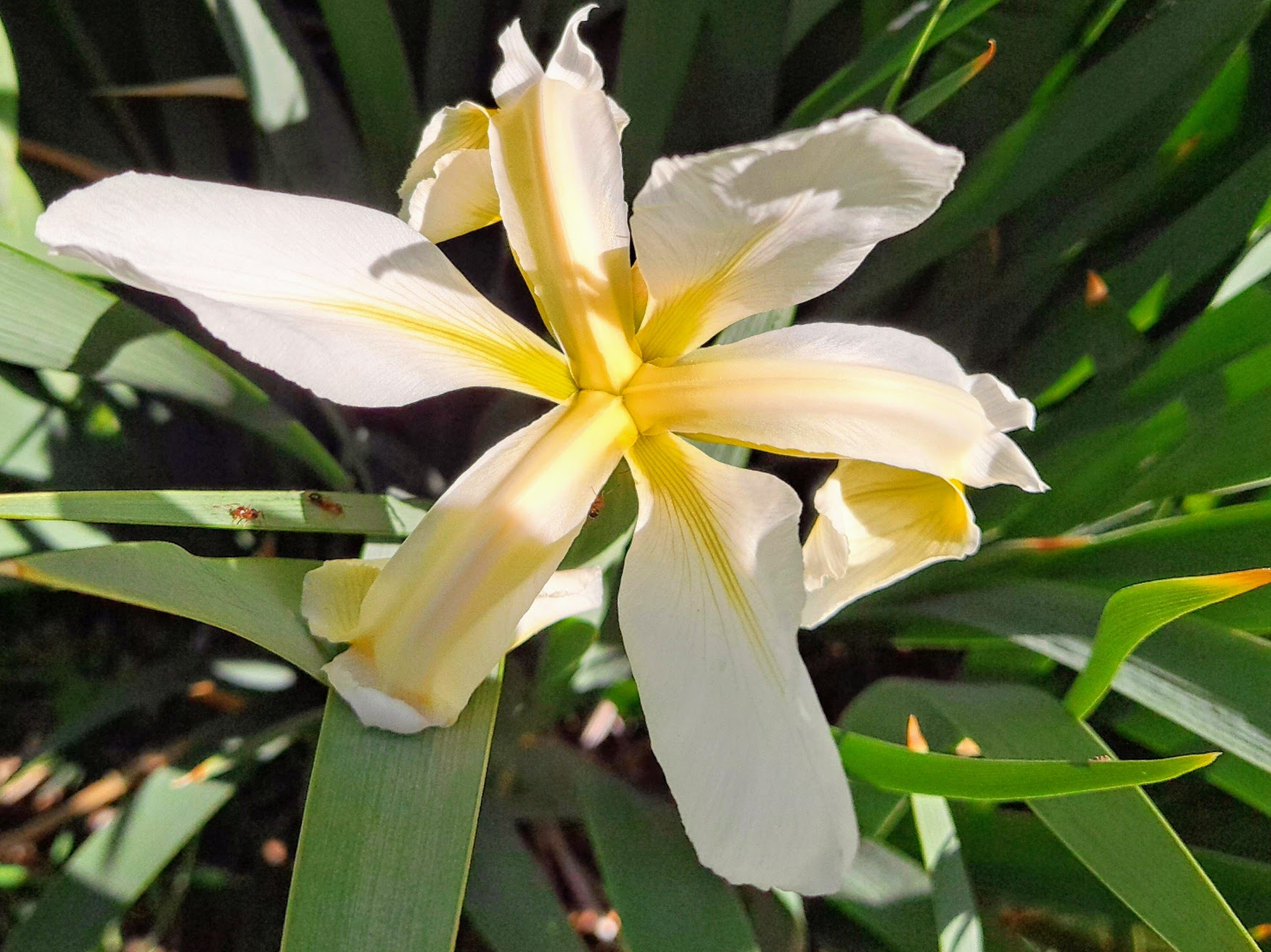
The point is, plants that can’t handle the alkaline soil or the searing sun or the frigid winters or perhaps just me, end up being a vague memory. The plants that hang around are ones that thrive in this yard, and they happily spread out or reseed themselves so that during springs like this one, they make it look as if I know what I am doing, when in fact, it’s the yard doing magic tricks. These gorgeous Asiatic irises were here when I moved in and do well with benign neglect. The purple larkspur, as seen in the top photo and in the background of other photos, are an example of a flower that reseeds itself. Magic, for sure!


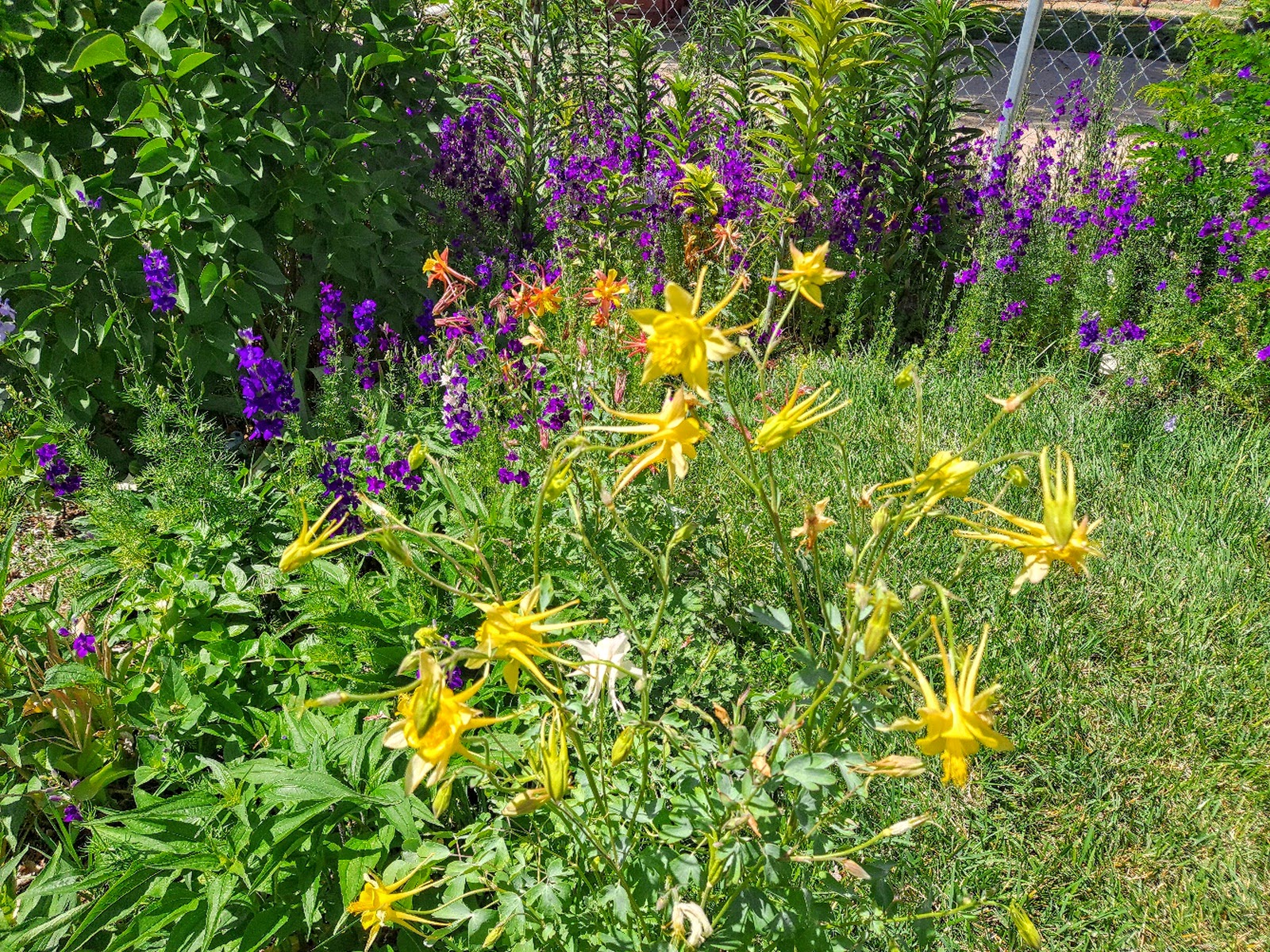
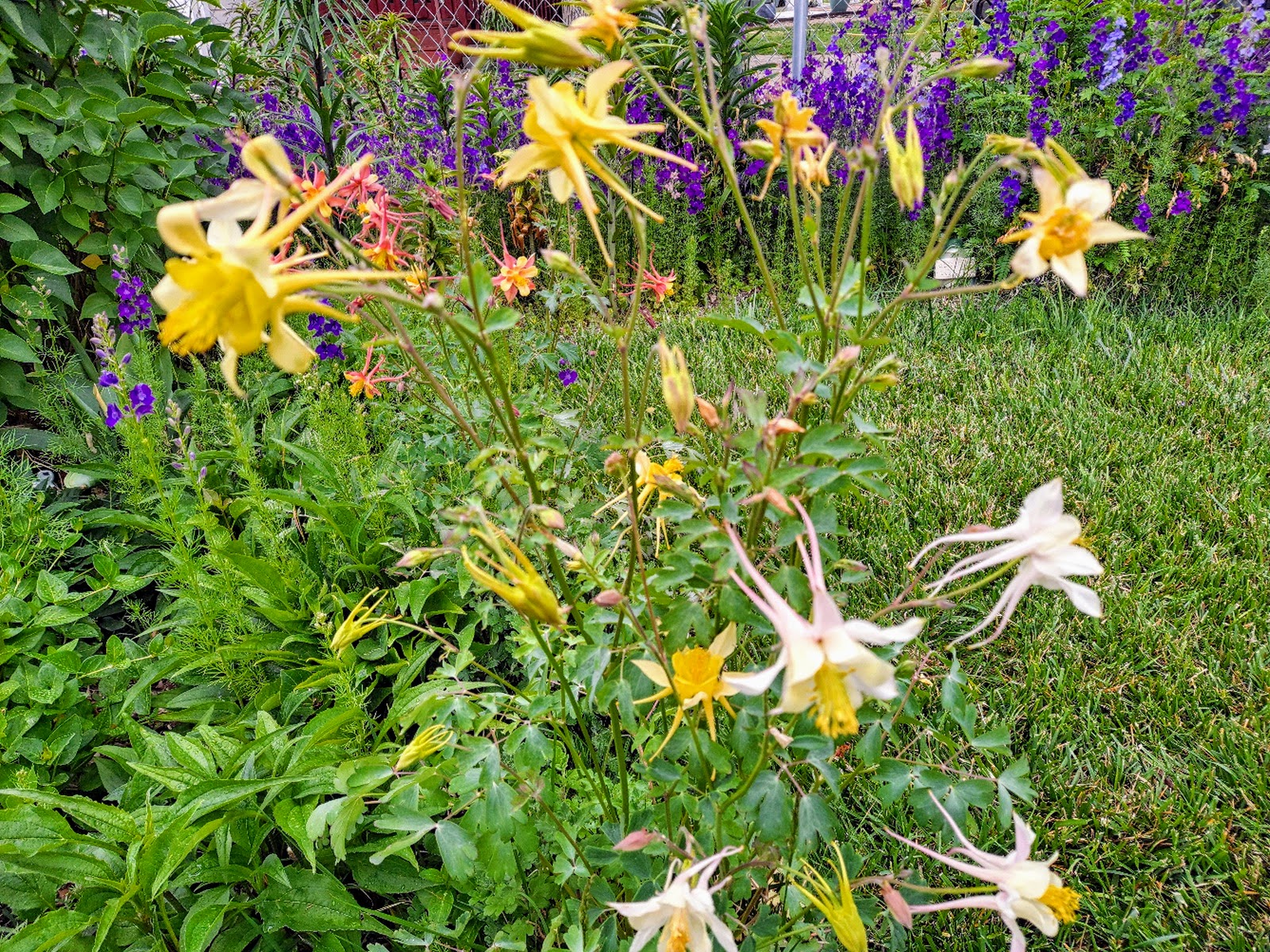
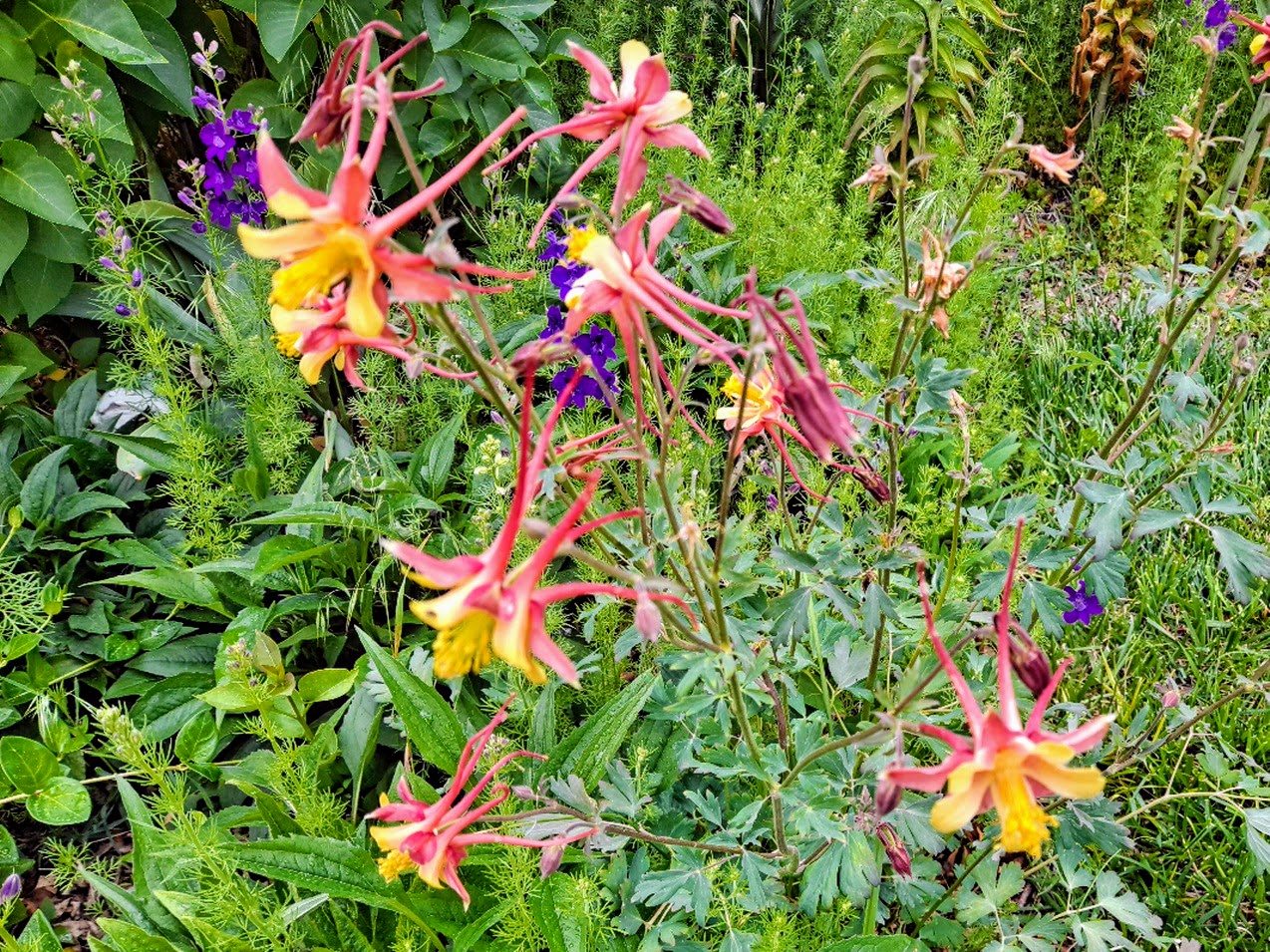
The beauty of gardening (besides the beauty of the garden itself) is that mistakes don’t hang around so that when things grow, it seems as if everything grows, when that is not the case. Also interesting is when the plants themselves decide what they want to be. Below is a yellow columbine that decided it wanted to be half white.

I’m lucky, really, to live in a magic yard. I plant things, water them, admire them, and that’s it. No green thumb. Just plants that like being where they are. Even then, some years, like last year, they struggle to put out any blooms. I truly have no idea why this is a lush spring for me. We had almost no moisture all winter, and not much this spring. What we have had this spring is springing temperatures — one day it’s below freezing, the next day it springs up to ninety. Amazing that anything can deal with such extremes!

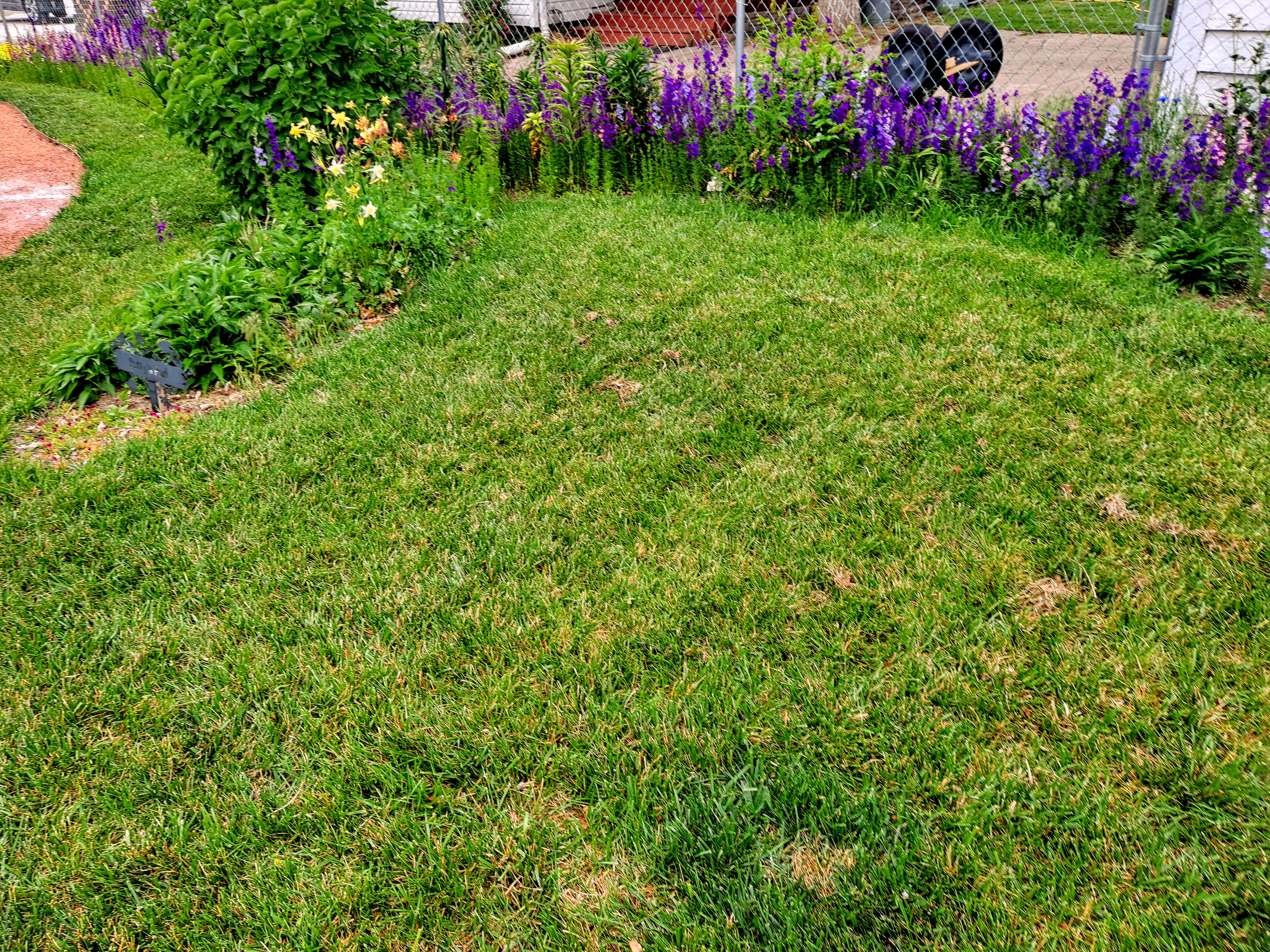
My grass is doing well so far, and I tend to think that has to do with the skunks. They come around every night and dig in the dead patches of grass for grubs, so what is left looks greener. (In the picture below, you might be able to see clumps of dead grass — that’s skunk work. I used to be upset with them until I realized that they are aerating my lawn for me, so as long as they keep their scent to themselves, I’m okay with their digging.)

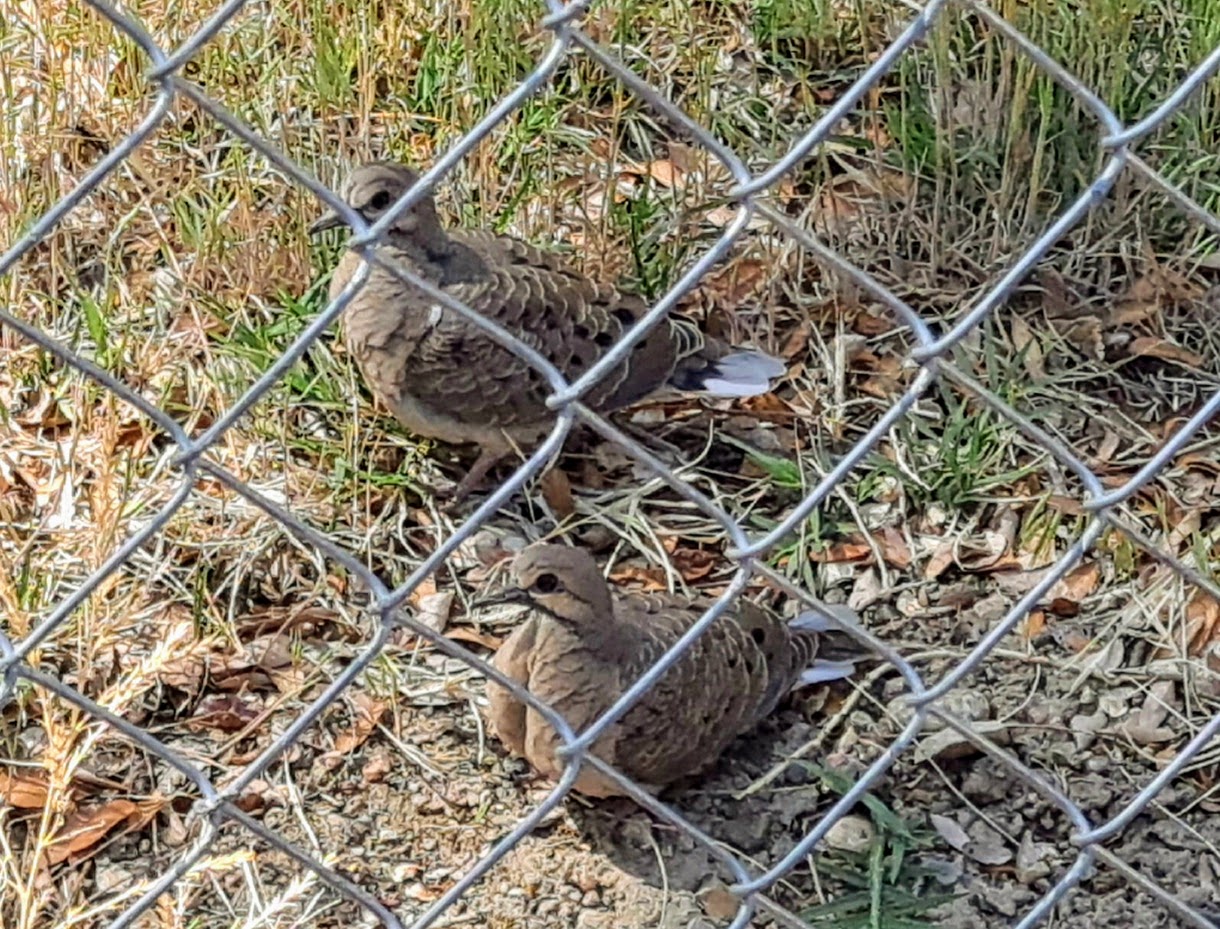
Now if I can only find something that will get rid of the weeds for me. Some years, when I’ve had a lush yard like this, come summer, most things were eaten almost to the ground by grasshoppers, leaving only weeds behind. If scientists could develop a grasshopper that ate weeds and left everything else behind, that would be a great service to us non-green-thumb gardeners. Meantime, I’m just grateful I have a magic yard that knows how to do what I don’t know how to do. I’m not the only one who likes my yard. These young turtledoves certainly seemed taken with the sight!

***

Pat Bertram is the author of Grief: The Inside Story – A Guide to Surviving the Loss of a Loved One