Treasure Hunt

I went hunting this morning. I even took a few shots! Camera shots, that is. And the game I was hunting? Treasure!

Although right now there aren’t many flowers in my yard in comparison to the size of the lot, when I looked at each treasure for itself rather than a piece of the whole, I found a whole lot of color.

The most surprising to me was the flower on the vinca. When I moved here, there were a few plants in the way of my soon-to-be sidewalk, so I transplanted them. It seemed as if they all died, so I eventually planted other flowers. Then, of course, the vinca decided to grow. So I moved it to another location, but it didn’t like the new place and pined away. And then the original transplanted vinca came back. I just left it alone and this year, it seems to be taking over that garden spot. I suppose I’ll leave it, especially now, after seven years of being barren, that it’s decided to flower.

The plum trees have blossomed the past couple of years, but so far only a couple of those blossoms managed to grow into plums. Maybe this year there will be more than a couple greengage plums for me to savor.

Unfortunately, there was a frost last night, so who knows what will happen. Meantime, the blossoms still are cheerful!

A few columbines are now flowering.

The wallflowers provide a colorful backdrop for one of the columbine plants.

The wild roses are just coming into bloom. Too bad they have such a short bloom season, but the vibrant color makes any bloom season a joy.

Lilacs, of course, are always a joy. This year, I’ve had a longer lilac season than normal because the white lilacs didn’t start blooming until the purple ones faded.

The garden today was such a delightful place. So many treasures!

***

Pat Bertram is the author of Grief: The Inside Story – A Guide to Surviving the Loss of a Loved One.

Gift of Companionship

Yesterday was one of those special days that can’t be planned. Well, I suppose it could be planned, but the logistics of arranging such a day and making it all come out to perfection would take more energy than I have. Besides, part of the perfection was the unexpectedness, the way everything that happened coalesced into something special.

When I was outside watering my lawn, a neighbor stopped by to visit. We chatted a bit, then I asked him if he was still strong enough to wield a hammer. (Maybe not a tactful question, but it’s something I am aware of, both for myself and other not-young folk.) One corner of my raised garden planter was pulling away from the rest of the boards, and though I tried, I couldn’t hammer a nail through that thick, two-inch board. It turns out that he could do the hammering, but unfortunately, the support post was all but rotten. Anyway, he worked on that planter for quite a while and finally was able to strengthen that corner so the weight of the soil wouldn’t keep pulling it out of whack.

Meantime, to my delight, a friend who I haven’t seen in ages stopped by to visit. She followed me around while I finished my watering and admired my flowers.

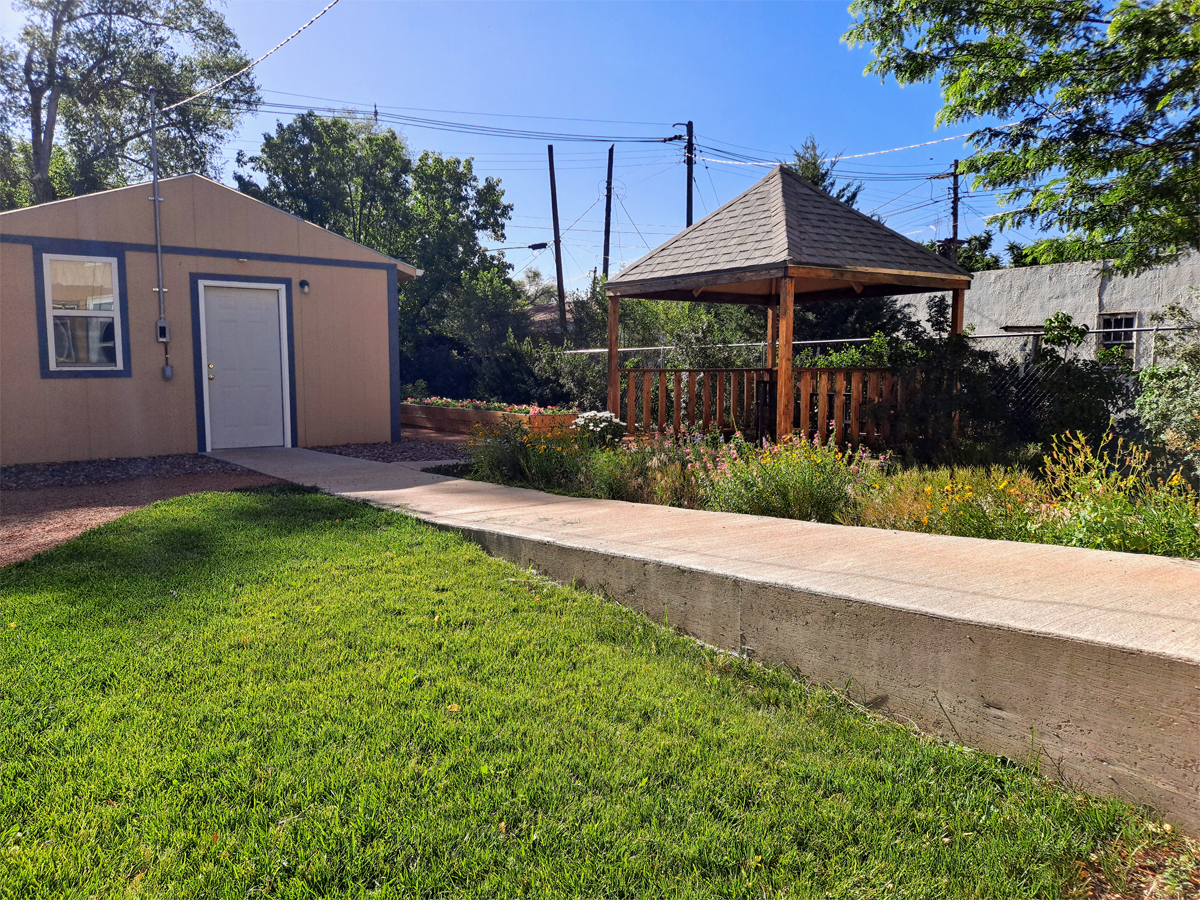
By then, the neighbor had finished doing what he could, so the three of us hung out in my gazebo to chat awhile. After he left, my friend stayed a couple of more hours, so we were able to get caught up. Such a joy that was!

After she left, I spoke a bit with a different neighbor. Then later I had a long text conversation with my sister. It was good to get caught up with her, too.

For sure, yesterday was a special day, and it wasn’t just the company after a long stretch of aloneness that made the day a good one, but the people themselves.

Today, I’m back to my normal hermit-y self, but I still am feeling the glow of friendship from yesterday. Maybe the remembrance of the day will make me more conscientious about keeping up with friendships, but who knows. Sometimes overcoming the inertia of aloneness to make plans seems insurmountable, which makes yesterday’s gift of companionship even more special.

***

Pat Bertram is the author of Grief: The Inside Story – A Guide to Surviving the Loss of a Loved One
Satiation

I used to like trees, but after digging up hundreds of sprouts from seeds blown into my yard from neighbors’ trees, I’ve become wary of them. The harsh winds occasionally blow branches into my yard, but at least those are easy to get rid of, especially if the owner of those branches hauls them away. But it’s the seedlings that cause the most work for me.

One next-door neighbor has locust trees, and those trees sure are prolific. Every year I find dozens of new baby trees to dig up. So far, the seedlings seem to be evenly distributed over the years, so I know what I’m getting into. Too bad that’s not the worst of it.

About three years ago, my other next-door neighbor’s ash tree had what is called a mast year — a year when it dropped a flood of seeds. I woke up one morning to find my entire yard a pale green. All the rocks around the house, the grass, the pathways, the garden areas were covered in ash seeds. I raked them, swept them, blew them, picked them up by the handfuls. I thought I’d gotten most of them, but two years later, I found hundreds of ash seedlings. That year, I felt almost kindly toward weeds — at least they were easy to pull up. Those seedlings? Not so much. They’d had an entire year to develop deep roots, and so each had to be dug up, not just pulled up. A not so fun year! I’m still finding seedlings, but now they’ve had an extra year to develop, and are harder to dig up because of that well-developed root system.

This year, Siberian elm trees belonging to both of my neighbors are having a mast year. A few days ago, the ground was almost completely covered in those tiny saucer-shaped seeds. The heavy winds we’ve been having do not blow those seeds out of my yard, only into it, so I get double my share of seeds no matter which way the wind is blowing. There have always been elm seedling for me to dig up because the normal amount seems to have a huge rate of germination, but I sure dread the work when this massive proliferation of seeds starts to sprout.

A mast year is also called “predator satiation.” Sometimes this satiation is cyclical, sometimes it’s an answer to a dry winter, and sometimes, I think, the trees just want to torment me. The satiation, of course, is to make sure that there will still be seeds left to become trees even after predators have eaten their fill. If I were out in the country, I wouldn’t care. If I didn’t spend so much time on my yard, I wouldn’t care, or at least not much. But as it is, I’ve come to dislike trees. None of my neighbors’ trees benefit me. I just get the mess and the work. And boy, talk about satiation! I’ve sure had my fill of trees trying to take over my yard.

Oh, well. If it’s not one thing, it’s another. And sometimes that “another” isn’t a bad thing. A couple of years ago, a columbine seeded itself into my hen and chicks garden, and I hesitated to pick it. It doesn’t belong there, but it’s not a weed, either, and it didn’t seem to be a problem, so I just let it grow. I’m glad I did. It’s not like any of my other columbines, which are the more traditional bluish purple and white as well as a couple of bright yellow plants.

This creamy columbine is a small thing to offset the dread of the seedling invasion, but it’s an important thing since it reminds me of the unexpected beauty a garden can bring.

***

Pat Bertram is the author of Grief: The Inside Story – A Guide to Surviving the Loss of a Loved One.

Gardening Season

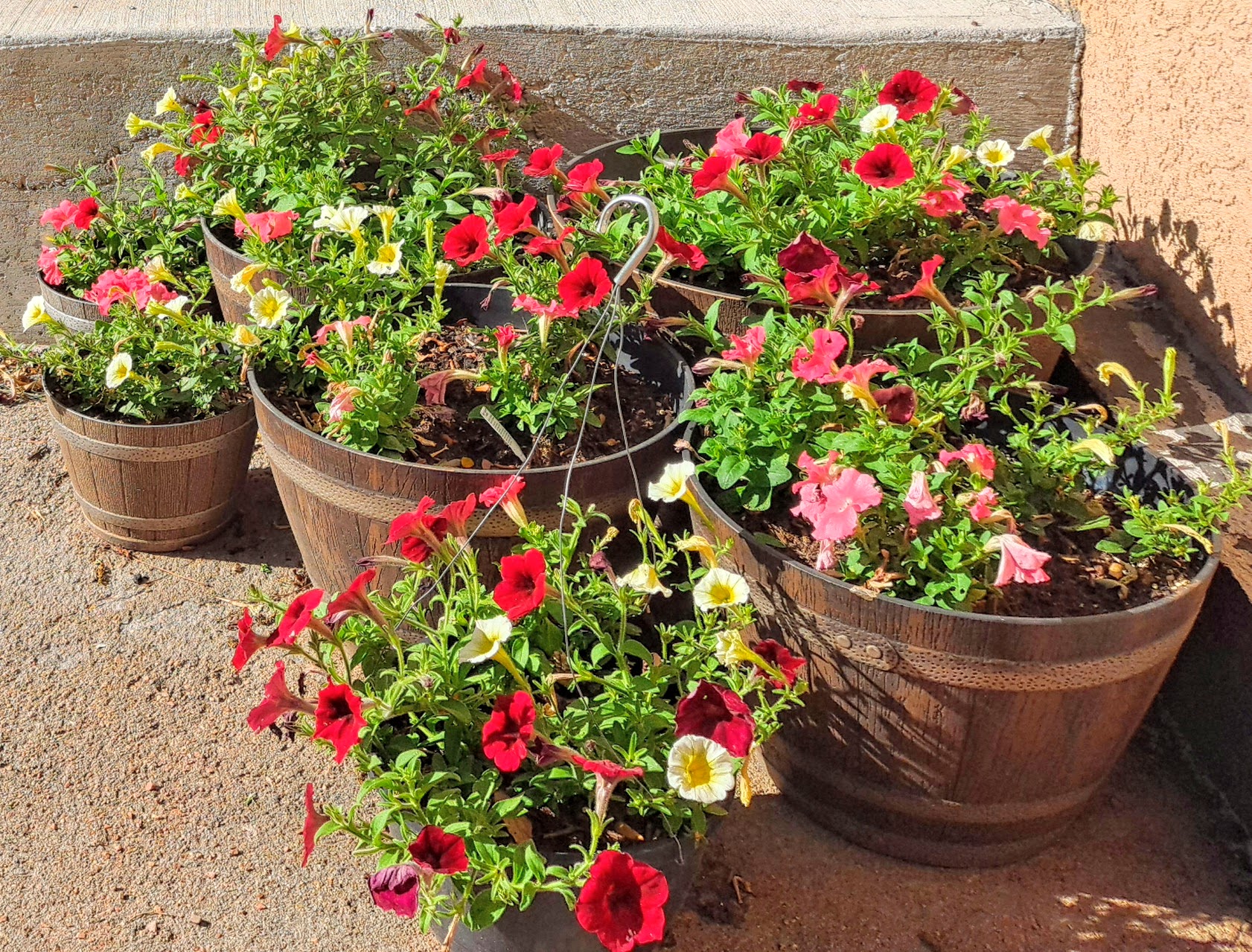
In less than a month, it will be spring planting time. I won’t have to buy as many plants as usual because several that usually die off made it through the winter. Out here, where the heat is blistering and the cold is frigid, many perennials, such as snapdragons, that survive in less harsh climates are grown as annuals. Snapdragons reseed themselves, so they might as well be perennials, though the seeding is sporadic at times. This year, though, the snapdragons managed to stay green all winter, so I am much further ahead than I expected. Mostly, I want to see if I can find a few more colors of snapdragons since all I could find last year were yellow ones. If so, then one problem garden will take care of itself. After that, all I’ll have to do is get petunias for my container gardens and hanging plants and then plant seeds in the raised garden. It’s shaping up to be so much less work than previous years.

Of course, when the plants are available for sale, all bets are off. I’ll probably splurge on a few untried plants and see what happens.

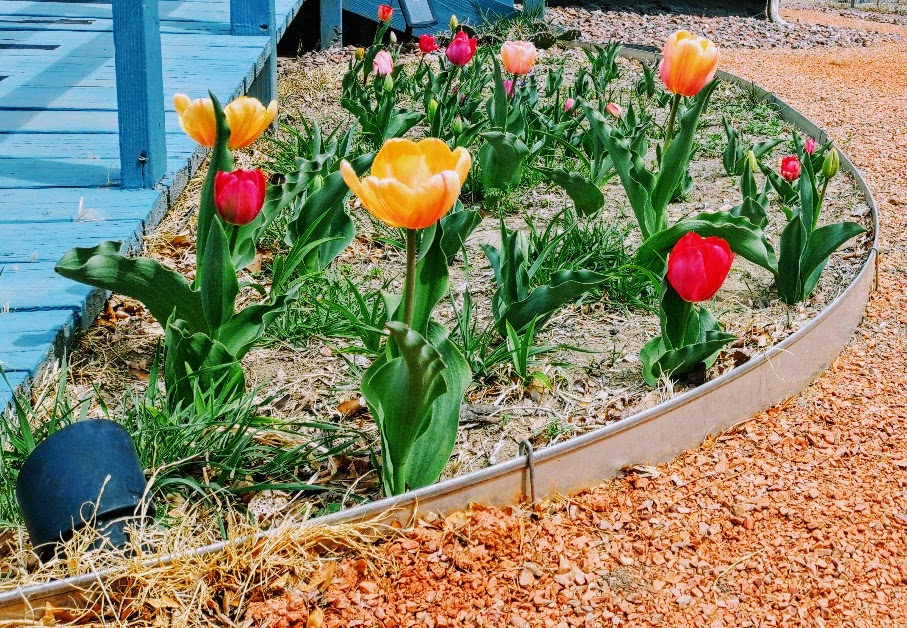
Meantime, there are a few tulips still hanging around, but those were the flowers that got afternoon shade.

Most of the rest, the ones that get the burning afternoon sun, fizzled out before they flowered.

Still, there is a bit of color in the yard. The Siberian wallflower is doing well. It’s one of my favorite early spring flowers — so cheery! Unfortunately, it’s a two-year biennial. The first year there are a few small plants, the second year they are mini bushes, and the third year, the poor things are kaput unless they’ve reseeded themselves.

The lilacs did well this year. Lots of blooms!

I’m hoping for a good gardening weather so that plants (and the grass) don’t fry in the summer sun, but the hope is all that’s in my control. What the weather does is something else again.

***

Pat Bertram is the author of Grief: The Inside Story – A Guide to Surviving the Loss of a Loved One.

What Is Now the Reality

I don’t understand the whole “naming generations” thing. It seems to me it would make more sense to go by decades — for one thing, no one would have to remember the names; for another, people at the beginning of a decade often have more in common with those at the end than they do with their own named generation.

For example, the boomer generation is considered to be 1946 to 1964. There is a vast difference in the lives between those born at the beginning of that so-called generation than those born at the end. At its most obvious — the oldest boomers are just turning 80. Most are in their 60s and 70s. The youngest still have two to three years to go before they retire. Do people who trash the “boomers” even realize that?

I’ve been seeing a lot of envy from younger generations because they’re told that boomers hold more than 50% of the wealth, and they want a piece of it. Some will get it when the boomers die off. Although a lot of the boomer wealth came from real estate investment, a portion was inherited, and unless the state takes a greater portion of that inheritance than they did in previous years, the next generations will end up with it.

Something people don’t understand is that for many of the boomers, their real estate investment wealth is their home. One couple I know bought their house decades ago, it’s now paid off, and is worth considerably more than when they bought it. But they are still working since they haven’t hit retirement age yet, and like everyone else, they are struggling to figure out how to support their old age since that house is their main investment. So, they can live there after retirement and work part time to pay the bills, or they can sell the house, realize the profit, and hope they can somehow find something cheaper to buy that leaves them enough to fund their living expenses. That doesn’t sound like boomer wealth to me.

As for that wealth — according to Pew research, 10% of boomers hold 71% of the generational wealth. Although on average, boomers hold more wealth than the previous generation at the same age, a good percent of those folks are no better off than their parents.

So what brought this on? I saw an article — the article wasn’t even a rant, just a supposed explanation of why boomers had it so much better than subsequent generations — that said that in the mid-1960s, boomers could still buy a house with a single income. And yes, in the mid-1960s, people could buy a house with a single income, but those house buyers weren’t boomers. They were the previous generation. In 1965, the oldest boomer was still a teenager, the youngest, a toddler. Unless there were a lot of really precocious babies back then, they weren’t buying houses.

What people don’t seem to realize is that by the time boomers were old enough and had enough money to buy a house, the housing market had changed and suddenly it took two incomes to afford what the previous generation could do on a single income. (I’ve always been fascinated by the idea that feminism grew considerably around that time. Did the need for two incomes fuel the movement, or did the movement somehow fuel the need for two incomes?)

Another thing that people don’t realize is how few basic things were necessary back then. Cable was just coming into prominence in the mid1970s; before that, television was free. There were no cell phones for each family member but a single phone, with perhaps an extension, plugged into the wall. Designer clothes were the privilege of the rich. Middle class women might yearn, but never assumed those clothes were for them. As for the whole “cute” shoe fetish and brand-name bags? Again, saved for the rich. It wasn’t until the 1980s and 90s that logos and brands became global status symbols. People today seem to think that fast food and take out were always available, and yes, there were a few fast-food outlets, but they were a special treat rather than a staple. Takeout was pretty much restricted to Chinese food, and most supermarkets didn’t even have delis.

As the pace of life speeded up, with the need for two incomes to support a family, the idea of cooking at home every night was overtaken by the prepared food market, which added considerably to the family food budget.

People complain that boomers are too ignorant about technology, and admittedly, now and again, you do come across a person in their late 70s who fumble with phones and computers, but most of the boomers, though not born with a phone in their chubby little hands, had to learn about computers to keep their jobs. Most boomers have been into technology for the past thirty years. It’s the previous generation that has a hard time with phones and computers, mostly because they didn’t need to learn until their grown children talked them into it.

As for those who complain about too many boomers in the House and Senate? Nope, again, those ancient folks aren’t boomers. They’re part of the never-silent “silent generation.”

And lest you think these ideas are limited to a single demographic, back then, before the government decided to get in on the act, people were doing just fine by themselves, naturally integrating into better neighborhoods.

Did the boomers have it better? I don’t know. I do know that the air was cleaner, the streets quieter (fewer two-car families and people worked closer to home so commutes were shorter), kids could play outside and had a lot more independence than kids do nowadays. Although health insurance was affordable, one could get by without insurance since doctors’ fees didn’t include exorbitant malpractice insurance rates. Because of the 1976 gas shortage, cars were smaller, more efficient — the boom in SUVs came in the 1990s.

Although boomers were able to buy their houses earlier than later generations, I have to wonder how much of that had to do with the money saved by having fewer necessities to buy, but whatever the reason, I do know that most homeowners were able to buy a house at a much younger age than I was.

Not that any of this matters. People will think what they want, though it’s never a good thing to compare yourself with other generations. It’s all about making the best of the world you live in, whatever generation it might be — and whatever name it might have — because the past (and lamenting the past) can never change what is now the reality.

***

Pat Bertram is the author of Grief: The Inside Story – A Guide to Surviving the Loss of a Loved One
Family, Friends, and a Reason to Celebrate

I had the weird experience yesterday of living in two different time zones depending on what room I was in. In one room, it was afternoon, and in the other, before noon. It didn’t really matter, apparently, since it took me a while to realize that there were two different times in my house. I mean, I knew it was 12:30 in one room but immediately forgot what the time was. Fifteen minutes later, I went into the kitchen and there the time was 11:45. Figuring I’d misread the time in the other room, I went back and checked my phone again. Confused the heck out of me why I’d lost an hour in one room but not the other.

Then, of course, light dawned. Sheesh. Daylight saving time. Unlike my phone and computer, the stove and microwave don’t change the time automatically.

Neither does my body.

I never think the time change will affect me since I get up with the sun, but it does, mostly because bedtime comes an hour earlier (which really means an hour or two later since I’m not tired enough to fall asleep, so I toss and turn longer than if I had simply gone to bed an hour later).

I hope this moment of confusion isn’t indicative of what my old age will be like — a lot of confusion with (hopefully) a quick dawning of understanding.

Of course, if I’d looked at the calendar or continued my perusal of online articles, I would have been reminded, but I’ve been narrowing my focus to what is in my immediate surroundings.

And apparently, yesterday, what was in my immediate surrounding was two different time zones — MST and MDT.

I have been enjoying my narrowed focus. (Even though it’s an online activity, blogging is still a narrowed focus because what I see is the words in my mind being written in black and white.) It helps that the weather is nice so I can go outside to expand my horizons, but I’ve also been bringing my horizons inside. At least, I did on Saturday, which was the seventh anniversary of my buying this house.

The house anniversary is one of the few dates in my life I like to celebrate, and so does my next-door neighbor. (Apparently, I was an answer to her prayer for a good neighbor. Makes me feel special since I’ve never — to my knowledge — been the answer to anyone’s prayers.) To honor the occasion, she gave me these gorgeous roses!

She and a few other friends came to help me celebrate. It was nice that they couldn’t all come at once, so I was able to visit one on one or one on two which is best for me. I find more company than that causes me too much confusion, though unlike the time difference mentioned above, this isn’t age-related confusion (or whatever the problem with the time was) but simply the way I’ve always been.

My sister had asked what I wanted for a gift. Since I don’t need anything, I told her I’d like gifts for my friends. So she made me the most wonderful party favor kit, which was great on so many levels.

I had the fun of receiving the box of goodies, the fun of assembling the kit, and the fun of handing them out.

So, who needs a broader focus in life when one has family, friends, a reason to celebrate, and lovely hostess gifts to hand out!

I was proud of myself for cleaning up immediately afterward, so yesterday morning I woke to a clean house rather than a mess. Not that we left much of a mess, but I had to clear the table and do the dishes as well as finish the leftovers since I don’t like having cake and ice cream on hand. Though to be honest, I never have them on hand because if I do, they are too soon gobbled up, and neither of those treats treat me well.

So that catches us up on my news. I’ve been spending my blog time on topics other than me (though in a way, everything I write is about me or at least what I think), but there’s truly been nothing much going on in my life to write about.

Still, it’s been nice having this narrow focus even if it doesn’t give me a lot of fodder for blogging.

***

Pat Bertram is the author of Grief: The Inside Story – A Guide to Surviving the Loss of a Loved One.

Buying Colorado

After Jeff died, I moved to California to help take care of my father. He didn’t actually need a lot of help, but he did need someone there to watch over him, so I was able to find a life for myself. During the first three years, I mostly walked. And walked. And walked. Then I discovered dancing, and that became a saving grace for me. (Well, maybe not “grace” since it didn’t make me all that graceful, but I still managed to hold my own, even during performances.)

After my father died, I became nomadic — housesitting, traveling, staying in motels. But always, I ended up back in that desert town because I didn’t know where else to go. Besides, I had friends there, and dancing.

Then came the opportunity to buy a house in a small town in Colorado. I was sad to leave my dance classes and my friends, but I was delighted to leave California. Although the high desert was livable, the politics of the state weren’t. Even if I could have afforded to live there, I would have left out of self-preservation.

I was glad to settle back into Colorado. That is, I was glad until I realized that the Colorado I left wasn’t the same one I returned to. The state had always been moderate, and yet somehow the state had become uber-liberal, as bad if not worse than California, with punitive policies and little representation of the rural areas. I live far from Denver, but that sanctuary city with its insane laws neutralizes the outlying areas even further. Not only do they try to take our water (which makes the building of the conduit from Pueblo out to the Kansas border a boondoggle because there won’t be any water for them to share with us) but they are also taking away the ability for counties to create their own zoning laws. Instead, small towns must adhere to the same unaffordable “affordability” zoning laws that are being put into place in the big cities. A state that once had a tax surplus is now in a sinking hole of debt because of liberal ideologies and the fraudulent misuse of tax dollars. Then there is the bought-and-paid-for governor who’s making his own deals with WHO and Zelensky and anyone else that can further his agenda of separating Colorado from the governance of federal agencies. (Though he still wants federal funds.) All this creates at times an uncomfortable dichotomy between the individualistic rural areas and the collectivistic urban areas.

So how did Colorado come to this when I wasn’t looking? Tons of money from east coast liberals, and maybe even west coast, came flooding in. Most of the money for democratic candidates comes from outside the state, while most of the money for conservative candidates comes from inside the state. Which says to me that the state would have preferred to remain conservative, or at least somewhere in the middle where it had always been. (Today, slightly less than a quarter of registered voters are democrat, another scant quarter is Republican, and slightly more than half are registered as independent or unaffiliated.)  Many districts no longer even put forth a republican candidate for any office. They simply can’t match the funds the democrats have at their disposal.

Why the push to buy Colorado? I have no idea, though I guess it was easy in part because so many people from California had moved here. I never understood that, frankly. You move from a cesspool of high taxes and an overreaching government, and you immediately start creating a similar cesspool, but that’s what they did.

Although the politics of Colorado has changed drastically, the feel of the state hasn’t. The air feels like home. The weather, though not always to my liking, is what I was used to growing up.

And I’ve made good friends here, making this small town even homier.

Even though I grew up in Denver, it turns out I’m a small-town girl at heart, though I do wish — silly me — that politically things were different. Still, the machinations of politicians and their backers, and those who espouse extremist policies have always horrified me so I don’t imagine things will be that different. I hope not. And anyway, I’ve managed to survive seven years here, so with any luck, I’ll continue to do okay.

***

Pat Bertram is the author of Grief: The Inside Story – A Guide to Surviving the Loss of a Loved One.

Creating a Peaceful Place

Daily writing prompt
Describe the most ambitious DIY project you’ve ever taken on.

The most ambitious DIY project I’ve ever taken on? That’s easy. Landscaping my yard.

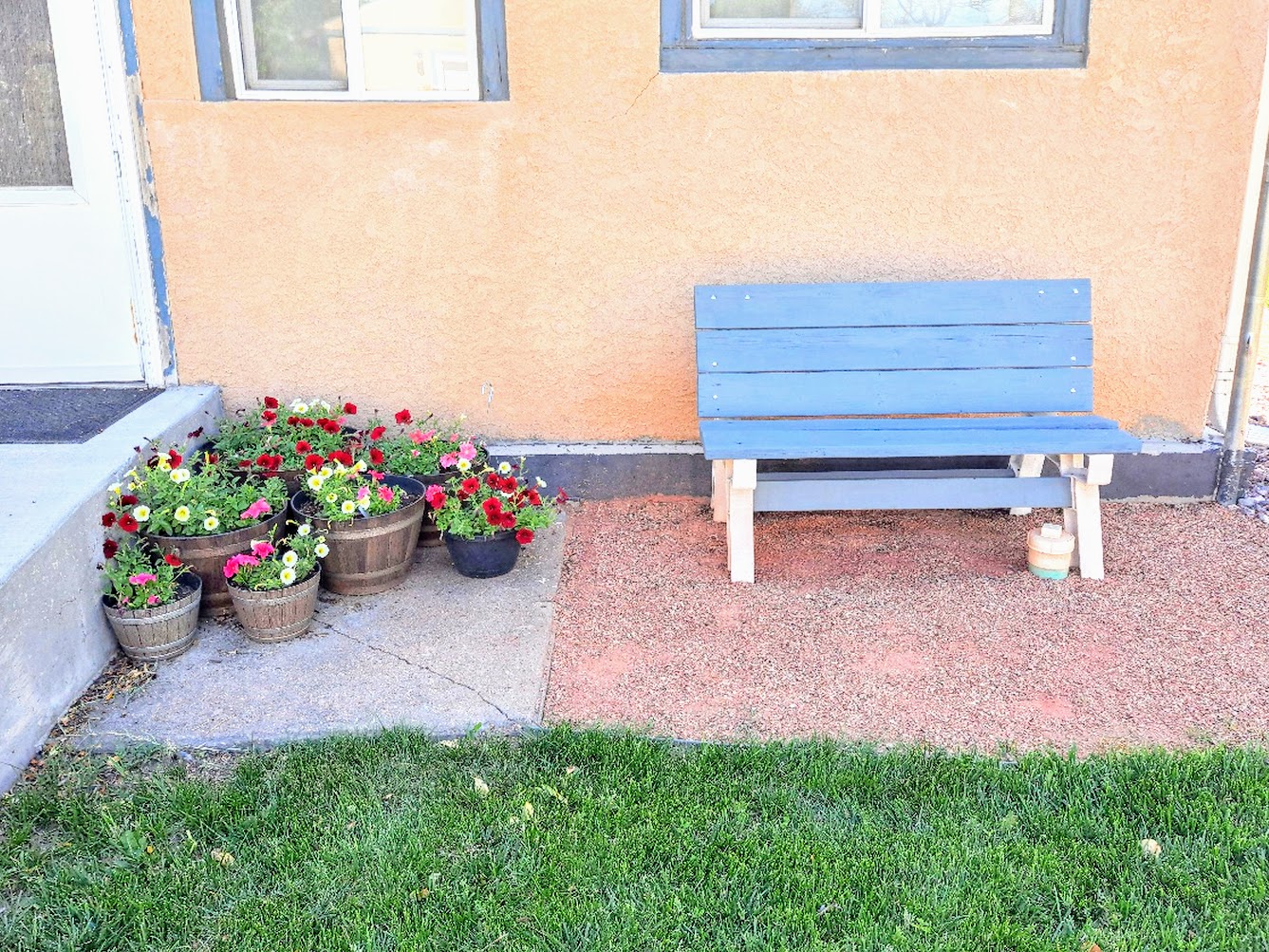
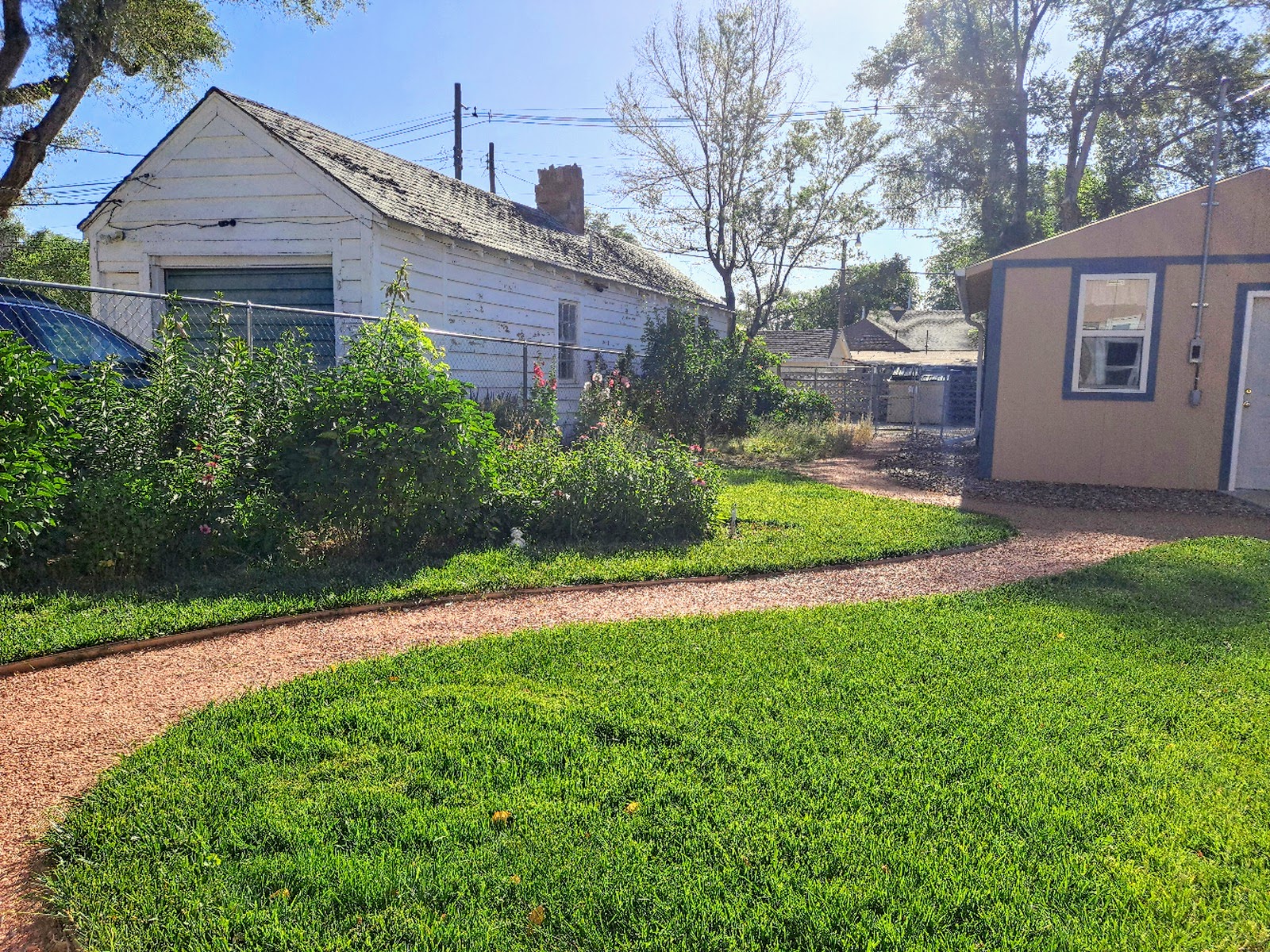
When I moved here, the yard was dirt and weeds. It looked okay because the weeds had been cut down to make the house look good when it was put on the market, but still, just weeds. I hadn’t planned on doing anything to improve the property because I didn’t want to have to take care of a yard, but there were things that needed to be done, such as rocks laid around the house to protect the foundation. Then, when I found out I was tripping on all the holes and rocks among the weeds, I decided I needed walking paths of crushed rock to keep from falling and breaking my neck. Or a hip, anyway.

Admittedly, I didn’t do any of the rock labor, but the finished work gave me a sort of yard pride that seemed to demand further work. So gradually, I planted a few bushes, a few flowers, filled in some of the gardens that were created by the walkways, and things escalated from there.

I had a lawn mower, so I put in a bit of a lawn since I didn’t want the mower to go to waste (a silly reason for a lawn, I know, but it’s the truth). I had sod put in, but when that all died (the people I hired put in the wrong grass), I dug it up and planted a more heat-resistant strain of grass.

And so it goes . . .

What makes this DIY project so ambitious is that there doesn’t seem to be an end to it. There’s a lot of work just involved in maintenance, so that keeps me outside for a couple of hours each day, which makes me see how much more I can improve. I can see spots that need to be filled in or bits of color that will improve the looks of one of the gardens. And then there are container gardens and hanging pots to be replanted every year.

Yep, an unending project when in fact, what I had wanted was a yard that took no work.

Oh, well, there are worse things than a garden demands attention. And truly, I can’t think of a better use of my time than creating this peaceful place.

Besides, there all are the surprises I find, like this morning. Look! Crocuses!

***

Pat Bertram is the author of Grief: The Inside Story – A Guide to Surviving the Loss of a Loved One.

Dreaming up a Home

Daily writing prompt
Write about your dream home.

I’m sitting here with a smile on my face, thinking about my dream home. For me, my dream home isn’t a fantasy, it’s a reality. It’s the very house I am now sitting in. What makes it a dream home is that I dreamed it up.

Years ago, I went through a huge change in my life. My life mate/soul mate of thirty-four years, Jeff, died, leaving me stranded here in this world without a home (he was my home) and with a single responsibility left to me — to go and help care for my aged father. I also was left with a sense that somewhere after the dark present, there would be a brighter future for me. During those long years of grief, I held to that thought. After my father died, I was adrift again, becoming a serial nomad — renting rooms and taking long trips.

I never thought of owning a house. It seemed too far from reality to even dream of it — just the thought of the upkeep seemed burdensome to say nothing of all the financial obligations a house engendered.

I spent years trying to figure out what to do, then when a relative suggested buying a house, it hit a chord. I had a bit of savings, but nowhere near enough to buy a house, or so I thought. Except, there was one corner of the world where house costs were still unbelievably low. I visited the area, and it was okay — way out on the plains, far from any major city, but I didn’t care. I just needed a place to live out my years.

A realtor took me around, and though I didn’t find a house I liked or could afford or that was still on the market a day or two after it was listed, I made friends with the real estate agent. Then I went home, thought about all I’d seen, and I dreamed.

I dreamed of a house with a new galley kitchen, a bathroom that would still be accessible no matter what old age brought, a living room with lots of screened windows,

an office with a day bed for reading and working/playing on the computer. Oh, I dreamed and dreamed, dreaming every single detail of what I would like into existence.

Then one day I got an email from Zillow though I’d never signed into that real estate site and certainly never signed up for emails. The email showed a simple house and said I might like it. I checked out the photos of the inside and gasped in disbelief. There it was — exactly what I’d dreamed up.

It wasn’t so much the looks of the house that got to me but the inside since I live in rooms and don’t spend a lot of time looking at the outside of where I live. I immediately called the realtor. She went to look at it, told me what she found, arranged for an inspector, and when I asked her to arrange the sale, she panicked and had me sign an affidavit that it was my choice to buy the house unseen. But I knew it would work out okay. After all, it was my house.

Three things were not in the dream — 1) the town itself because at that point I didn’t really care where I lived, I just wanted not to have to worry; 2) friends because I moved for the house and my future; the friends I’ve made have been a true blessing; 3) a landscaped yard because I didn’t want to have to take care of a lawn or a garden, and yet, over the years, I’ve created a beautiful outdoor space for myself.

So here I am, sixteen years after Jeff’s death, seven years after the Zillow email, living in that brighter future I’d believed would come. Living in the very house I dreamed up.

***

Pat Bertram is the author of Grief: The Inside Story – A Guide to Surviving the Loss of a Loved One.

Ten-Year Anniversary of My Road Trip

Daily writing prompt
Think back on your most memorable road trip.

It’s odd to think that my cross-country road trip was ten years ago! It doesn’t seem that so much time has passed, and yet, I’ve lived what seems a lifetime since then — moving (both into a new location and out of grief), becoming a first-time homeowner, landscaping the yard, meeting new people and making new friends.

Despite the vast change in my life during the past years, I never had any problems adjusting to anything that happened to me probably because of all the traveling that had gone before — the twenty-one week cross-country trip, the longitudinal trips, the half-cross-country trips (from California to Colorado). I really enjoyed all those trips, but now, I’m just as glad to stay home. (Though I tend to think part of that is not wanting to drive my geriatric car too much anymore. I shudder at times to think of my traveling solo all over the country in my ancient VW bug. I made it safely, but I’m not sure I want to test my luck.)

There was so much to see and do on all of my trips, but the most memorable one has to be that cross-country trip. I was out there by myself, doing what I wanted, going where I wanted, camping when I could, staying in motels when I needed to, visiting friends. Most of those friends were people I’d met online, and I was amazed and honored by how well they treated me, taking me to see the special sights and sites in their area. I experienced more of the continental USA during that time than I had in all my previous years.

Lucky for me, even though I do remember the trip, I don’t have to. I documented my travels, from the first hesitant raising of my first tent to the final feeling of loss at finding myself the same at the end as I was at the beginning.

And lucky for you, you can experience my trip for yourself by clicking on this link: Road Trip 2016.

Safe travels wherever you go!

***

Pat Bertram is the author of Grief: The Inside Story – A Guide to Surviving the Loss of a Loved One.